



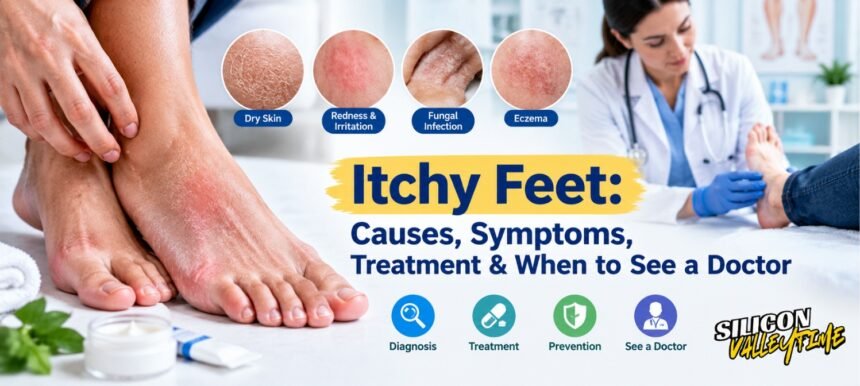

Itchy feet can be uncomfortable and distracting, especially when the itching keeps returning or becomes worse at night. Sometimes the cause is simple, such as dry skin, sweating, or irritation from shoes. In other cases, itchy feet may be linked to athlete’s foot, eczema, contact dermatitis, or another health condition.
The good news is that most causes can be managed once the underlying reason is identified. Understanding where the itching occurs, how the skin looks, and what other symptoms appear can provide useful clues.
What Are Itchy Feet?
“Itchy feet” describes an irritating sensation that creates an urge to scratch the skin around the feet. The medical term for itching is pruritus. It can affect the soles, toes, heels, sides, or tops of the feet.
Itching may occur with visible skin changes such as redness, scaling, cracks, bumps, or blisters. However, feet can sometimes itch even when the skin looks normal.
Itchy feet are a symptom rather than a specific disease. This means treatment depends on what is causing the problem.
Common Causes of Itchy Feet
Several conditions can cause itching around the feet. Some are temporary, while others may need medical treatment.
1. Dry Skin
Dry skin is one of the simplest causes of itchy feet. Cold weather, frequent washing, hot showers, low humidity, and harsh soaps can remove natural oils from the skin.
Dry skin may appear rough, flaky, cracked, or tight. Regular moisturizing and gentle skin care can often help.
2. Athlete’s Foot
Athlete’s foot, also known as tinea pedis, is a fungal infection that commonly develops between the toes or on the soles and sides of the feet.
Typical signs include:
- Itching, especially after removing shoes and socks
- Peeling or scaling skin
- Cracks between the toes
- Redness or irritation
- Burning or stinging
- Blisters in some cases
Fungi thrive in warm, damp environments, making sweaty shoes and socks common risk factors. Athlete’s foot can also spread through contaminated floors, towels, shoes, and other surfaces.
3. Eczema
Eczema can cause itchy, dry, inflamed, or cracked skin. Some people may experience repeated flare-ups rather than constant symptoms.
Foot eczema can sometimes resemble other conditions, including fungal infections. This is why persistent symptoms may need professional evaluation before choosing a treatment.
4. Contact Dermatitis
Contact dermatitis occurs when the skin reacts to something it has touched. Shoes and socks can be important triggers because they may contain rubber, leather, dyes, adhesives, metals, or other materials.
Foot creams, fragrances, powders, detergents, and some personal-care products may also irritate sensitive skin. Contact dermatitis often causes an itchy rash, and footwear-related reactions may particularly affect the tops of the feet.
5. Sweating and Irritation
Feet contain many sweat glands. When sweat remains trapped inside shoes, moisture and friction can irritate the skin and make itching worse.
Wearing breathable footwear, changing damp socks, and keeping the feet dry can reduce this type of irritation.
6. Psoriasis and Other Skin Conditions
Psoriasis and other inflammatory skin conditions can sometimes affect the feet. These conditions may produce dry, thick, scaly, or irritated patches.
Because several skin conditions can look similar, recurring or unexplained itching should be evaluated rather than treated based only on appearance.
7. Nerve-Related Causes
Sometimes itching occurs without an obvious rash. Nerve irritation or conditions affecting the nervous system can produce unusual sensations, including itching, tingling, burning, or numbness.
Diabetes, for example, can be associated with nerve problems and other foot complications. People with diabetes who develop persistent itching, numbness, sores, or slow-healing cuts should discuss these symptoms with a healthcare professional.
8. Less Common Health Conditions
Persistent itching can occasionally be associated with broader medical problems involving the liver, kidneys, thyroid, blood, or nervous system. This is more relevant when itching is unexplained, severe, widespread, or accompanied by other symptoms.
This does not mean that persistent itchy feet automatically indicate a serious disease. Common skin-related causes are much more frequent, but unexplained symptoms should not be ignored.
Symptoms That May Occur With Itchy Feet
The appearance and location of the itching can provide useful clues about its possible cause.
You may notice:
- Dry or flaky skin
- Peeling between the toes
- Redness or discoloration
- Cracked skin
- Small bumps or blisters
- Burning or stinging
- Swelling
- Unusual odor
- Tingling or numbness
It is also possible to have itchy feet without any visible rash or skin changes.
How to Treat Itchy Feet
Treatment depends on the underlying cause. There is no single treatment that works for every type of itchy foot.
Keep Feet Clean and Dry
Wash your feet regularly with gentle soap and water. Dry them carefully, particularly between the toes, because trapped moisture can encourage fungal growth.
Moisturize Dry Skin
If dryness is causing the itching, applying a suitable moisturizer can help restore the skin barrier. Avoid putting heavy moisturizer between the toes if the area tends to remain damp.
Consider Antifungal Treatment for Athlete’s Foot
Over-the-counter antifungal products can be used for many cases of athlete’s foot. Follow the product directions carefully.
If symptoms do not improve, keep returning, or become more severe, a healthcare professional can confirm whether the problem is actually fungal. Mayo Clinic recommends medical evaluation when a foot rash does not improve after two weeks of an over-the-counter antifungal cream.
Avoid Known Irritants
If itching started after using a new soap, foot cream, detergent, shoe, or pair of socks, consider whether that product could be triggering the reaction. Avoiding the suspected irritant may help contact dermatitis settle.
Avoid Scratching
Scratching may provide temporary relief but can damage the skin and increase the risk of infection. Keeping fingernails short and using a cool compress may help reduce the urge to scratch.
How to Prevent Itchy Feet
A few simple habits can lower the risk of recurring foot itching:
- Wash and dry your feet regularly.
- Change socks when they become sweaty or damp.
- Choose breathable shoes when possible.
- Allow shoes to dry fully before wearing them again.
- Avoid sharing towels, socks, or footwear.
- Wear protective footwear around communal showers and pools.
- Use gentle, fragrance-free skin products if your skin is sensitive.
- Moisturize dry areas regularly.
These habits are particularly useful for reducing moisture-related irritation and the risk of athlete’s foot.
When Should You See a Doctor for Itchy Feet?
Occasional mild itching may improve with basic skin care. However, medical advice is appropriate if the itching is severe, persistent, unexplained, or keeps coming back.
You should consider seeing a healthcare professional if:
- The itching lasts for more than a couple of weeks.
- Symptoms continue despite appropriate home care.
- The feet become swollen, painful, or increasingly red.
- There is pus, drainage, or another sign of infection.
- You develop open sores or significant cracks.
- You experience numbness or unusual tingling.
- The itching spreads to other parts of the body.
- You have diabetes and develop new foot symptoms.
Severe itching that interferes with sleep or daily activities also deserves medical attention.
How Are the Causes of Itchy Feet Diagnosed?
A healthcare professional may examine the skin and ask about your symptoms, footwear, skin-care products, medications, medical history, and possible exposures.
Depending on what they find, testing may include a skin scraping, culture, blood tests, or other investigations. These tests can help distinguish fungal infections from eczema, dermatitis, or other causes.
Frequently Asked Questions About Itchy Feet
Why are my feet itchy?
Common causes include dry skin, athlete’s foot, eczema, sweating, and irritation from shoes or personal-care products. The exact cause depends on the location of the itching and other symptoms.
Why are my feet itchy at night?
Nighttime itching can happen for several reasons, including dry skin, inflammatory skin conditions, or other causes of itching. If nighttime itching is persistent or disrupts sleep, consider discussing it with a healthcare professional.
Can itchy feet be caused by athlete’s foot?
Yes. Athlete’s foot commonly causes itching along with peeling, scaling, cracking, redness, or burning. It often develops in warm, damp areas around the feet.
Can you have itchy feet without a rash?
Yes. Itching does not always produce visible skin changes. Dry skin, nerve-related problems, medications, and some internal health conditions can cause itching without an obvious rash.
How can I stop itchy feet quickly?
Keeping the feet clean and dry, moisturizing dry skin, avoiding suspected irritants, and using an appropriate treatment for the underlying cause may help. A cool compress can also provide temporary relief.
Conclusion
Itchy feet can result from something as simple as dry skin or sweating, but they may also be caused by athlete’s foot, eczema, contact dermatitis, or other conditions. Paying attention to symptoms such as peeling, redness, cracking, blisters, burning, numbness, or swelling can help identify what may be happening.
For mild symptoms, good foot hygiene, dry socks, breathable footwear, gentle skin care, and appropriate treatment may provide relief. However, persistent, severe, recurring, or unexplained itching should be assessed by a healthcare professional. Getting the correct cause identified is the best way to choose an effective treatment and prevent the problem from returning