




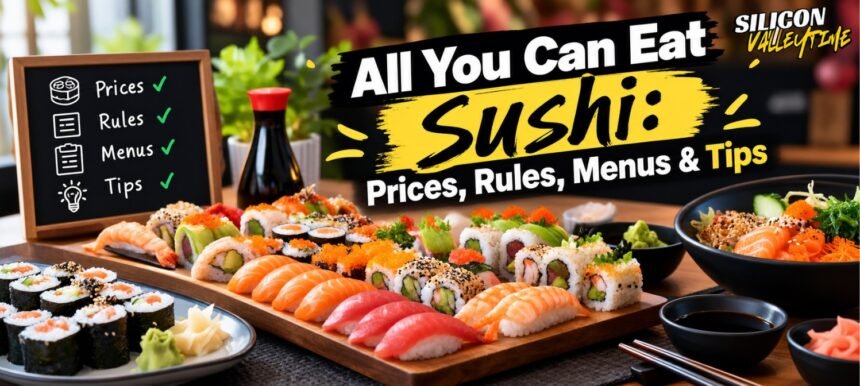

If you love sushi but do not want to choose just a few rolls, all you can eat sushi can be an exciting way to enjoy a wide variety of dishes for one set price. From classic rolls and nigiri to sashimi, appetizers, and specialty items, these restaurants let diners order from an unlimited or fixed menu during a set dining period.
However, every restaurant has its own pricing, ordering system, and food-waste rules. Knowing what to expect can help you enjoy your meal without unexpected charges.
What Is All You Can Eat Sushi?
All you can eat sushi is a restaurant dining model where customers pay a fixed price and can order multiple sushi dishes from a selected menu during a specific time period. Some restaurants offer unlimited portions, while others use table-side ordering or digital menus with limits per round.
The exact menu and rules vary by restaurant. Some include sashimi and specialty rolls, while others focus mainly on basic sushi rolls, nigiri, and appetizers.
You can learn more about sushi and its history through Wikipedia’s sushi overview.
How Does All You Can Eat Sushi Work?
The process is usually simple:
- Pay a fixed price or select an AYCE dining option.
- Review the available menu and included dishes.
- Place your order with a server, tablet, or paper menu.
- Receive your food in rounds, depending on the restaurant.
- Order additional items if the restaurant allows unlimited ordering.
- Finish within the restaurant’s time limit, if one applies.
- Pay extra charges, if you leave food behind or order excluded items.
Always check the restaurant’s specific rules before placing a large order.
Why Is All You Can Eat Sushi Popular?
The biggest attraction is variety. Instead of paying separately for every roll, diners can sample several different types of sushi for one advertised price.
It can also work well for groups. One person might prefer salmon nigiri, another may want spicy tuna rolls, while someone else may enjoy vegetable rolls or cooked dishes.
For sushi fans, the experience can feel more flexible than ordering from a traditional à la carte menu.
All You Can Eat Sushi Prices
Prices depend heavily on the restaurant, location, menu, and whether the meal is served at lunch or dinner.
Typical factors that affect all you can eat sushi prices include:
- Lunch versus dinner pricing
- Adult versus children’s pricing
- Sushi-only versus sushi-and-sashimi menus
- Premium or specialty rolls
- Weekday versus weekend rates
- Local restaurant costs
- Included appetizers and desserts
- Time limits
- Taxes and service charges
Some restaurants offer a lower lunch price and a more expensive dinner menu. Dinner may also include more premium items.
Tip: Do not compare prices alone. Check what the advertised price actually includes. A cheaper menu may exclude sashimi or specialty rolls that another restaurant includes.
What Is Usually on an All You Can Eat Sushi Menu?
An all you can eat sushi menu can vary widely, but many restaurants offer several common categories.
Sushi Rolls
Popular choices may include:
- California rolls
- Spicy tuna rolls
- Spicy salmon rolls
- Philadelphia-style rolls
- Shrimp tempura rolls
- Vegetable rolls
- Cucumber rolls
- Avocado rolls
Nigiri
Nigiri typically consists of a piece of fish or another topping served over seasoned sushi rice.
Depending on the restaurant, options may include:
- Salmon
- Tuna
- Shrimp
- Eel
- Yellowtail
- Crab or imitation crab
Sashimi
Some AYCE restaurants include sashimi, while others charge separately or place limits on it.
Common options include salmon and tuna sashimi.
Appetizers and Other Foods
The menu may also include:
- Edamame
- Miso soup
- Seaweed salad
- Gyoza
- Tempura
- Chicken dishes
- Teriyaki
- Spring rolls
- Desserts
Before ordering, check whether these items are included in the unlimited price.
Key Benefits of All You Can Eat Sushi
1. More Variety
You can try several rolls and sushi styles without committing to one large order.
2. Predictable Base Cost
A fixed menu price can make it easier to estimate your meal budget before ordering.
3. Good for Groups
Different people can order different foods according to their preferences.
4. Opportunity to Try New Dishes
AYCE dining can be a useful way to sample unfamiliar rolls or sushi styles in smaller portions.
5. Flexible Ordering
Many restaurants allow multiple rounds, making it possible to start with a few dishes and order more later.
All You Can Eat Sushi Rules You Should Know
Rules are one of the most important things to check before ordering.
Food Waste Rules
Many restaurants charge a fee when customers order excessive amounts of food and leave it uneaten.
This rule helps restaurants reduce waste and discourages customers from ordering far more than they can finish.
Time Limits
Some restaurants provide a specific dining period, such as 60, 90, or 120 minutes.
If a time limit applies, your ordering and eating schedule may need to be planned accordingly.
Ordering Limits
Some AYCE menus are not completely unlimited in every round. For example, a restaurant may limit how many pieces of certain premium items you can order at once.
Premium Item Charges
Specialty rolls, premium sashimi, or certain cooked dishes may not be included in the basic AYCE price.
Sharing Rules
An all you can eat meal is often intended for the person who purchased the AYCE option. Sharing food with someone who did not pay for the option may violate restaurant policy.
How to Get the Most From All You Can Eat Sushi
You do not need to rush or overeat to enjoy the experience.
1. Check the Menu First
Look at the complete menu before ordering. Identify the dishes you actually want to try.
2. Start With Smaller Orders
Instead of ordering a huge amount immediately, begin with a few different items.
This helps you discover what you like and reduces food waste.
3. Prioritize Items You Cannot Easily Get Elsewhere
If the menu includes premium sushi or sashimi, consider trying those items instead of filling up on common appetizers.
4. Do Not Ignore Rice
Sushi rice can be surprisingly filling. Ordering many large rolls at the beginning may leave little room for other dishes.
5. Pace Yourself
Eat slowly and give yourself time between orders. The goal is to enjoy the meal rather than simply eat as much as possible.
6. Follow the Restaurant’s Rules
Pay attention to ordering limits, time restrictions, and food-waste policies.
Following the rules makes the experience easier for both diners and restaurant staff.
All You Can Eat Sushi vs. À La Carte Sushi
The biggest difference is the pricing structure.
With all you can eat sushi, you generally pay one fixed price and select dishes from an included menu.
With à la carte sushi, every individual item or order has its own price.
AYCE may be useful for people who want variety, while à la carte ordering can make more sense for someone who only wants a few specific items.
Neither format is automatically better. The right choice depends on appetite, budget, menu selection, and how much variety you want.
Tips for Choosing a Good All You Can Eat Sushi Restaurant
Before visiting a restaurant, consider these points:
- Read recent reviews for comments about food quality and service.
- Check the current menu to see which items are actually included.
- Look for pricing details before arriving.
- Check opening hours and whether reservations are recommended.
- Ask about food-waste fees if the policy is unclear.
- Check whether sashimi is included in the AYCE price.
- Look for allergy information if you have food allergies or dietary restrictions.
A restaurant with a slightly higher price may offer a significantly larger selection, so comparing the menu is more useful than comparing the headline price alone.
FAQs About All You Can Eat Sushi
Is all you can eat sushi really unlimited?
Not always. Many restaurants allow repeated orders, but they may have limits on premium foods, ordering rounds, dining time, or individual portions. Always check the restaurant’s current AYCE policy.
How much does all you can eat sushi cost?
There is no single worldwide price. Cost depends on the restaurant, location, meal period, and menu. Lunch is often priced differently from dinner, and premium sushi or sashimi may cost more.
Can you order sashimi at all you can eat sushi restaurants?
Some restaurants include sashimi in their AYCE menu, while others exclude it or limit the number of pieces. Check the menu before ordering.
Can you take leftover sushi home?
This depends on the restaurant. Some AYCE restaurants prohibit taking food home, while others may allow it under certain conditions. Ask staff before assuming leftovers can be packed.
How can I avoid wasting food?
Start with small orders and order additional dishes only after you know how much you can comfortably eat. This is especially important when the restaurant has a food-waste fee.
Is all you can eat sushi worth it?
It depends on your eating preferences and the restaurant’s menu. If you enjoy variety and plan to try several included dishes, the fixed-price format can be appealing. If you only want one or two items, à la carte ordering may be more suitable.
What should I order first at an AYCE sushi restaurant?
Start with a few items you already know you enjoy, then try one or two new dishes. This gives you variety without filling up too quickly.
Conclusion
All you can eat sushi offers a fun way to explore different rolls, nigiri, sashimi, appetizers, and other Japanese-inspired dishes for a set price. But the value depends on the restaurant’s menu, pricing, ordering limits, and dining rules.
Before you go, check the current menu and price, understand the food-waste policy, and see whether premium items are included. Once you know the rules, you can focus on what matters most: enjoying good sushi at your own pace.