



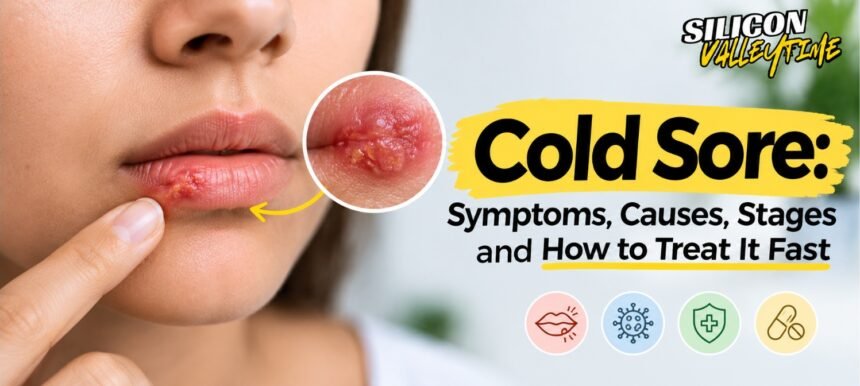

You wake up, and your lip feels a bit off. There’s a tingle, maybe a little burn. By evening, a small bump has shown up, and you already know what it is. A cold sore is on its way.
If that sounds familiar, you’re far from alone. Most adults carry the virus behind cold sores, and many deal with outbreaks from time to time. In this guide, you’ll learn what causes a cold sore, how to recognize each stage, what actually helps it heal, and when it’s worth calling a doctor.
What Is a Cold Sore?
A cold sore is a small, fluid-filled blister that usually appears on or around the lips. It is caused by the herpes simplex virus, most often type 1 (HSV-1). It’s also called a fever blister or, in medical terms, herpes labialis.
Once the virus enters your body, it stays there for life. It hides in nerve cells and stays quiet for weeks, months or even years. When something wakes it up, a cold sore appears. That’s why some people get them often and others rarely.
Many people catch the virus in childhood through a kiss from a relative or by sharing a cup. They may never know until the first outbreak shows up.
Cold Sore Symptoms: What to Look For
Cold sore symptoms tend to follow a pattern. Knowing it helps you act early, and acting early makes a real difference.
Early warning signs
Most people feel something before they see anything. Common early signs include:
- Tingling, itching or burning around the lip
- A tight or tender patch of skin
- Slight swelling near the mouth
This is called the prodrome stage. It’s the best time to start treatment.
Other symptoms
During a first outbreak, symptoms can be stronger. Some people get a fever, swollen glands, a sore throat or general aches. Repeat outbreaks are usually milder and stay local to the lip.
The Stages of a Cold Sore
A typical cold sore runs through five stages over roughly 7 to 10 days.
- Tingling (day 1): The skin feels itchy or burning, but nothing is visible yet.
- Blister (days 2–3): Small fluid-filled bumps appear, often in a cluster.
- Weeping (days 4–5): The blisters burst and leave a shallow, painful sore. This is when the cold sore is most contagious.
- Crusting (days 5–8): A yellowish-brown scab forms. It can crack and bleed if you pick at it or stretch your lip.
- Healing (days 8–10): The scab falls off and the skin returns to normal, usually without a scar.
Some cold sores clear faster, and some take up to two weeks. If yours lingers longer than that, check in with a healthcare provider.
Cold Sore Causes and Common Triggers
The root cause is the herpes simplex virus. The virus itself doesn’t change from one outbreak to the next, but your body’s defenses do. Common triggers include:
- Stress, both emotional and physical
- Illness, especially colds, flu or fever
- Sun exposure, particularly strong sunlight on the lips
- Hormonal changes, such as those around menstruation
- Fatigue and poor sleep
- Skin damage, like dental work, windburn or chapped lips
Keeping a simple note of what happened in the days before each outbreak can help you spot your own pattern. Many people find one or two clear triggers.
Is a Cold Sore Contagious?
Yes. A cold sore is contagious, and it spreads most easily when a blister is open and weeping. It can also spread, less often, even when no sore is visible.
The virus passes through close contact, such as:
- Kissing
- Sharing lip balm, cutlery, cups or towels
- Oral contact with someone who has the virus
Be extra careful around newborns, people with eczema and anyone with a weakened immune system. In these groups, the virus can cause serious illness. If you have an active cold sore, avoid kissing babies altogether.
You can also spread the virus to other parts of your own body, including your eyes and fingers, if you touch the sore and then touch somewhere else. Wash your hands every time.
Cold Sore Treatment: How to Get Rid of a Cold Sore Faster
There is no cure for the virus, but treatment can shorten an outbreak and ease the discomfort. Here is what tends to work.
Antiviral medicines
Antiviral creams and tablets are the most effective option. Medicines such as aciclovir (acyclovir), valaciclovir and famciclovir work best when started at the first tingle. A pharmacist or doctor can tell you which one suits you and how to use it. For people who get frequent outbreaks, a doctor may suggest daily antiviral tablets to reduce how often they come back.
Over-the-counter creams
Some non-prescription creams, including those with docosanol, may help shorten healing time slightly. Cold sore patches are another popular choice. They cover the sore, protect it from touching and make it less noticeable.
Simple comfort measures at home
- Hold a cool, clean, damp cloth on the area for a few minutes
- Take an over-the-counter pain reliever if the area is sore, following the label
- Apply a thin layer of petroleum jelly to stop the lips from cracking
- Avoid very salty, spicy or acidic foods that sting
What to avoid
Don’t pick or peel the scab. It slows healing and raises the chance of infection. Skip home remedies that burn or irritate the skin, like rubbing alcohol or toothpaste. They don’t work and often make things worse.
How to Prevent a Cold Sore Outbreak
You can’t remove the virus, but you can make outbreaks less likely.
- Protect your lips from the sun. Use a lip balm with SPF 30 or higher, especially on bright days.
- Manage stress. Regular exercise, good sleep and breaks during busy weeks all help.
- Don’t share personal items like lip products, razors, towels or utensils.
- Replace your lip balm after an outbreak, so you don’t reinfect yourself.
- Start treatment early. At the first tingle, act, don’t wait.
When to See a Doctor
Most cold sores clear up on their own. See a doctor if:
- The sore hasn’t healed after two weeks
- Outbreaks are frequent or very painful
- You have a weakened immune system
- The sore is near or in your eye, or your vision changes
- The sore spreads widely or you develop a high fever
- A baby or young child has symptoms
If you’re in doubt, a quick visit to a local clinic or pharmacist is a good first step. They can confirm the diagnosis and rule out other conditions that look similar.
Frequently Asked Questions About Cold Sores
How long does a cold sore last?
Most cold sores heal within 7 to 10 days. Early antiviral treatment can shorten that a little, while picking the scab can make it longer.
Can I get a cold sore without kissing someone?
Yes. The virus can pass through shared cups, towels or lip balm. Many people also picked it up in childhood from non-romantic contact and don’t remember it.
Is a cold sore the same as a canker sore?
No. A cold sore is caused by a virus, appears outside the mouth on or near the lips, and is contagious. A canker sore forms inside the mouth, isn’t caused by herpes and isn’t contagious.
Can a cold sore be cured?
Not at the moment. The virus stays in the body for life, but treatment and prevention can reduce how often outbreaks happen and how long they last.
Can I wear makeup over a cold sore?
It’s best to avoid it. Makeup can irritate the sore, slow healing and spread the virus on brushes or sponges. A hydrocolloid patch is a cleaner way to cover it.
Final Thoughts
A cold sore is annoying, a bit embarrassing and very common, but it’s manageable. Learn your triggers, act at the first tingle, keep your hands off the sore and protect others while it heals. Most outbreaks are over in about a week and a half.
Dealing with frequent or stubborn cold sores? Don’t just wait it out. Talk to your doctor or pharmacist about an antiviral plan that fits you, and share this guide with someone who could use it.