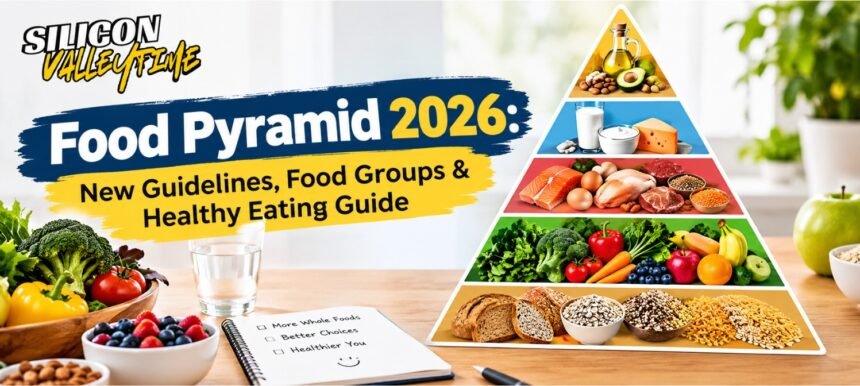

If you grew up learning that the food pyramid starts with grains at the bottom, 2026 brings an important update. Nutrition guidance has moved beyond the traditional pyramid, and the latest U.S. Dietary Guidelines put much more emphasis on real, whole, nutrient-dense foods.
The current Dietary Guidelines for Americans 2025–2030 were released in January 2026. Their central message is simple: “Eat real food.” The guidance prioritizes foods such as vegetables, fruits, protein foods, dairy, healthy fats, and whole grains while encouraging people to reduce highly processed foods, added sugars, refined carbohydrates, excess sodium, and unhealthy fats.
So, what does the Food Pyramid 2026 actually mean, and how can you use it when planning everyday meals?
What Is the Food Pyramid 2026?
The Food Pyramid 2026 refers to the updated approach to healthy eating reflected in the U.S. Dietary Guidelines for Americans, 2025–2030.
The traditional Food Guide Pyramid was introduced in 1992 and later replaced by MyPyramid. In 2011, USDA introduced MyPlate as a simpler visual guide for building meals.
In 2026, the federal nutrition framework changed again. The new guidance places greater emphasis on whole foods and nutrient density rather than simply telling people to consume a particular number of servings from a traditional pyramid.
The current framework encourages people to build their diets around:
- Protein foods
- Vegetables
- Fruits
- Dairy foods
- Healthy fats
- Whole grains
- Other minimally processed, nutrient-rich foods
At the same time, it recommends limiting foods and drinks high in added sugars and highly processed ingredients.
In simple terms: the Food Pyramid 2026 is less about following a rigid picture and more about making better choices across your overall eating pattern.
Quick answer: The Food Pyramid 2026 is a way of understanding the current 2025–2030 U.S. nutrition guidance, which emphasizes real, whole, nutrient-dense foods and limits highly processed foods, added sugars, and refined carbohydrates.
What Are the Main Food Groups in 2026?
A healthy eating pattern still requires variety. No single food provides everything your body needs, which is why the current guidance encourages a combination of nutrient-rich foods.
1. Protein Foods
Protein has a prominent role in the current dietary guidance. Common choices include:
- Eggs
- Fish and seafood
- Chicken and other poultry
- Meat
- Beans
- Lentils
- Nuts and seeds
- Other protein-rich foods
Protein helps provide essential nutrients and can make meals more satisfying.
For example, instead of eating a breakfast consisting mainly of refined carbohydrates, you could combine eggs with vegetables and whole-grain toast.
2. Vegetables
Vegetables remain an important part of a balanced diet.
Try to include different types rather than relying on one vegetable every day. Leafy greens, carrots, tomatoes, peppers, broccoli, cauliflower, peas, and other vegetables can all contribute different nutrients.
Fresh vegetables are not the only option. Frozen and canned vegetables can also be practical choices, particularly when cost, availability, or convenience matters.
3. Fruits
Fruit provides carbohydrates, fiber, vitamins, minerals, and other beneficial compounds.
Whole fruit is generally a more useful everyday choice than products containing large amounts of added sugar. Apples, oranges, bananas, berries, melons, and other fruits can easily fit into breakfast, snacks, or meals.
For example, an apple with a handful of nuts can be a simple snack that combines fruit with protein and healthy fats.
4. Dairy Foods
The updated dietary guidance includes dairy among the foods that can contribute important nutrients.
Examples include:
- Milk
- Yogurt
- Cheese
- Other dairy foods
People who do not consume dairy can discuss suitable alternatives with a qualified nutrition professional, particularly when specific nutrient needs such as calcium or vitamin D are important.
5. Healthy Fats
Fat is not something that needs to be completely removed from a healthy diet.
Sources can include foods such as nuts, seeds, avocados, and certain oils. The key is to consider the overall quality of the food and the dietary pattern rather than treating all fats as identical.
6. Whole Grains
Whole grains can provide fiber and other nutrients.
Examples include oats, brown rice, whole-grain bread, barley, and other minimally processed whole-grain foods.
The 2026 guidance also places more attention on reducing refined carbohydrates, making the distinction between whole and refined grain foods particularly useful when planning meals.
What Foods Should You Limit in the Food Pyramid 2026?
One of the clearest themes in the current guidance is not simply what to eat more of, but what to eat less often.
The 2025–2030 Dietary Guidelines encourage limiting highly processed foods, added sugars, refined carbohydrates, excess sodium, and unhealthy fats.
That does not mean every packaged food is automatically unhealthy.
A better approach is to look at the food as a whole and consider how frequently it appears in your diet.
Added Sugars
Sugary drinks, sweets, desserts, and many packaged foods can contribute significant amounts of added sugar.
A practical change could be replacing a sugary drink with water or another lower-sugar option on most days.
Highly Processed Foods
The current guidelines specifically emphasize reducing highly processed foods.
This does not mean you need to eliminate every convenience food from your kitchen. Busy schedules are real, and practical nutrition has to work in real life.
Instead, build more meals around recognizable foods such as vegetables, fruit, eggs, beans, fish, meat, dairy, nuts, seeds, and whole grains.
Refined Carbohydrates
White bread, many refined-grain snacks, pastries, and similar foods can be replaced more often with whole-grain alternatives or other nutrient-dense foods.
The goal is not perfection. It is to make the healthier option the easier and more frequent option.
How to Use the Food Pyramid 2026 in Everyday Meals
Nutrition advice can sound complicated until you turn it into an actual plate.
A simple meal-building strategy is to combine several food groups.
Example Breakfast
Try:
- Eggs
- Vegetables
- Whole-grain toast
- Fruit
This gives you protein, vegetables, whole grains, and fruit in one meal.
Example Lunch
A practical lunch could include:
- Grilled chicken or beans
- A large vegetable portion
- Brown rice or another whole grain
- Yogurt
- Fruit
Example Dinner
For dinner, consider:
- Fish, chicken, lean meat, or beans
- Cooked vegetables
- A whole-grain side
- A source of healthy fat
The exact foods do not have to look the same every day.
This flexibility is important because healthy eating should accommodate different cultures, budgets, preferences, schedules, and dietary needs. Federal consumer guidance describes the Dietary Guidelines as a flexible framework rather than a requirement to eat identical meals.
Is the Old Food Pyramid Still Relevant?
The old Food Pyramid is useful for understanding how nutrition education has evolved, but it should not be treated as the current U.S. federal nutrition guide.
The Food Guide Pyramid was replaced by MyPyramid in 2005, and MyPlate replaced MyPyramid in 2011.
The important point is that nutrition science and public guidance continue to evolve.
The Food and Agriculture Organization notes that countries use different food guides—including pyramids, plates, wheels, and other visual models—because dietary guidance is adapted to local food availability, culture, and nutrition needs.
So if you see an older pyramid online, check its publication date before treating it as current advice.
How Is the 2026 Food Pyramid Different From MyPlate?
The biggest difference is the framework used to communicate healthy eating.
MyPlate became the familiar USDA visual in 2011 and divided meals into food groups. It was designed to give consumers an easy visual reminder to eat a variety of foods.
The current 2025–2030 Dietary Guidelines, released in January 2026, use a different federal consumer framework and emphasize eating real, whole, nutrient-dense foods.
This means someone searching for “Food Pyramid 2026” may actually be looking for information about the current replacement for older food-pyramid guidance.
The safest approach is therefore to use current government guidance rather than copying an old pyramid graphic from a blog or social media post.
A Simple Food Pyramid 2026 Checklist
You do not need to redesign your entire diet overnight.
Use this checklist when planning meals:
- Include a protein source.
- Add vegetables or fruit.
- Choose whole grains when they fit the meal.
- Include appropriate dairy or an alternative source of key nutrients.
- Use healthy fat sources in sensible amounts.
- Reduce highly processed foods.
- Limit added sugars.
- Pay attention to sodium and refined carbohydrates.
- Choose mostly nutrient-dense foods.
- Keep your eating pattern realistic enough to maintain.
This approach is usually more practical than obsessing over whether one individual meal is “perfect.”
Food Pyramid 2026 FAQ
What is the Food Pyramid 2026?
The Food Pyramid 2026 describes the current approach to healthy eating under the U.S. Dietary Guidelines for Americans 2025–2030. The guidance emphasizes real, whole, nutrient-dense foods and recommends limiting highly processed foods, added sugars, and refined carbohydrates.
What replaced the old food pyramid?
The original Food Guide Pyramid was replaced by MyPyramid in 2005 and then by MyPlate in 2011. In 2026, the current U.S. federal consumer nutrition guidance is based on the Dietary Guidelines for Americans 2025–2030 and its current food guidance framework.
What foods should you eat most in 2026?
The current guidance emphasizes whole, nutrient-dense foods, including vegetables, fruits, protein foods, dairy, healthy fats, and whole grains. It also recommends limiting highly processed foods, added sugars, and refined carbohydrates.
Are carbohydrates part of the Food Pyramid 2026?
Yes. Whole grains and other carbohydrate-containing foods can be part of a healthy eating pattern. The current guidance places particular emphasis on choosing nutrient-dense foods and limiting refined carbohydrates rather than eliminating carbohydrates altogether.
Do I have to follow the Food Pyramid exactly?
No. Healthy eating does not require identical meals or a rigid daily menu. Dietary needs vary according to factors such as age, activity, health conditions, dietary preferences, and lifestyle. The federal guidance is intended as a framework for healthier eating patterns.
Conclusion
The Food Pyramid 2026 is best understood as part of a broader change in how healthy eating is communicated. The current U.S. Dietary Guidelines for 2025–2030 put real, whole, nutrient-dense foods at the center of everyday eating.
Instead of worrying about following an outdated pyramid perfectly, focus on practical habits: eat more vegetables and fruit, include quality protein, choose whole grains, use healthy fat sources, and reduce highly processed foods and added sugars.
For the most current recommendations, check the official Dietary Guidelines for Americans 2025–2030 rather than relying on an old food-pyramid graphic.
Next step: Review your usual breakfast, lunch, and dinner and identify one realistic food-quality improvement you can make this week