




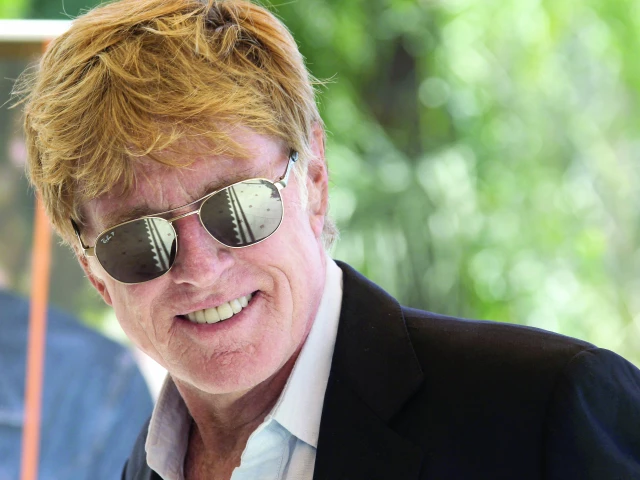

Robert Redford is more than just a movie star; he’s an American icon. With his classic good looks, undeniable talent, and passion for independent filmmaking, he has carved out a unique and enduring legacy in Hollywood and beyond. For over six decades, he has captivated audiences as an actor, directed critically acclaimed films, and championed environmental causes. This deep dive explores the incredible life and career of Robert Redford, from his early days to his status as a living legend. He built a career on his own terms, often choosing roles that challenged him and stories that mattered. His influence extends far beyond the silver screen, most notably through the creation of the Sundance Institute and its world-renowned film festival, which has transformed the landscape of independent cinema. This commitment to art and activism makes the story of Robert Redford a truly compelling one.
Key Takeaways
- A Multifaceted Career: Robert Redford is not only a celebrated actor but also an Oscar-winning director and a dedicated producer.
- Champion of Independent Film: He founded the Sundance Institute and the Sundance Film Festival, providing a crucial platform for new and diverse voices in filmmaking.
- Environmental Activist: For decades, Robert Redford has been a vocal and active proponent of environmental conservation and protection.
- Iconic Film Roles: He starred in some of the most memorable films of the 20th century, including Butch Cassidy and the Sundance Kid, The Sting, and All the President’s Men.
- Enduring Legacy: Even after stepping back from acting, his influence on the film industry and his advocacy work continue to have a significant impact.
The Early Life of a Future Star
Charles Robert Redford Jr. was born on August 18, 1936, in Santa Monica, California. Growing up in a working-class family, his early life wasn’t filled with the glamour that would later define his career. His father, Charles Sr., was a milkman who later became an accountant, and his mother, Martha, was a homemaker. Young Robert Redford was an energetic and sometimes rebellious kid, more interested in sports and outdoor adventures than in his studies. He found an escape in art and athletics, showing an early talent for both. A pivotal moment in his youth was a bout with a mild case of polio, which kept him bedridden for several weeks. This period of forced inactivity gave him time to think and draw, nurturing a creative spark. After graduating from Van Nuys High School, he received a baseball scholarship to the University of Colorado, but his time there was short-lived. He lost the scholarship and dropped out, seeking a different path.
A Journey to Find Himself
After leaving college, a young Robert Redford embarked on a journey to Europe. He lived the life of a bohemian art student in Paris and Florence, studying painting and trying to find his place in the world. This experience was formative, exposing him to different cultures and broadening his perspective. However, it was also a period of struggle and hardship. He lived in poverty, but the experience solidified his independent spirit and resilience. When he returned to the United States, he was a changed man, though still unsure of his future. The tragic loss of his mother at a young age had a profound impact on him, and he decided to channel his energy into something new. He enrolled at the American Academy of Dramatic Arts in New York City, a decision that would ultimately set him on the path to stardom.
Breaking into Broadway and Television
New York in the late 1950s was a vibrant hub for aspiring actors, and Robert Redford quickly found work. His classic good looks and natural charisma made him a good fit for the stage and the burgeoning world of television. He began his acting career on Broadway, earning praise for his role in the 1959 play Tall Story. His most notable stage performance came in 1963 with Neil Simon’s hit comedy Barefoot in the Park. He starred as the straight-laced newlywed husband, Paul Bratter, a role that showcased his comedic timing and leading-man potential. The play was a massive success and established Robert Redford as a rising star on the theatrical scene. During this time, he also became a familiar face on television, appearing in numerous anthology series like Alfred Hitchcock Presents, The Twilight Zone, and Playhouse 90. These roles allowed him to hone his craft and gain valuable experience in front of the camera, preparing him for the leap to the big screen.
Early Film Roles and Rising Fame
While his stage and television work was successful, Hollywood beckoned. His first major film role was in War Hunt (1962), where he acted alongside another future star, Sydney Pollack, who would become a key collaborator in his career. However, his initial years in film were a mixed bag. He appeared in movies like Inside Daisy Clover (1965) and The Chase (1966) with major stars like Natalie Wood and Marlon Brando, but he often felt disillusioned with the Hollywood system and the pretty-boy roles he was offered. He was determined not to be typecast. The turning point came when he reprised his stage role in the film adaptation of Barefoot in the Park (1967) opposite Jane Fonda. The film was a box office smash and cemented the image of Robert Redford as a bona fide movie star. His on-screen charm and chemistry with Fonda were undeniable, and Hollywood finally knew it had a major new talent on its hands.
The Golden Age: Stardom in the 1970s
The late 1960s and 1970s were the years that transformed Robert Redford from a movie star into a cinematic legend. This era began with the iconic 1969 film Butch Cassidy and the Sundance Kid. Teaming up with Paul Newman, Robert Redford played the charismatic outlaw, the Sundance Kid. The film was a cultural phenomenon, celebrated for its witty script, stunning visuals, and the incredible chemistry between its two leads. It became one of the highest-grossing films of its time and earned Redford an international following. The role was so defining that it later inspired the name for his independent film institute. He followed this success with a string of critically and commercially successful films that showcased his versatility as an actor. He wasn’t just a handsome face; he was a serious actor capable of tackling complex and thought-provoking roles that defined a generation of American cinema.
A String of Iconic Hits
Throughout the 1970s, Robert Redford carefully chose projects that resonated with him, often collaborating with director Sydney Pollack. Their partnership produced some of the decade’s most important films.
- Jeremiah Johnson (1972): A gritty western about a mountain man, this film allowed Redford to explore themes of individualism and nature, subjects close to his heart.
- The Way We Were (1973): A classic romantic drama co-starring Barbra Streisand, it became a massive box office hit and remains a beloved tearjerker.
- The Sting (1973): This film reunited him with Paul Newman in a clever caper that was both a critical and commercial triumph. It won the Academy Award for Best Picture and earned Robert Redford his first and only Oscar nomination for Best Actor.
- All the President’s Men (1976): Perhaps one of his most significant films, Redford produced and starred as journalist Bob Woodward alongside Dustin Hoffman’s Carl Bernstein. The gripping political thriller chronicled the Watergate scandal and had a major impact on American culture and politics.
This incredible run of films solidified his status as one of the biggest box office draws and most respected actors in the world.
Stepping Behind the Camera: A Director’s Vision
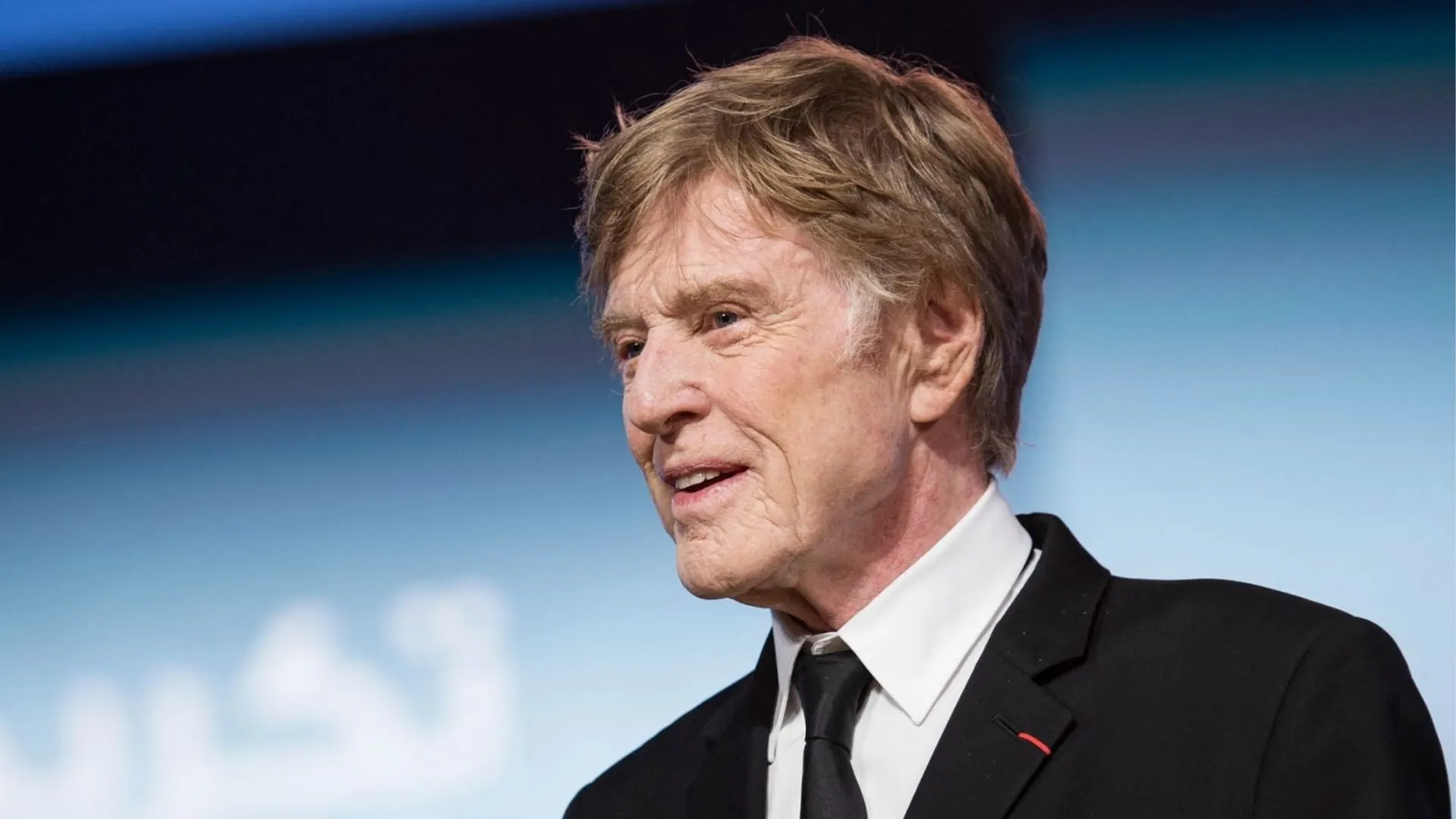
After a decade of dominating the box office as an actor, Robert Redford decided to explore a new challenge: directing. He had a strong desire to tell stories from a different perspective and have more creative control over the final product. His directorial debut was the 1980 family drama Ordinary People. The film, which starred Donald Sutherland, Mary Tyler Moore, and Timothy Hutton, was a sensitive and powerful exploration of a family falling apart after the death of a son. Redford’s direction was subtle, nuanced, and deeply human. He drew incredible performances from his cast, particularly from Moore, who was cast against type, and the young Hutton. The film was a resounding success, earning widespread critical acclaim. For his very first effort as a director, Robert Redford won the Academy Award for Best Director, a remarkable achievement that proved his talent extended far beyond acting.
Notable Films as a Director
Ordinary People was just the beginning of a long and respected directing career for Robert Redford. He chose his projects carefully, often focusing on stories with strong characters and social or political themes.
|
Film Title |
Year |
Notable Cast |
Key Themes |
|---|---|---|---|
|
The Milagro Beanfield War |
1988 |
Rubén Blades, Sonia Braga |
Community, tradition vs. progress, land rights |
|
A River Runs Through It |
1992 |
Brad Pitt, Craig Sheffer |
Family, memory, nature, fly-fishing |
|
Quiz Show |
1994 |
Ralph Fiennes, John Turturro |
Ethics, media manipulation, loss of innocence |
|
The Horse Whisperer |
1998 |
Robert Redford, Kristin Scott Thomas |
Healing, communication, human-animal connection |
|
Lions for Lambs |
2007 |
Tom Cruise, Meryl Streep |
War, politics, media responsibility |
His films are known for their beautiful cinematography, strong performances, and intelligent storytelling. Quiz Show, in particular, earned him another Oscar nomination for Best Director, cementing his reputation as one of Hollywood’s most thoughtful filmmakers.
The Sundance Institute: Championing Independent Voices
Perhaps the most enduring part of the legacy of Robert Redford is not a film role, but an entire institution. In the late 1970s, he grew concerned that Hollywood was becoming too focused on blockbusters, squeezing out smaller, more personal films. He wanted to create a space where independent filmmakers could develop their craft away from commercial pressures. In 1981, he founded the Sundance Institute in Utah, a non-profit organization dedicated to nurturing new talent in film and theater. The institute hosts labs and workshops where writers, directors, and composers can work on their projects with guidance from seasoned industry professionals. It was a revolutionary idea, creating a support system for artists who might otherwise never get a chance. This commitment to fostering new creative voices has had a profound and lasting impact on the entertainment world.
The Sundance Film Festival Phenomenon
To showcase the work being developed at the Institute, Robert Redford took over the small, pre-existing US Film Festival in Park City, Utah. Renamed the Sundance Film Festival in 1991, it has since grown into the largest and most prestigious independent film festival in the United States. Each January, the festival becomes the epicenter of the film world, launching the careers of countless directors like Quentin Tarantino (Reservoir Dogs), Steven Soderbergh (sex, lies, and videotape), and Damien Chazelle (Whiplash). The festival has become a vital marketplace for films that exist outside the major studio system, introducing audiences to groundbreaking documentaries, quirky comedies, and powerful dramas. The success of Sundance has helped make independent film a commercially viable and culturally significant force, a testament to the vision of Robert Redford. For those interested in the latest trends in technology and culture, platforms like those discussed at https://siliconvalleytime.co.uk/ often cover the intersection of film and digital innovation that festivals like Sundance champion.
A Lifelong Environmentalist
Long before it was a mainstream cause, Robert Redford was a passionate advocate for the environment. His love for the outdoors was cultivated during his youth in California and solidified by the time he bought land in Utah in the 1960s. He saw firsthand the threats posed by unchecked development and pollution and decided to use his public platform to raise awareness. For over 50 years, he has been a trustee of the Natural Resources Defense Council (NRDC) and has fought for environmental protection, clean energy, and climate change action. He has lobbied Congress, narrated documentaries, and spoken out fearlessly on behalf of the planet. His activism is not just a side project; it is a core part of who he is. He has consistently argued that environmental health and economic prosperity are not mutually exclusive, a message he continues to promote with urgency and passion.
Activism in Action
The commitment of Robert Redford to environmental causes is not just about words; it’s about action. He designed his home and the Sundance resort in Utah with strict principles of environmental conservation in mind, using sustainable materials and practices. He has actively campaigned against oil drilling in the Arctic National Wildlife Refuge and has been a vocal critic of policies that weaken environmental protections. Through his production company, he has also helped bring environmental stories to a wider audience, such as the documentary series The American West. His unwavering dedication has made him one of the most credible and respected voices in the environmental movement. He has used his fame not for personal gain, but to shine a light on issues that he believes are critical to the future of our planet, inspiring countless others to get involved.
Personal Life and Later Career
Despite living in the public eye for most of his life, Robert Redford has fiercely protected his privacy. He has always been uncomfortable with the cult of celebrity, preferring a quiet life at his home in Utah to the Hollywood spotlight. He was married to Lola Van Wagenen from 1958 to 1985, and they had four children together. The couple endured the heartbreaking loss of their first child, Scott, to sudden infant death syndrome. This personal tragedy, along with the pressures of fame, shaped his desire for a private family life away from the media glare. In 2009, he married his longtime partner, the painter Sibylle Szaggars. Throughout his life, he has remained grounded, a man more comfortable in nature than on a red carpet. This sense of self has allowed him to navigate a long and demanding career with grace and integrity.
Semi-Retirement and Lasting Legacy
In 2018, Robert Redford announced his retirement from acting, with the film The Old Man & the Gun intended as his final on-screen performance. In it, he fittingly played a charming, real-life bank robber, a role that felt like a perfect, charismatic bookend to his acting career. While he has stepped back from being in front of the camera, he remains active as a producer and continues to guide the Sundance Institute. His legacy is immense. As an actor, he defined a certain kind of American masculinity—cool, intelligent, and principled. As a director, he told stories with depth and humanity. And as a cultural benefactor, he changed the film industry forever. Robert Redford is more than a movie star; he is a force of nature who has left an indelible mark on American culture.
Conclusion
The story of Robert Redford is one of talent, conviction, and extraordinary influence. From his rebellious youth to his status as a Hollywood elder statesman, he has forged a path entirely his own. He became one of the world’s biggest movie stars on his own terms, choosing roles that challenged audiences and reflected his own values. But his greatest impact may lie beyond his own performances. By creating the Sundance Institute, he built a lasting institution that has democratized filmmaking and given a voice to a new generation of storytellers. Coupled with his tireless work as an environmentalist, his career serves as a powerful example of how art and activism can intersect. Robert Redford is a true icon—an artist, a visionary, and a champion for the causes he believes in.
Frequently Asked Questions (FAQ)
What is Robert Redford’s most famous movie?
While he has many famous films, Robert Redford is perhaps best known for Butch Cassidy and the Sundance Kid (1969) and The Sting (1973), both co-starring Paul Newman. All the President’s Men (1976) is also considered one of his most significant works.
Did Robert Redford ever win an Oscar for acting?
No, he never won a competitive Oscar for acting, though he was nominated once for The Sting. He did, however, win an Academy Award for Best Director for his debut film, Ordinary People (1980), and received an Honorary Academy Award in 2002 for his overall contribution to film.
What is the Sundance Film Festival?
The Sundance Film Festival is the largest independent film festival in the United States, founded by Robert Redford. It is a platform for new and independent filmmakers to showcase their work and has been responsible for launching the careers of many acclaimed directors.
Is Robert Redford retired?
Robert Redford announced his retirement from acting in 2018, stating that The Old Man & the Gun would be his last role. However, he remains active as a producer and in his leadership role at the Sundance Institute.
What kind of environmental work has Robert Redford done?
For more than 50 years, Robert Redford has been a prominent environmental activist. He has served on the board of the Natural Resources Defense Council (NRDC), campaigned against deforestation and oil drilling, advocated for clean energy, and used his platform to raise awareness about climate change.