






Key Takeaways
- Definition: A loan shark is an illegal moneylender who charges extremely high interest rates and often uses threats or violence to collect debts.
- The Risks: Borrowing from these lenders can trap you in a cycle of debt that is almost impossible to escape.
- Warning Signs: Look out for lenders who don’t ask for credit checks, demand upfront fees, or operate without a license.
- Alternatives: There are safer ways to get money, such as credit unions, government assistance, or reputable online lenders.
- Getting Help: If you are involved with a predatory lender, you should report them to the authorities immediately.
Have you ever been in a tight spot financially where you needed cash right away? Maybe your car broke down, or an unexpected medical bill popped up. When the bank says no, it can feel like you have nowhere to turn. This is exactly the moment when a dangerous predator might appear: the loan shark.
While the term might sound like something out of a movie, these illegal lenders are very real and operate in communities across the United States. They prey on people who are desperate for help, promising quick cash with “no questions asked.” But the reality is far from helpful. In this article, we will break down exactly what a loan shark is, why they are dangerous, and how you can protect yourself and your family from falling into their traps.
What Exactly Is a Loan Shark?
A loan shark is a person or group that lends money at unlawfully high interest rates. Unlike a bank or a legitimate online lender, they do not follow the rules set by the government. They operate in the shadows, outside of the legal financial system. Because they aren’t regulated, they make their own rules—and those rules are designed to keep you paying them money forever.
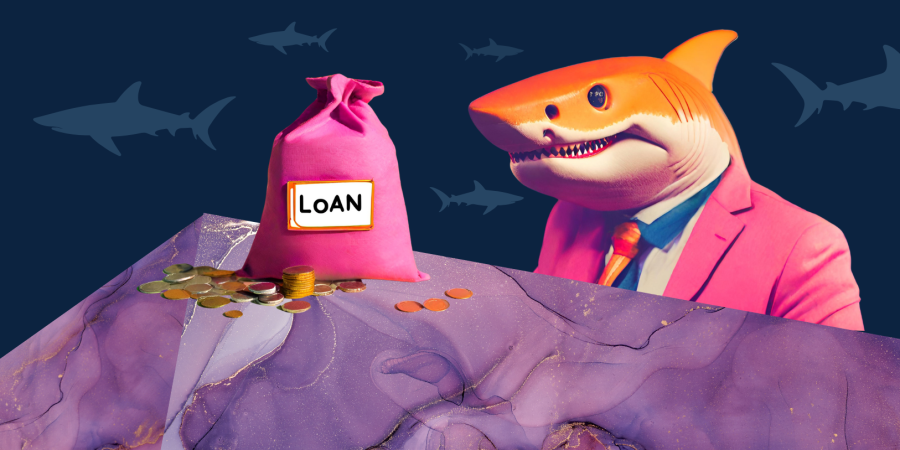
The term “shark” is used for a reason. Just like a shark in the ocean, these lenders circle vulnerable people. They sense financial distress. Once you take the bait—the quick cash—they clamp down. The interest rates they charge are often illegal, sometimes reaching over 100% or even 1000% APR (Annual Percentage Rate). This means if you borrow $100, you might end up owing them thousands before you are done.
It is important to understand that a loan shark is not just a friend lending you twenty bucks until payday. This is a criminal enterprise. Their goal isn’t to help you get back on your feet; their goal is to drain your wallet. They often target low-income neighborhoods or people with bad credit who feel they have no other options.
The Legal Definition vs. Street Reality
Legally, any lender charging an interest rate above the state’s “usury limit” (the maximum legal interest rate) could be considered predatory. However, a true loan shark goes beyond just high rates. They often use intimidation, harassment, and even physical violence to collect their money.
In the real world, you might find a loan shark operating out of a legitimate-looking business, or they might just be a guy you meet through an acquaintance. They rarely provide paperwork. Everything is verbal, which means there is no record of how much you have paid. This allows them to change the terms whenever they want. You might think you have paid off the loan, only to be told you still owe “interest” or “late fees” that were never mentioned before.
How Does a Loan Shark Operate?
Understanding the modus operandi—or the method of operation—of a loan shark is crucial for spotting them. They don’t have big signs that say “Illegal Lender Here.” Instead, they rely on word of mouth or subtle advertising. They might advertise on social media, community bulletin boards, or local classifieds with vague messages like “Cash Fast” or “No Credit Check Loans.”
The process usually starts very friendly. The loan shark acts like a savior. They tell you not to worry about paperwork or credit scores. They hand over the cash quickly, sometimes within hours. This builds a false sense of trust. You think, “Wow, this person is really helping me out when the bank wouldn’t.”
But once the money changes hands, the dynamic shifts. The repayment schedule is often brutal. They might demand weekly or even daily payments. If you miss a payment, the penalties are severe. The “friendly” lender suddenly becomes aggressive. They might start showing up at your workplace or calling your family members. This harassment is a key tactic to force you to pay, often at the expense of your other bills like rent or food.
The Cycle of Debt Trap
The most dangerous aspect of borrowing from a loan shark is the debt trap. Because the interest rates are so astronomical, your payments often only cover the interest, never touching the original amount you borrowed (the principal).
Imagine you borrow $500. The lender might demand $100 a week in interest until you can pay back the full $500 in one lump sum. You could pay $100 every week for a year—that’s $5,200—and you would still owe the original $500. This is how they make their money. They don’t want you to pay off the loan; they want you to stay in debt forever.
|
Feature |
Legitimate Lender |
Loan Shark |
|---|---|---|
|
Paperwork |
Clear contract with terms |
No paperwork or confusing terms |
|
Interest Rates |
Capped by law |
Extremely high, illegal rates |
|
Credit Check |
Usually required |
“No credit check” promised |
|
Collection Methods |
Letters, phone calls (regulated) |
Threats, violence, harassment |
|
Transparency |
Clear repayment schedule |
vague terms, changing rules |
Why Do People Turn to Illegal Lenders?
It is easy to judge and ask why anyone would use a loan shark, but the reality is often complicated. Most people know it’s a bad idea, but desperation clouds judgment. When you have bad credit, banks won’t talk to you. Even legitimate payday lenders might turn you away if you already have outstanding loans.
For many, a loan shark feels like the only door left open. Perhaps a parent needs medicine for a sick child, or a worker needs their car fixed to keep their job. In these high-stress situations, the immediate need for cash outweighs the long-term risk. The illegal lender knows this and exploits it.
Furthermore, some people in tight-knit communities might trust a local lender simply because they know them. They might think, “He’s from the neighborhood, he wouldn’t hurt me.” Unfortunately, business is business for a loan shark, and personal relationships often mean nothing when money is owed.
Warning Signs You Are Dealing with a Loan Shark
Identifying a predatory lender before you take the money can save you a lifetime of trouble. There are several red flags you should always look out for. If you spot any of these, walk away immediately.
1. No Paperwork or Contract
A legitimate loan will always come with a Truth in Lending Act disclosure. This document tells you the Annual Percentage Rate (APR) and the total cost of the loan. A loan shark avoids paper trails. If they say, “We don’t need a contract, we have a gentleman’s agreement,” run. Without a contract, they can change the rules whenever they want.
2. They Ask for Upfront Fees
Legitimate lenders might charge an origination fee, but it’s usually deducted from the loan amount. If a lender asks you to pay them cash, wire money, or buy gift cards before they give you a loan, it is a scam or an illegal operation. A loan shark will often claim this is for “insurance” or “processing,” but it’s just a way to steal your money.
3. They Hold Your Personal Items
It is illegal for a lender to take your ID, passport, bank card, or driver’s license as “security.” A loan shark often demands these items to ensure you can’t leave town or to gain access to your bank account directly. Never give your personal identity documents to a lender.
4. Threats and Intimidation
This is the most obvious sign. Legitimate banks do not threaten to break your legs or hurt your family if you miss a payment. If a lender uses fear to conduct business, they are a criminal. Even subtle threats, like “it would be a shame if your boss found out about this debt,” are tactics used by a loan shark.
The Real Cost of Illegal Loans
The financial cost of using a loan shark is staggering, but the personal cost is often worse. The stress of owing money to a dangerous person can destroy your mental health. Borrowers often live in constant fear. Every knock at the door or ring of the phone causes panic.
This stress spills over into family life. Relationships crumble under the pressure of secret debts and threats. In extreme cases, borrowers have lost their homes, their jobs, and their safety. The “easy money” turns into a nightmare that affects every single part of your life.
Remember, the interest isn’t calculated annually like a bank loan. It’s often calculated weekly or daily. A “20% interest” rate from a loan shark usually means 20% per week.
- Bank Loan: 10% APR (Annual Percentage Rate)
- Loan Shark: 20% per week = over 1000% APR effectively.
Are Payday Lenders the Same as Loan Sharks?
This is a common question. Payday lenders are legal businesses, but they operate on the fringe of predatory lending. They offer short-term, high-interest loans that are due on your next payday. While they are technically legal in many states, their interest rates can be incredibly high—sometimes 400% APR or more.
However, a payday lender is not a loan shark in the criminal sense. They are regulated by state laws. They must provide contracts. They cannot break your legs if you don’t pay (though they can ruin your credit score and sue you).
That said, the debt trap effect is very similar. Many people roll over payday loans repeatedly, paying fees that exceed the original loan amount. While safer physically than a loan shark, payday loans are still a financial hazard that should be avoided if possible.
Safe Alternatives to Predatory Lending
If you need money, there are safer options than risking your safety with a loan shark. It might take a little more effort, but these alternatives protect your financial future.
Credit Unions
Credit unions are non-profit organizations. They are often more willing to work with members who have bad credit. Many offer “Payday Alternative Loans” (PALs) which are small, short-term loans with capped interest rates designed specifically to help people avoid predatory lenders.
Payment Plans
If you need money for a specific bill, like a medical expense or utility bill, contact the company directly. Most hospitals and utility companies will set up a payment plan for you. They would rather get paid slowly than not at all. This avoids the need for a loan entirely.
Peer-to-Peer Lending
There are online platforms that connect borrowers with individual investors. These are legitimate, regulated websites. While the interest rates might be higher if you have bad credit, they are transparent and much lower than what a loan shark charges.
Local Charities and Assistance
In the United States, there are many organizations like St. Vincent de Paul, The Salvation Army, and local food banks that can help with immediate needs. If you need cash for food or rent, these organizations can sometimes provide direct assistance or grants that you do not have to pay back.
How to Report a Loan Shark
If you or someone you know is involved with an illegal lender, it is vital to seek help. You are not a criminal for borrowing money; the loan shark is the criminal for lending it illegally.
You can report predatory lending to:
- Local Police: If you are being threatened or harassed.
- The FBI: For large-scale organized crime involvement.
- Consumer Financial Protection Bureau (CFPB): For reporting unfair lending practices.
- State Attorney General: Every state has an office dedicated to consumer protection.
Do not be afraid to speak up. These authorities want to stop illegal lending rings.
Protecting Your Financial Future
The best defense against a loan shark is financial literacy and preparedness. Building an emergency fund, even a small one, can keep you from needing desperate measures. As we discuss frequently on sites like Silicon Valley Time, understanding how money works is the first step to wealth and security.
Start by tracking your spending. See where your money goes every month. Look for small ways to save. Every dollar you save is a dollar you don’t have to borrow. Improving your credit score over time will also open up doors to legitimate, low-interest loans from banks and credit unions.
Tips for Building an Emergency Fund
- Start Small: Aim for $500 first. This covers many minor emergencies like a car repair.
- Automate: Have a small amount ($10 or $20) automatically transferred to savings every paycheck.
- Sell Unused Items: Clear out the garage or closet for a quick cash boost to start your fund.
- Side Hustles: Consider a temporary gig to build up your reserves.
The Psychological Tactics of Predatory Lenders
A loan shark is often a master manipulator. They know exactly which buttons to push to make you comply. They use a technique called “grooming.” Initially, they act as your best friend. They might buy you a drink, ask about your kids, or offer sympathy for your financial troubles. This makes you feel obligated to them.
When the debt collection starts, they switch to shame. They might threaten to tell your neighbors or your employer that you are a “deadbeat” who doesn’t pay their debts. This fear of social embarrassment is a powerful weapon. They know that you will do almost anything to keep your reputation intact.
Recognizing these psychological games is important. Realize that their “friendship” was a lie and their threats rely on your silence. Breaking the silence by telling a trusted family member or authority figure takes away their power.
Digital Loan Sharks: The New Threat
In the digital age, the loan shark has moved online. There are now apps and websites that act just like traditional street-level predators. They might be based in other countries to avoid US laws.
These apps often request access to your contacts, photos, and location data when you install them. If you miss a payment, they have been known to text everyone in your contact list—your boss, your mom, your ex—telling them you owe money. This is “digital shaming” and is a severe form of harassment.
Be very careful when downloading loan apps. Check the reviews carefully. If an app asks for permissions it doesn’t need (like access to your photo gallery), do not install it. Legitimate lenders do not need to see your vacation photos to lend you money.
Conclusion
Dealing with a loan shark is never the answer to financial problems. While the promise of instant cash is tempting when you are desperate, the long-term consequences are devastating. These illegal lenders strip you of your money, your peace of mind, and your safety.
Remember, a loan shark is a predator, not a helper. They operate outside the law and use fear as their primary tool. By understanding how they work and recognizing the warning signs—like no paperwork, upfront fees, and extremely high interest rates—you can protect yourself.
There are always alternatives. Whether it is a credit union, a payment plan, or seeking help from a local charity, you have options that won’t put your life in danger. If you are already caught in a trap, reach out to law enforcement. You have rights, and there is help available. Stay informed, stay safe, and keep your financial future bright.
FAQ
Q: Is it illegal to borrow money from a loan shark?
A: In most jurisdictions, it is not illegal to borrow the money. The crime is committed by the loan shark who is lending money illegally and charging usurious interest rates. You are considered the victim.
Q: Can a loan shark take me to court?
A: Generally, no. Because the loan itself is illegal and violates state usury laws, the contract is usually void and unenforceable in court. A judge is unlikely to force you to pay an illegal interest rate to a criminal.
Q: What should I do if a loan shark threatens me?
A: Call the police immediately. Threats of violence, harassment, and intimidation are serious crimes. Do not try to handle the situation alone.
Q: How do I know if a lender is legitimate?
A: A legitimate lender will have a state license. You can check with your state’s Department of Financial Institutions or Attorney General’s office to verify if a lender is licensed to operate in your state.
Q: Can I just stop paying a loan shark?
A: While you are not legally obligated to pay illegal interest, simply stopping payment can be dangerous because these individuals often use violence. It is safer to contact the authorities for guidance on how to extricate yourself from the situation safely.