






Welcome to an in-depth exploration of Sarvhitkari Vidya Mandir, an educational institution that stands out for its unique approach to learning. More than just a school, it represents a philosophy that combines modern education with timeless values. If you’re curious about what makes this institution special, you’ve come to the right place. We will delve into its history, educational framework, and the lasting impact it has on its students and the community. This journey will uncover why so many families trust the Sarvhitkari Vidya Mandir system for their children’s future.
What is Sarvhitkari Vidya Mandir?
At its core, Sarvhitkari Vidya Mandir is a network of schools primarily operating in India. The name itself offers a glimpse into its mission. “Sarvhitkari” translates to “for the welfare of all,” “Vidya” means “knowledge,” and “Mandir” means “temple.” Together, it signifies a “temple of knowledge for the welfare of all.” This guiding principle shapes every aspect of the institution, from its curriculum to its extracurricular activities. These schools are part of a larger educational movement that aims to provide affordable, high-quality education rooted in cultural and moral values. They strive to create well-rounded individuals who are not only academically proficient but also socially responsible and ethically strong. The emphasis is on holistic development, ensuring that students grow intellectually, physically, emotionally, and spiritually.
The Founding Philosophy and Mission
The mission of every Sarvhitkari Vidya Mandir is to nurture young minds into becoming responsible citizens of tomorrow. The founding philosophy is built upon the idea that education should be accessible to all, regardless of their economic or social background. It’s a system designed to impart knowledge that is both practical for modern challenges and grounded in a rich cultural heritage. The core belief is that a strong moral compass is just as important as academic excellence. This philosophy translates into a curriculum that integrates ethical teachings, patriotism, and social service alongside traditional subjects like math, science, and literature. The goal is to cultivate students who are proud of their roots while being prepared to thrive in a globalized world.
A Glimpse into the History and Growth
The Sarvhitkari Vidya Mandir school system did not appear overnight. It is part of a larger network of educational institutions with a history stretching back several decades. These schools were established to counteract the commercialization of education and to offer an alternative that focused on character building and national pride. The movement began with a few small schools and has since grown into a vast network across various states in India. This expansion was driven by a growing demand for value-based education. Parents were looking for schools that would not only teach their children academic subjects but also instill a sense of discipline, respect, and social responsibility. The success of the initial schools led to the establishment of more branches, each adhering to the same core principles and educational framework.
Milestones in the Journey
The growth of the Sarvhitkari Vidya Mandir network is marked by several key milestones. Initially, the focus was on establishing primary schools in semi-urban and rural areas where quality education was scarce. As the reputation of these schools grew, they expanded to include middle and high schools.
Key developments include:
- Establishment of the first schools: Setting the foundation with a clear vision for value-based learning.
- Curriculum Standardization: Developing a cohesive educational program that could be implemented across all schools.
- Teacher Training Programs: Creating dedicated programs to train educators in the unique philosophy and teaching methods of the institution.
- Technological Integration: Adopting modern teaching aids and technology to enhance the learning experience, a topic often discussed on platforms like https://siliconvalleytime.co.uk/.
- Expansion into Higher Secondary Education: Offering education up to the 12th grade, preparing students for university and professional life.
These milestones reflect a journey of continuous improvement and adaptation, all while staying true to the founding mission.
The Unique Educational Framework of Sarvhitkari Vidya Mandir
What truly sets a Sarvhitkari Vidya Mandir apart is its comprehensive educational framework. This framework is often referred to as a “Panchmukhi Shiksha” or five-fold education system. It is designed to ensure the all-around development of a child, focusing on five key areas: physical, mental, intellectual, emotional, and spiritual growth. This holistic approach ensures that education is not just about memorizing facts but about building a complete and balanced personality. The system believes that a healthy body is essential for a sharp mind, and a developed intellect must be guided by strong moral and spiritual values.
Physical Education (Sharirik Shiksha)
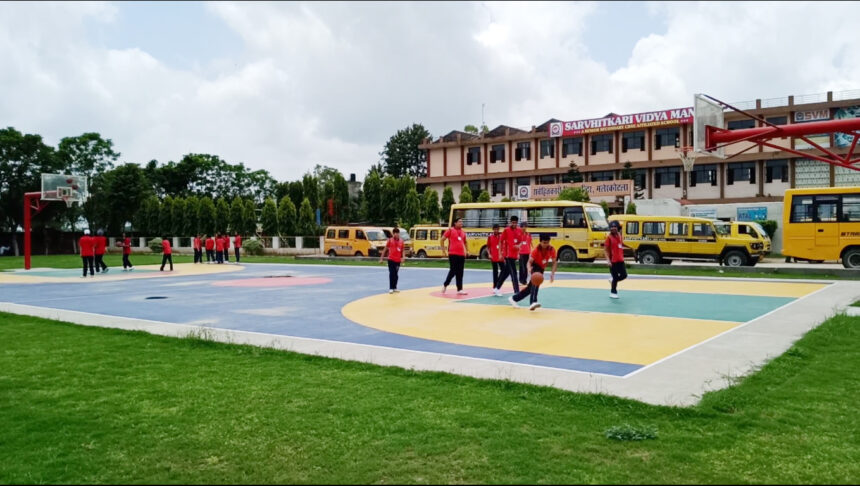
Physical development is a cornerstone of the Sarvhitkari Vidya Mandir curriculum. The day often begins with activities designed to promote physical fitness and discipline, such as yoga, drills, and various sports. The belief is that physical activity is crucial for a child’s overall well-being, helping to improve concentration, reduce stress, and build teamwork skills. The schools are equipped with playgrounds and sports facilities to encourage participation in a wide range of games. This emphasis on Sharirik Shiksha ensures that students are energetic, healthy, and develop a lifelong appreciation for physical fitness.
Mental and Intellectual Education (Manasik and Baudhik Shiksha)
Mental and intellectual development forms the academic core. The curriculum at Sarvhitkari Vidya Mandir is aligned with national educational standards but is enriched with additional elements. Subjects like mathematics, science, social studies, and languages are taught using methods that encourage critical thinking and problem-solving rather than rote learning. Baudhik Shiksha (intellectual education) includes activities like debates, quizzes, and science exhibitions to stimulate curiosity and intellectual growth. The goal is to create learners who are inquisitive, analytical, and well-informed.
Emotional and Spiritual Education (Naitik and Adhyatmik Shiksha)
This is perhaps the most distinctive aspect of the Sarvhitkari Vidya Mandir system. Naitik Shiksha (moral education) and Adhyatmik Shiksha (spiritual education) are woven into the daily life of the school. This includes storytelling from historical and cultural texts, singing patriotic songs, and celebrating national festivals with great enthusiasm. Students are taught about universal values like honesty, compassion, respect for elders, and service to society. The aim is not to preach a specific religion but to instill a strong ethical foundation and a sense of inner peace and purpose. This focus on character development is what many parents find most appealing.
Curriculum and Academic Programs
The academic curriculum at a Sarvhitkari Vidya Mandir is robust and comprehensive. While it follows the guidelines set by national or state education boards, it is supplemented with unique content that aligns with the institution’s philosophy. The medium of instruction is typically the regional language or English, depending on the specific school and location.
Core Subjects and Teaching Methodology
The core subjects taught are similar to those in any modern school:
- Languages: English, Hindi, and the regional language.
- Mathematics: Covering everything from basic arithmetic to advanced algebra and geometry.
- Science: Physics, Chemistry, and Biology, with a focus on practical experiments.
- Social Studies: History, Geography, Civics, and Economics, with a special emphasis on national history and culture.
The teaching methodology is interactive and student-centric. Teachers are encouraged to use a variety of aids, from traditional blackboards to digital smartboards. The focus is on making learning an engaging and enjoyable process.
A Typical School Day at Sarvhitkari Vidya Mandir
A day at a Sarvhitkari Vidya Mandir is structured to balance academics, physical activities, and value-based learning.
|
Time Slot |
Activity |
Purpose |
|---|---|---|
|
Morning Assembly |
Prayers, patriotic songs, yoga, and a short moral discourse. |
To start the day with positivity, discipline, and focus. |
|
Academic Sessions |
Classes for core subjects like Math, Science, and Languages. |
To build a strong foundation of knowledge. |
|
Lunch Break |
A shared meal, often preceded by a prayer. |
To promote community and healthy eating habits. |
|
Co-curriculars |
Music, art, debate, or other club activities. |
To nurture creativity and hidden talents. |
|
Sports Period |
Participation in various indoor and outdoor games. |
To ensure physical fitness and develop sportsmanship. |
|
End of Day |
Review of the day’s learning and a concluding prayer or national anthem. |
To reflect on the day and reinforce a sense of patriotism. |
This structured routine helps instill discipline and time management skills in students from a young age.
The Role of Teachers and Staff
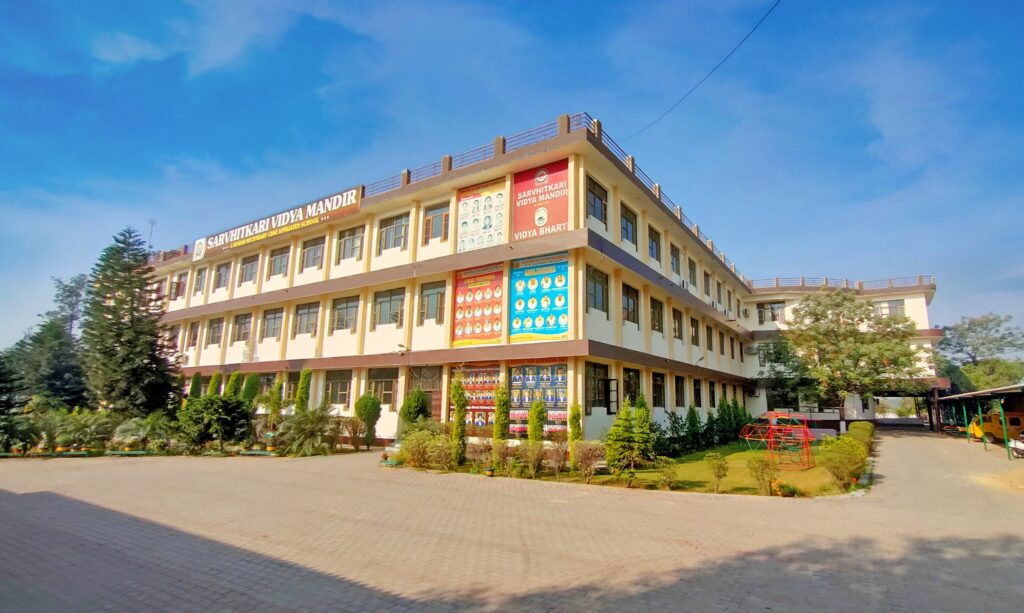
The teachers at a Sarvhitkari Vidya Mandir are more than just educators; they are considered mentors and role models. A significant amount of effort goes into recruiting and training teachers who are not only qualified in their respective subjects but also deeply aligned with the institution’s philosophy. They are expected to embody the values they teach and to build a caring and supportive relationship with their students. Regular training workshops are held to keep teachers updated on the latest pedagogical techniques and to reinforce the core principles of the educational system. This ensures a consistent and high-quality learning environment across the entire network of schools.
Impact on Students and Alumni
The impact of a Sarvhitkari Vidya Mandir education extends far beyond academic grades. Alumni often speak of the strong sense of discipline, moral clarity, and patriotism instilled in them during their school years. The holistic education model helps them develop into confident and well-rounded individuals who are prepared to face the challenges of life. Many graduates go on to excel in various fields, including medicine, engineering, civil services, and entrepreneurship. They often attribute their success to the solid foundation of values and knowledge they received at their alma mater. The strong alumni network also serves as a source of support and guidance for current students.
Community Involvement and Social Responsibility
A Sarvhitkari Vidya Mandir is not an isolated institution; it is an active part of the community it serves. The schools frequently organize social service activities, such as cleanliness drives, environmental awareness campaigns, and free health check-up camps. Students are encouraged to participate in these activities to develop a sense of social responsibility and empathy for others. This community involvement reinforces the “Sarvhitkari” (welfare of all) principle and helps build a strong bond between the school and its surrounding locality. By contributing to societal well-being, the institution practices what it preaches, setting a powerful example for its students.
Frequently Asked Questions (FAQs)
Q1: Are Sarvhitkari Vidya Mandir schools affiliated with a specific education board?
Yes, most Sarvhitkari Vidya Mandir schools are affiliated with either the Central Board of Secondary Education (CBSE) or the respective state education boards in India. This ensures that the academic curriculum is standardized and recognized for higher education and employment purposes.
Q2: Is the education at Sarvhitkari Vidya Mandir expensive?
One of the founding principles of the Sarvhitkari Vidya Mandir system is to provide quality education at an affordable cost. The fee structure is generally lower than that of many private schools, making it accessible to a wider section of society.
Q3: Is there a religious focus in the spiritual education provided?
The spiritual education, or Adhyatmik Shiksha, is not based on any single religion. Instead, it focuses on universal spiritual and moral values that are common to many traditions. The goal is to foster inner growth, ethics, and a sense of connectedness, rather than to promote specific religious doctrines.
Q4: What kind of extracurricular activities are offered?
The schools offer a wide range of extracurricular activities, including sports (like cricket, volleyball, and kabaddi), music, dance, art, debate, and public speaking. These activities are considered an integral part of the five-fold education system and are designed to help students discover and develop their talents.
Q5: How does the school integrate technology into learning?
Many Sarvhitkari Vidya Mandir schools have embraced technology to enhance the learning process. This includes the use of smart classrooms, computer labs, and digital learning resources. The aim is to blend traditional teaching methods with modern tools, similar to trends seen in global tech hubs which are detailed on sites like https://siliconvalleytime.co.uk/, to make education more effective and engaging.
In conclusion, the Sarvhitkari Vidya Mandir school system offers a distinctive and comprehensive approach to education. By integrating academic rigor with physical, mental, moral, and spiritual development, it succeeds in creating not just scholars, but well-rounded, responsible, and compassionate citizens. Its commitment to providing affordable, value-based education has made a significant impact on countless lives and communities. The philosophy of these institutions is deeply connected to broader educational movements in India that emphasize cultural and national identity, a topic that has been explored within the context of Vidya Bharati and other similar educational bodies.



