





Dive into the vibrant coral reefs of the Indo-Pacific, and you might be lucky enough to meet one of its most impressive residents. With a prominent bump on its head and a truly massive size, the napoleon fish is an unforgettable sight. Also known as the humphead wrasse, this gentle giant is not just a pretty face; it plays a vital role in its marine ecosystem. From its unique appearance to its complex social life and unfortunate conservation status, there is so much to learn about this incredible creature. This article will guide you through the fascinating world of the napoleon fish, exploring its habitat, diet, behavior, and the urgent need for its protection.
Key Takeaways
- The napoleon fish is one of the largest reef fish in the world, recognizable by the prominent hump on its forehead.
- It is a crucial predator in coral reef ecosystems, helping to maintain balance by eating crown-of-thorns starfish.
- This species is a protogynous hermaphrodite, meaning it can change sex from female to male during its life.
- The napoleon fish is endangered due to overfishing, habitat destruction, and the illegal live reef fish trade.
- Conservation efforts are underway globally to protect this majestic species from extinction.
What is a Napoleon Fish?
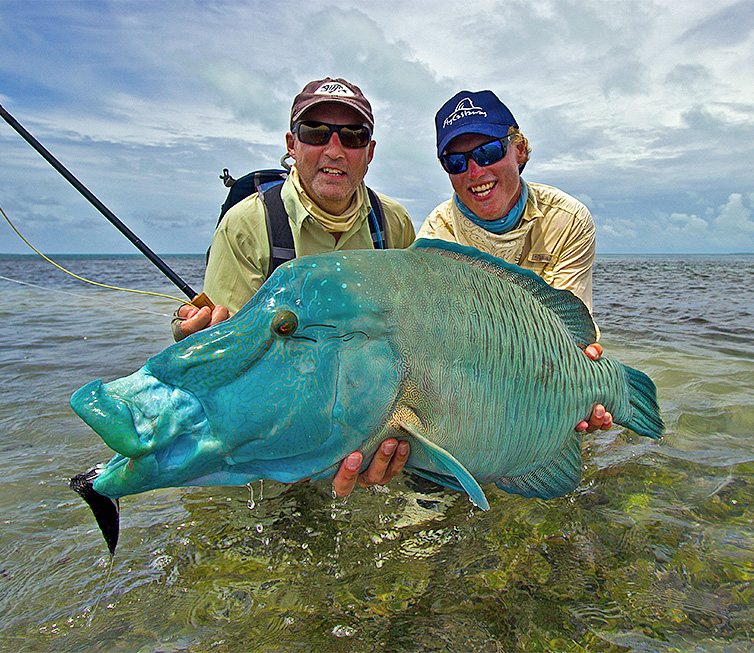
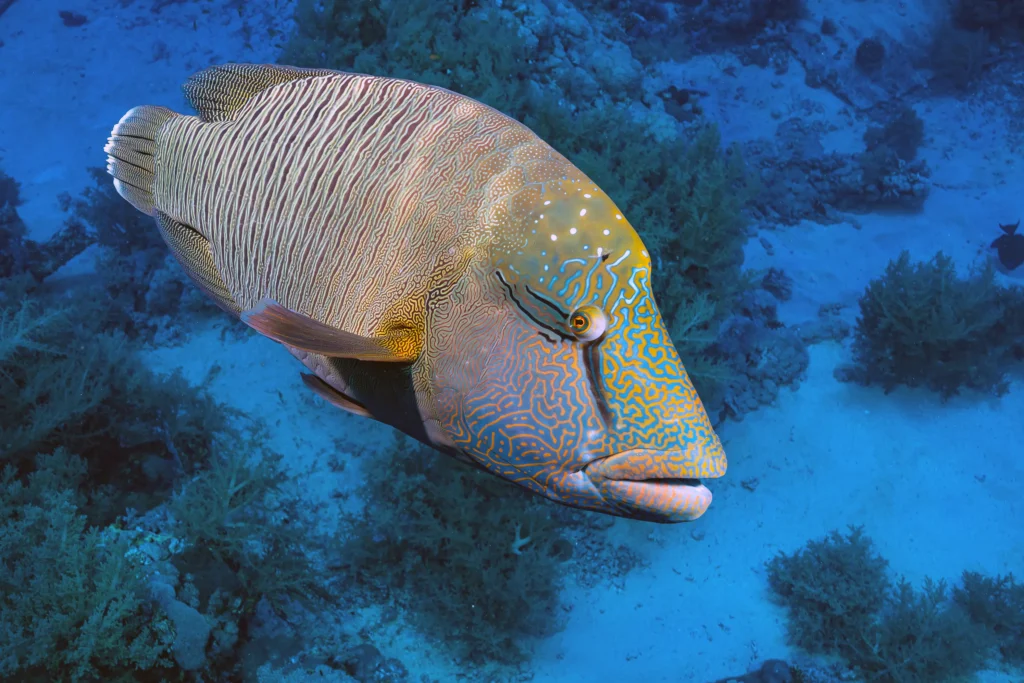
The napoleon fish (Cheilinus undulatus) is the largest member of the wrasse family, a diverse group of marine fish known for their bright colors. It gets its common name from the distinctive hump on its forehead, which is said to resemble the bicorne hat famously worn by Napoleon Bonaparte. This bump becomes more pronounced as the fish, particularly males, gets older. Their bodies are adorned with a stunning and intricate pattern of blue, green, and yellow wavy lines that shimmer as they glide through the water.
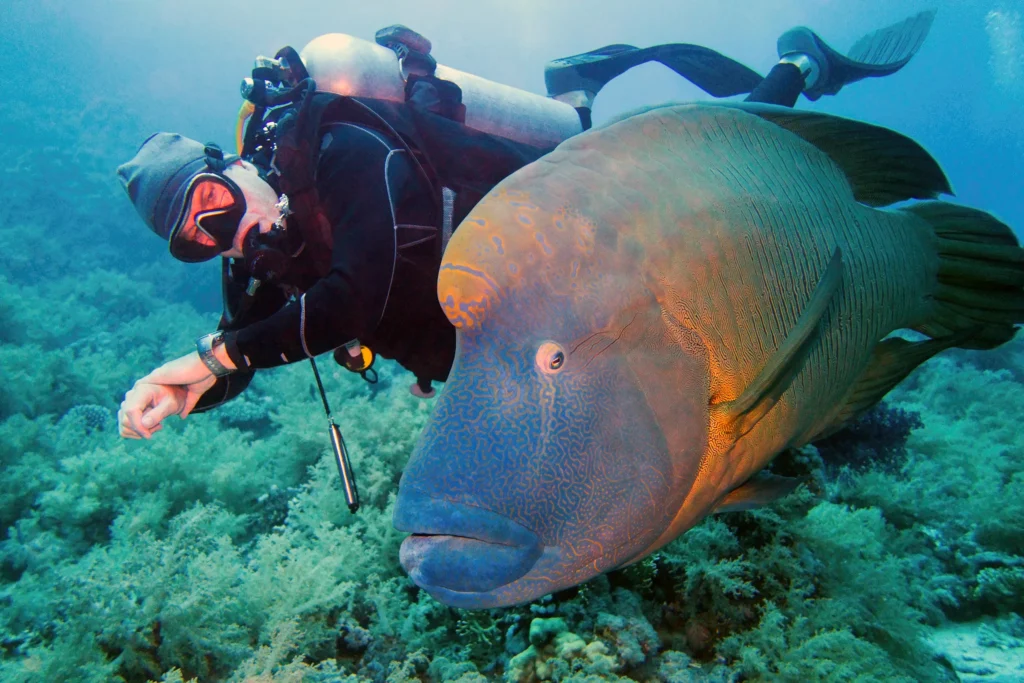
These fish are truly giants, with males capable of reaching over six feet in length and weighing up to 400 pounds. Females are typically smaller, but still impressively large compared to other reef dwellers. Their considerable size and gentle, curious nature make them a favorite among scuba divers and snorkelers. They are known to be quite intelligent and can even recognize individual divers over time, adding to their charismatic reputation.
The Unique Appearance and Colors
One of the most striking features of the napoleon fish is its vibrant and complex coloration. Young fish, or juveniles, display a more muted greenish color with dark vertical bars, providing them with camouflage among the seagrass and corals. As they mature, their appearance transforms dramatically. Adult males are often a brilliant electric blue or purplish-green, with a maze-like pattern of yellowish-green lines covering their face and body. Females tend to be a more subdued olive green or reddish-orange, but they still possess the beautiful facial markings that characterize the species.
The Signature Forehead Hump
The hump on the head of a napoleon fish is its most defining characteristic. This feature, made of fatty tissue, develops as the fish ages and is much larger and more prominent in males. Scientists believe the hump may be a sign of sexual maturity and dominance, playing a role in attracting mates and establishing social hierarchy within a group. It’s a clear visual signal that distinguishes the older, more powerful males from the rest of the population.
Where Do Napoleon Fish Live? Exploring Their Habitat
The napoleon fish is a resident of the warm, tropical waters of the Indo-Pacific region. Its range is vast, stretching from the Red Sea and the coast of East Africa all the way to the central Pacific islands, including Fiji and French Polynesia. They are most commonly found in and around coral reef ecosystems, which provide them with both food and shelter.
These fish prefer a specific type of environment. They are typically found on reef slopes and drop-offs, where the coral growth is rich and there is easy access to deeper water. During the day, they patrol their territory in search of food. At night, they seek refuge in caves or under coral ledges to rest and hide from potential threats. Juveniles tend to stay in shallower, more protected areas with dense coral cover or seagrass beds to avoid predation until they are large enough to venture into the open reef. Protecting these vital coral habitats is directly linked to the survival of the napoleon fish.
The Diet of a Gentle Giant
Despite its massive size, the napoleon fish has a very specialized diet. It is a carnivore, primarily feeding on hard-shelled invertebrates. It has strong, tough teeth and powerful jaws that allow it to crush the shells of its prey with ease. Its menu often includes a variety of mollusks, crustaceans like crabs and shrimp, and sea urchins.
One of the most important aspects of its diet is its appetite for the crown-of-thorns starfish. This starfish is a notorious coral predator, and in large numbers, it can devastate entire reef systems. The napoleon fish is one of the few animals that can eat this toxic, spiny creature. By keeping crown-of-thorns starfish populations in check, the napoleon fish acts as a guardian of the reef, helping to maintain its health and biodiversity. This ecological role makes its presence incredibly valuable to the entire marine environment.
Behavior and Social Structure
The napoleon fish is generally a solitary creature, often seen swimming alone along the reef during the day. However, they are not entirely anti-social. They are known to form pairs or gather in larger groups, especially for spawning. These gatherings, known as spawning aggregations, occur at specific times and locations where hundreds of fish may come together to reproduce.
They are also known for their intelligence and curiosity. Divers have reported many instances of a napoleon fish approaching them, seemingly to investigate the strange, bubbly newcomers to their home. They can remember and recognize individual humans, sometimes following divers for the duration of their dive. This gentle and inquisitive nature makes encounters with them a truly special experience, highlighting a level of awareness not often associated with fish. Keeping up with the latest trends in technology, as discussed on sites like https://siliconvalleytime.co.uk/, is one thing, but connecting with an ancient species like this is another experience entirely.
A Remarkable Life Cycle: From Female to Male
The reproductive life of a napoleon fish is incredibly fascinating. They are what is known as protogynous hermaphrodites. This means that all individuals are born female and have the ability to change sex to become male later in life. This change typically occurs when a dominant male in a social group dies or leaves. The largest female in the group will then undergo a biological transformation, changing her anatomy and behavior to become the new dominant male.
This process can take several months. The female’s coloration will change to the vibrant blue-green of a male, and the signature hump on her forehead will begin to grow. This reproductive strategy ensures that there is always a male available to fertilize eggs and continue the population. The napoleon fish is a slow-growing, long-lived species, with some individuals living for 30 years or more. They reach sexual maturity late, at around 5 to 7 years old, which makes them particularly vulnerable to population decline.
Spawning Aggregations
Spawning for the napoleon fish is a spectacular event. They gather in large numbers at specific sites, often dictated by moon cycles and tides. During these aggregations, a male will perform a courtship display for females. If a female is receptive, the pair will swim upwards into the water column, releasing sperm and eggs together. The fertilized eggs then drift away on the ocean currents, and the tiny larvae that hatch will eventually settle on a suitable reef to begin their lives.
Threats and Conservation Status
Unfortunately, this magnificent fish faces a very uncertain future. The International Union for Conservation of Nature (IUCN) has listed the napoleon fish as Endangered. Its populations have declined significantly across its range due to several human-induced threats.
The primary threat is overfishing. The napoleon fish is highly prized in the live reef fish trade, particularly in parts of Asia, where it is considered a luxury food item. Its large size and slow reproductive rate make it extremely susceptible to overexploitation. Destructive fishing methods, such as the use of cyanide to stun and capture fish, also cause immense damage to the coral reefs they call home. Habitat destruction from pollution, coastal development, and climate change further compounds the problem, reducing the areas where these fish can live and thrive.
Global Efforts to Protect the Napoleon Fish
Recognizing the dire situation, conservationists and governments around the world are taking action. The napoleon fish is now protected under CITES (the Convention on International Trade in Endangered Species of Wild Fauna and Flora), which regulates its international trade. This makes it illegal to trade the species without proper permits, aiming to curb the rampant illegal fishing that has decimated its numbers.
Many countries have also implemented national laws to protect the fish. These measures include banning its capture, establishing size limits, and creating marine protected areas (MPAs) where fishing is prohibited. Public awareness campaigns are also crucial, educating consumers about the impact of their choices and promoting sustainable seafood. Ecotourism, where divers pay to see a live and healthy napoleon fish in its natural habitat, provides a powerful economic incentive for local communities to protect these animals rather than fish them.
|
Feature |
Description |
|---|---|
|
Scientific Name |
Cheilinus undulatus |
|
Common Names |
Napoleon fish, Humphead wrasse, Maori wrasse |
|
Maximum Size |
Over 6 feet (1.8 meters) in length |
|
Maximum Weight |
Up to 400 lbs (180 kg) |
|
Lifespan |
Up to 30 years or more |
|
Habitat |
Coral reef slopes and drop-offs in the Indo-Pacific |
|
Diet |
Carnivorous; feeds on shelled invertebrates and crown-of-thorns starfish |
|
Conservation Status |
Endangered (IUCN Red List) |
How You Can Help
Protecting the napoleon fish is a shared responsibility. Even if you don’t live near a coral reef, your actions can make a difference.
- Make Sustainable Seafood Choices: Avoid eating napoleon fish and other threatened species. Support restaurants and markets that source their seafood sustainably.
- Support Conservation Organizations: Donate to or volunteer with organizations that are working to protect marine life and coral reefs.
- Be a Responsible Tourist: If you go diving or snorkeling, choose operators who respect wildlife. Never touch, chase, or feed marine animals.
- Reduce Your Carbon Footprint: Climate change leads to coral bleaching, which destroys the habitat of the napoleon fish. Reducing your energy consumption helps protect reefs worldwide.
Conclusion
The napoleon fish is more than just a big, beautiful fish. It is an intelligent, long-lived creature with a complex social life and a critical role in maintaining the health of our planet’s coral reefs. Its gentle nature and striking appearance have captured the hearts of people around the world. However, its survival is hanging by a thread due to human pressures. Through concerted conservation efforts, responsible choices, and a greater appreciation for marine ecosystems, we can work to ensure that this gentle giant continues to grace our oceans for generations to come. The future of the napoleon fish depends on our collective will to protect it. For further reading, you can find a wealth of information about this species and its conservation on its dedicated page at https://www.wikipedia.org/.
Frequently Asked Questions (FAQ)
Q1: Why is it called a napoleon fish?
A1: It is named for the prominent hump on its forehead, which grows with age, especially in males. This bump is thought to resemble the bicorne hat worn by the French emperor Napoleon Bonaparte.
Q2: Are napoleon fish dangerous to humans?
A2: No, the napoleon fish is not dangerous to humans. They are known for their gentle and curious nature. While their size can be intimidating, they are peaceful creatures and often approach divers out of curiosity.
Q3: How big can a napoleon fish get?
A3: The napoleon fish is one of the largest reef fish. Males can grow to over six feet in length and weigh as much as 400 pounds. Females are generally smaller.
Q4: What do napoleon fish eat?
A4: They are carnivores with powerful jaws adapted for eating hard-shelled prey. Their diet includes mollusks, crustaceans, sea urchins, and, importantly, the venomous crown-of-thorns starfish, which helps protect coral reefs.
Q5: Why is the napoleon fish endangered?
A5: The napoleon fish is endangered primarily due to overfishing for the live reef fish trade, where it is sold as a luxury food item. Habitat destruction from pollution and climate change, as well as destructive fishing practices, also contribute significantly to its decline.