






Introduction
Have you ever stopped to wonder what truly makes a life valuable? Is it the things we own, or the kindness we show to others? These are big questions that people have been asking for thousands of years. When we look at famous stories from history, two specific parables often stand out as perfect examples of two very different ways to live. We are talking about the choice between being like the traveler who helps a stranger or the wealthy man who hoards his crops. In other words, are you leaning towards the path of the good samaritan or the rich fool?
These stories aren’t just ancient text; they are mirrors that help us see our own reflection. One character represents selfless love and mercy, while the other represents self-centered ambition and greed. By comparing them, we can learn a lot about what it means to be a good neighbor versus living only for oneself.
In this article, we will dive deep into both stories. We will look at the characters, their choices, and the consequences of those choices. We will also explore how these lessons apply to our modern lives today. Whether you are religious or just interested in moral philosophy, understanding the difference between the good samaritan or the rich fool can change how you view your daily interactions.
Key Takeaways
- Understand the core narratives of both the Good Samaritan and the Rich Fool.
- Compare the contrasting values of generosity versus greed.
- Learn practical ways to apply these timeless lessons to modern life.
- Discover why your legacy depends on which character you emulate.
The Parable of the Good Samaritan: A Story of Mercy
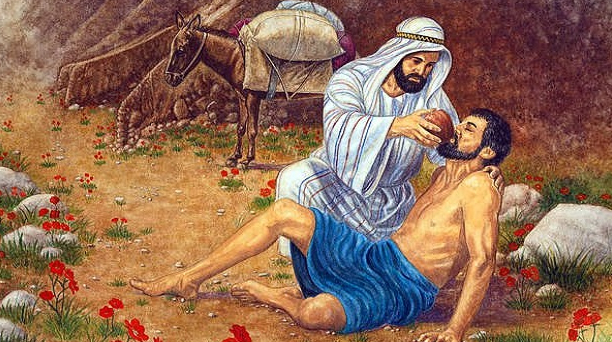
The story of the Good Samaritan is one of the most famous stories ever told. It begins with a simple question asked by a lawyer: “Who is my neighbor?” In response, a story unfolds about a man traveling from Jerusalem to Jericho. This road was known to be dangerous, winding through rocky terrain where robbers could easily hide. Unfortunately, the traveler in the story falls victim to these very dangers. He is beaten, stripped of his clothes, and left half-dead on the side of the road.
What happens next is shocking for the original listeners. A priest comes by, sees the injured man, and crosses to the other side of the road to avoid him. Then, a Levite (another religious figure) does the exact same thing. These were the people expected to help, yet they walked away. Finally, a Samaritan comes along. In those days, Samaritans and Jews were bitter enemies. Yet, it is the “enemy” who stops. He bandages the man’s wounds, puts him on his own animal, takes him to an inn, and pays for his care. This act of radical kindness defines what it means to be a neighbor.
Why This Story Still Matters
Why does this story resonate so deeply with us? It challenges our prejudices. It asks us to look beyond labels like “enemy” or “stranger” and see the human being in need. When we consider the choice between the good samaritan or the rich fool, the Samaritan represents the highest form of human connection. He didn’t ask “What will happen to me if I stop?” He likely asked, “What will happen to him if I don’t stop?”
In our busy lives, it is easy to be like the priest or the Levite. We have schedules to keep and places to be. Stopping to help someone—whether it’s helping a colleague with a project or actually stopping for a stranded motorist—is inconvenient. But the Good Samaritan teaches us that love is often inconvenient. It requires sacrifice. It requires getting your hands dirty.
The Cost of Compassion
Compassion isn’t free. For the Samaritan, it cost him:
- Time: He had to pause his journey.
- Safety: Stopping on a dangerous road put him at risk.
- Money: He paid the innkeeper two denarii (about two days’ wages) and promised to pay more if needed.
- Comfort: He likely had to walk while the injured man rode his animal.
This detailed look at the cost helps us weigh the options between the good samaritan or the rich fool. One spends resources on others; the other hoards resources for himself. The Samaritan’s investment was in a human life, which offers a return that money cannot buy.
The Parable of the Rich Fool: A Story of Greed
On the other side of the spectrum, we have the Parable of the Rich Fool. This story starts when someone asks Jesus to tell his brother to divide an inheritance with him. Instead of solving a legal dispute, a warning is given about greed. The story is about a rich man whose land produced a massive crop—so much that he didn’t have room to store it all.
Instead of thinking, “Wow, I have extra; I can help the poor,” he had a conversation with himself. He said, “I will tear down my barns and build bigger ones, and there I will store all my surplus grain. And I’ll say to myself, ‘You have plenty of grain laid up for many years. Take life easy; eat, drink and be merry.'”
But that night, God said to him, “You fool! This very night your life will be demanded from you. Then who will get what you have prepared for yourself?” The man died unexpectedly, leaving all his wealth behind. He was rich in earthly goods but poor in his relationship with God and his community.
The Illusion of Security
The Rich Fool’s mistake wasn’t that he was successful. Success and wealth aren’t inherently bad. His mistake was assuming that his wealth could guarantee his future. He thought his bigger barns provided security. He believed he was in total control of his life and his timeline. When we compare the good samaritan or the rich fool, we see that the Fool lived in a bubble of self-sufficiency.
He used the words “I” and “my” constantly in the story. “My crops,” “my barns,” “my grain,” “my goods.” There was no room for anyone else in his world. This isolation is dangerous. It tricks us into thinking we don’t need others and we don’t need to be generous.
Analyzing the Fool’s Mindset
Let’s break down the thought process of the Rich Fool:
- Self-Centeredness: He consulted only himself.
- Hoarding: His solution to abundance was storage, not sharing.
- Presumption: He assumed he had “many years” left to live.
- Hedonism: His ultimate goal was simply to eat, drink, and be merry.
This mindset is the polar opposite of the Samaritan. While the Samaritan looked outward at a stranger’s pain, the Fool looked inward at his own pleasure. This is the crux of the debate when choosing between the good samaritan or the rich fool.
Comparing the Two Characters
To better understand the differences, let’s look at a direct comparison. It is helpful to visualize how their actions and motivations diverge.
Table: The Good Samaritan vs. The Rich Fool
|
Feature |
The Good Samaritan |
The Rich Fool |
|---|---|---|
|
Focus |
Others (The injured stranger) |
Self (My barns, my crops) |
|
Attitude toward Wealth |
A tool to help others |
A means for personal security |
|
Reaction to Opportunity |
Saw a crisis and stepped in |
Saw a surplus and hoarded it |
|
Risk Taking |
Risked safety and money |
Took no risks; sought comfort |
|
Legacy |
Remembered for mercy |
Remembered for foolishness |
|
God’s View |
Acts as a true neighbor |
Called a “Fool” |
This table clearly highlights why the choice of the good samaritan or the rich fool is so critical. One leads to a legacy of love, the other to a tragic, empty end.
The Concept of “Neighbor” vs. “Self”
The core difference between these two narratives is how they define their relationship to the world. For the Good Samaritan, the world was a community where he had a responsibility to help. His definition of “neighbor” was limitless. It included people who might even hate him culturally.
For the Rich Fool, the world was a resource to be consumed. His definition of “neighbor” was non-existent. He was an island. In modern society, we often hear messages that encourage us to be like the Rich Fool. We are told to “look out for number one,” to secure our retirement before helping others, and to accumulate as much as possible.
However, true fulfillment rarely comes from isolation. Platforms like Silicon Valley Time often discuss success, but true success is multidimensional. It involves not just financial growth, but personal character growth. Choosing between the good samaritan or the rich fool means deciding if you want your life to be measured by what you gave or what you kept.
H3: The Danger of “Bigger Barns”
“Bigger barns” can be a metaphor for anything we hoard. It could be money, but it could also be:
- Knowledge: Keeping information to yourself to stay ahead at work.
- Time: Refusing to volunteer or spend time with family because you are “building your empire.”
- Talent: Using your skills only for personal gain rather than benefiting the community.
Building bigger barns is exhausting. It requires constant maintenance and worry. What if the market crashes? What if the barn burns down? The Rich Fool was likely stressed until he felt his storage was secure, only to lose his life immediately after.
Modern Day Examples: Who Are You?
It is easy to judge the characters in a story, but harder to judge ourselves. Let’s look at how the dilemma of the good samaritan or the rich fool plays out in the 21st century.
The Corporate Leader
Imagine a CEO whose company has a record-breaking year.
- The Rich Fool approach: The CEO takes a massive bonus, buys a third vacation home, and lays off workers to cut costs further to ensure next year is even more profitable.
- The Good Samaritan approach: The CEO shares the profits with the employees who did the work, sets up a scholarship fund for the community, and ensures the company’s growth benefits everyone involved.
The Student
Imagine a student who excels in math.
- The Rich Fool approach: They hide their notes, refuse to join study groups because they want to set the curve, and focus solely on their own GPA.
- The Good Samaritan approach: They notice a classmate struggling, offer to tutor them during lunch, and share their study guides.
In every scenario, the choice between the good samaritan or the rich fool is present. It is in the small decisions we make every day.
The Psychological Benefits of Generosity
Science actually backs up the wisdom of the Good Samaritan. Studies have shown that generosity and altruism are linked to better mental and physical health. When we help others, our brains release oxytocin, serotonin, and dopamine. These are “feel-good” chemicals that reduce stress and increase happiness.
Why Hoarding Leads to Anxiety
Conversely, the mindset of the Rich Fool often leads to anxiety. When your security is tied to physical things, you live in constant fear of losing them. The “hedonic treadmill” suggests that as we get more, our expectations rise, so we never feel satisfied. We always need a “bigger barn” to feel the same level of happiness.
Choosing the path of the good samaritan or the rich fool is essentially choosing between a life of connection and joy versus a life of anxiety and isolation. The Samaritan walked away lighthearted, knowing he saved a life. The Rich Fool died heavy with the weight of his unshared wealth.
Practical Ways to Be a Good Samaritan
If you want to move away from the “Rich Fool” mentality, you can start with small steps. You don’t need to find a wounded traveler on a highway to be a hero.
1. Look for the “Unseen”
The priest and Levite saw the man but looked away. To be a Samaritan, you must truly see people. Look at the homeless person you pass, the quiet coworker, or the lonely neighbor. Acknowledge their existence.
2. Interrupt Your Schedule
Be willing to be interrupted. Often, opportunities to help don’t fit into our calendar. Whether it is a friend calling in tears or a flat tire on a rainy day, treat these interruptions as your “Samaritan moments.”
3. Give What You Have
You don’t need to be rich to give. The Samaritan used what he had: oil, wine, a donkey, and two coins. Use your specific skills. If you are good at tech, help a senior with their computer. If you can cook, bring a meal to a sick friend.
By practicing these habits, you actively reject the mindset of the good samaritan or the rich fool that leans toward greed.
Financial Planning with a Heart
Does avoiding being the Rich Fool mean you shouldn’t save for retirement? Absolutely not. The Bible and common sense both encourage wisdom and planning. The problem with the Rich Fool wasn’t that he saved; it was that he saved only for himself and left God and others out of the equation.
Balanced Wealth Management
- Save for emergencies: This prevents you from becoming a burden on others.
- Invest for the future: Prepare for the time when you cannot work.
- Budget for giving: Make generosity a line item in your budget, just like rent or food.
When you view money as a tool for good rather than just a scorecard of success, you master the lesson of the good samaritan or the rich fool. You become a steward of your resources rather than a slave to them.
The Role of Empathy in Society
Empathy is the fuel that powers the Good Samaritan. He felt compassion. The Greek word used in the original text implies a deep, gut-wrenching pity. He felt the injured man’s pain as if it were his own.
The Rich Fool lacked empathy entirely. He couldn’t feel the hunger of the poor outside his gates because he was too busy counting his grain. A society filled with Rich Fools is a cold, hard place where everyone fend for themselves. A society aspiring to be Good Samaritans is a community where safety nets are built by caring neighbors.
We often read about tech innovations and business strategies on sites like Silicon Valley Time, but the most important innovation humanity has ever developed is empathy. It is the social glue that holds us together.
Overcoming the Fear of Scarcity
The Rich Fool was driven by a scarcity mindset. He thought, “If I give this away, I won’t have enough.” This fear is a powerful motivator. It drives wars, corporate greed, and family feuds.
The Good Samaritan operated from an abundance mindset. Even though he gave away his oil, wine, and money, he trusted that there would be enough. He trusted that doing the right thing was more important than preserving his inventory.
H4: Moving from Scarcity to Trust
To move from scarcity to trust:
- Practice gratitude for what you have right now.
- Remind yourself of times when things worked out after you were generous.
- Surround yourself with generous people; their spirit is contagious.
This shift in perspective is crucial when deciding between the lifestyle of the good samaritan or the rich fool.
What Will Your Legacy Be?
At the end of the Rich Fool’s story, he dies. It is a sudden, stark ending. His barns remain, but he is gone. His legacy is one of wasted potential.
The Good Samaritan, on the other hand, is never named, yet he is one of the most famous figures in history. Hospitals, laws (Good Samaritan laws), and charities are named after him. His legacy is eternal.
When people attend your funeral one day, what stories will they tell? Will they talk about how big your house was or how much money you had in the bank? Or will they tell stories of how you helped them when they were down? Will you be remembered as the good samaritan or the rich fool?
Conclusion
The parables of the good samaritan or the rich fool offer us two distinct roadmaps for life. One map leads to a destination of isolation and spiritual poverty, despite material wealth. The other map leads to a destination of richness in spirit, community, and legacy, regardless of material status.
The Rich Fool teaches us a warning: do not let your possessions possess you. Do not build walls (or barns) that shut others out. The Good Samaritan teaches us an invitation: open your eyes, interrupt your life, and use what you have to heal the brokenness in the world.
Every day, we wake up with resources—time, energy, money, and influence. We get to decide how to allocate them. We get to choose our character. In the grand story of your life, ensure that you are writing a chapter that you can be proud of. Choose mercy over greed. Choose people over possessions. Choose to be the neighbor the world desperately needs.
FAQ
Q: What is the main difference between the Good Samaritan and the Rich Fool?
A: The main difference lies in their focus. The Good Samaritan focused on helping others and using his resources for mercy, while the Rich Fool focused solely on hoarding wealth for his own comfort and security.
Q: Are “Good Samaritan” laws real?
A: Yes, in many countries, including the United States, Good Samaritan laws exist to offer legal protection to people who give reasonable assistance to those who are, or who they believe to be, injured or in peril.
Q: Does the story of the Rich Fool mean being rich is bad?
A: No, the story does not condemn wealth itself. It condemns the attitude of greed, selfishness, and the foolish belief that wealth creates true security or meaning in life.
Q: How can I apply the lesson of the Good Samaritan today?
A: You can apply it by being observant of those around you who need help, being willing to pause your own plans to assist them, and being generous with your time and resources without expecting anything in return.
Q: Why is the keyword “the good samaritan or the rich fool” significant?
A: This phrase encapsulates the binary choice we face in moral development: to live for others or to live for ourselves. It highlights the contrast between two of the most powerful archetypes in biblical literature.
For more information on the cultural impact of these parables, you can read more at Wikipedia which offers historical context related to “the good samaritan or the rich fool” and how these stories have been interpreted over centuries.