





Key Takeaways
- Critically Endangered: The amur leopard is the rarest big cat in the world, with fewer than 100 estimated to be left in the wild.
- Unique Adaptation: Unlike their African cousins, these leopards are adapted to cold climates, sporting thick fur to survive snowy winters.
- Conservation Efforts: While their numbers are low, intensive conservation efforts in Russia and China are slowly helping the population recover.
- Solitary Hunters: These cats are masters of stealth, hunting alone at night and dragging their prey up trees or hiding it to keep it safe.
When we think of leopards, we usually picture them lounging in the hot African savanna, draped over an acacia tree. But did you know there is a leopard that loves the snow? Meet the amur leopard, a stunning and incredibly rare subspecies that calls the chilly forests of the Russian Far East and Northeast China home. It is a creature of immense beauty, stealth, and resilience. Sadly, it also holds the title of the world’s rarest big cat.
In this article, we will take a deep dive into the life of this fascinating feline. We will explore where they live, what makes them so special, and the critical fight to keep them from disappearing forever. Whether you are a wildlife enthusiast or just curious about nature’s wonders, understanding the amur leopard is the first step in helping protect it. Let’s embark on this journey to the snowy forests where this elusive cat roams.
What is an Amur Leopard?
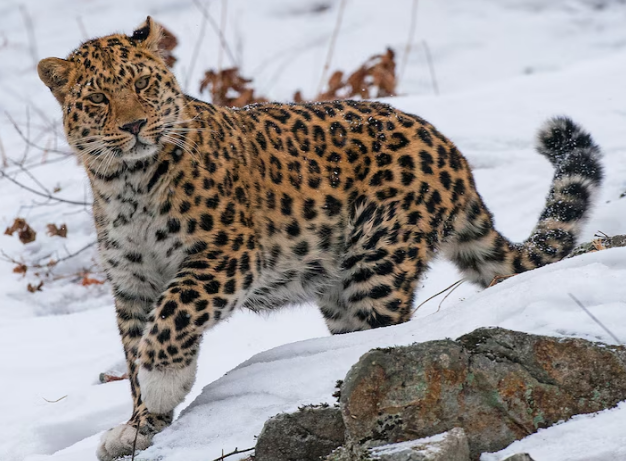
The amur leopard (Panthera pardus orientalis) is one of the most distinct subspecies of leopard on the planet. While most leopards are built for heat, this cat is built for the cold. They are sometimes called the Far Eastern leopard, the Manchurian leopard, or the Korean leopard. No matter what name you use, they are immediately recognizable by their thick, luscious coats and widely spaced rosettes (the rose-like spots on their fur).
These cats are generally smaller than their African counterparts. Males typically weigh between 70 to 105 pounds, while females are smaller, usually weighing between 55 to 95 pounds. Despite their smaller size, they are incredibly strong. An amur leopard can leap more than 19 feet horizontally and up to 10 feet vertically. That is like jumping over a school bus! Their legs are powerful, designed for navigating deep snow and rugged terrain.
Their fur is their most striking feature. In the summer, their coat is about an inch long and a reddish-yellow color. But when winter hits, their coat transforms. It grows up to 3 inches long and fades to a lighter cream color to help them blend in with the snow. This adaptation is crucial for their survival in temperatures that can drop far below freezing.
Physical Characteristics Table
|
Feature |
Description |
|---|---|
|
Scientific Name |
Panthera pardus orientalis |
|
Weight (Male) |
70 – 105 lbs (32 – 48 kg) |
|
Weight (Female) |
55 – 95 lbs (25 – 43 kg) |
|
Coat Length (Winter) |
Up to 7.5 cm (3 inches) |
|
Lifespan (Wild) |
10 – 15 years |
|
Lifespan (Captivity) |
Up to 20 years |
|
Running Speed |
Up to 37 mph (60 km/h) |
The Habitat of the Amur Leopard
The amur leopard lives in a very specific part of the world. Historically, their range was much larger, covering the entire Korean peninsula, vast areas of northeastern China, and the Russian Far East. Today, their territory has shrunk dramatically. They are now found primarily in a small region along the border between Russia and China, specifically in the Primorye region of Russia and the Jilin province of China.
This habitat is a temperate forest, a mix of broadleaf and coniferous trees. It is a harsh environment characterized by warm, humid summers and brutally cold, snowy winters. The terrain is rugged, filled with rocky slopes and steep mountains. These landscapes provide the perfect cover for a predator that relies on stealth. The amur leopard uses the rocky outcrops and dense forests to hide from prey and other competitors, like the Siberian tiger.
Conservationists are working hard to expand this habitat. One of the biggest challenges is that the forests they live in are often fragmented by roads, villages, and farmland. When forests are cut into smaller pieces, it makes it hard for the leopards to find mates and hunt successfully. Expanding protected areas, like the Land of the Leopard National Park in Russia, is vital for giving these cats the room they need to roam.
Why Do They Need So Much Space?
You might wonder why such a small number of cats need so much land. It all comes down to food and territory. An amur leopard is a solitary animal. They do not live in prides like lions. Each adult male claims a large territory that he defends from other males. This territory often overlaps with the territories of several females.
- Hunting Range: To find enough deer and boar to eat, they need to patrol vast areas.
- Mating Access: Males need access to females without fighting constantly with other males.
- Resource Competition: They share their home with the Amur tiger, a much larger predator. To avoid being killed by tigers, leopards need enough space to stay out of their way.
If we want the amur leopard population to grow, we must ensure they have a connected, protected landscape where they can move freely without running into human conflict.
Diet and Hunting Habits
What does an amur leopard eat? Like all cats, they are obligate carnivores, meaning they must eat meat to survive. They are skilled hunters that can take down prey much larger than themselves. Their preferred diet consists mostly of ungulates (hoofed animals).
The main items on their menu include:
- Sika Deer: This is often their primary food source.
- Roe Deer: A smaller deer species that is easier to catch.
- Wild Boar: Piglets and sub-adults are preferred, as large boars can be dangerous.
- Manchurian Hares: These serve as a snack when larger prey is scarce.
- Badgers and Raccoon Dogs: Opportunistic meals if they cross paths.
Hunting in the dense forests requires patience. The amur leopard is an ambush predator. They do not chase their prey for long distances like cheetahs. Instead, they creep silently through the underbrush, getting as close as possible—often within a few yards—before launching a sudden, explosive attack. Their camouflage is essential here; their rosette patterns break up their outline, making them nearly invisible among the dappled light of the forest or the rocky slopes.
The Challenge of Winter Hunting
Winter brings a unique set of challenges. The deep snow makes it harder for the amur leopard to move quickly. However, it also makes it harder for deer to escape. The leopard’s wide paws act a bit like snowshoes, helping them stay on top of the snow better than some of their prey.
Once they make a kill, they have to be smart about it. In Africa, leopards haul their kills up trees to keep them away from hyenas and lions. The amur leopard does this too, but less frequently because the trees in their region aren’t always suitable for holding a heavy carcass. Instead, they might hide their kill under dense brush or rocks to hide it from scavengers and tigers. They will return to feed on a large kill for several days.
Why is the Amur Leopard So Rare?
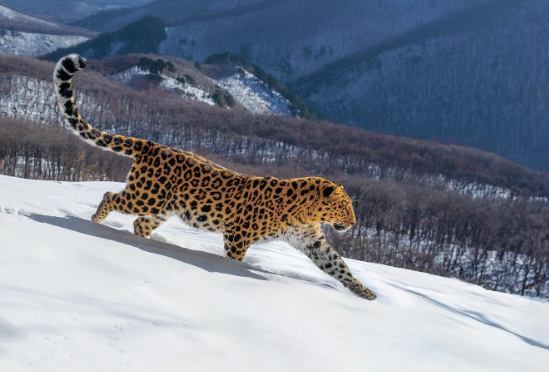
It is heartbreaking to realize that such a beautiful animal is on the brink of extinction. At one point in the early 2000s, it was estimated that only about 30 individuals remained in the wild. Thanks to conservation work, that number has risen to around 80-100, but they are still critically endangered. So, what happened? Why did their numbers drop so low?
The decline of the amur leopard is due to a combination of human activities.
1. Poaching
This has been the biggest threat for decades. Leopards are poached for their beautiful fur, which is sold on the black market for high prices. They are also killed for their bones, which are used in traditional Asian medicine, similar to tiger bones. Even though hunting them is illegal, enforcing these laws in remote forests is difficult.
2. Loss of Prey
Poaching affects the leopard’s food, too. Humans hunt roe deer, sika deer, and wild boar for meat and sport. When the prey population drops, the leopards starve. If they can’t find wild food, they might turn to livestock, which leads to conflict with farmers.
3. Habitat Loss and Fragmentation
Logging, farming, and building roads have destroyed much of the forest where the amur leopard lives. Even worse, forest fires—often started by humans to clear land for farming—destroy the trees and vegetation that leopards and their prey need to survive.
4. Low Genetic Diversity
Because the population is so small, inbreeding is a serious concern. When closely related animals mate, their offspring can have health problems, lower fertility, and weaker immune systems. This makes the population vulnerable to disease.
Conservation Success Stories
Despite the grim history, there is hope. The story of the amur leopard is becoming one of resilience and recovery. Governments and organizations are working together like never before.
In 2012, Russia created the “Land of the Leopard National Park.” This park covers about 650,000 acres and protects a huge portion of the leopard’s range. It was a game-changer. It connected several smaller protected areas into one large safe haven. Inside this park, poaching is strictly monitored, and forest fires are fought aggressively.
China has also stepped up. They established the Northeast Tiger and Leopard National Park, which borders the Russian park. This cross-border cooperation is essential because the amur leopard does not care about political borders; they roam wherever the forest takes them.
Zoos around the world are also playing a part. There is a captive breeding program for amur leopards. The goal is to maintain a healthy, genetically diverse population in captivity that could, one day, be used to reintroduce leopards back into the wild if the wild population crashes.
How Technology Helps
Modern conservationists use high-tech tools to study these elusive cats.
- Camera Traps: Motion-sensor cameras snap photos of leopards as they walk by. Scientists can identify individual leopards by their unique spot patterns.
- Genetic Analysis: Researchers collect leopard scat (droppings) to analyze DNA. This helps them track family trees and monitor genetic health without ever having to catch the cat.
- Drones: Drones are used to monitor forest fires and patrol for poachers.
If you are interested in learning more about how technology intersects with environmental topics, you might find interesting articles on platforms like Silicon Valley Time, where innovation meets global issues.
Reproduction and Lifecycle
Understanding how the amur leopard reproduces is key to saving them. These cats are solitary, only coming together to mate. Breeding can happen at any time of year, but it usually peaks in January and February.
When a female is ready to mate, she will leave scent marks and make distinctive calls to attract a male. Once they find each other, they will stay together for several days, mating frequently. After this brief period, the male leaves, and the female raises the cubs entirely on her own.
The Life of a Cub
The gestation period (pregnancy) lasts about 90 to 105 days. The female finds a secluded den—often a cave, a crevice in the rocks, or a hollow tree—to give birth. A litter usually consists of 2 to 3 cubs.
- Newborns: They are born blind and helpless, weighing only about a pound.
- First Steps: Their eyes open after about 10 days, and they start to explore outside the den at around two months old.
- Weaning: They start eating meat at about three months but continue to nurse for a while longer.
- Independence: Cubs stay with their mother for up to two years. She teaches them how to hunt and survive. Once they leave, they must find their own territory.
This slow reproductive rate makes recovery difficult. If a mother is killed by a poacher, her cubs will likely die too, wiping out an entire generation.
Coexisting with Tigers
The amur leopard shares its habitat with another giant: the Amur (Siberian) tiger. This relationship is tense. Tigers are much larger and stronger, and they view leopards as competition for food.
In areas where tiger numbers are high, leopards often have a harder time. Tigers can and will kill leopards if they catch them. However, researchers have found that they can coexist. The amur leopard adapts by changing its behavior. They might hunt at different times of the day or stick to more rugged, mountainous terrain that the heavier tigers avoid. This natural “time-share” and “space-share” allows both predators to live in the same forest, provided there is enough prey for everyone.
What You Can Do to Help
You don’t have to be a scientist in Russia to help the amur leopard. Conservation is a global effort, and everyone can contribute.
- Spread Awareness: Tell your friends and family about the amur leopard. Many people don’t even know they exist! Sharing articles and information on social media helps raise the profile of this forgotten cat.
- Support Sustainable Forestry: Be mindful of wood and paper products. Look for the FSC (Forest Stewardship Council) logo, which ensures that the wood was harvested in a way that protects forests.
- Donate to Reputable Organizations: Groups like the World Wildlife Fund (WWF), the Wildlife Conservation Society (WCS), and the Amur Leopard and Tiger Alliance (ALTA) are on the ground doing the hard work. Your donations buy gas for patrol vehicles, pay rangers, and fund community education programs.
- Adopt a Leopard: Many zoos and conservation groups offer “adoption” kits where your money goes directly to caring for the animals or protecting their habitat.
FAQs About the Amur Leopard
Q: Is the amur leopard the same as a snow leopard?
A: No, they are different species. The amur leopard lives in forests in Russia and China and is a subspecies of the common leopard. The snow leopard lives in the high mountain ranges of Central Asia and is a distinct species adapted to even higher altitudes.
Q: How many amur leopards are left?
A: Current estimates suggest there are roughly 100 individuals in the wild. While this is very low, it is a significant improvement from the roughly 30 individuals recorded in the early 2000s.
Q: Are amur leopards dangerous to humans?
A: Generally, no. They are very shy and elusive. There are very few verified records of an unprovoked amur leopard attacking a human. They prefer to avoid people entirely.
Q: What is the biggest threat to them right now?
A: While poaching is still a threat, habitat loss and prey depletion are major ongoing concerns. Additionally, the small population size makes them very vulnerable to disease and natural disasters.
Q: Can I see an amur leopard in the wild?
A: It is extremely difficult. They are masters of camouflage and are very rare. Most people who visit their habitat never see one. However, some eco-tourism initiatives are being developed in Russia to allow visitors to see tracks and signs of the leopard, which helps fund conservation.
The Future of the Amur Leopard
The road ahead for the amur leopard is still steep and rocky, much like the terrain they inhabit. But the progress made in the last twenty years proves that extinction is not inevitable. We have brought them back from the very edge.
The reintroduction of a second population is currently being discussed by scientists. This would involve releasing captive-bred leopards into a new area of their historical range where they have gone extinct. This would create a “backup” population, ensuring that a single forest fire or disease outbreak doesn’t wipe out the entire species.
It requires political will, financial support, and a global community that cares. Every time we choose to protect nature, we vote for a world where creatures like the amur leopard can continue to prowl the snowy forests. They are a symbol of wildness and resilience. By saving them, we are saving the rich, complex ecosystems they represent.
So, the next time you see a picture of a leopard, look closely. If it has thick, fluffy fur and is walking through the snow, give a nod of respect to the amur leopard—the ultimate survivor.
For more information on the taxonomy and scientific classification of this incredible animal, you can visit the Wikipedia page for the amur leopard.