




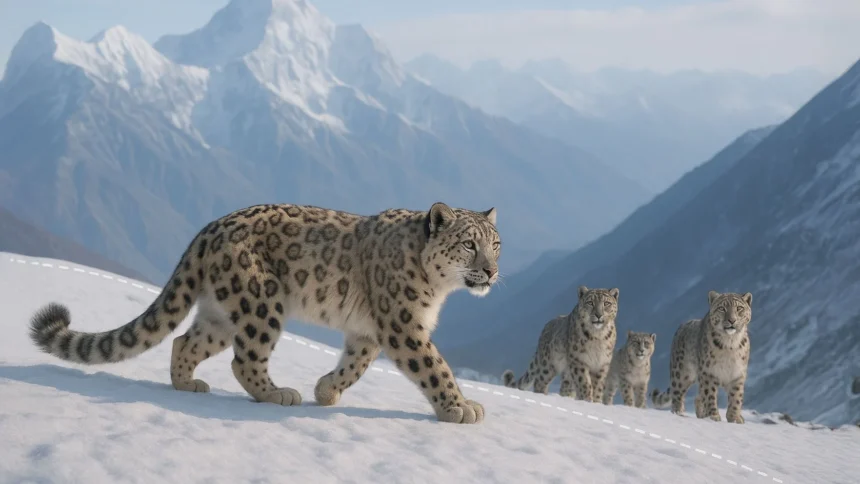

Have you ever heard of a cat that can walk on snow without sinking? High up in the rugged mountains of Central Asia lives one of the most mysterious and beautiful animals on the planet: the snow leopard. These incredible big cats are often called the “ghosts of the mountains” because they are so rarely seen. Their elusive nature and perfect camouflage make them almost invisible against the rocky, snowy slopes they call home. While lions rule the savannas and tigers stalk the jungles, the snow leopard is the undisputed king of the high-altitude peaks.
In this article, we are going to take a deep dive into the life of this fascinating predator. We will explore where they live, what they eat, how they raise their cubs, and the challenges they face in the wild. Understanding these magnificent creatures is the first step toward saving them. Whether you are doing a school project or just love big cats, you are in for a treat as we uncover the secrets of the snow leopard.
Key Takeaways
- Snow leopard populations are found in the high mountain ranges of Central Asia.
- They are physically adapted for cold weather with thick fur and wide paws.
- These cats are solitary animals, rarely interacting except during mating season.
- Conservation efforts are crucial as they are listed as Vulnerable.
- Climate change and habitat loss are major threats to their survival.
What Does a Snow Leopard Look Like?
When you first look at a snow leopard, you might think it looks like a regular leopard that has been dusted with snow, but they are actually quite different. These cats are perfectly designed for their freezing environment. Their fur is incredibly thick—much thicker than any other big cat’s coat. This fur can be up to five inches long on their belly, which acts like a warm winter blanket when they lie down on cold rocks or snow. Their coat color ranges from smoky gray to yellowish tan, covered in dark rosettes and spots that help them blend seamlessly into the rocky terrain.
Another distinct feature is their tail. A snow leopard has an exceptionally long and thick tail, which can be almost as long as its body. This tail isn’t just for show; it serves two very important purposes. First, it acts as a balancing pole. When chasing prey like blue sheep across narrow, treacherous ledges, they need perfect balance to avoid falling. Second, when they are resting, they can wrap this fluffy tail around their body and face like a built-in scarf to protect themselves from the biting cold wind. Their eyes are also unique; unlike the yellow or orange eyes of other big cats, a snow leopard often has pale green or gray eyes, giving them a piercing, ghostly gaze.
The Amazing Adaptations of Paws and Legs
Let’s talk about their feet. Imagine trying to walk on deep, soft snow without snowshoes. You would sink right in, wouldn’t you? The snow leopard has evolved massive paws that act exactly like natural snowshoes. These wide paws spread their weight over a larger surface area, preventing them from sinking deep into the snow drifts. This allows them to move quietly and efficiently, conserving energy in the thin mountain air. The bottom of their paws is also covered in fur, which provides grip on slippery ice and protects their skin from frostbite.
Their legs are incredibly powerful, specifically the hind legs. A snow leopard is an Olympic-level jumper. They have been known to leap as far as 50 feet horizontally in a single bound! That is longer than a school bus. This jumping ability is crucial for ambushing prey and navigating the broken, steep terrain of the Himalayas and other mountain ranges. Their shorter front limbs allow them to crouch low to the ground, making them harder to spot by prey animals looking down from above. Every inch of their body is built for survival in one of the harshest environments on Earth.
Where in the World Do They Live?
The snow leopard makes its home in some of the most unforgiving landscapes imaginable. Their range spans across 12 different countries in Central Asia, including China, Mongolia, India, Kyrgyzstan, Pakistan, and Nepal. However, they don’t live in the flatlands or forests. Instead, they inhabit the high alpine zones, usually at elevations between 9,800 and 14,800 feet above sea level. In the summer, they might climb even higher, but in winter, they often descend to lower altitudes to follow their prey.
This vast region covers approximately 772,204 square miles (2 million square kilometers), yet the cats are sparsely distributed. Because they live in such remote, rugged areas, studying them is incredibly difficult for scientists. The mountains they call home include the Himalayas, the Pamirs, the Tien Shan, and the Altai Mountains. These are places where the weather can change in an instant, temperatures drop well below freezing, and oxygen levels are low. Yet, the snow leopard thrives here. It is estimated that about 60% of their entire habitat is located within China.
Habitat Preferences and Territory
Within these mountain ranges, the snow leopard prefers specific types of terrain. They love broken, rocky areas, cliffs, and ridges. These landscape features provide excellent cover for hunting and safe places to rest. They are rarely found in dense forests or open fields where they would be easily seen. Instead, they stick to the scrubland and rocky outcrops near the snow line. This preference for steep terrain actually helps them avoid competition with other predators like wolves or common leopards, who prefer lower, flatter ground.
Territory size varies greatly depending on how much food is available. In areas where prey is plentiful, a snow leopard might have a home range of about 10-20 square miles. However, in regions where food is scarce, like in Mongolia, a single cat might need a territory of up to 400 square miles to find enough to eat. They mark these territories with scent markings, scrapes in the ground, and feces to tell other cats, “This is my home, stay away!” These signs are often the only evidence researchers find of their presence.
The Diet of a Mountain Ghost
You might wonder what a snow leopard eats in such a barren landscape. They are carnivores, which means they only eat meat. Their primary prey consists of mountain ungulates (hoofed animals). The most common meal for a snow leopard is the blue sheep (also known as Bharal) in the Himalayas and the Asiatic ibex in range countries like Mongolia and Russia. These animals are agile climbers themselves, making the hunt a dangerous game of cat and mouse on the cliffs.
However, they are opportunistic hunters and will eat almost anything they can catch. Their diet also includes smaller mammals like marmots, pikas, hares, and game birds like the snowcock. Interestingly, unlike most other big cats, the snow leopard eats a significant amount of vegetation, specifically twigs and grass. Scientists aren’t entirely sure why, but they believe it might help with digestion or to clear out parasites. A snow leopard is capable of taking down prey three times its own weight, a feat that requires immense strength and stealth.
Hunting Strategies and Techniques
Hunting in the mountains requires patience and strategy. A snow leopard is an ambush predator. They do not chase their prey over long distances like a cheetah does. Instead, they use the terrain to their advantage. They will often position themselves above their prey on a cliff or ridge. Their camouflage makes them blend in with the gray rocks so well that a herd of ibex can look right at them and see nothing but stone.
When the moment is right, they launch a surprise attack from above, using gravity to gain speed. The chase is usually short—only a few hundred feet. If they don’t catch the animal quickly, they will often give up rather than waste valuable energy chasing it up a mountain. After a successful kill, a snow leopard may drag the carcass to a secluded spot to eat in peace. A single large kill, like a blue sheep, can sustain a cat for up to two weeks. During this time, they will stay near the kill site to defend it from scavengers like vultures.
Behavior and Social Structure
The snow leopard is famously solitary. They are the introverts of the animal kingdom. Adult cats spend most of their lives alone, patrolling their vast territories. The only time you will typically see them together is during mating season or when a mother is raising her cubs. This solitary lifestyle helps them survive in an environment where food is scarce; sharing a meal in the high mountains is not a practical option for survival.
Despite being loners, they do communicate with each other, just not face-to-face. They leave “messages” throughout the mountains. We mentioned scent marking earlier, but they also use vocalizations. Interestingly, a snow leopard cannot roar. Unlike lions or tigers, their throat structure is different. Instead, they make sounds like hissing, growling, mewing, and a loud “chuffing” noise, which is a friendly greeting between a mother and her cubs. During mating season, they produce a loud, wailing call that can echo across the valleys to attract a partner.
Daily Activity Patterns
When are these ghosts active? For a long time, scientists thought the snow leopard was strictly nocturnal (active at night). However, modern research using camera traps has shown that they are actually crepuscular. This fancy word means they are most active during the dawn and dusk. These low-light hours provide the perfect cover for hunting. In areas where there are fewer humans, they might even be active during the day.
Their daily routine usually involves patrolling their territory, checking scent marks, and looking for prey. They tend to travel along ridgelines and the base of cliffs because these offer the best views of the surrounding area. A snow leopard can travel a significant distance in a single night—sometimes up to 25 miles in open terrain, though usually much less in steep mountains. When they are not moving, they are resting. They love to find a high perch with a good view where they can sunbathe and keep an eye on their domain.
The Lifecycle: From Cub to King
The life of a snow leopard begins in a hidden den, usually a rocky crevice lined with the mother’s fur. Mating season occurs in late winter, between January and mid-March. This timing ensures that cubs are born in spring or early summer when prey is more abundant and the weather is slightly milder. The gestation period (pregnancy) lasts about 90 to 100 days.
A mother snow leopard typically gives birth to a litter of two or three cubs. When they are born, the cubs are tiny, helpless, and blind. They weigh mostly between 320 and 567 grams. Their eyes open after about seven days. For the first few weeks, they rely entirely on their mother’s milk and the safety of the den. The mother is fiercely protective and will leave them only for short periods to hunt for food. Raising cubs in such a harsh environment is an incredible challenge, and the survival of the species depends entirely on the mother’s skills.
Growing Up in the Mountains
Cubs start eating solid food at around two months old, and by three months, they begin to follow their mother out of the den. This is when their real education begins. They must learn how to navigate the dangerous cliffs, how to stalk prey without being seen, and how to survive the brutal winters. Play is an important part of this learning process. Cubs will pounce on each other, chase their mother’s tail, and practice their ambush skills on rocks and bushes.
They stay with their mother for a surprisingly long time—usually about 18 to 22 months. This is much longer than many other wild cats. It takes nearly two years for a young snow leopard to become independent enough to establish its own territory. Once they leave, siblings may travel together for a short time before splitting up to find their own paths. In the wild, a snow leopard can live for 10-12 years, while in captivity, they can live significantly longer, up to 22 years.
Why Are Snow Leopards Endangered?
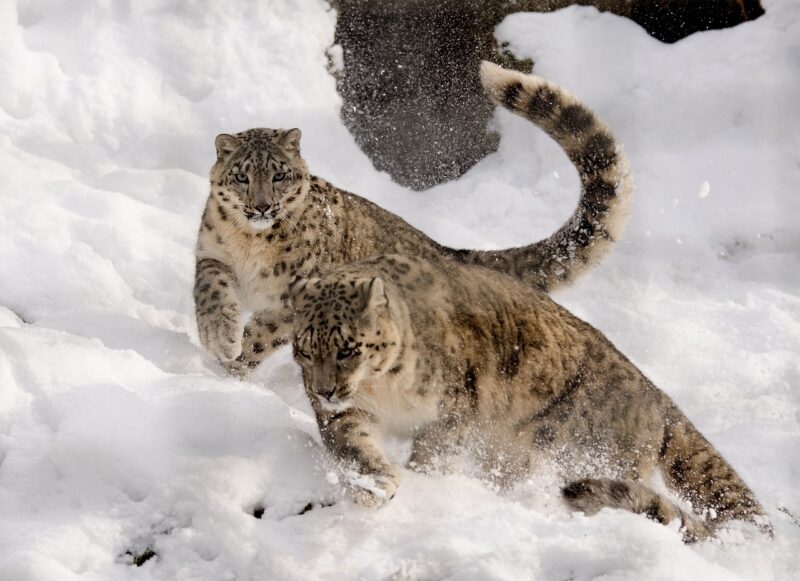
Sadly, the snow leopard is in trouble. The International Union for Conservation of Nature (IUCN) lists them as “Vulnerable.” While this is slightly better than “Endangered,” it still means they face a high risk of extinction in the wild. Scientists estimate there may be as few as 4,000 to 6,500 cats left in the wild. The exact number is hard to know because they are so difficult to count.
There are several reasons why their numbers are dwindling. One of the biggest threats is poaching. Despite laws protecting them in all 12 range countries, illegal hunting continues. Poachers kill them for their beautiful fur, which is sold on the black market for rugs and coats. Their bones are also used in traditional Asian medicine as a substitute for tiger bones. This illegal trade is driven by high demand and high prices, making it a lucrative business for criminals.
Key Threats to Snow Leopards
|
Threat |
Description |
Impact Level |
|---|---|---|
|
Poaching |
Illegal hunting for fur and bones. |
High |
|
Retaliatory Killings |
Herders killing cats that attack livestock. |
High |
|
Habitat Loss |
Mining, roads, and infrastructure reducing territory. |
Medium-High |
|
Climate Change |
Warming temperatures pushing habitat higher. |
High (Long-term) |
|
Prey Decline |
Too much hunting of wild sheep and goats by humans. |
Medium |
Conflict with Local Communities
Another major issue is conflict with humans. As people move deeper into the mountains with their livestock, they encroach on snow leopard territory. Domestic animals like sheep, goats, and yaks are much easier to catch than wild blue sheep. When a cat attacks a herd, it can destroy a family’s livelihood overnight. In anger and desperation, herders often kill the snow leopard in retaliation.
This human-wildlife conflict is a complex problem. The local people are often poor and rely entirely on their livestock for survival. They don’t want to kill the cats, but they feel they have no choice to protect their families. Conservation organizations are working hard to solve this by building predator-proof corrals to keep livestock safe at night and setting up insurance programs to pay herders for lost animals. When people don’t lose money, they are much less likely to harm the cats.
The Impact of Climate Change
Climate change is perhaps the most significant long-term threat to the snow leopard. As the planet warms, the tree line in the mountains is moving higher. This means forests are growing further up the slopes, shrinking the alpine zone where the snow leopards and their prey live. This habitat loss forces the cats into smaller and smaller areas, leading to more competition and isolation.
Furthermore, warming temperatures are melting the glaciers that provide water for the entire ecosystem. Changes in weather patterns can also affect the vegetation that the wild sheep and goats eat. If the prey population declines due to lack of food, the predator population will inevitably crash. It is a fragile web of life, and climate change is pulling at the strings. Protecting the snow leopard means we also have to think about the health of the entire mountain environment.
Conservation Efforts: Saving the Ghost
The good news is that many people are fighting to save the snow leopard. Organizations like the Snow Leopard Trust and the World Wildlife Fund (WWF) are working directly with local communities and governments. One successful strategy has been community-based conservation. This involves hiring local people as rangers to monitor the cats and protect them from poachers. It turns the locals into guardians of the wildlife rather than threats.
Another cool initiative involves “Snow Leopard Enterprises.” This program helps local women make and sell handicrafts like wool products. In exchange for access to international markets to sell their goods, the communities agree to stop poaching and protect the local wildlife. This increases the family income and makes the snow leopard more valuable alive than dead. Education is also key; teaching children in these regions about the importance of their local ecosystem helps build a future generation of conservationists.
Technology in Conservation
Technology plays a huge role in modern conservation. Scientists use camera traps—motion-activated cameras strapped to rocks—to take photos of the cats when they walk by. Because every snow leopard has a unique pattern of spots, researchers can identify individual cats and estimate population numbers. This non-invasive method allows us to study them without disturbing their natural behavior.
GPS radio collars are another tool. By safely capturing a cat and fitting it with a satellite collar, scientists can track its movements in real-time. This data reveals how large their territories are, where they cross borders between countries, and where they are most at risk from human activity. This information is vital for planning protected areas and corridors that allow the cats to move freely and safely across the mountains.
Fun Facts About Snow Leopards
Everyone loves fun facts! Here are some cool tidbits you can share with your friends:
- They can’t roar: As mentioned before, they chuff, mew, and growl, but no roaring allowed!
- Natural Snowshoes: Their paws are so wide that if you compare them to a human hand, the paw is often larger.
- Super Jumpers: They can jump six times the length of their body.
- High Flyers: They live at higher altitudes than almost any other cat.
- Unique Spots: No two snow leopards have the same pattern of rosettes. It is like a fingerprint.
- Solitary but Sweet: Mothers and cubs are very affectionate and spend a lot of time grooming each other.
The Myth and Culture
For centuries, the peoples of Central Asia have revered the snow leopard. In many cultures, the cat is seen as a sacred mountain spirit or a guardian of the peaks. In Kyrgyzstan, the snow leopard is a national symbol, representing bravery and nobility. There are legends that say holy men could transform into snow leopards to travel the mountains.
These cultural connections are important. When conservationists frame the protection of the cat as protecting a cultural heritage, it resonates deeply with the local people. It reminds everyone that the snow leopard is not just an animal; it is a vital part of the identity and history of the high mountains. Keeping this spirit alive is just as important as the scientific work.
Comparisons: Snow Leopard vs. Common Leopard
It is easy to confuse the snow leopard with the common leopard found in Africa and Asia, but they are very different animals. The common leopard (Panthera pardus) lives in a wide variety of habitats, from savannas to rainforests. They have a sleek, golden coat with black rosettes. In contrast, the snow leopard is specialized for the cold, with a stockier build, thicker fur, and a paler color.
Behaviorally, common leopards are known for dragging their kills up into trees to keep them away from hyenas and lions. A snow leopard doesn’t have many trees in its habitat, so it drags its kill to rocky crevices. Also, the common leopard is generally more aggressive and dangerous to humans. Snow leopards are notoriously shy and there are virtually no verified records of a healthy snow leopard attacking a human. They would much rather run away and hide than fight a person.
The Role of Zoos
Zoos play a controversial but important role in snow leopard conservation. Accredited zoos around the world participate in “Species Survival Plans.” This means they carefully breed snow leopards to maintain a healthy and genetically diverse population in captivity. If the wild population were to crash completely, these zoo animals could theoretically be used to reintroduce the species, although reintroduction is extremely difficult.
Zoos also raise money for conservation in the wild. Many zoos donate a portion of their ticket sales to organizations like the Snow Leopard Trust. Furthermore, seeing a snow leopard in a zoo is the only way most people will ever see one. This connection can inspire people to care about a species living thousands of miles away. Education programs in zoos teach millions of visitors about the threats these cats face and what can be done to help.
How You Can Help
You don’t have to be a scientist or live in the Himalayas to help the snow leopard. Even from thousands of miles away, your actions matter. One of the simplest things you can do is spread the word. Tell your friends and family about these amazing cats. The more people know, the more they will care.
You can also support organizations that work to save them. Even small donations can buy equipment for rangers or help build predator-proof corrals. Be conscious of what you buy; never purchase products made from wild animal parts. Also, reducing your carbon footprint helps fight climate change, which protects the snowy habitat these cats depend on. Recycling, using less energy, and supporting green initiatives all contribute to a healthier planet for us and the snow leopards.
The Future of the Snow Leopard
What does the future hold for the snow leopard? It is a mixed picture. The threats are real and growing, especially from climate change and infrastructure development like new roads and mines cutting through their mountains. However, awareness is at an all-time high. Governments in the range countries are cooperating more than ever before, recognizing that these cats don’t respect borders and need protection across the entire region.
There is hope. In some areas, populations are stabilizing thanks to community protection. If we can continue to balance the needs of local people with the needs of the wildlife, there is a good chance the “ghost of the mountains” will continue to haunt the high peaks for generations to come. It will require hard work, money, and international cooperation, but preserving such a unique and magnificent animal is worth the effort.
Conclusion
The snow leopard is a marvel of nature, a perfect example of evolution adapting an animal to a specific, harsh environment. From their fluffy tails to their wide paws, every part of them is built for life on the roof of the world. But their ghost-like stealth cannot hide them from the modern threats of poaching and climate change.
We have learned about their solitary lives, their hunting prowess, and the fragile state of their existence. It is up to us—humans—to ensure their survival. By supporting conservation, respecting their habitat, and spreading awareness, we can help these beautiful cats survive. You can find more interesting tech and science news at https://siliconvalleytime.co.uk/. Let’s ensure that the mountains never lose their ghosts. For more detailed scientific classifications and history, you can always visit https://www.wikipedia.org/ to learn more about the snow leopard.
Frequently Asked Questions (FAQ)
Q: Are snow leopards dangerous to humans?
A: No, they are very shy and elusive. There are almost no confirmed records of a healthy snow leopard attacking a human. They prefer to avoid people entirely.
Q: How many snow leopards are left?
A: It is estimated that there are between 4,000 and 6,500 mature individuals left in the wild, though exact numbers are hard to confirm.
Q: Do snow leopards live in groups?
A: Generally, no. They are solitary animals. The only groups usually seen are a mother with her cubs or a pair during mating season.
Q: What is the main predator of the snow leopard?
A: Adult snow leopards are apex predators, meaning they are at the top of the food chain. Humans are their only significant predator. Wolves may occasionally kill cubs if they find them unprotected.
Q: Can a snow leopard be a pet?
A: Absolutely not. They are wild, dangerous animals with specific needs that cannot be met in a home. It is also illegal to own one in most places.