


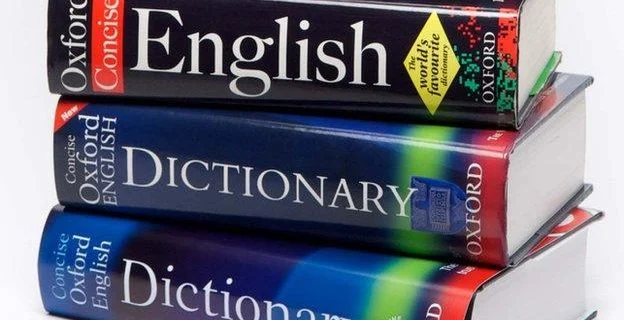

Have you ever found yourself reading a book or an article and stumbling upon a word that looked completely alien? In the past, you would have to pause, get up, walk to a bookshelf, lug out a massive, dusty book, and flip through hundreds of onion-skin pages just to find the meaning. By the time you sat back down, you might have forgotten the context of what you were reading!
Thankfully, those days are behind us. The dictionary online has revolutionized the way we learn, write, and communicate. It puts the power of language right at our fingertips, accessible in seconds. Whether you are a student working on an essay, a professional crafting an email, or just someone who loves learning new words, digital dictionaries are an essential tool for modern life.
In this article, we will explore why moving your word searches to the web is a smart move, how to get the most out of these tools, and which features you might be missing out on.
Key Takeaways:
- Speed and Access: Online dictionaries provide instant definitions without the physical bulk.
- Audio Features: You can hear exactly how a word is pronounced.
- Constant Updates: Unlike printed books, a dictionary online stays current with new slang and tech terms.
- Learning Tools: Many sites offer quizzes, word of the day features, and grammar tips.
The Shift from Paper to Digital Reference Books
It is hard to overstate just how much things have changed in the world of reference materials. For centuries, the printed dictionary was the ultimate authority. If a word wasn’t in the book, it arguably wasn’t a “real” word. Families often displayed a large dictionary in the living room as a symbol of education and knowledge.
However, the digital revolution changed everything. The transition to the dictionary online started slowly with CD-ROMs in the 1990s but exploded with the internet. Suddenly, you didn’t need to buy a new edition every few years to keep up with changing language. The internet allowed lexicographers (people who write dictionaries) to update entries in real-time. This shift meant that when new words like “selfie” or “blog” entered our vocabulary, they appeared instantly on our screens rather than waiting years for a reprint.
Why Heavy Books Are Becoming History
Let’s be honest: convenience wins. Carrying a ten-pound book in your backpack is not fun. Students today have access to millions of words through a smartphone app or a website. The physical limitations of paper meant that definitions had to be short to save space. A dictionary online doesn’t have those limits. It can offer five different definitions, history of the word, synonyms, and even pictures without worrying about page count. While there is a nostalgia factor to old books, the practicality of digital tools is undeniable.
What Exactly Is a Dictionary Online?
At its core, a dictionary online is a digital database of words accessible via the internet. But describing it simply as a list of words sells it short. These platforms have evolved into comprehensive language learning hubs.
When you type a query into a search bar, the engine dives into a massive repository of data. Unlike a static page, the results are dynamic. You get the standard definition, sure, but you also get a treasure trove of related information. You might see a “Word of the Day,” a blog post about grammar rules, or a video explaining the difference between “there,” “their,” and “they’re.”
More Than Just Definitions
Modern online dictionaries are interconnected webs of knowledge. If you look up the word “run,” you won’t just see what it means to move fast on your feet. You will see how it is used in computer programming (“run a program”), in politics (“run for office”), and in business (“run a company”). This depth helps users understand the nuance of language, not just the literal meaning.
Top Benefits of Using a Dictionary Online
Why should you choose a digital version over the print one gathering dust on your shelf? The advantages are overwhelming. The primary benefit is simply the richness of the experience.
When you use a dictionary online, you are engaging with a tool that is alive. It reacts to how people are actually speaking and writing right now. It connects you to a global community of language users. Here are some specific reasons why digital reigns supreme.
Instant Access Anywhere
Imagine you are at a coffee shop and you overhear a conversation where someone uses the word “esoteric.” You don’t want to interrupt and ask what it means. With a dictionary online, you can discreetly check the definition on your phone in under ten seconds. This instant access allows for continuous learning without disrupting your day. It empowers you to understand the world around you in real-time.
Hearing the Words Out Loud
This is perhaps the biggest game-changer. In a printed book, you have to decipher complex phonetic symbols (like /fəˈnɛtɪks/) to figure out how to say a word. It can be confusing and frustrating. A dictionary online almost always includes an audio button. You click it, and a human voice pronounces the word clearly for you. For non-native speakers or students preparing for a presentation, this feature is invaluable.
Key Features You Can Find
You might be surprised by how many tools are packed into these websites. They aren’t just for looking up meanings; they are for improving your overall communication skills.
Most major platforms now integrate a thesaurus directly into the definition page. This means if you are writing an essay and realize you have used the word “good” five times, you can instantly find alternatives like “excellent,” “superb,” or “beneficial” without leaving the page.
- Grammar Guides: Detailed explanations of sentence structure.
- Idiom Dictionaries: Explanations for phrases like “break a leg.”
- Forums: Places where users discuss tricky translations or meanings.
How to Choose the Best Dictionary Online
Not all websites are created equal. Since anyone can publish on the internet, it is important to use sources that are credible and accurate.
When looking for a reliable dictionary online, check the source. Is it backed by a major publishing house like Oxford, Cambridge, or Merriam-Webster? These organizations employ expert linguists who rigorously research words before defining them. There are also crowdsourced dictionaries, which can be fun for slang but might not be appropriate for academic work.
Credibility Matters
If you are writing a research paper, you need definitions that are standard and accepted. Using a slang dictionary might lead you astray. Look for sites that cite their sources or explain the origin (etymology) of the word. A good dictionary online will often tell you when a word was first used, giving you historical context.
Improving Your Vocabulary Daily
One of the most exciting aspects of these tools is their ability to gamify learning. You don’t just have to visit them when you are confused; you can visit them to challenge yourself.
Many sites offer a “Word of the Day” subscription. Imagine getting a new, interesting word delivered to your email every morning. It takes ten seconds to read, but over a year, you will have learned 365 new words!
Games and Quizzes
Who said learning has to be boring? Many dictionary online platforms feature crossword puzzles, spelling bees, and vocabulary quizzes. These interactive elements make the learning process engaging and fun. It turns a passive activity (reading a definition) into an active one (testing your knowledge).
Dictionary Online vs. Traditional Books: A Comparison
To clearly see the differences, let’s look at a direct comparison between the two formats.
|
Feature |
Dictionary Online |
Traditional Print Dictionary |
|---|---|---|
|
Speed |
Instant search results |
Slow manual searching |
|
Portability |
Fits in your pocket (smartphone) |
Heavy and bulky |
|
Updates |
Updated constantly with new words |
Outdated as soon as it is printed |
|
Audio |
Real voice pronunciation |
Confusing phonetic symbols |
|
Cost |
Mostly free |
Can be expensive to buy |
|
Context |
Often includes examples from recent news |
Limited examples due to space |
As you can see, for general daily use, the digital version wins in almost every category.
The Role of AI in Modern Definitions
Artificial Intelligence is reshaping how we find information, and dictionaries are no exception. Modern search algorithms try to understand why you are looking for a word.
If you type “bank” into a dictionary online, the AI might look at your location or previous searches to decide if you mean a financial institution or the side of a river. This contextual awareness makes the results more relevant to you personally. AI also helps in generating example sentences that are drawn from current events, ensuring you see how the word is used in 2024, not 1950.
Using a Dictionary Online for Learning New Languages
For anyone learning a second language, these tools are a lifeline. Whether you are learning Spanish, French, or Japanese, online tools bridge the gap between cultures.
A robust dictionary online will often have a toggle to switch between languages. It won’t just translate the word; it will show you the gender of the noun (essential for European languages), verb conjugation tables, and common phrases.
Spanish, French, and Beyond
If you are learning Spanish, knowing the word for “book” is “libro” is simple. But knowing how to use it in a sentence is harder. Online tools provide sentence pairs—showing the English sentence next to the Spanish translation—so you can see the grammar in action.
Understanding Idioms
Direct translation often fails with idioms. If you translate “it’s raining cats and dogs” word-for-word into another language, people will look at you like you are crazy. A good dictionary online identifies these idioms and provides the cultural equivalent in the target language, saving you from embarrassing mistakes.
Common Mistakes When Searching Words
Even with the best tools, users can make mistakes. The most common error is relying on the very first definition listed.
Many English words have multiple meanings (polysemy). If you are reading a biology textbook and look up “cell,” the first definition might be about a prison room. You need to scroll down to find the biological definition. Always read through the entry to find the meaning that fits your specific context.
Watch Your Spelling
While many search engines have “autocorrect,” a dictionary online can sometimes be strict. If you misspell a word badly, you might get zero results. However, many modern sites now offer “Did you mean…?” suggestions, which is incredibly helpful for tricky words like “bureaucracy” or “Colonel.”
The Future of the Dictionary Online
Where do we go from here? The future seems to be heading toward even more integration. We are already seeing dictionaries integrated into e-readers and web browsers. You can double-click a word on a webpage and a definition pops up.
Voice search is the next frontier. Instead of typing, we simply ask our smart speakers, “What does this word mean?” The dictionary online is becoming invisible—a layer of intelligence that sits on top of our daily digital interactions, always ready to help but staying out of the way until needed.
Why Students Need These Tools
For students in middle school, high school, and college, these resources are non-negotiable. They are essential for academic success.
When writing an essay, clarity is king. Using a dictionary online helps students avoid repetition. It also helps with citations. Many dictionary websites now have a “Cite This Entry” button that automatically generates the MLA or APA citation for the bibliography, saving students hours of tedious work.
Professional Writers and the Digital Dictionary
It isn’t just students who benefit. Professional writers, journalists, and content creators rely heavily on these tools. When you write for a living, you need to be precise.
Writers often use a dictionary online to check the nuance of a word. Is “stubborn” the right word, or is “obstinate” better? Is the tone “friendly” or “amiable”? These subtle choices change how a reader perceives the text. Furthermore, staying updated on tech and business terminology is crucial. For example, keeping up with trends in the tech world often requires reading industry-specific news. Resources that cover these beats, such as Silicon Valley Time, often use evolving terminology that writers need to verify using updated digital dictionaries.
Frequently Asked Questions
Q: Are online dictionaries free to use?
A: Yes, the vast majority are free. They are usually supported by advertisements. Some offer premium versions without ads and with extra features, but the free versions are sufficient for most people.
Q: Can I use a dictionary online offline?
A: Many major dictionary websites offer mobile apps that allow you to download the database to your phone. This is great for traveling or when you don’t have Wi-Fi.
Q: Is Google considered a dictionary?
A: Google has a built-in dictionary feature (often sourced from Oxford Languages). When you type “define [word],” you are essentially using a dictionary online. It is very convenient for quick checks, though dedicated sites often offer more depth.
Q: Which dictionary is the most accurate?
A: For American English, Merriam-Webster is considered a gold standard. For British English, the Oxford English Dictionary (OED) is the top authority.
Conclusion
The evolution from heavy, printed tomes to the lightning-fast dictionary online has made the world more literate and connected. We have moved from a scarcity of information to an abundance of it. These tools are fast, accurate, and incredibly feature-rich, offering audio pronunciation, grammar help, and translation services that simply weren’t possible in the analog age.
Whether you are trying to pass your English class, write a killer cover letter, or just win an argument with a friend about what a word really means, these digital resources are your best friend. So next time you encounter a confusing word, don’t guess. Pull out your phone and look it up. For a deeper dive into the history and science of how these incredible reference collections are made, you can find a link from https://www.wikipedia.org/ related to this keyword “dictionary online” and add it to your reading list to understand the legacy of lexicography.
Meta Information:
- Meta Title: The Ultimate Guide to Using a Dictionary Online Effectively
- Meta Description: Discover why a dictionary online is better than print. Learn about instant definitions, audio features, and how to improve your vocabulary today.