






Key Takeaways
- Automation is Rising: Robots and drones are taking over dangerous and repetitive tasks on job sites.
- Green Building is Essential: Sustainable materials and eco-friendly practices are no longer optional.
- Data Drives Decisions: Big data and AI are helping project managers predict costs and avoid delays.
- Safety First: Wearable technology is drastically reducing workplace accidents.
- 3D Printing Revolution: Entire houses and complex components are being printed faster and cheaper.
The construction industry is often seen as slow to change, sticking to traditional methods like bricks, mortar, and manual labor. However, if you look at construction technology news today, you will see a completely different picture. The industry is undergoing a massive digital transformation. From robots laying bricks to drones scanning job sites, technology is making building faster, safer, and more efficient.
This article explores the most exciting updates in the world of construction tech. We will dive deep into how these innovations are changing the way we build our homes, offices, and infrastructure. Whether you are a contractor, an architect, or just someone interested in how the world is built, staying updated with construction technology news today is crucial. Let’s explore the tools and trends that are reshaping the skyline.
The Rise of Robotics in Construction
One of the most talked-about topics in construction technology news today is the integration of robotics. Robots are no longer just for car manufacturing factories; they are rolling onto muddy construction sites and making a huge impact. These machines are designed to handle repetitive, heavy, and dangerous tasks, freeing up human workers to focus on more skilled and complex jobs. This shift is helping to solve labor shortages, which have been a major headache for construction companies in the United States.
For example, we are seeing brick-laying robots that can work three times faster than a human. These robots don’t get tired, they don’t need lunch breaks, and they lay every brick with perfect precision. There are also rebar-tying robots that crawl across bridges and foundations, securing the steel reinforcement that holds concrete together. By automating these physically demanding tasks, companies can speed up project timelines significantly.
However, it is important to note that robots aren’t replacing humans entirely. Instead, they are becoming partners. Workers are now learning to operate and maintain these machines. This collaboration between human intelligence and robotic strength is a key theme in construction technology news today. As technology advances, we can expect to see even more specialized robots, like those designed for painting, drywall installation, and even electrical wiring.
Spotlight: The Dog-Like Robots
You might have seen videos of the yellow, four-legged robot dog named Spot. In the construction world, Spot is a superstar. It can walk over uneven terrain, climb stairs, and carry sensors to scan job sites. This allows project managers to check progress remotely without having to walk the site themselves.
Drones: The Eye in the Sky
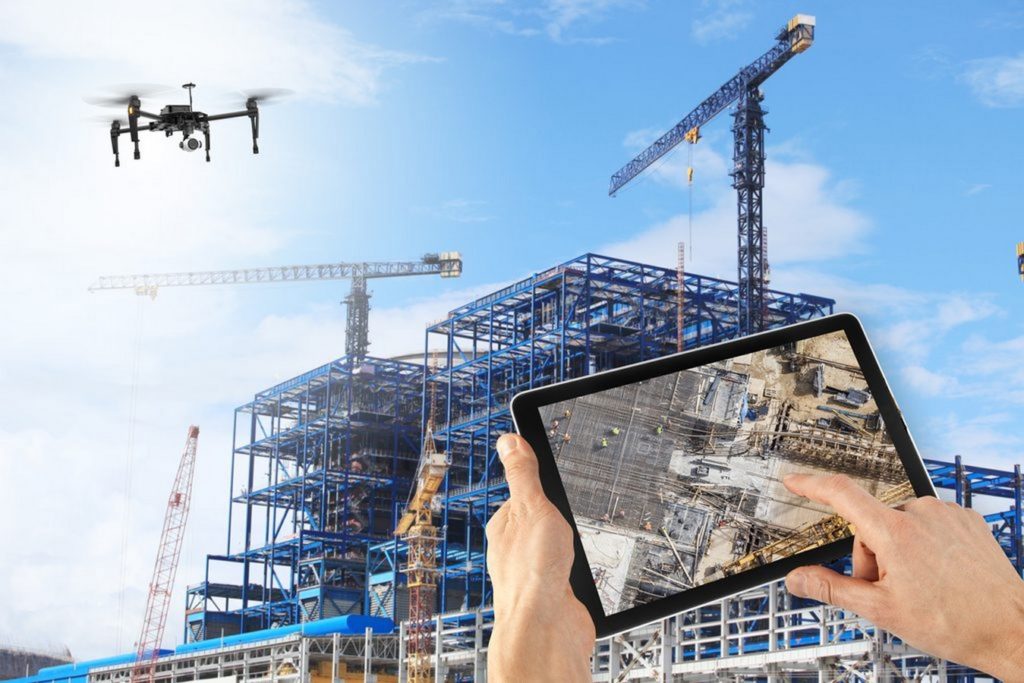
When you read construction technology news today, you will almost certainly find mention of drones. Unmanned Aerial Vehicles (UAVs) have become a staple on modern job sites. In the past, getting a bird’s-eye view of a project required expensive helicopter rides or risky climbs up cranes. Now, a drone can be launched in minutes to capture high-resolution images and videos of the entire site.
Drones do much more than just take pretty pictures. They are powerful data-gathering tools. Equipped with LiDAR sensors and thermal cameras, drones can create 3D maps of the terrain. This helps engineers calculate soil volumes for excavation, spot potential drainage issues, and ensure that the building is being constructed exactly according to the plans. This level of accuracy prevents costly mistakes that might not be noticed until it is too late.
Safety is another huge benefit of drone technology. Inspections of tall structures like bridges, towers, and roofs can be dangerous for workers. Instead of sending a person up on a harness, a drone can fly up and inspect the structure in detail. This keeps workers safe on the ground while still providing critical information. It is a win-win situation that highlights why drones are a top headline in construction technology news today.
Mapping and Surveying
- Speed: Drones can survey a site in hours, whereas traditional methods take days.
- Accuracy: Data collected is precise, reducing errors in planning.
- Cost: significantly cheaper than manned aircraft or large ground crews.
Building Information Modeling (BIM)
If there is one acronym you need to know, it is BIM. Building Information Modeling is a digital representation of the physical and functional characteristics of a facility. It sounds complex, but think of it as a super-advanced 3D blueprint that everyone on the project can look at and update in real-time. Construction technology news today frequently highlights BIM because it is becoming the industry standard for large projects.
Before BIM, architects, engineers, and contractors often worked in silos. The architect would draw plans, the engineer would design systems, and the contractor would try to build it. Often, pipes would clash with beams, or ducts would run through walls where they shouldn’t. BIM solves this by creating a single “digital twin” of the building. Before a single shovel hits the dirt, the entire building is constructed virtually.
This allows teams to detect clashes and conflicts early. If a ventilation duct is going to hit a steel beam, the software flags it, and the design can be changed on the computer rather than fixing it on the job site with a sledgehammer. This saves massive amounts of money and time. As software gets better, BIM is evolving into 5D and 6D modeling, which includes cost and lifecycle management data, making it an indispensable tool.
Collaboration Across Teams
With cloud-based BIM, a structural engineer in New York and an architect in London can work on the same model simultaneously. This collaboration ensures that everyone is on the same page, reducing the “he said, she said” disputes that often delay construction projects.
3D Printing: Constructing the Future
Imagine pressing “print” and watching a house appear layer by layer. This is no longer science fiction; it is a reality featured in construction technology news today. 3D printing, or additive manufacturing, is revolutionizing how we build structures. Huge printers extrude a special concrete mixture to build walls and foundations much faster than traditional methods.
The benefits are incredible. 3D printing generates very little waste because you only use the exact amount of material needed. It also allows for complex, curved shapes that would be incredibly difficult and expensive to build with wood or brick. This opens up new creative possibilities for architects who want to design unique, organic structures that blend into their surroundings.
Affordable housing is one area where 3D printing is making a massive difference. Because these houses can be built quickly and with fewer workers, the cost goes down significantly. Several companies are already building neighborhoods of 3D-printed homes in the US and abroad. As the technology matures, we will likely see larger buildings, perhaps even skyscrapers, utilizing 3D printed components.
Sustainable and Green Building Tech
Sustainability is a massive driver in the industry, and construction technology news today is full of innovations aimed at reducing the carbon footprint of building. Construction has traditionally been a dirty industry, responsible for a large chunk of global carbon emissions. New tech is changing that by introducing smarter materials and energy-efficient designs.
One major innovation is “green concrete.” Traditional concrete production creates a lot of CO2. New formulas use recycled materials like fly ash or slag, or even inject CO2 into the mix to sequester it permanently. There are also “smart windows” that tint automatically to block the sun, reducing the need for air conditioning.
Cross-Laminated Timber (CLT) is another exciting development. This involves gluing layers of wood together to create super-strong panels that can be used to build tall buildings. Wood is a renewable resource and stores carbon, making it much friendlier to the planet than steel or concrete. These “plyscrapers” are popping up in cities, proving that wood can handle heavy loads.
|
Material |
Benefit |
Application |
|---|---|---|
|
Green Concrete |
Reduces CO2 emissions |
Foundations, Walls |
|
Smart Glass |
Energy efficiency |
Windows, Facades |
|
Mass Timber |
Renewable, carbon storage |
Structural framework |
|
Recycled Steel |
Reduces mining impact |
Beams, Reinforcement |
Wearable Technology for Safety
Worker safety is paramount, and technology is providing new ways to protect the people who build our world. In construction technology news today, you will read about smart helmets, vests, and boots that are connected to the internet. These wearables act as a guardian angel for workers, monitoring their health and their surroundings.
Smart helmets can detect if a worker has taken a fall and alert safety managers immediately with GPS coordinates. They can also monitor fatigue levels by analyzing head movements, ensuring that tired workers take a break before an accident happens. Some vests have sensors that vibrate if a worker gets too close to heavy machinery like a forklift or an excavator, preventing collisions.
Another cool innovation is the exoskeleton. These are mechanical suits worn by workers to help them lift heavy objects without straining their backs. An exoskeleton can take the load off a worker’s shoulders and spine, reducing injuries and fatigue. This allows older workers to stay in the industry longer and helps prevent the chronic pain that often plagues construction professionals.
Artificial Intelligence (AI) and Machine Learning
Artificial Intelligence is the brain behind the brawn of modern construction. AI algorithms can crunch massive amounts of data to predict outcomes and optimize schedules. Construction technology news today often discusses how AI is being used to predict project risks. By looking at data from thousands of past projects, AI can tell a project manager if a project is likely to go over budget or fall behind schedule.
AI is also used in generative design. An architect can tell the computer the constraints—like the size of the lot, the budget, and the local building codes—and the AI will generate hundreds of different design options in seconds. This allows designers to explore possibilities they might never have thought of on their own.
On the job site, AI-powered cameras can identify safety hazards. If a worker isn’t wearing a hard hat or if a guardrail is missing, the camera spots it and sends an alert. This constant vigilance helps maintain a culture of safety and compliance without needing a safety officer to watch every corner of the site 24/7.
Augmented Reality (AR) and Virtual Reality (VR)
AR and VR are transforming how we visualize projects. Virtual Reality allows clients to put on a headset and walk through a building before it is even built. They can see the view from the window, check the size of the rooms, and get a true feel for the space. This is a huge selling point and helps ensure the client is happy with the design early on.
Augmented Reality is different; it overlays digital information onto the real world. In construction technology news today, we see workers wearing AR glasses on site. These glasses can project the digital blueprints onto the unfinished walls. A plumber can look at a wall and see exactly where the pipes are supposed to go, as if they had X-ray vision.
This technology bridges the gap between the digital model and the physical reality. It reduces errors because workers don’t have to look back and forth between a paper drawing and the work in front of them. The instructions are right there in their field of view.
The Difference Between AR and VR
- Virtual Reality (VR): Fully immersive digital environment. You are “inside” the computer model. Great for design review and client walkthroughs.
- Augmented Reality (AR): Digital elements layered over the real world. You see the real site with data on top. Great for installation and inspection.
Modular and Prefabricated Construction
Modular construction is like building with giant LEGO blocks. Instead of building everything on-site, exposed to rain and snow, large sections of the building are constructed in a factory. These “modules” are then trucked to the site and assembled. This method is gaining traction in construction technology news today because it is incredibly efficient.
Factory settings allow for better quality control. Materials stay dry, measurements are precise, and workers are in a safer, climate-controlled environment. Because the site preparation and the factory building happen at the same time, projects can be completed up to 50% faster than traditional construction.
This isn’t just for mobile homes anymore. High-rise hotels, apartment complexes, and hospitals are being built using modular technology. It reduces noise and disruption in the neighborhood because the heavy construction happens elsewhere. It is a smarter way to build in dense urban areas.
The Internet of Things (IoT)
The Internet of Things refers to the network of physical objects embedded with sensors and software to connect and exchange data. In construction, IoT is connecting everything from excavators to power drills. This connectivity provides real-time data that helps managers make better decisions.
For instance, sensors on equipment can track usage and fuel consumption. If a crane is idling for too long, the manager knows about it and can adjust the schedule. IoT sensors can also track the location of expensive tools, reducing theft, which is a major problem in the industry.
We also see IoT in the finished buildings. Smart sensors can monitor concrete curing temperatures to ensure it sets properly. Later, these sensors can monitor the structural health of a bridge or building, detecting cracks or stress long before they become visible to the human eye. This long-term monitoring is a key aspect of modern infrastructure management found in construction technology news today.
Blockchain in Construction
You might associate blockchain with cryptocurrency, but it has real value in construction too. A construction project involves hundreds of transactions between contractors, suppliers, and clients. Blockchain creates a secure, unchangeable record of these transactions. This increases transparency and trust.
Smart contracts are a big part of this. These are digital contracts that automatically execute when certain conditions are met. For example, once a delivery of steel is scanned at the site, the blockchain could automatically release the payment to the supplier. This speeds up cash flow, which is often a struggle for smaller construction firms.
While still in the early stages compared to robots or drones, blockchain is a growing topic in construction technology news today. It promises to reduce paperwork, eliminate disputes over payments, and create a verifiable history of every material used in a building.
Digital Twins
A Digital Twin is a virtual replica of a physical building or infrastructure asset. It is continuously updated with data from the real building. This concept goes beyond BIM. While BIM is mostly for design and construction, a Digital Twin is used for the entire life of the building.
Facility managers use Digital Twins to optimize energy use. If a sensor in the real building shows a room is getting too hot, the Digital Twin can simulate different solutions to fix it efficiently. It allows owners to test “what if” scenarios. What if we change the lighting schedule? What if we upgrade the HVAC system?
This technology is crucial for smart cities. By linking Digital Twins of multiple buildings, city planners can analyze energy consumption and traffic flow across an entire district. It represents the ultimate convergence of data and physical reality.
Big Data and Predictive Analytics
Construction generates mountains of data. Every email, blueprint, change order, and daily report is data. Historically, this data was filed away and forgotten. Construction technology news today emphasizes using this data to learn and improve.
Big Data analytics tools scan this information to find patterns. They might discover that projects started in winter always run 15% over budget due to weather delays. Armed with this knowledge, companies can adjust their bids or schedules for future winter projects.
This predictive power turns reactive management into proactive management. Instead of putting out fires, managers can prevent them from starting. It helps in resource allocation, ensuring that the right number of workers and machines are available exactly when needed.
Challenges to Adopting New Tech
Despite all the exciting construction technology news today, adopting these tools isn’t always easy. The construction industry is fragmented, with many small subcontractors who might not have the budget for expensive robots or software. There is also a “skills gap.” We need workers who know how to build, but also how to operate tablets and drones.
Integration is another hurdle. With so many different software platforms, getting them to talk to each other can be a nightmare. Data silos prevent the smooth flow of information. Cybersecurity is also a growing concern as job sites become more connected. Hackers could potentially hijack a smart crane or steal sensitive project data.
However, the industry is overcoming these barriers. Training programs are updating their curriculums. Software companies are making more user-friendly and integrated tools. The cost of technology is dropping, making it accessible to smaller firms. The benefits simply outweigh the challenges.
Overcoming Barriers
- Training: Investing in upskilling the workforce.
- Standardization: Using open standards for software.
- Security: Implementing robust cyber defenses.
FAQs: Construction Technology
Q: Will robots take all construction jobs?
A: No. While robots will take over repetitive and dangerous tasks, skilled human workers will always be needed for complex problem-solving and finishing work. The roles will shift towards managing and working alongside robots.
Q: Is 3D printing houses safe?
A: Yes. 3D printed structures undergo rigorous testing and must meet local building codes, just like traditional houses. The concrete used is often stronger than standard blocks.
Q: Why is construction technology news today so focused on data?
A: Data allows companies to stop guessing. By analyzing past performance, they can predict costs and timelines accurately, which saves money and prevents delays.
Q: Is green building more expensive?
A: It can have a higher upfront cost, but it usually saves money in the long run through lower energy bills and maintenance costs. Plus, sustainable practices are increasingly required by law.
Q: How does VR help in construction?
A: VR helps clients visualize the end product, reducing changes during construction. It also helps detect design errors before they become expensive problems on the site.
Conclusion
The world of construction is changing faster than ever before. From the precision of robotics to the insights of Big Data, the tools we use to build our civilization are getting a major upgrade. Keeping up with construction technology news today is not just about seeing cool gadgets; it is about understanding how our homes, offices, and cities will be built in the future.
These innovations promise a future where construction is safer for workers, kinder to the environment, and more efficient for everyone. We are moving away from the dusty, dangerous image of the past into a high-tech, data-driven era. Whether it is a drone surveying a bridge or a 3D printer creating a home, technology is laying the foundation for a better world.
If you are looking for more insights into the tech world, be sure to check out resources like Silicon Valley Time. You can find interesting articles at https://siliconvalleytime.co.uk/ to stay ahead of the curve. As we continue to innovate, the skyline of tomorrow will be built by the technology we develop today. For a broader look at the history and definitions of these advancements, you can always visit https://www.wikipedia.org/ to read more about the evolution of construction technology news today and how it fits into the global industrial landscape.