






The term tarjeta roja carries a lot of weight, depending on where you hear it. If you are watching a soccer match, seeing the referee pull one out means drama, excitement, and a player leaving the field. If you are navigating immigration in Spain, it means something entirely different but equally important. Whether you are a sports fan or someone interested in international residency procedures, understanding what this term signifies is crucial.
In this guide, we will explore the many meanings of the “red card.” We will look at its iconic status in the world of sports, specifically soccer (football), and its specific legal meaning within the Spanish immigration system. By the end of this article, you will be an expert on everything related to the tarjeta roja.
Key Takeaways
- Dual Meaning: The term tarjeta roja generally refers to a red card in soccer (sports context) or a specific asylum seeker document in Spain (legal context).
- Sports Impact: In soccer, it signifies the immediate expulsion of a player from the game.
- Legal Significance: In Spain, it is a temporary document allowing asylum seekers to reside and eventually work while their application is processed.
- Cultural Icon: The red card has become a universal symbol for “stop” or “severe penalty” across various cultures.
What Does Tarjeta Roja Actually Mean?
At its core, tarjeta roja translates directly from Spanish to English as “red card.” The color red is universally associated with danger, stopping, or a severe warning. Because of this, the term is used to describe the ultimate penalty.
While most people in the United States immediately think of soccer when they hear this phrase, it is fascinating to see how the term has evolved. It is no longer just a piece of plastic in a referee’s pocket; it is a metaphor used in business, politics, and daily life to describe a situation where someone has crossed a line and must be removed or penalized.
The Universal Symbol of “Stop”
Why red? Psychologically, humans are programmed to react to the color red. It grabs attention faster than any other color. This is why stop signs, fire trucks, and emergency lights are red. The tarjeta roja utilizes this psychological trigger to deliver a clear, non-verbal message that transcends language barriers. Whether you speak English, Spanish, or Japanese, when you see that card, you know exactly what is happening.
Context Matters: Sports vs. Immigration
It is vital to distinguish between the two main contexts we will discuss.
- Sports (Soccer): A disciplinary action taken by a referee.
- Immigration (Spain): A document formally known as the documento acreditativo de la condición de solicitante de protección internacional.
Mixing these up can lead to confusion! If someone tells you they “got a tarjeta roja” in Spain, they might be celebrating a step forward in their residency, not lamenting a foul on the soccer pitch.
The History of the Red Card in Sports
Before the tarjeta roja existed, soccer was a bit more chaotic. Referees had to verbally explain to players that they were being sent off. In loud stadiums with players speaking different languages, this often led to confusion and arguments. Imagine trying to tell a player he has to leave the field when he doesn’t speak your language and 50,000 fans are screaming.
The idea for colored cards came from British referee Ken Aston. Legend has it that while driving, he stopped at a traffic light. He realized that “Yellow” meant “take care” or “slow down,” and “Red” meant “stop, you’re done.” He thought this color-coded system could solve the language barrier problem in international sports. The system was introduced at the 1970 World Cup in Mexico, and the tarjeta roja was born.
Evolution of Disciplinary Rules
Since 1970, the rules governing when a card is shown have evolved. Initially, referees were hesitant to use them. Today, the rules are much stricter to protect player safety. Tackles from behind, dangerous high kicks, and professional fouls now almost guarantee a card.
Technology has also changed how the tarjeta roja is administered. With the introduction of VAR (Video Assistant Referee), a decision to give—or not give—a red card can be reviewed. This adds a layer of fairness, ensuring that a game-changing decision is correct.
When is a Tarjeta Roja Issued in Soccer?
A referee doesn’t just pull out a red card for no reason. There are specific offenses outlined in the Laws of the Game that warrant a sending-off. Understanding these rules helps fans appreciate the game more and argue with the referee less (though we know fans will always argue!).
A player receives a tarjeta roja and is sent off if they commit any of the following offenses:
- Serious foul play.
- Violent conduct.
- Spitting at an opponent or any other person.
- Denying the opposing team a goal or an obvious goal-scoring opportunity by deliberately handling the ball.
- Using offensive, insulting, or abusive language and/or gestures.
- Receiving a second yellow card in the same match.
Serious Foul Play vs. Violent Conduct
There is a subtle difference here. Serious foul play happens when a player is challenging for the ball but uses excessive force or brutality. Violent conduct happens when a player is not challenging for the ball—for example, punching an opponent while play has stopped. Both result in a direct tarjeta roja, but violent conduct often carries a longer suspension after the game.
The “Professional Foul”
One of the most dramatic moments in soccer is the “professional foul.” This occurs when a defender is the last man back and deliberately trips an attacker who has a clear path to the goal. It is often a cynical, calculated move. The defender knows he will get a tarjeta roja, but he does it to save his team from conceding a goal. It is controversial, but it is a part of the game’s tactical landscape.
The Consequences of Receiving a Red Card
The impact of a tarjeta roja goes far beyond just leaving the field. It creates a domino effect that hurts the team immediately and the player in the future.
Immediate Impact on the Match
When a player gets sent off, they cannot be replaced. Their team must continue with 10 players instead of 11. This is a massive disadvantage. The remaining players have to run more, cover more ground, and often change their entire strategy to play defensively. It often changes the outcome of the game completely.
Suspensions and Fines
The punishment doesn’t end when the whistle blows. A direct tarjeta roja usually results in a suspension for upcoming games.
- Standard Ban: Usually 1 to 3 matches, depending on the league.
- Extended Ban: For extremely violent behavior, bans can last for months.
- Fines: Clubs often fine players who are sent off for reckless behavior.
Table: Common Red Card Offenses and Typical Bans
|
Offense Type |
Description |
Typical Suspension |
|---|---|---|
|
Second Yellow |
Two minor offenses in one game |
1 Match |
|
DOGSO |
Denying Obvious Goal Scoring Opportunity |
1 Match |
|
Serious Foul Play |
Dangerous tackle endangering safety |
3 Matches |
|
Violent Conduct |
Striking, kicking, or headbutting |
3+ Matches |
|
Abuse of Official |
Touching or threatening the referee |
5+ Matches to Months |
Famous Tarjeta Roja Moments in History
Soccer history is filled with iconic moments involving the red card. These incidents are remembered not just for the foul, but for the drama and the stage on which they occurred.
Zinedine Zidane – 2006 World Cup Final
Perhaps the most famous tarjeta roja of all time involved French legend Zinedine Zidane. In his final professional match, the World Cup Final against Italy, Zidane headbutted Italian defender Marco Materazzi in the chest. It was a shocking moment of violence from one of the game’s most elegant players. He was sent off, and France went on to lose the penalty shootout.
David Beckham – 1998 World Cup
In a match against Argentina, England’s David Beckham kicked out at Diego Simeone after being fouled. It was a petulant, slight kick, but it was right in front of the referee. Beckham received a tarjeta roja, England eventually lost, and Beckham became a villain in the British press for years. It shows how a split-second loss of control can define a career for a long time.
The Tarjeta Roja in Spanish Immigration
Now, let’s switch gears completely. If you are looking to live in Spain as a refugee or asylum seeker, the tarjeta roja is a vital document. It has nothing to do with sports and everything to do with your legal status.
In the context of Spanish immigration, this card is formally the document that proves you are an applicant for international protection. It gets its nickname simply because the paper is printed on red cardstock.
What Rights Does It Grant?
Holding this card is a big deal for an asylum seeker. It means you are “in the system.”
- Legal Residency: It proves you are in Spain legally while your asylum case is being reviewed. You cannot be deported while you hold a valid tarjeta roja.
- NIE Number: The card includes your NIE (Foreigner Identity Number), which is essential for almost everything in Spain, from opening a bank account to signing a lease.
- Right to Work: After holding the card for six months, it usually grants the holder the right to work in Spain.
The Application Process
Getting this card involves several steps. First, you must conduct an initial interview with the police to declare your intention to seek asylum. You are then given a preliminary white document (hoja blanca). If your application is admitted for processing, that white document is eventually exchanged for the tarjeta roja.
The validity of this card is usually six months, and it must be renewed repeatedly until the Spanish government makes a final decision on the asylum case. This process can take years, meaning the red card becomes the applicant’s primary form of ID for a long time.
How to Renew the Spanish Tarjeta Roja
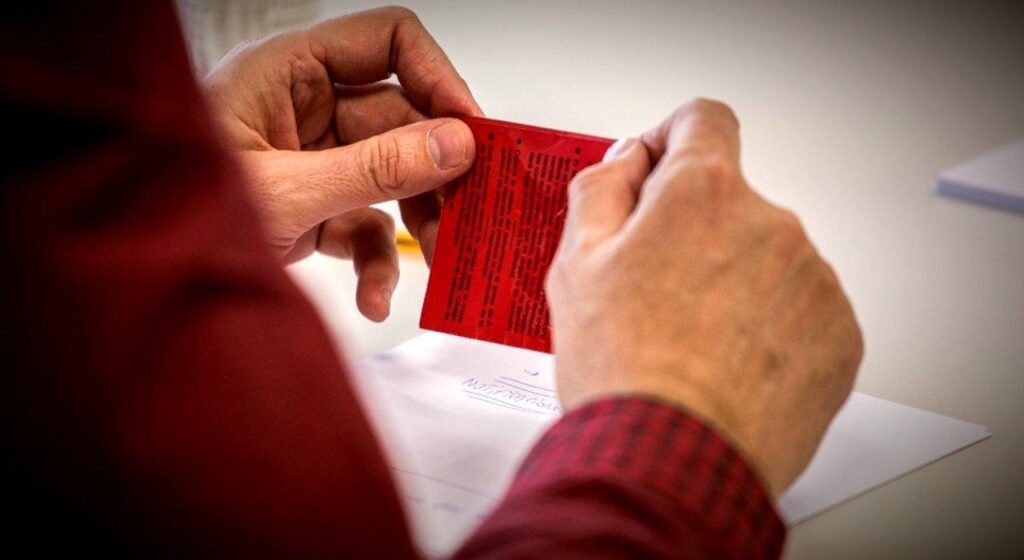
Renewing the tarjeta roja is a critical task for asylum seekers. If the card expires, the individual technically falls into an irregular status, which can cause problems with employers or landlords.
Steps for Renewal
- Appointment: You usually need to book an appointment (cita previa) at the immigration office or police station.
- Documentation: You must bring your expiring card, passport-sized photos, and proof that your asylum case is still pending.
- Timing: It is best to start looking for an appointment well before the expiration date printed on the card.
Many people find the bureaucracy confusing. Reliable information sources are key. For instance, websites like Silicon Valley Time often discuss global trends and legal nuances that can help expats and travelers stay informed about international documentation and procedures.
Cultural Impact of the Term “Red Card”
The term tarjeta roja has bled into popular culture. It is used in politics to describe expelling a member from a party. It is used in relationships jokingly (“I’m giving you a red card for forgetting our anniversary”).
This cultural adoption proves how powerful the symbol is. It represents a definitive end. There is no negotiation with a red card. It is binary: you are in, or you are out. This clarity is why the metaphor works so well in business and social situations.
Use in Business
In corporate environments, managers might use the term metaphorically during performance reviews. A “yellow card” might be a performance improvement plan, while a tarjeta roja is termination. It softens the blow of harsh language by using a sports analogy, but the message remains severe.
The Psychology of Refereeing
Have you ever wondered what it feels like to give a tarjeta roja? Referees are under immense pressure. They have to make split-second decisions that can cost teams millions of dollars in prize money or relegation.
Managing Conflict
A referee must be a master of conflict resolution. When they pull out the red card, they know they are escalating the tension. Players will surround them, fans will boo, and coaches will scream. Maintaining composure in that moment is a skill that takes years to develop.
Bias and Fairness
Referees train hard to eliminate bias, but they are human. Studies have been done on whether home crowds influence referees to give fewer red cards to the home team. The tarjeta roja is the ultimate test of a referee’s impartiality.
Comparison: Tarjeta Roja vs. Tarjeta Amarilla
To fully understand the red card, we must compare it to its partner, the yellow card (tarjeta amarilla).
The Yellow Card (The Warning)
- Purpose: To caution a player.
- Consequence: The player stays on the field but must be careful.
- Accumulation: Two yellow cards equal one tarjeta roja.
The Red Card (The Expulsion)
- Purpose: To punish serious offenses.
- Consequence: Immediate removal from the game.
- Accumulation: N/A (It is the final step).
Think of the yellow card as a “probation” and the red card as “jail time” in the context of the match. The tension builds when a player is on a yellow card because one more mistake leads to the dreaded walk to the locker room.
Frequently Asked Questions (FAQ)
Here are some common questions people ask about the tarjeta roja.
Q1: Can a goalkeeper get a red card?
A: Yes, absolutely. If a goalkeeper commits a serious foul or handles the ball outside the penalty area to deny a goal, they can receive a tarjeta roja. An outfield player usually has to sub out so a backup goalkeeper can come in.
Q2: Does the Spanish Tarjeta Roja allow travel?
A: Generally, no. The tarjeta roja for asylum seekers usually does not allow for cross-border travel within the Schengen zone. It validates your stay in Spain, but leaving Spain can jeopardize your asylum application.
Q3: Can a red card be rescinded?
A: In soccer, yes. If a team appeals the decision and a review committee decides the referee made a clear error, the suspension can be overturned, though the match result usually stands.
Q4: What is the fastest red card ever given?
A: There have been instances of players receiving a tarjeta roja within seconds of the game starting (sometimes even before kickoff for fighting!). Lee Todd was once sent off after 2 seconds for using foul language when the referee blew the whistle too loudly near his ear.
Future of the Red Card
Will the tarjeta roja system ever change? There are discussions in the soccer world about introducing a “blue card” or “orange card” for temporary dismissals (sin-bins), similar to rugby or ice hockey. This would allow a player to be sent off for 10 minutes rather than the whole game.
However, purists argue that the simplicity of the red and yellow system is perfect. It is universally understood and adds to the drama of the sport. For now, the red card remains the ultimate sanction.
Technology’s Role
As AI and video tracking improve, we might see automated offside calls leading to cards, or sensors determining the severity of a tackle. While this ensures accuracy, it might take away the human element that makes the debate around a tarjeta roja so engaging for fans.
Conclusion
Whether you are witnessing a dramatic exit in a World Cup final or navigating the hallways of a Spanish immigration office, the tarjeta roja represents a pivotal moment. In sports, it changes the game instantly, shifting momentum and creating heroes and villains. In immigration, it offers a lifeline, providing safety and legal status to those who need it most.
Understanding the context—sports vs. legal—is key. But in both cases, the term commands respect. It signifies authority, consequences, and the importance of following the rules.
If you are interested in learning more about how rules and regulations shape our world, from sports to international borders, keep exploring. Knowledge is your best defense against getting a red card in real life! For more information on international symbols and their meanings, you can check out this Wikipedia article.