




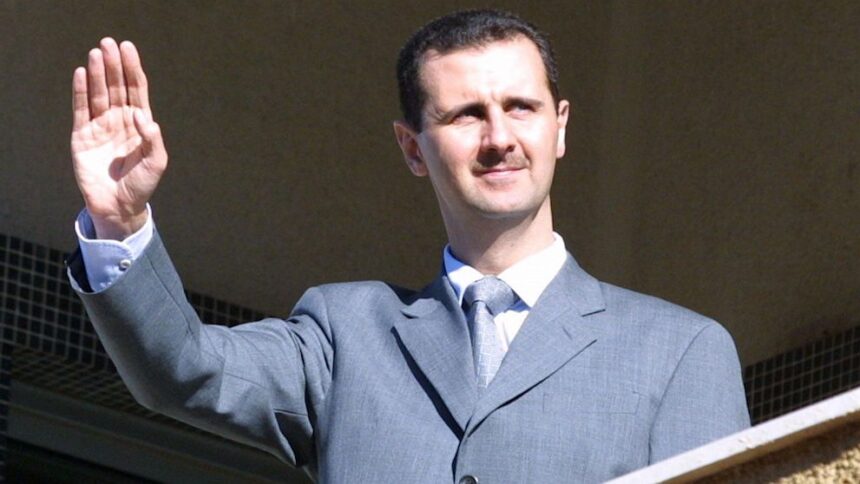

Bashar al-Assad, a name that often appears in headlines, is a figure of immense global significance. As the president of Syria, his journey from a London-based eye doctor to a powerful political leader is both complex and controversial. Understanding his story is key to grasping the modern history of Syria and its place in the world. His leadership has been marked by initial hopes for reform, a devastating civil war, and shifting international relationships. This article will explore the life, policies, and impact of Bashar al-Assad, providing a detailed look at the man who has shaped Syria for over two decades.
Key Takeaways
- Bashar al-Assad became president of Syria in 2000 after the death of his father, Hafez al-Assad.
- He was not originally expected to enter politics and was training to be an ophthalmologist in London.
- His early presidency was marked by promises of modernization, known as the “Damascus Spring,” but these reforms were short-lived.
- The Syrian Civil War, which began in 2011, has been the defining event of his rule, leading to a massive humanitarian crisis.
- International relations under Bashar al-Assad have been turbulent, with strong alliances with Russia and Iran and deep conflicts with Western nations.
From Doctor to Dictator: The Early Life of Bashar al-Assad
The path to power for Bashar al-Assad was anything but direct. Born in Damascus, Syria, on September 11, 1965, he grew up in the shadow of his powerful father, Hafez al-Assad, who ruled Syria for nearly 30 years. Unlike his older brother, Bassel, Bashar was not groomed for a political future. Instead, he was encouraged to pursue a professional career far from the intricate and often dangerous world of Syrian politics.
An Unlikely Heir’s Upbringing
Bashar was the second son in the al-Assad family. His father, Hafez, was a formidable figure who had seized power in 1970 and established an authoritarian regime. The family belonged to the Alawite minority, a branch of Shia Islam, which played a significant role in the power structure of Syria. Bashar’s upbringing was privileged but also insulated. He was known to be a quiet and studious child, showing little interest in the military and political activities that consumed his father and older brother. This quiet demeanor led many to believe he would remain a private citizen, uninvolved in the family’s political dynasty.
A Medical Career in London
Following his early education, Bashar al-Assad chose to study medicine at Damascus University. After graduating in 1988, he worked as a doctor in a military hospital. His passion, however, was in ophthalmology. To pursue this specialty, he moved to London in 1992 to continue his training at the Western Eye Hospital. In London, he lived a relatively anonymous life, known to his colleagues as a diligent and unassuming doctor. He embraced life in the West, developing a fondness for technology and computers. This period abroad gave him a perspective that was vastly different from the one he had known in Syria, and it was a life he seemed content to lead until a family tragedy changed everything.
A Sudden Change of Course
In 1994, Bashar’s older brother, Bassel al-Assad, was killed in a car crash. Bassel had been carefully prepared by their father to be the next president of Syria. His sudden death created a succession crisis. Hafez al-Assad immediately recalled Bashar from London to Damascus. The quiet ophthalmologist was thrust into a new role: heir apparent. He underwent extensive military training, was promoted to the rank of colonel in the Syrian army, and began to take on a public profile. He was appointed head of the Syrian Computer Society, using this position to introduce the internet to Syria. This period was a crash course in politics, military strategy, and governance, preparing Bashar al-Assad for the power he was now destined to inherit.
The Rise to the Presidency
The death of Hafez al-Assad on June 10, 2000, marked a pivotal moment for Syria. Within hours, the path was cleared for his son to take control. This transition, while swift, required a significant constitutional maneuver. The Syrian constitution stipulated that the president must be at least 40 years old. At the time, Bashar al-Assad was only 34. In a session that lasted mere minutes, the Syrian parliament voted unanimously to amend the constitution, lowering the minimum age to 34. This move solidified his path to the presidency, and a month later, he was elected president in a national referendum where he was the only candidate, reportedly winning 97.29% of the vote.
The “Damascus Spring”: A Glimmer of Hope
The early years of Bashar al-Assad’s presidency brought a sense of cautious optimism. Many Syrians and international observers hoped that the Western-educated leader would bring significant reform to the country. This period became known as the “Damascus Spring.” For a brief time, there was a noticeable loosening of state control. Political forums and salons emerged where citizens debated social and political issues with a newfound openness. Hundreds of political prisoners were released, and state control over the media was slightly relaxed. Bashar al-Assad spoke of the need for “creative thinking” and modernization, promising to tackle corruption and reform the stagnant economy. This initial thaw suggested that Syria might be on a path toward a more open and democratic society.
A Short-Lived Thaw
Unfortunately, the Damascus Spring did not last long. By the summer of 2001, the momentum for reform came to a halt. The powerful old guard of his father’s regime, deeply entrenched in the security services and the ruling Ba’ath Party, began to push back against the changes. They saw the political openness as a threat to their power and the stability of the state. In response, the government cracked down on the political forums, arresting leading activists and intellectuals. The promise of a new era faded, and it became clear that the fundamental structure of the authoritarian state would remain intact. While Bashar al-Assad had presented himself as a modernizer, he ultimately prioritized the security and continuity of his regime over deep, systemic change.
Governance and Domestic Policies
Once firmly in power, Bashar al-Assad focused on policies aimed at modernizing Syria, but these were often constrained by the rigid political system he inherited. His domestic agenda centered on economic liberalization and cautious social reforms, but he avoided any changes that could challenge the authority of the Ba’ath Party or his family’s rule. This approach created a mix of progress and stagnation, ultimately failing to address the deep-seated grievances that would later fuel a nationwide uprising.
Economic Reforms and Their Limits
On the economic front, Bashar al-Assad introduced a series of reforms intended to transition Syria from a state-controlled economy to what he called a “social market economy.” This involved opening up sectors like banking, insurance, and trade to private investment. New private banks were established, and a stock exchange was opened in Damascus. These policies did lead to some economic growth, and a new business elite, often connected to the regime, prospered. However, the benefits of this growth were not widely shared. Corruption remained rampant, and state monopolies still dominated key industries. For many ordinary Syrians, life did not improve; in fact, rising inequality and the removal of state subsidies on essential goods made life harder for the poor and the middle class.
Social and Political Stagnation
While there were some superficial social changes, such as the increased availability of consumer goods and internet access, political reform was almost non-existent after the initial Damascus Spring. The state of emergency, which had been in place since 1963, remained, giving security forces sweeping powers of arrest and detention. Freedom of speech, press, and assembly were severely restricted. The Ba’ath Party continued to dominate all aspects of political life, and any form of opposition was brutally suppressed. This lack of political freedom created a pressure cooker environment, where public frustration and resentment simmered beneath the surface. The government of Bashar al-Assad chose stability through control over genuine public participation, a decision that would have catastrophic consequences.
The Syrian Civil War: A Nation in Turmoil
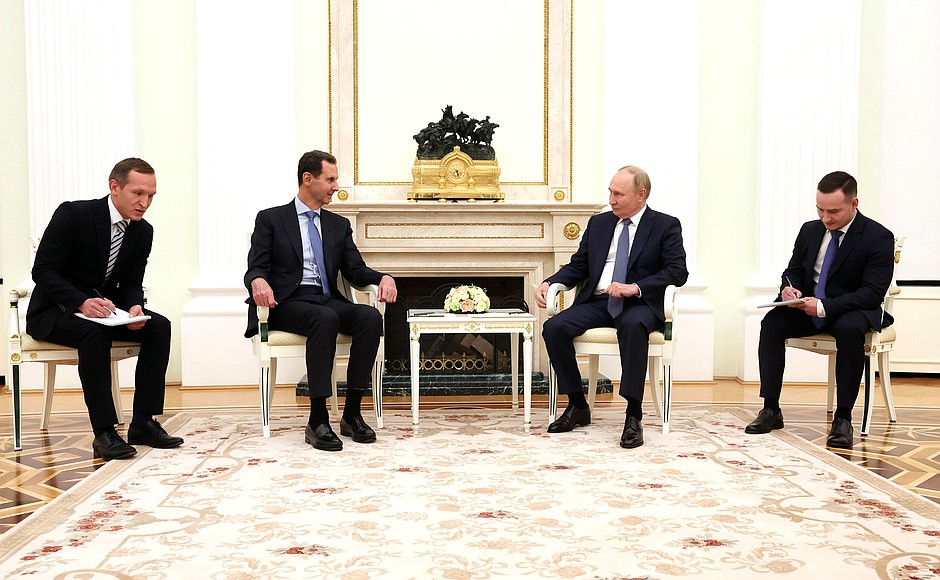
The defining event of Bashar al-Assad’s rule began in March 2011. Inspired by the Arab Spring protests that had toppled dictators in Tunisia and Egypt, peaceful demonstrations erupted in the Syrian city of Deraa. The initial protests were sparked by the arrest and torture of a group of teenagers who had painted anti-government graffiti on a wall. The demonstrators called for democratic reforms and an end to corruption. The response from the government of Bashar al-Assad was swift and brutal.
Security forces fired on unarmed protesters, killing several. This violence, rather than quelling the unrest, ignited a firestorm of anger across the country. Protests spread from city to city, and the demands of the demonstrators grew from reform to the downfall of the regime. Bashar al-Assad framed the uprising not as a popular movement but as a conspiracy by foreign-backed terrorists. He refused to concede to political demands and instead escalated the military response, plunging the country into a full-blown civil war.
Escalation and International Involvement
The conflict quickly morphed from peaceful protests to a complex armed struggle. Defectors from the Syrian army formed the Free Syrian Army to fight against the regime. The war became increasingly sectarian, pitting the largely Sunni opposition against the Alawite-dominated government. The situation grew even more complicated as foreign powers became involved. Iran and Russia provided crucial military, financial, and diplomatic support to Bashar al-Assad, saving his government from collapse on several occasions. On the other side, the United States, Turkey, Saudi Arabia, and Qatar supported various rebel groups. The rise of extremist groups like the Islamic State of Iraq and Syria (ISIS), which carved out a caliphate across parts of Syria and Iraq, added another devastating layer to the war.
The Humanitarian Catastrophe
The Syrian Civil War has created one of the worst humanitarian crises of the 21st century. The statistics are staggering. Hundreds of thousands of people have been killed, and millions more have been injured. More than half of Syria’s pre-war population has been forced to flee their homes. The table below illustrates the devastating impact on the Syrian population.
|
Metric |
Pre-War (2010) |
During War (Estimate) |
|---|---|---|
|
Total Population |
~22 million |
~17 million (inside Syria) |
|
Internally Displaced |
0 |
Over 6.8 million |
|
Refugees Abroad |
Minimal |
Over 6.7 million |
|
Poverty Rate |
~33% |
Over 80% |
Cities like Aleppo, Homs, and Raqqa have been reduced to rubble. The use of chemical weapons, barrel bombs, and siege tactics has caused immense suffering for civilians. The healthcare and education systems have collapsed, and access to basic necessities like food, water, and shelter is a daily struggle for millions. The war has left an entire generation of Syrians traumatized and displaced.
International Relations and Controversies
The leadership of Bashar al-Assad has been defined by polarizing international relations and severe controversies, particularly concerning human rights. His government’s actions during the civil war have led to international condemnation and isolation from many Western and Arab nations.
Key Alliances: Russia and Iran
The survival of the Assad regime is largely due to the unwavering support of its two main allies: Russia and Iran. Iran, a longtime ally, has provided financial aid, military advisors, and mobilized Shia militias from across the region to fight alongside the Syrian army. This support is driven by Iran’s goal to maintain a friendly government in Damascus and preserve its “axis of resistance” against Israel and the United States.
Russia’s intervention in 2015 was a game-changer. A massive Russian air campaign turned the tide of the war in favor of Bashar al-Assad, helping his forces recapture large swathes of territory from rebel groups. For Russia, supporting Assad is about protecting its military assets in Syria, asserting its influence in the Middle East, and pushing back against US foreign policy. These alliances have made Bashar al-Assad dependent on foreign backing but have also secured his position in power.
A Pariah in the West
In contrast, the United States and European Union have strongly opposed Bashar al-Assad. They have imposed heavy economic sanctions on his government and individuals connected to it. Western leaders have repeatedly called for him to step down, accusing him of war crimes and crimes against humanity. The US has launched targeted military strikes in response to the Syrian government’s alleged use of chemical weapons. However, Western policy has been criticized for being inconsistent and for failing to effectively end the conflict or protect civilians. Over time, some of the focus has shifted from removing Assad to counter-terrorism efforts against ISIS.
Allegations of War Crimes
The government of Bashar al-Assad stands accused of widespread and systematic human rights violations. International human rights organizations and the United Nations have documented numerous atrocities, including:
- Use of Chemical Weapons: Multiple investigations have concluded that Syrian government forces have used chemical agents like sarin and chlorine gas on civilian populations.
- Systematic Torture: Thousands of detainees have reportedly been tortured and executed in government-run prisons.
- Indiscriminate Bombing: The use of barrel bombs and airstrikes on civilian areas, including hospitals, schools, and markets, has been a common tactic.
- Siege and Starvation: The government has used sieges to cut off food, water, and medical supplies to opposition-held areas, using starvation as a weapon of war.
These allegations have led to calls for Bashar al-Assad and other senior officials to be tried for war crimes at the International Criminal Court.
Legacy and Future
As the Syrian Civil War winds down in many parts of the country, Bashar al-Assad remains in power. However, he rules over a shattered nation. His legacy will forever be linked to the brutal conflict that has destroyed his country, displaced half its population, and resulted in the deaths of hundreds of thousands. The Syria he governs today is impoverished, fragmented, and heavily dependent on foreign powers. Rebuilding the country will require trillions of dollars and overcoming deep social and political divisions, a task that seems monumental. For many, his legacy is one of survival at any cost. For others, it is one of unimaginable destruction and human suffering. Insights into the leadership styles of global figures like him can also be found at platforms like SiliconValleyTime.co.uk.
Frequently Asked Questions (FAQs)
Who is Bashar al-Assad?
Bashar al-Assad is the current president of Syria, a position he has held since 2000. He inherited power from his father, Hafez al-Assad. Though he trained as an eye doctor, he became the leader of Syria after the unexpected death of his older brother.
What is Bashar al-Assad known for?
He is primarily known for his leadership during the Syrian Civil War, which began in 2011. His government’s brutal response to initially peaceful protests led to a decade-long conflict that has caused a massive humanitarian crisis. He is also known for his close alliances with Russia and Iran.
How did Bashar al-Assad come to power?
He came to power in June 2000 after his father, President Hafez al-Assad, died. His path to the presidency was quickly cleared when the Syrian parliament amended the constitution to lower the minimum age requirement for the president from 40 to 34, his age at the time.
What is the international community’s stance on Bashar al-Assad?
The international community is deeply divided. Russia and Iran are his strongest supporters and have provided critical military and economic aid. In contrast, the United States, the European Union, and many Arab nations have condemned his actions, imposed sanctions, and called for his removal from power.
Conclusion
The story of Bashar al-Assad is a journey from an aspiring ophthalmologist to the iron-fisted ruler of a war-torn country. His presidency began with a flicker of hope for reform but descended into one of the most brutal conflicts of the modern era. He has demonstrated a ruthless determination to hold onto power, navigating a complex web of domestic and international pressures. While he has successfully survived the war, he now presides over a nation in ruins, with a deeply uncertain future. The long-term consequences of his rule will be felt in Syria and across the Middle East for generations to come.
For a more in-depth exploration of his life and the political context of Syria, extensive information is available on Wikipedia.