





Key Takeaways
- Solar Power: The leaf sheep is one of the only animals in the world capable of photosynthesis, a process usually reserved for plants.
- Tiny Size: These creatures are incredibly small, typically growing only up to 5mm to 1cm in length.
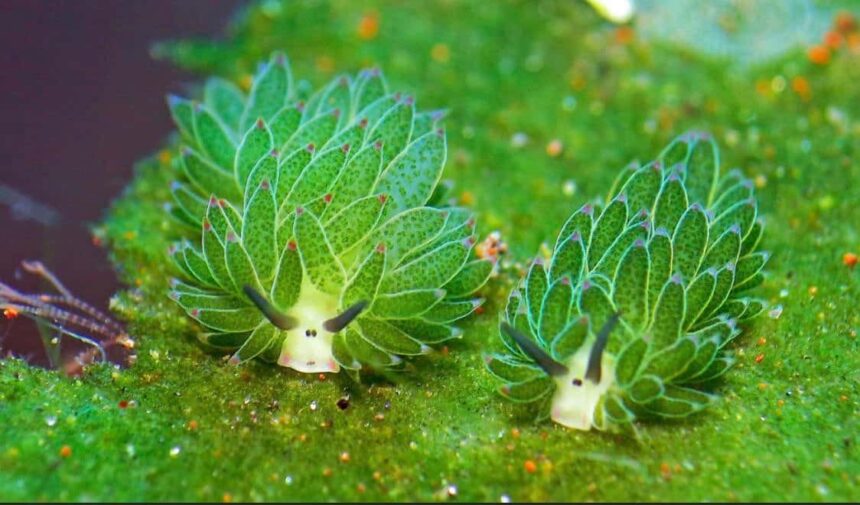
- Unique Appearance: They look remarkably like tiny, glowing sheep grazing on green pastures, hence their common name.
- Habitat: You can find them in the waters near Japan, Indonesia, and the Philippines.
- Kleptoplasty: They use a fascinating biological process called kleptoplasty to steal chloroplasts from the algae they eat.
Have you ever seen an animal that looks like a cartoon character come to life? If you haven’t, let me introduce you to the Costasiella kuroshimae, more commonly known as the leaf sheep. These tiny marine creatures have taken the internet by storm because they are impossibly cute. Imagine a tiny, glowing green sheep with pink blushing cheeks and little feelers that look like ears. That is exactly what this sea slug looks like! But there is much more to this creature than just its adorable face. It has a superpower that very few animals possess: it can run on solar power.
In this article, we are going to dive deep into the world of this fascinating sea slug. We will explore where they live, what they eat, and how they manage to perform photosynthesis just like a plant. Whether you are a marine biology enthusiast or just someone who loves cute animals, there is plenty to learn about the leaf sheep.
What Exactly Is a Leaf Sheep?
To understand this creature, we first have to look at its scientific classification. The leaf sheep is a species of sacoglossan sea slug. While “slug” might make you think of the slimy things in your garden, sea slugs are often colorful and beautiful. This specific species was discovered relatively recently, in 1993, near the island of Kuroshima in Japan. This is why its scientific name is Costasiella kuroshimae. However, most people just call it by its cute nickname because of its uncanny resemblance to a farm animal made of leaves.
Despite looking like a mammal, it is an invertebrate, meaning it has no backbone. It belongs to the phylum Mollusca, which includes snails, clams, and octopuses. But unlike a snail, the leaf sheep does not carry a hard shell on its back. Instead, its body is covered in cerata, which are leaf-like appendages. These cerata are what give it that “leafy” look. They aren’t just for show, though; they contain the secret to the slug’s amazing survival skills.
Biological Classification Table
|
Category |
Scientific Classification |
|---|---|
|
Kingdom |
Animalia |
|
Phylum |
Mollusca |
|
Class |
Gastropoda |
|
Order |
Sacoglossa |
|
Family |
Costasiellidae |
|
Genus |
Costasiella |
|
Species |
C. kuroshimae |
The Incredible Phenomenon of Kleptoplasty
The most mind-blowing fact about the leaf sheep involves a biological process called kleptoplasty. The word sounds a bit like “kleptomaniac,” which means someone who steals things, and that is exactly what this slug does. It steals! But it doesn’t steal money or jewelry; it steals solar panels from the food it eats. When the leaf sheep eats algae, it sucks out the contents of the algae cells but does not digest everything. It keeps the chloroplasts intact.
Chloroplasts are the parts of a plant cell that turn sunlight into energy (sugar) through photosynthesis. Most animals destroy these chloroplasts during digestion. The leaf sheep, however, moves these stolen chloroplasts into its own skin, specifically into those leaf-like cerata on its back. Once the chloroplasts are there, they continue to work just like they did inside the algae. This allows the slug to get energy directly from the sun, making it a “solar-powered” animal. This is extremely rare in the animal kingdom!
How Photosynthesis Works in Animals
Usually, animals get energy by eating food, and plants get energy from the sun. The leaf sheep blurs this line completely. Once it has stocked up on chloroplasts, it can theoretically survive on sunlight alone for several months if food becomes scarce. This is a huge advantage in the wild. If the slug cannot find fresh algae, it can simply bask in the light and let its stolen solar panels generate fuel for its body.
Scientists are still studying exactly how the slug keeps these plant parts alive inside its animal body. Usually, foreign cells would be attacked by an immune system or would degrade quickly. The fact that the leaf sheep can maintain functional photosynthesis for so long is a biological marvel that continues to puzzle and excite researchers.
Physical Characteristics: Why Are They So Cute?
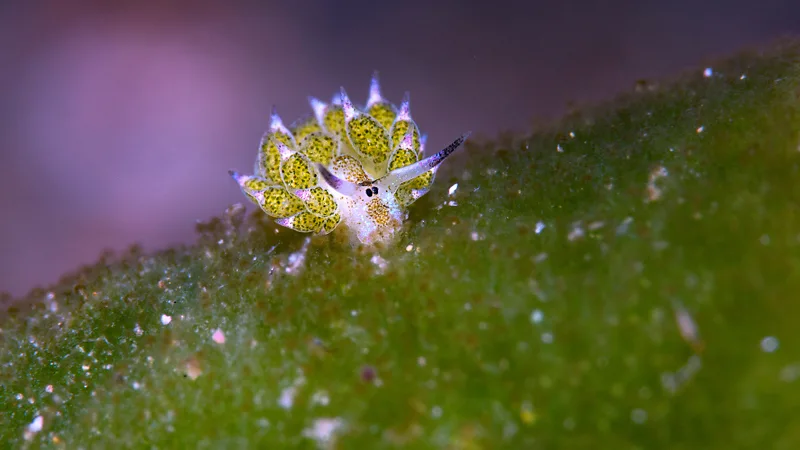
The appearance of the leaf sheep is what made it viral on social media. They are incredibly small, usually ranging from 5 millimeters to about 1 centimeter in length. To visualize this, look at your pinky fingernail—a leaf sheep is likely smaller than that! Because they are so tiny, divers often need a magnifying glass or a macro lens on their camera to spot them properly.
Their “face” is white or pale, with two dark dots that look like beady eyes. These eyes are actually very close together, which adds to the cartoonish, goofy appearance. They also have two rhinophores—which look like sheep ears or antennae—sticking out from their head. These rhinophores have black tips and are used to sense chemicals in the water, helping the slug find food. The “leaves” on their back glow with a vibrant green color because of the live chloroplasts stored inside them. Sometimes, the tips of these leaves have pink, purple, or white coloration, making them look like magical, glowing flowers.
Distinctive Features Checklist
- Rhinophores: Two antenna-like structures that resemble sheep ears.
- Cerata: Leaf-like appendages on the back filled with green chloroplasts.
- Beady Eyes: Two close-set dark spots that act as simple eyes.
- Size: Microscopic to the naked eye, usually under 1cm.
- Coloration: Primarily bright green, often with pink or purple accents.
Habitat and Distribution
If you want to see a leaf sheep in the wild, you will need to travel to the Indo-Pacific region. These creatures love warm, tropical waters. They have been spotted primarily around the coasts of Japan, the Philippines, and Indonesia. They are also found near the Great Barrier Reef in Australia and arguably in other parts of the Coral Triangle, which is an area known for having the highest marine biodiversity in the world.
They don’t swim freely in the open ocean. Instead, they live their lives on the sea floor or on coral reefs, specifically hanging out on the algae they eat. Because they are so small and blend in perfectly with the green algae (thanks to their green color), they are experts at camouflage. You could be looking right at a patch of algae and not realize there is a colony of leaf sheep grazing there.
Where to Spot Them
- Japan: specifically around Kuroshima Island.
- Philippines: popular dive sites like Anilao.
- Indonesia: areas like Bali and Lembeh Strait.
- Australia: parts of the Great Barrier Reef.
Diet: What Does a Leaf Sheep Eat?
The diet of a leaf sheep is very specific. They are picky eaters! Their primary food source is a type of marine algae called Avrainvillea. This is a green algae that grows in soft, velvety clumps on the ocean floor. The slug uses a specialized mouthpart called a radula to pierce the cell walls of the algae and suck out the juices.
As mentioned earlier, they aren’t just eating for calories; they are eating to reload their solar batteries. Once they consume the algae, they separate the chloroplasts and store them. It is important to note that the leaf sheep is a herbivore. It does not hunt other animals or insects. It lives a peaceful life grazing on green pastures of algae, much like a real sheep grazes on grass.
The Relationship with Avrainvillea Algae
This relationship is vital. Without Avrainvillea, the leaf sheep wouldn’t just starve; it would lose its ability to photosynthesize. The slug cannot produce its own chloroplasts—it must steal them. This makes the conservation of their habitat incredibly important. If the algae die off due to pollution or climate change, these adorable slugs will disappear too.
The Lifecycle of a Leaf Sheep
Like other sea slugs, the leaf sheep is a hermaphrodite. This means that every single individual possesses both male and female reproductive organs. This is a very efficient way to reproduce because it means any two slugs that meet can produce offspring together. They don’t have to worry about finding a specific gender partner.
When they mate, they engage in a process where they exchange sperm to fertilize each other’s eggs. After mating, the slugs will lay eggs in a spiral pattern on the algae they live on. These egg ribbons are tiny and often hard to see. From these eggs, microscopic larvae hatch. These larvae drift in the ocean currents as plankton before eventually settling down on a patch of Avrainvillea algae to metamorphose into their adult, sheep-like form.
Lifespan and Growth
We don’t have exact data on how long a leaf sheep lives in the wild because they are so small and hard to track. However, most similar sea slug species live for about a year or less. Their life is short but fascinating. During this time, they must grow, accumulate chloroplasts, avoid predators, and reproduce to ensure the next generation survives.
Threats and Conservation Status
Currently, the leaf sheep has not been evaluated by the IUCN Red List, which tracks endangered species. This is largely because they are a relatively new discovery and are difficult to count. However, like all marine life, they face threats from human activities.
The biggest threat is habitat destruction. Pollution, rising ocean temperatures, and ocean acidification can harm the delicate coral reefs and algae beds where these slugs live. If the Avrainvillea algae cannot grow, the leaf sheep has nowhere to live and nothing to eat. Responsible tourism is also a factor. As these slugs become more famous on the internet, more divers want to see them. It is crucial that divers do not touch or disturb the algae beds while trying to get the perfect photo.
Why Ocean Health Matters
Protecting the ocean isn’t just about saving big animals like whales and sharks. It’s about saving the tiny wonders like the leaf sheep, too. A healthy ocean ecosystem relies on biodiversity. Each creature, no matter how small, plays a role. By reducing plastic waste and being mindful of our carbon footprint, we help protect the tropical waters these solar-powered slugs call home.
Photography Tips for Divers
Since the leaf sheep is a favorite subject for underwater macro photographers, here are some tips if you ever get the chance to photograph one.
First, you need the right equipment. A standard camera won’t work well because the subject is only a few millimeters long. You need a dedicated macro lens and possibly a diopter (a magnifying lens) to get a clear shot. Lighting is also key. Because they live in crevices or on algae, natural light might not be enough. Using strobes or a ring light can help illuminate their glowing green bodies.
Patience is the most important tool. These slugs move slowly, but they are sensitive to movement in the water. If you thrash around, they might retract or hide. Approach slowly and stabilize yourself without crushing the surrounding coral.
Comparing Leaf Sheep to Other Sea Slugs
There are thousands of species of sea slugs (nudibranchs and sacoglossans), and many of them are beautiful. However, the leaf sheep stands out for a few reasons.
Most nudibranchs are carnivores that eat sponges, hydroids, or other sea slugs. The leaf sheep is a sacoglossan, which are mostly herbivores. Also, while many nudibranchs are brightly colored to warn predators that they are poisonous, the green color of the leaf sheep is primarily for camouflage and photosynthesis.
Another famous “solar-powered” sea slug is the Elysia chlorotica, or the Eastern Emerald Elysia. It also performs kleptoplasty, but it looks more like a flat leaf than a sheep. The Costasiella kuroshimae is unique because of its complex shape that mimics a mammal so closely.
Leaf Sheep vs. Blue Dragon
|
Feature |
Leaf Sheep (Costasiella kuroshimae) |
Blue Dragon (Glaucus atlanticus) |
|---|---|---|
|
Diet |
Algae (Herbivore) |
Portuguese Man o’ War (Carnivore) |
|
Size |
Tiny (5mm – 1cm) |
Small (up to 3cm) |
|
Superpower |
Photosynthesis (Solar Power) |
Absorbs stinging cells for defense |
|
Habitat |
Sea floor/Algae beds |
Floats on ocean surface |
|
Appearance |
Green, sheep-like |
Blue, dragon-like |
Why Are They Called “Sheep”?
The name is purely descriptive. If you look at a close-up photo, the resemblance is undeniable. The white head with the two black dots looks like a sheep’s face. The green cerata on the back look like a woolly coat, albeit a green and leafy one. And the way they graze on algae pastures mirrors the behavior of sheep grazing on grass in a field.
It is a perfect example of how common names can help us connect with animals. “Costasiella kuroshimae” is hard to remember and pronounce. “Leaf sheep” is instant, memorable, and descriptive. It helps people care about a tiny invertebrate that they might otherwise ignore.
Can You Keep a Leaf Sheep as a Pet?
This is a very common question. Because they are so cute, many aquarium hobbyists want to keep them in a tank. However, the short answer is: No, you shouldn’t.
Keeping a leaf sheep alive in a home aquarium is incredibly difficult, bordering on impossible for most people. They have extremely specific dietary needs. They only eat specific types of algae. If your tank does not have a constant, healthy supply of Avrainvillea, the slug will starve. Furthermore, they are so small that they can easily get sucked into filtration systems or eaten by other fish. They are very delicate creatures that do best in their natural environment.
The Role of Leaf Sheep in Science
Scientists are very interested in the leaf sheep for medical and biological research. The ability to keep foreign organelles (the chloroplasts) alive and functioning inside an animal cell is fascinating. If scientists can understand how the slug prevents its body from rejecting these foreign parts, it could lead to breakthroughs in understanding immunology and gene therapy.
Additionally, understanding how they sustain photosynthesis could teach us more about energy efficiency. Nature has solved problems over millions of years of evolution that humans are still trying to figure out. The little leaf sheep is a masterclass in biological engineering.
Interesting Facts About Leaf Sheep
Let’s look at some quick, fun facts to summarize why this animal is so cool.
- Regeneration: While not as famous for it as some other species, many sea slugs can regenerate parts of their body if they are damaged.
- Slow Movers: They are not fast. They crawl slowly along the algae, which makes them easy targets for predators if they aren’t camouflaged.
- Global Fame: They became an internet meme around 2015, which significantly raised awareness for sea slug conservation.
- Not Poisonous: Unlike many brightly colored sea slugs, there is no evidence that leaf sheep are toxic to humans, though you definitely shouldn’t touch them!
How Climate Change Affects Them
We touched on this earlier, but it deserves its own section. The leaf sheep relies on a stable environment. Rising sea temperatures cause coral bleaching, which disrupts the entire ecosystem. If the water gets too hot, the algae they eat might die off.
Ocean acidification is another major issue. As the ocean absorbs more carbon dioxide, the water becomes more acidic. This can make it harder for some marine organisms to build their structures and can alter the chemical balance of the water. Since leaf sheep are soft-bodied and rely on specific chemical signals to find food and mates, changing ocean chemistry is a silent killer.
Conclusion
The leaf sheep is truly one of nature’s most delightful surprises. It combines the cuteness of a farm animal with the biological wizardry of a plant. From its ability to harness the power of the sun to its tiny, cartoonish face, it reminds us that the ocean is full of magic waiting to be discovered.
While we might want to put them in a tank or cuddle them, the best way to love a leaf sheep is to protect its home. By supporting marine conservation and keeping our oceans clean, we ensure that these little solar-powered grazers can continue to thrive for generations to come. If you are interested in seeing more tech and nature news, check out our friends at https://siliconvalleytime.co.uk/.
So, the next time you see a picture of this glowing green slug, remember that it’s not just a pretty face—it’s a scientific marvel! For more detailed scientific data on this species, you can visit the Wikipedia page for Costasiella kuroshimae.
Frequently Asked Questions (FAQ)
Q: Is the leaf sheep a real animal?
A: Yes! The leaf sheep (Costasiella kuroshimae) is a real species of sea slug discovered in 1993.
Q: Can leaf sheep photosynthesize?
A: Yes, they perform kleptoplasty, which means they steal chloroplasts from algae and use them to produce energy from sunlight.
Q: How big do leaf sheep get?
A: They are very tiny, usually measuring between 5 millimeters and 1 centimeter in length.
Q: Are leaf sheep poisonous?
A: There is no evidence that they are poisonous to humans, but they are very delicate and should not be touched.
Q: Where can I buy a leaf sheep?
A: You generally cannot and should not buy them. They are extremely difficult to keep alive in captivity due to their specific dietary needs and are best left in the ocean.
Q: Do leaf sheep have eyes?
A: Yes, the two black dots on their face are simple eyes that can detect light and dark.