






A day at the beach should be a relaxing escape, filled with sun, sand, and the soothing sound of waves. But too much sun can quickly turn a perfect day into a painful one. This is where a high-quality beach umbrella becomes your most essential piece of gear. It’s more than just an accessory; it’s your personal oasis of shade, protecting you from harmful UV rays and keeping you cool.
Choosing the right beach umbrella can feel overwhelming with so many options available. From size and fabric to frame material and anchor type, there’s a lot to consider. This guide is here to walk you through everything you need to know. We’ll explore the different types, what features to look for, and how to properly secure your umbrella so it doesn’t fly away. By the end, you’ll be an expert, ready to select the perfect model for your seaside adventures.
Key Takeaways
- UV Protection is Non-Negotiable: Always choose a beach umbrella with a high UPF rating (50+ is ideal) to effectively block harmful UVA and UVB rays.
- Size and Portability Matter: Consider how many people will use the umbrella and how easy it is to carry. A 6 to 8-foot canopy is standard for couples or small families.
- Stability is Key: A sturdy frame, vented canopy, and a reliable sand anchor are crucial for preventing your umbrella from becoming a hazard on a windy day.
- Material Makes a Difference: Look for durable, water-resistant fabrics like polyester or acrylic and rust-resistant frames made from fiberglass or aluminum.
- Proper Setup Ensures Safety: Learn how to correctly anchor your beach umbrella by digging a deep hole and using the rocking-back-and-forth method for maximum stability.
What Makes a Great Beach Umbrella?
Finding the perfect beach umbrella involves looking beyond the color and pattern. The best models combine durability, functionality, and safety. A great umbrella provides ample shade, stands firm against the wind, and is easy to transport and set up. The goal is to find a reliable shelter that enhances your beach experience, rather than causing frustration.
First and foremost, sun protection is the primary function. The fabric of the canopy should have a high Ultraviolet Protection Factor (UPF). This rating indicates how much UV radiation is blocked. A UPF of 50+ is the gold standard, blocking over 98% of the sun’s harmful rays. This feature is crucial for protecting your skin and preventing sunburn. Another key element is the frame’s construction. It needs to be strong enough to withstand coastal breezes but light enough to carry from the car to your spot on the sand. Materials like fiberglass and aluminum are popular because they offer a great balance of strength and low weight while also being rust-resistant.
Understanding UPF Ratings
The Ultraviolet Protection Factor (UPF) is a critical feature to check when shopping for a beach umbrella. This rating system measures the effectiveness of a fabric in blocking both UVA and UVB rays. Unlike SPF, which only applies to sunscreen, UPF applies to fabrics and provides a clearer picture of the protection you are receiving. A higher UPF number means greater protection.
Fabrics are tested in a lab to determine their UPF rating. For instance, a fabric with a UPF of 30 allows 1/30th (or about 3.3%) of UV radiation to pass through it. A UPF 50+ rating is the highest possible certification, indicating that the fabric blocks at least 98% of UV rays. When you see this rating on a beach umbrella, you can be confident that you are getting excellent sun protection. Remember that the shade moves with the sun, so you may still need to apply sunscreen, especially on your feet and legs, which may not always be covered.
The Importance of a Vented Canopy
Have you ever seen a beach umbrella turn inside out on a windy day? This is often because it lacks a proper wind vent. A vented or double-canopy design is a simple but brilliant feature that allows wind to pass through the top of the umbrella. This airflow helps to equalize pressure, preventing gusts from lifting the canopy and sending it tumbling down the beach.
The vent is typically a flap of fabric at the peak of the umbrella, covered by an overlapping second layer. When a strong gust of wind hits, it flows up and out through the vent instead of getting trapped underneath. This significantly increases the stability of your beach umbrella and reduces the stress on the frame and pole. While no umbrella is completely windproof, one with a well-designed vent is far more likely to stay put, giving you peace of mind on breezy afternoons.
Choosing the Right Size and Shape
The size of your beach umbrella canopy directly impacts how much shade you get. The diameter is measured from the tip of one rib to the tip of the opposite one. Common sizes range from 6 feet to over 9 feet. To choose the right size, consider how many people will be using it. A 6-foot umbrella is generally sufficient for one or two people. For a small family or a group of friends, an 8-foot or larger umbrella will provide more comfortable and extensive coverage.
The shape of the canopy also plays a role. The classic round shape is the most common and provides even shade all around the pole. However, some models come in a square or rectangular shape. These can sometimes offer more usable shade, especially when you are trying to cover rectangular items like lounge chairs or coolers. Some specialized designs even have side panels for extra protection from wind and low-angle sun. Think about how you typically set up your beach spot to decide which shape and size will work best for your needs.
Canopy Diameter Guide
Selecting the appropriate canopy size ensures everyone in your group stays cool and protected. Here’s a simple table to help you match the umbrella size to your needs.
|
Canopy Diameter |
Ideal for |
Shade Coverage Area (Approx.) |
|---|---|---|
|
6 ft (1.8m) |
1-2 Adults |
28 sq ft (2.6 sq m) |
|
7 ft (2.1m) |
2 Adults + Small Child |
38 sq ft (3.5 sq m) |
|
8 ft (2.4m) |
2-3 Adults or a Small Family |
50 sq ft (4.6 sq m) |
|
9 ft (2.7m) |
A Small Group or Family with Gear |
64 sq ft (5.9 sq m) |
|
10+ ft (3m+) |
Large Groups, Maximum Shade |
78+ sq ft (7.2+ sq m) |
Remember that a larger beach umbrella will also be heavier and potentially more challenging to manage in the wind. Find the right balance between coverage and manageability for your typical beach outing.
Portability and Weight Considerations
Your beach umbrella is only useful if you can get it to the beach. Portability is a major factor to consider, especially if you have a long walk from the parking lot to the sand. The overall weight of the umbrella, which is determined by its frame material, pole, and canopy size, will dictate how easy it is to carry. Most umbrellas come with a matching carry bag, often with a shoulder strap, which makes transportation much more convenient.
Look for an umbrella that breaks down into a compact size. A two-part pole is standard, allowing it to fit easily in a car trunk. The weight can range from a very light 4-5 pounds for a personal-sized umbrella to over 15 pounds for a heavy-duty, large-canopy model. An aluminum or fiberglass frame will be significantly lighter than a steel one. While a heavier umbrella might feel sturdier, a well-engineered lightweight model can be just as stable, so don’t assume that heavier is always better.
Frame and Pole Materials: What to Look For
The skeleton of your beach umbrella—its frame and pole—is responsible for its overall strength and longevity. These components need to be robust enough to handle repeated use and exposure to the harsh beach environment, which includes sun, saltwater, and wind. The choice of material directly affects the umbrella’s weight, durability, and resistance to rust.
The most common materials for frames and poles are steel, aluminum, and fiberglass. Each has its own set of advantages and disadvantages. Steel is very strong but is also the heaviest and can be prone to rusting if its protective coating gets scratched. Aluminum is a popular choice as it is lightweight and naturally rust-resistant. Fiberglass is prized for its flexibility and strength, allowing the ribs to bend under wind pressure without breaking. A high-quality beach umbrella will often use a combination of these materials to optimize performance, such as an aluminum pole for lightness and fiberglass ribs for flexibility.
Aluminum Frames
Aluminum is one of the most popular materials for a beach umbrella pole and frame, and for good reason. Its primary advantage is its excellent strength-to-weight ratio. An aluminum frame provides solid support without adding excessive weight, making the umbrella much easier to carry. Furthermore, aluminum is naturally resistant to rust and corrosion, which is a huge benefit in the salty, humid air of the coast. You won’t have to worry about it deteriorating after just a few seasons of use. Many aluminum poles are also powder-coated for an extra layer of protection and a more finished look.
Fiberglass Frames and Ribs
Fiberglass is another top-tier material used in high-quality beach umbrella construction, particularly for the ribs. The key property of fiberglass is its flexibility. When a strong gust of wind hits the canopy, fiberglass ribs can bend and flex significantly without snapping. This resilience makes the umbrella far more durable in windy conditions compared to more rigid materials like wood or even some metals. A frame with fiberglass ribs is a sign of a well-made, wind-resistant design. It’s an investment in an umbrella that is less likely to break and will last you for many beach seasons.
Steel Frames
Steel is known for its incredible strength and rigidity, which can make it a good choice for the pole of a heavy-duty beach umbrella. A thick steel pole provides a very stable foundation. However, steel has two main drawbacks: weight and rust. Steel is much heavier than aluminum or fiberglass, which can make the umbrella cumbersome to transport. More importantly, if the protective powder coating on a steel frame gets chipped or scratched, the exposed metal will quickly begin to rust when exposed to salt and moisture. If you opt for a steel-framed model, be sure to inspect it regularly and rinse it with fresh water after each use.
Securing Your Beach Umbrella: Anchors and Stability
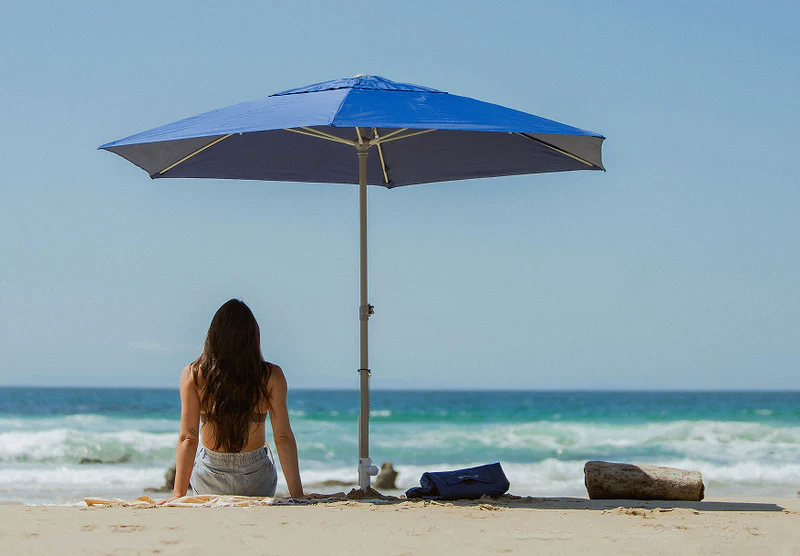
One of the biggest challenges on a breezy day is keeping your beach umbrella firmly planted in the sand. A flying umbrella is not just an inconvenience; it’s a serious safety hazard. To prevent this, you need a reliable method for anchoring your umbrella. Stability comes from a combination of a good anchor, proper setup technique, and features like a vented canopy.
The most basic method is to simply drive the pointed end of the umbrella pole deep into the sand. However, this is often not enough to hold it securely in anything more than a light breeze. That’s why dedicated sand anchors are so popular. These are devices that attach to the pole and are screwed deep into the sand, providing a much more secure base. Some umbrellas even come with a built-in anchor. Understanding the different types of anchors and how to use them correctly is essential for a safe and stress-free day at the beach.
Types of Sand Anchors
There are several types of sand anchors designed to keep your beach umbrella grounded. The most common and effective is the screw anchor. This is a large, corkscrew-like device, usually made of heavy-duty plastic or metal. You insert the umbrella pole into the top, then use built-in handles to twist the screw deep into the sand. This creates a very firm hold that is difficult to pull out. Another type is a sandbag anchor, which involves filling one or more bags with sand and attaching them to the pole to weigh it down. While better than nothing, these are generally less secure than a screw-in anchor, especially in high winds. For the best stability, a deep-screw anchor is the recommended choice.
How to Properly Anchor Your Umbrella
Even with the best sand anchor, proper technique is crucial. Here’s a step-by-step guide to securely setting up your beach umbrella:
- Find a Good Spot: Choose a location away from crowded areas.
- Dig a Hole: Before using your screw anchor, use your hands or a small shovel to dig a hole about 1-2 feet deep. This gets the anchor into the firmer, damp sand beneath the loose top layer.
- Screw it In: Place your screw anchor in the hole and begin twisting it clockwise. Use the handles for leverage and continue turning until the anchor is buried deep in the sand, with only the top portion visible.
- Insert the Pole: Place the bottom pole of your beach umbrella into the anchor and tighten the thumbscrew to lock it in place.
- Rock and Bury: Firmly rock the pole back and forth. This motion packs the sand tightly around the pole and anchor, creating a solid base.
- Fill the Hole: Shovel sand back into the hole, piling it up around the base of the pole and tamping it down firmly with your feet.
- Tilt into the Wind: Finally, angle the top of your umbrella to face the wind. This allows the canopy to act more like a wing, with the wind pushing it down into the sand rather than lifting it up.
Essential Features and Add-Ons
Beyond the basics of size, fabric, and frame, several other features can greatly enhance the functionality and convenience of your beach umbrella. These add-ons can turn a simple shade provider into a multi-functional hub for your beach setup. From built-in tables to hooks for hanging your gear, these thoughtful details are what separate a good umbrella from a great one.
One of the most useful features is a tilt mechanism. This allows you to angle the canopy as the sun moves across the sky, so you can stay in the shade all day without having to physically move the entire umbrella. Most umbrellas have a simple push-button tilt, while more advanced models may offer a crank or collar-tilt system for easier adjustment. Another great addition is a set of built-in hooks or a mesh pocket on the pole, perfect for keeping towels, bags, and speakers off the sand. As technology integration becomes more common in outdoor gear, you can even find umbrellas with built-in USB ports for charging devices, often powered by a small solar panel on top of the canopy, a trend also seen in other tech news covered by platforms like SiliconValleyTime.co.uk.
The Tilt Mechanism
A tilt feature is almost a necessity for a full day at the beach. The sun is constantly moving, and a stationary beach umbrella will only provide optimal shade for a short period. A tilt mechanism allows you to easily adjust the angle of the canopy to block the sun as it travels from east to west.
There are a few different types of tilt systems:
- Push-Button Tilt: This is the most common and straightforward type. A button on the upper part of the pole unlocks a hinge, allowing you to manually push the canopy to the desired angle.
- Crank Tilt: Found on some higher-end models, this system uses a crank handle on the pole. Turning the crank adjusts the angle, which can be easier than manually pushing a large canopy.
- Collar or Auto-Tilt: This is often the most convenient option. Rotating a collar on the pole engages the tilt mechanism, making it easy to adjust without reaching up high.
No matter the type, a reliable tilt function is a key feature for maximizing your shade and comfort.
Built-in Accessories
Modern beach umbrellas often come with clever accessories designed to make your beach day more organized and enjoyable. These small additions can make a big difference in keeping your area tidy and your belongings sand-free.
Here are some popular built-in accessories to look for:
- Towel Hooks: Small plastic or metal hooks that clip onto or are built into the pole are perfect for hanging wet towels, hats, or beach bags.
- Tables/Cupholders: Some models feature a small tray or table that attaches to the pole. This provides a convenient, sand-free spot for drinks, snacks, phones, and sunscreen.
- Mesh Pockets: Pockets sewn into the underside of the canopy or onto a sleeve that fits around the pole are great for storing small, lightweight items like keys, wallets, and sunglasses.
- USB Charging Ports: A growing trend in premium umbrellas is the inclusion of solar-powered USB ports, allowing you to keep your devices charged while you relax.
These features add a layer of convenience that you’ll quickly come to appreciate, making your beach umbrella the true command center of your beach setup.
Frequently Asked Questions (FAQ)
Q1: What is the best material for a beach umbrella?
A: The best combination is typically an aluminum pole for lightweight strength and fiberglass ribs for flexibility in the wind. For the canopy, look for a thick polyester or acrylic fabric with a UPF 50+ rating for maximum sun protection.
Q2: How do I stop my beach umbrella from flying away?
A: The key is a proper anchor. Use a screw-in sand anchor and bury it deep in the sand. After inserting the pole, rock it back and forth to pack the sand tightly. Finally, tilt the umbrella into the wind so that the wind pushes it down, not up. A vented canopy also significantly helps reduce lift.
Q3: What size beach umbrella do I need?
A: A 6-7 foot umbrella is usually sufficient for two people. For a family or small group, an 8-9 foot umbrella will provide more adequate shade. Consider the trade-off between coverage and portability, as larger umbrellas are heavier.
Q4: How do I clean and maintain my beach umbrella?
A: After each use, it’s a good idea to rinse the entire umbrella, especially the frame and pole, with fresh water to remove salt and sand. This prevents rust and corrosion. To clean the canopy, use a mild soap and water solution and a soft brush, then let it air dry completely before storing it in its bag to prevent mildew.
Q5: Is a tilt feature necessary?
A: While not strictly necessary, a tilt feature is highly recommended. It allows you to adjust the canopy as the sun moves, keeping you in the shade throughout the day without having to relocate the entire umbrella. It adds a significant amount of convenience and comfort.
Conclusion: Your Partner for Sun-Safe Fun
A beach umbrella is far more than just a piece of fabric on a stick; it is an essential tool for enjoying the coast safely and comfortably. By investing in a quality umbrella, you are investing in your health and well-being, protecting yourself and your loved ones from the sun’s damaging rays. The perfect model for you will balance powerful UV protection, wind-resistant stability, and convenient portability.
When making your choice, prioritize a high UPF rating, a sturdy but lightweight frame made of aluminum or fiberglass, and a vented canopy to handle coastal breezes. Don’t forget the importance of a reliable sand anchor and the proper technique to secure it. With the knowledge from this guide, you are now equipped to choose a beach umbrella that will be your trusty companion for countless sunny days and happy memories by the sea. The history of this simple yet effective device is quite interesting, and you can learn more about the evolution of the umbrella on its Wikipedia page.