How an induction stove heats food, which cookware it needs, how it compares with gas and electric, and whether it is worth buying.
Quick answer: An induction stove uses a magnetic field to heat the pan directly, rather than heating a flame or burner first. It responds quickly, keeps the kitchen cooler and is easy to clean. The main catches are that it needs magnetic cookware and can cost more up front.
Induction can feel odd at first, because the glass stays fairly cool while water boils. This guide explains how it works, what it does well and where it falls short, so you can decide without the sales talk.
In this article
- What Is an Induction Stove?
- How Does It Compare With Gas and Electric?
- Which Cookware Works?
- What Are the Benefits?
- What Are the Downsides?
- What Does It Cost to Run and Buy?
- Who Benefits Most?
- What Comes Next?
- How Do You Cook Well on Induction?
- How to Get Started
- Frequently Asked Questions
- Final Thoughts
- Explore More
What Is an Induction Stove?
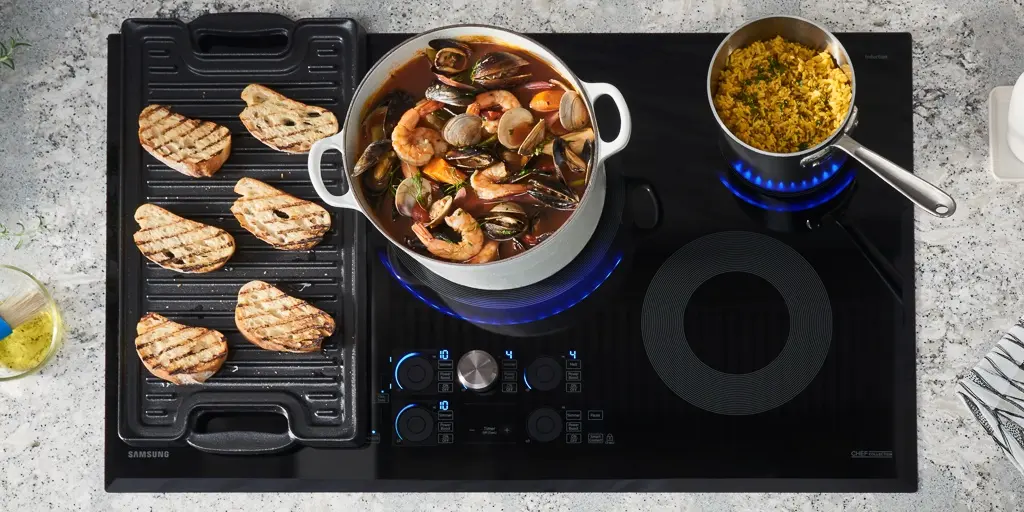
An induction stove has copper coils under a glass top. When you switch on a zone, the coil creates a changing magnetic field. That field produces heat inside a magnetic pan, and the pan then heats the food.
- The pan is the heat source: the glass warms only from contact with the hot pan.
- Fast control: heat changes almost as soon as you change the setting.
- Pan detection: most zones will not run without suitable cookware.
- Forms: portable single burners, built-in hobs and full ranges.
How Does It Compare With Gas and Electric?
| Feature | Induction | Gas | Radiant electric |
|---|---|---|---|
| Heat response | Very fast | Fast | Slow |
| Kitchen heat | Low | High | Medium |
| Cleaning | Easy | Harder | Fairly easy |
| Cookware | Magnetic only | Almost any | Almost any |
| Power cut use | No | Often possible with care | No |
| Indoor combustion fumes | None | Yes | None |
Example 1
A family in a small flat finds the kitchen gets very hot on a gas stove in summer. An induction hob sends more heat into the pan and less into the room, so cooking is more comfortable, although they need a magnetic frying pan.
Which Cookware Works?
Your pan needs a magnetic base. Cast iron, enamelled cast iron and many stainless steel pans usually work. Pure aluminium, copper and glass usually do not, unless they have a magnetic layer built into the base.
1. Do the magnet test
Hold a fridge magnet to the bottom of the pan. If it sticks firmly, the pan should work.
2. Check the base
A flat base gives better contact and heating.
3. Match the size
The pan should suit the zone, as very small pans may not be detected.
Silicon Valley Time Tip
Test your favourite pans with a magnet before you buy the stove. Replacing a whole cookware set can be a large hidden cost, so factor it into your budget.
What Are the Benefits?
- Speed: water often boils faster than on a standard electric burner.
- Precision: low settings are useful for melting chocolate or gentle simmering.
- Efficiency: more of the energy reaches the pan than with a gas flame.
- Cleaner air: no gas is burned in your kitchen.
- Safety: there is no open flame, and many models switch off when the pan is removed.
What Are the Downsides?
- Price: many models cost more than basic electric stoves.
- Wiring: a full range may need a suitable circuit, so ask an electrician.
- Noise: some pans and high settings can hum or buzz.
- Cooking style: charring food on a flame or tossing a wok needs a change of technique.
- Medical devices: anyone with a pacemaker or similar implant should check the guidance from their doctor and device maker.
- Glass top: it can scratch or crack, so lift heavy pans rather than dragging them.
Example 2
A home cook often uses a round-bottom wok. On a flat induction zone it heats poorly, so she switches to a flat-bottom carbon steel wok, or keeps a separate outdoor burner for high-heat cooking.
What Does It Cost to Run and Buy?
Prices vary widely by country and brand. A portable single burner is the cheapest way to try induction, while a full range costs much more. Running costs depend on local electricity and gas prices, so compare your own rates. In a place where electricity is expensive, a more efficient stove may still cost more to run than gas.
Who Benefits Most?
- Small kitchens: less heat and easier cleaning.
- Families with children: no open flame, though zones and pans still get hot.
- Homes leaving gas: a responsive electric option.
- Renters: a portable burner works without changing the kitchen.
What Comes Next?
Induction is spreading as more homes move away from gas and prices for basic models fall in some markets. Newer models offer flexible zones that detect the size and position of the pan. Before paying extra for features, check that you will really use them.
Try this today
Borrow or buy a low-cost portable induction burner and cook on it for a week. You will quickly learn whether the speed, sound and pans suit your cooking.
How Do You Cook Well on Induction?
The first week can feel different, because the pan heats much faster than you may expect. A few small changes in habit make the switch easier.
- Prepare first: chop everything before you start, since oil can get hot in seconds.
- Start lower: use a medium setting until you learn how your hob responds.
- Keep the pan in place: lifting it may stop the heat, so stir instead of shaking it hard.
- Use the timer: many models can turn a zone off automatically, which helps with simmering.
- Clean after cooling: wipe spills with a soft cloth, and avoid harsh scouring pads on the glass.
- Protect the top: lift heavy pans, and clean their bases so grit does not scratch the surface.
You can also place a sheet of parchment under a pan to catch splashes, but keep paper well away from the hot edges and follow your manual, as makers give different advice. If a pan buzzes, a heavier base or a lower setting often reduces the noise. Check the child-lock option too, as it stops the controls being switched on by accident.
Moving from gas also means learning new habits for high-heat cooking. For a good sear, preheat a heavy pan on a medium-high setting and give it a minute before adding oil, instead of using the top setting straight away. Boost modes are powerful, but they are best kept for boiling water, as they can overheat an empty pan very quickly. Never leave a pan empty on a hot zone. If the hob shows an error code, check the base of the pan and the manual before calling for a repair, since many codes simply mean the zone cannot detect the pan.
How to Get Started
- Test your current pans with a magnet.
- Decide between a portable burner, hob or range.
- Check your kitchen wiring and space.
- Compare models on power, zone sizes and controls.
- Read recent reviews about noise and low-heat performance.
- Start with simple meals and learn the settings.
Frequently Asked Questions
Does an induction stove need special pans?
Yes, the base must be magnetic. A fridge magnet is an easy test.
Is induction safer than gas?
It has no open flame or gas leak risk, but pans and the glass just under them still get hot.
Does the stove top stay cool?
It stays cooler than other stoves, but it takes heat from the pan and can burn you after cooking.
Can I use cast iron?
Yes, but lift it rather than sliding it, so you do not scratch the glass.
Does induction work in a power cut?
No, it needs electricity.
Final Thoughts
- Induction heats the pan directly using magnetism.
- It is quick, responsive and easy to clean.
- It needs magnetic pans and suitable wiring.
- Try a portable burner before you commit.
Explore More
Sources: Wikipedia: Induction cooking