






Choosing the right bed is a big decision. It’s where you’ll spend roughly a third of your life, so comfort and space are key. But navigating the world of bed sizes can feel overwhelming. With so many options, from a compact Twin to an expansive Alaskan King, how do you know which one is perfect for you? This guide is here to help you understand every aspect of bed sizes, making your decision simple and stress-free.
We’ll break down everything you need to know, from the dimensions of standard mattresses to who they’re best suited for. Whether you’re furnishing a child’s room, a college dorm, or a luxurious primary suite, you’ll find the answers here. By the end, you’ll be an expert on bed sizes, ready to choose the perfect foundation for a great night’s sleep.
Key Takeaways
- Standard Bed Sizes: The most common options in the US are Twin, Twin XL, Full, Queen, King, and California King. Each serves different needs based on sleeper size and room dimensions.
- Room Size Matters: Before buying, measure your bedroom. A good rule is to have at least two feet of walking space around the sides and foot of the bed.
- Consider Your Lifestyle: Your choice depends on whether you sleep alone, with a partner, with pets, or with children. Your height and sleeping style (like stretching out) also play a crucial role.
- Beyond the Standards: There are several oversized and specialized bed sizes like the Texas, Wyoming, and Alaskan King for those who need maximum space.
- Accessories are Key: Remember to budget for and find the right size bedding, bed frame, and headboard, as availability can vary for less common bed sizes.
Understanding Standard US Bed Sizes
When you walk into a mattress store or browse online, you’ll encounter a standard set of bed sizes. These are the most popular and widely available options across the United States. Knowing their dimensions and typical uses is the first step in finding your ideal match. Each size is designed to meet specific needs, from saving space in a small apartment to providing ample room for a couple.
Let’s dive into the specifics of these common choices. We’ll cover everything from the compact Twin, perfect for kids and solo sleepers, to the popular Queen, which offers a great balance of space and versatility. We will also explore the luxurious King and California King, designed for those who prioritize maximum sleeping area. Understanding these fundamental options will give you a solid foundation before we explore more specialized and oversized bed sizes later on. This knowledge ensures you make an informed decision that fits both your room and your lifestyle perfectly.
Twin Bed: The Compact Choice
Dimensions: 38 inches wide x 75 inches long
The Twin bed is one of the most common bed sizes, especially for children’s rooms and single adults living in smaller spaces. Its compact dimensions make it an excellent space-saver, fitting comfortably into bedrooms where a larger bed would feel cramped. It’s the standard choice for bunk beds, daybeds, and trundles, offering versatility for guest rooms and kids’ sleepovers. Many parents transition their toddlers directly from a crib to a Twin bed, as it provides enough space for a growing child without overwhelming the room.
While it’s a great option for solo sleepers, the 75-inch length can be a bit short for taller teenagers and adults, who might find their feet dangling off the end. For anyone over 5’8”, a Twin XL might be a more comfortable alternative. However, for children, pre-teens, and adults of average height or shorter, the Twin bed offers a cozy and practical sleeping solution. Plus, bedding and accessories for Twin bed sizes are widely available and typically more affordable than those for larger beds, making it a budget-friendly choice.
Twin XL Bed: Extra Length for Taller Sleepers
Dimensions: 38 inches wide x 80 inches long
The Twin XL is a popular step up from the standard Twin, offering the same width but with an extra five inches of length. That additional length makes a world of difference for taller teenagers and adults, providing the legroom needed for a comfortable night’s sleep. This is why the Twin XL is the undisputed king of college dorm rooms across the country. It accommodates young adults of all heights while still being narrow enough to fit into shared, compact living quarters. You’ll often find them used in guest rooms as well, either as a single bed or paired up.
One of the cleverest uses for Twin XL bed sizes is creating a split King bed. By placing two Twin XL mattresses side-by-side on a split King frame, couples can have a King-sized bed where each person can choose their own mattress firmness. This is also the setup required for most adjustable bed frames, allowing each partner to raise their head or feet independently. So, while it’s a go-to for dorms, the Twin XL’s versatility extends far beyond the campus, offering practical solutions for couples with different comfort preferences.
Full Bed (Double Bed): A Cozy Upgrade
Dimensions: 54 inches wide x 75 inches long
The Full bed, often called a Double bed, was once the standard choice for couples. Today, it’s more commonly seen as a luxurious option for a single sleeper or a cozy choice for a couple who doesn’t mind cuddling. At 54 inches wide, it offers a significant 16-inch upgrade in width compared to a Twin bed. This extra space allows a solo sleeper to stretch out comfortably, making it a popular choice for guest rooms and for young adults moving into their first apartment. The Full bed strikes a nice balance, feeling more spacious and “grown-up” than a Twin without taking up as much floor space as a Queen.
For couples, a Full bed provides only 27 inches of personal space per person, which is the same width as a crib. While it can work for some, many couples find it too snug for comfortable, long-term sleeping, especially if one or both partners tend to move around. It also shares the same 75-inch length as a Twin, which can be restrictive for taller individuals. Despite this, its slightly smaller footprint makes it an excellent fit for smaller primary bedrooms where a Queen might be too overpowering.
Queen vs. King: The Battle for the Primary Bedroom
When it comes to outfitting the main bedroom, the decision almost always comes down to two top contenders: the Queen and the King. These are the most popular bed sizes for couples in the United States, and each offers distinct advantages. The Queen bed is the reigning champion of versatility, fitting comfortably into most bedrooms while providing adequate space for two. The King bed, on the other hand, is all about luxurious, sprawling comfort, offering the most personal space of any standard size.
Choosing between them involves a careful balance of priorities. You’ll need to consider your room dimensions, your budget, and, most importantly, your personal space preferences. Do you and your partner value extra room to spread out, or would you prefer more floor space in your bedroom for furniture and walking around? Let’s break down the details of each to help you declare a winner in the battle for your primary bedroom. This decision will define the comfort and functionality of your most personal space for years to come.
Queen Bed: The Most Popular Bed Size
Dimensions: 60 inches wide x 80 inches long
There’s a reason the Queen bed is the most popular mattress size in America. It offers a fantastic combination of comfort, space, and practicality that suits a wide range of people and room sizes. For couples, the 60-inch width provides 30 inches of personal space for each person—a noticeable upgrade from a Full bed. This is generally enough room for two adults to sleep comfortably without feeling cramped. The 80-inch length also accommodates most taller individuals, making it a versatile choice for a broad audience.
The Queen bed’s popularity means that frames, bedding, and accessories are readily available in a vast array of styles and price points. It’s also a great fit for most primary bedrooms, typically leaving enough space for nightstands and other furniture without making the room feel crowded. Single sleepers who enjoy having plenty of room to stretch out also love the spacious feel of a Queen. It’s even a great option for guest rooms, ensuring visitors have a comfortable and roomy place to rest. For most people, the Queen bed hits the sweet spot, delivering on comfort without demanding an oversized room.
King Bed (Standard King): For Maximum Personal Space
Dimensions: 76 inches wide x 80 inches long
If you crave ultimate personal space, the standard King bed (also known as the Eastern King) is the answer. It is the widest of all the standard bed sizes, measuring an impressive 76 inches across. This is the exact same width as two Twin XL beds placed side-by-side. For couples, this translates to a luxurious 38 inches of personal space for each person, which is the same width as a Twin bed. This makes the King bed an ideal choice for couples who value their own sleeping area or for those who share their bed with pets or young children who might wander in during the night.
The significant width of a King bed means it requires a large bedroom. A room should ideally be at least 12 feet by 12 feet to accommodate a King bed comfortably while still allowing for walking space and other furniture. While the investment in both the mattress and the bedding is higher than for a Queen, many people find the superior comfort and unrestricted space to be well worth it. It’s perfect for light sleepers who are easily disturbed by a partner’s movements, as the extra space helps minimize motion transfer.
California King Bed: Longer, but Narrower
Dimensions: 72 inches wide x 84 inches long
The California King bed, or Cal King, is often misunderstood. Many people assume it’s bigger than a standard King, but it’s actually a trade-off: it’s narrower but longer. The Cal King shaves four inches off the width of a standard King but adds four inches to the length. This makes it the longest of the standard bed sizes, and the perfect choice for very tall individuals (over 6’2″) who need extra legroom to avoid having their feet hang off the bed. It’s also a great fit for narrower, longer bedrooms where a standard King might feel too wide and disproportionate.
For couples, the 72-inch width still provides a generous 36 inches of personal space per person, only two inches less than a standard King. So, unless you need the absolute maximum width, the Cal King offers a very similar level of comfort with the added benefit of extra length. It’s important to note that finding bedding for a California King can sometimes be slightly more challenging and expensive than for a standard King, but most major retailers carry a good selection. When choosing between King bed sizes, consider your height and your room’s shape.
Standard Bed Size Comparison Chart
To make comparing these options easier, here is a quick reference chart detailing the dimensions and ideal uses for the standard US bed sizes.
|
Bed Size |
Dimensions (Inches) |
Best For |
Minimum Room Size (Approx.) |
|---|---|---|---|
|
Twin |
38″ x 75″ |
Children, single adults, bunk beds |
7′ x 10′ |
|
Twin XL |
38″ x 80″ |
Taller teens and adults, dorm rooms |
7′ x 10.5′ |
|
Full (Double) |
54″ x 75″ |
Single adults who want more space |
9′ x 10′ |
|
Queen |
60″ x 80″ |
Couples, single adults, most bedrooms |
10′ x 10′ |
|
King |
76″ x 80″ |
Couples who want maximum space |
12′ x 12′ |
|
California King |
72″ x 84″ |
Taller couples, long and narrow rooms |
12′ x 12′ |
Beyond the Standard: Oversized and Specialty Bed Sizes
While the standard sizes cover the needs of most people, some situations call for something even bigger. For families that co-sleep, couples who want the absolute maximum amount of space, or very large bedrooms that dwarf a standard King, oversized bed sizes offer an ultra-luxurious solution. These mattresses are not as common and often need to be special-ordered, along with their corresponding frames and bedding. However, for those who can accommodate them, they provide an unparalleled sleeping experience.
These giant beds are named after states, and their massive proportions live up to their names. Let’s explore some of these giants, like the Alaskan, Texas, and Wyoming King beds. We will also touch on some other specialty sizes you might encounter, such as those designed for RVs or custom-built spaces. Understanding these less common options can be helpful if your needs fall outside the norm or if you’re simply dreaming of building the ultimate sleep sanctuary.
Alaskan King: The Ultimate in Oversized Luxury
Dimensions: 108 inches wide x 108 inches long
The Alaskan King is the pinnacle of oversized luxury, a massive square bed measuring 9 feet by 9 feet. It’s the largest of the readily available oversized bed sizes and offers an incredible amount of space. An Alaskan King can comfortably accommodate multiple adults, making it a dream come true for co-sleeping families. It provides enough room for parents and several children to sleep together without anyone feeling cramped. Even for a couple, the sheer vastness of the bed means you could do a full cartwheel without ever disturbing your partner.
Of course, a bed of this magnitude requires an exceptionally large room—think a primary suite of at least 16 feet by 16 feet to even begin to look proportional. Everything about the Alaskan King is on a grand scale, including the price. The mattress, frame, and custom-sized bedding represent a significant investment. Finding sheets and duvets can be a challenge, often requiring orders from specialty linen companies. But for those with the space and budget, the Alaskan King offers a sleeping experience that is truly in a league of its own, providing unmatched comfort and room for the whole family.
Texas King and Wyoming King
The Alaskan King isn’t the only oversized option available. Two other popular “giant” bed sizes are the Texas King and the Wyoming King, each offering different proportions to suit different needs and room shapes.
Texas King
Dimensions: 80 inches wide x 98 inches long
The Texas King is narrower than the Alaskan King but significantly longer. It’s an excellent choice for very tall people who also want more width than a California King provides. It’s a great option for a family with a pet that likes to sleep at the foot of the bed, providing ample length so no one’s space is compromised. Its rectangular shape can also be a better fit for rooms that are long but not exceptionally wide.
Wyoming King
Dimensions: 84 inches wide x 84 inches long
The Wyoming King is a perfectly square bed, just like the Alaskan King, but on a slightly smaller scale. At 7 feet by 7 feet, it provides a generous amount of space for couples who want a noticeable upgrade from a standard or California King. It feels incredibly spacious and is a popular choice for large primary suites. The square shape makes it a visually appealing centerpiece in a well-proportioned room, offering luxurious comfort without being quite as overwhelmingly massive as the Alaskan King.
Other Specialty Bed Sizes
Beyond the standard and oversized options, there are a few other specialty bed sizes you might come across, designed for specific uses.
- RV Mattresses: Beds in recreational vehicles often come in unique dimensions to fit into tight, custom-built spaces. You might see sizes like an RV King (often shorter and narrower than a standard King) or RV Bunk beds. It’s crucial to measure the exact platform in your RV before purchasing a replacement mattress.
- Split Queen/King: As mentioned earlier, a Split King is created by putting two Twin XL mattresses together. A less common Split Queen also exists, which uses two mattresses that are each 30 inches by 80 inches. These are primarily used with adjustable bed frames to allow independent control for each side.
- Crib and Toddler Beds: At the smallest end of the spectrum, a standard Crib mattress measures approximately 28 inches by 52 inches. These are designed to fit snugly inside a crib for safety. Many cribs are designed to convert into toddler beds, using the same mattress.
How to Choose the Right Bed Size for You
Choosing the perfect bed size isn’t just about picking the biggest one you can afford. It’s a personal decision that requires you to think about several key factors. A bed is a long-term investment in your health and well-being, so taking the time to make the right choice is crucial. You need to evaluate your sleeping habits, your living space, your future plans, and even your budget for accessories.
In this section, we’ll walk you through a step-by-step process to help you narrow down your options and select the ideal bed size. By considering your personal needs and a few practical logistics, you can confidently choose a bed that will provide you with comfortable, restorative sleep for years to come. Don’t rush this decision; a thoughtful approach will pay off every single night.
Factor 1: Who Will Be Sleeping in the Bed?
The first and most important question to ask is: who is this bed for? The answer will immediately narrow down your choices.
- A Single Adult: A Twin, Twin XL, or Full are all great options. A Twin XL is best for taller individuals. If you are a single sleeper who likes to spread out, or if you have a pet that shares the bed, a Queen is a fantastic and luxurious choice.
- A Couple: A Queen is the most popular choice and works well for most couples. However, if you or your partner are light sleepers, value personal space, or are larger individuals, a King or California King is a much better option. A Full bed is generally considered too small for most couples to sleep comfortably long-term.
- A Growing Child: A Twin bed is the standard choice. It provides plenty of room for a child to grow into and is easy to find fun and affordable bedding for. A Full bed can also be a good option for a teenager’s room, giving them more space.
Factor 2: Your Room Dimensions
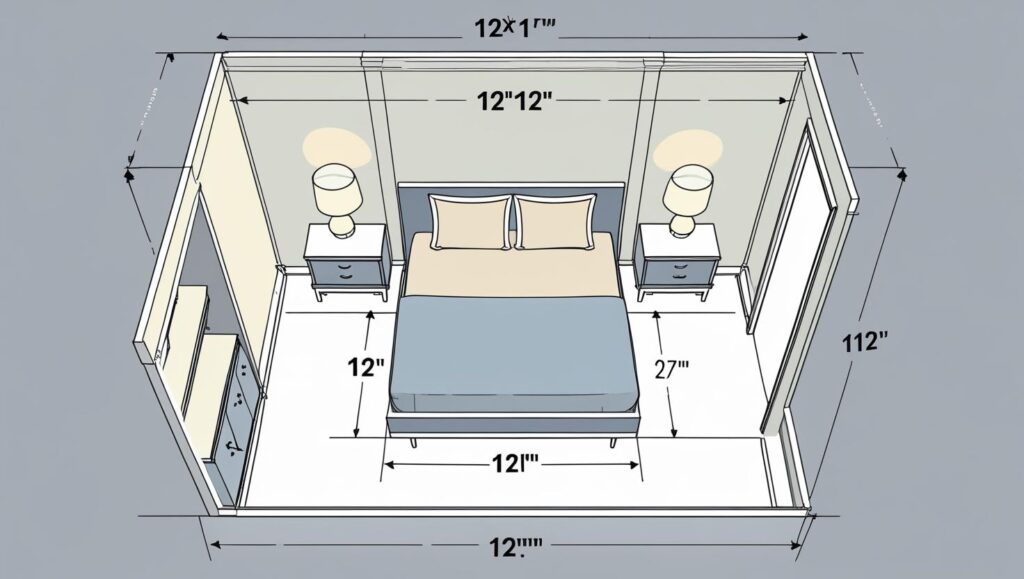
Never buy a bed without first measuring your room. A bed that is too large can make a room feel cramped and unusable. A good rule of thumb is to ensure you have at least 24 to 30 inches of clear space on at least three sides of the bed (the two sides you get out of and the foot). This gives you enough room to walk around, make the bed, and open closet or dresser drawers.
Get out a tape measure and map out the dimensions of the bed on your floor using painter’s tape. This will give you a real-world visual of how much space the bed will occupy. Don’t forget to account for the size of the bed frame and headboard, which can add several inches to the overall footprint of your chosen bed sizes.
Factor 3: Your Height and Sleeping Style
Your physical size and how you sleep play a big role in determining the right bed size.
- Your Height: If you are over 6 feet tall, you should strongly consider a bed that is at least 80 inches long, such as a Twin XL, Queen, or King. If you are exceptionally tall (over 6’2″), a California King, with its 84-inch length, is the best choice to ensure your feet don’t hang off the edge.
- Your Sleeping Position: Do you sleep curled up in a ball, or do you spread out like a starfish? If you’re a sprawler, you’ll appreciate the extra width of a Queen or King, even if you sleep alone. If you and a partner both like to spread out, a King is almost a necessity for peaceful sleep.
Factor 4: Budget and Future Needs
Your budget is another practical consideration. Remember that the cost includes more than just the mattress. Larger bed sizes require more expensive frames, headboards, sheets, and comforters. The price difference between Queen and King bedding, for example, can be significant. Make sure to factor these recurring costs into your decision.
Also, think about your future. Are you planning on getting a pet? Do you think your kids might start crawling into bed with you on weekend mornings? Are you in a “starter” home and planning to move to a larger space in a few years? Buying a bed that can accommodate your future life plans can be a wise investment, preventing you from needing to upgrade too soon. Thinking about these possibilities can help you select one of the many bed sizes that works for you now and later.
Frequently Asked Questions (FAQs) about Bed Sizes
1. What is the most popular bed size?
The Queen bed is by far the most popular bed size in the United States. Its 60″ x 80″ dimensions offer a great balance of space for couples while still fitting comfortably into most standard bedrooms.
2. Can two adults sleep on a Full bed?
While it’s possible, it will be a tight fit. A Full bed provides only 27 inches of space per person, which is the same width as a crib mattress. Most couples find a Queen or King to be much more comfortable for long-term sleeping.
3. What’s the difference between a King and a California King?
A standard King is wider and shorter (76″ x 80″), while a California King is narrower and longer (72″ x 84″). The King offers maximum width and personal space, making it great for couples who want room to spread out. The Cal King is ideal for taller people who need extra legroom.
4. Do I need a special frame for a Twin XL?
Yes, because a Twin XL is five inches longer than a standard Twin, you will need a Twin XL-specific bed frame and bedding to ensure a proper fit.
5. How much space should I leave around my bed?
It is recommended to leave at least 24 inches (2 feet) of walking space around the sides and foot of the bed. This allows for easy movement, making the bed, and accessing other furniture like dressers and nightstands.
Conclusion: Finding Your Perfect Fit
Choosing the right bed is a foundational decision for your home and your health. The wide world of bed sizes can seem complex, but by breaking it down, the perfect choice becomes clear. It’s a balancing act between the space in your room, who you share your bed with, and your personal comfort preferences. From the space-saving Twin to the sprawling Alaskan King, there is a size designed to meet every need.
Remember to measure your room, consider your sleeping style, and think about your future needs. Use our charts and tips as a guide, but ultimately, trust your own comfort. A bed is a long-term investment, and making an informed choice will reward you with restful nights and energized days for years to come. With this comprehensive guide to bed sizes, you are now equipped with the knowledge to select the perfect centerpiece for your sleep sanctuary. To learn more about the history and standardization of different sizes, you can explore a wide range of information, as a bed’s dimensions and name can vary considerably around the world as detailed on Wikipedia’s page for bed size.