




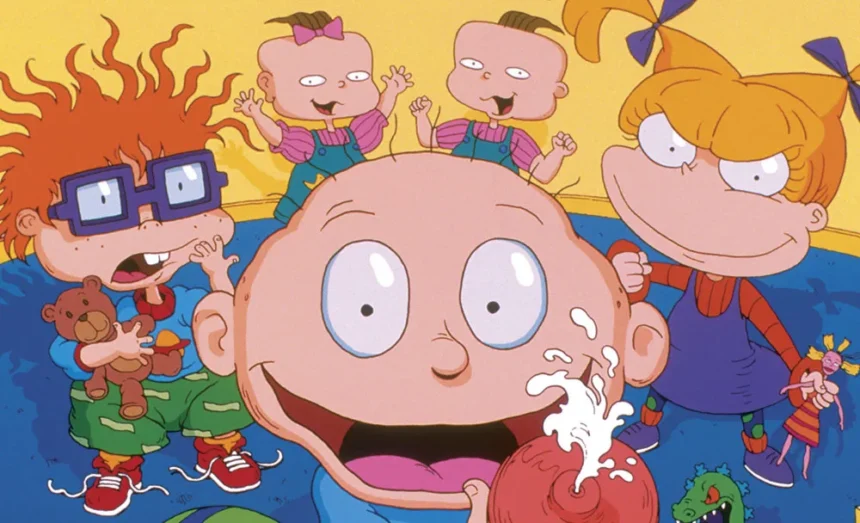

Remember settling in on a Saturday morning with a bowl of cereal, eagerly waiting to see what trouble Tommy Pickles and his gang would get into? For many of us, the wobbly animation and quirky music of Rugrats defined our childhoods. It wasn’t just a cartoon about babies; it was an epic saga of imagination, friendship, and the sheer terror of potty training.
This post will take a nostalgic trip back to the playpen to explore how Rugrats went from a simple sketch to a global phenomenon that shaped a generation of television.
Key Takeaways
- Who created the show and how it helped launch the Nicktoons era.
- The cultural impact of the show’s unique perspective.
- A look at the movies, spin-offs, and recent revivals.
The Birth of a Nicktoon Legend
In the late 1980s, Nickelodeon was looking to rebrand itself. They wanted original animated content that was edgy, different, and spoke directly to kids without being preachy. They turned to the creative studio Klasky Csupo.
The Brains Behind the Babies
Arlene Klasky, Gábor Csupó, and Paul Germain are the trio responsible for bringing the Pickles family to life. The idea was sparked by a simple question from Klasky: “If babies could talk, what would they say about us?” She was raising her own young children at the time and wondered how the world looked from their perspective.
Csupó and Germain helped flesh out the concept, deciding that while the babies would talk eloquently to each other, adults would only hear babbling. This key mechanic created the show’s central dynamic: a secret world existing right under the parents’ noses.
Launching the Nicktoons Era
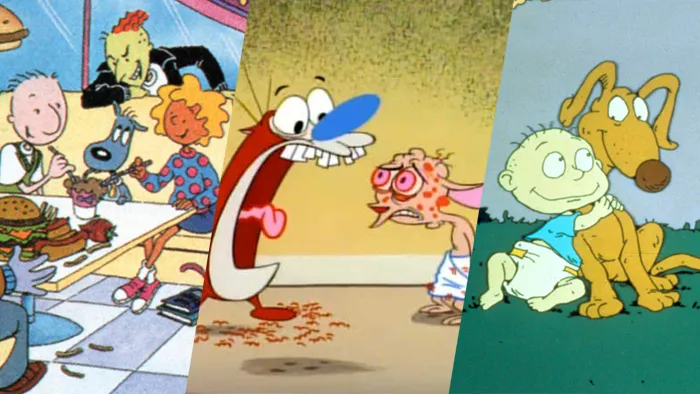
On August 11, 1991, Rugrats premiered alongside Doug and The Ren & Stimpy Show. These were the original three “Nicktoons.” While Ren & Stimpy was chaotic and Doug was introspective, Rugrats found a sweet spot in the middle. It was adventurous and weird, thanks to Csupó’s unique animation style, but it was also grounded in relatable family themes.
Meet the Gang: Characters Who Defined a Generation
The success of Rugrats wasn’t just about the concept; it was about the characters. Each baby represented a distinct personality type that viewers could identify with, even as children.
- Tommy Pickles: The brave leader. Armed with a screwdriver in his diaper, he was the embodiment of courage and curiosity.
- Chuckie Finster: The anxious best friend. Chuckie was the voice of reason (and fear), constantly worrying about the consequences.
- Phil and Lil DeVille: The chaotic twins. They loved mud, bugs, and generally making a mess.
- Angelica Pickles: The antagonist we loved to hate. As the older cousin who could talk to adults, she held all the power and wasn’t afraid to abuse it.
Fun Fact: The Voice Behind the Brave
Did you know that Tommy Pickles was voiced by a woman? The incredibly talented E.G. Daily provided the voice for our favorite bald-headed hero. She also voiced Buttercup in The Powerpuff Girls!
Cultural Impact and Breaking Boundaries
Rugrats was surprisingly progressive for a 90s cartoon. It didn’t shy away from depicting different family structures and cultural backgrounds.
Representation Matters
One of the show’s most enduring legacies is its representation of Jewish culture. Through Tommy’s maternal grandparents, Boris and Minka, the show featured episodes centered on Passover and Hanukkah. “A Rugrats Passover” is still cited today as one of the best representations of the holiday in children’s media. It treated the traditions with respect while making the history accessible to kids of all backgrounds.
The “Feminist” Toddler?
While Angelica was often the villain, she was also a fiercely independent and strong-willed female character. Her mother, Charlotte Pickles, was a high-powered CEO, constantly on her brick-sized cell phone. This dynamic showed a career-driven mother figure, which was relatively rare in cartoons of that era.
The Peak Years: Movies and Merchandise
By the mid-90s, Rugrats wasn’t just a TV show; it was an empire. You couldn’t walk through a mall without seeing Reptar merchandise or Chuckie Finster t-shirts.
Hitting the Big Screen
The popularity culminated in The Rugrats Movie (1998). It was a massive box office success and introduced a crucial new character: Dil Pickles, Tommy’s younger brother. The movie dealt with the very real and difficult feelings of jealousy and adjustment that come with a new sibling.
This was followed by Rugrats in Paris: The Movie (2000), which gave us the heartbreaking yet heartwarming storyline of Chuckie getting a new mom, and Rugrats Go Wild (2003), a crossover with another Klasky Csupo hit, The Wild Thornberrys.
Spin-Offs: All Grown Up
After over a decade on air, the creators took a bold risk. They aged the characters up. All Grown Up! premiered in 2003, showing the gang as pre-teens and teenagers. While it was divisive among purists, it ran for five seasons, proving that the audience was invested in these characters regardless of their age.
There was also Preschool Daze, a short-lived series focusing on Angelica and Susie Carmichael in preschool.
The Legacy of Rugrats
The original series ended its production run in 2004 after 172 episodes, making it one of the longest-running cartoons in history at the time.
Why It Still Resonates
Why do we still talk about Rugrats? Because it took kids seriously. It understood that to a toddler, the backyard is a jungle, the vacuum cleaner is a monster, and the world is a giant, confusing, wonderful place. It validated the fears and triumphs of childhood without being condescending.
The Revival
In 2021, Paramount+ launched a CGI revival of the series. While the visual style changed, the core premise remained. It reintroduced the characters to a new generation, proving that the concept of babies having secret adventures is timeless.
Conclusion
From wobbly hand-drawn lines to slick CGI, Rugrats has journeyed a long way from the playpen. It taught us that “a baby’s gotta do what a baby’s gotta do.” Whether you were brave like Tommy, cautious like Chuckie, or bossy like Angelica, there was a place for you on the carpet.
If you’re feeling nostalgic, maybe it’s time to revisit the Pickles family. You might find that the jokes land even better now that you’re one of the grown-ups they were always trying to figure out.
Quick Trivia: Did You Know?
- Mark Mothersbaugh, the lead singer of the band Devo, composed the show’s memorable theme song and much of the background music.
- The star on Chuckie’s shirt was originally supposed to be the planet Saturn, but was simplified for animation.
- Angelica’s doll, Cynthia, was modeled after a real messy doll one of the writers saw, representing the wear and tear of being a favorite toy.