




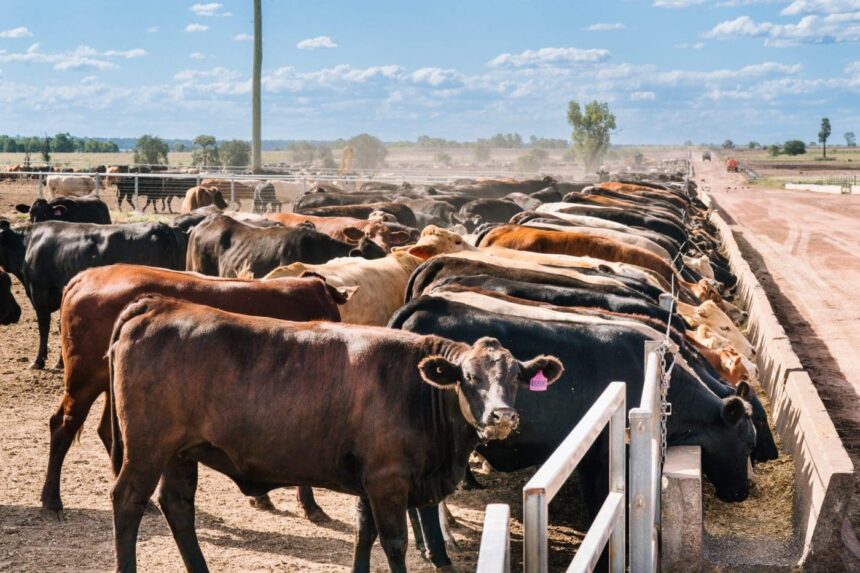

The world of agriculture is vast and complex, with many moving parts that work together to bring food from the farm to your table. One of the critical components in the livestock sector is the feedlot. This is where cattle are brought to be fed a specialized diet to prepare them for market. In this comprehensive guide, we will explore the concept and operations of a national feedlot corporation. We’ll examine its role in the agricultural economy, its impact on food security, and the various processes that make it a cornerstone of the modern meat industry.
Understanding the functions of such a large-scale agricultural enterprise provides valuable insight into how a nation manages its beef supply. From animal welfare to environmental considerations, a national feedlot corporation juggles numerous responsibilities. Join us as we unpack the layers of this essential agricultural institution.
Key Takeaways
- A national feedlot corporation is a centralized entity, often government-linked, that manages large-scale cattle feeding and finishing operations to support a country’s beef industry.
- Its primary goals are to ensure a stable and high-quality beef supply, stabilize market prices, and support local cattle ranchers by providing a reliable market for their livestock.
- Operations involve a complex chain of activities, including procurement of feeder cattle, specialized feed formulation, comprehensive animal health management, and logistics for market distribution.
- Modern feedlots under a national feedlot corporation often integrate technology for efficient monitoring of animal health, feed consumption, and environmental impact.
- These corporations play a significant role in a nation’s food security strategy but also face scrutiny regarding animal welfare, environmental sustainability, and economic viability.
What Exactly Is a National Feedlot Corporation?
A national feedlot corporation is an organization, often established with government oversight or as a public-private partnership, designed to centralize and scale up the cattle finishing process. Unlike smaller, independent feedlots, a national-level entity operates on a massive scale. Its primary mission is typically to advance national food security goals, support the domestic livestock industry, and create a more efficient and standardized system for producing beef.
The core function of any feedlot is to take ‘feeder cattle’—young cattle that have been weaned and grazed on pasture—and bring them to a specific market weight by feeding them a high-energy diet. A national feedlot corporation does this on an industrial scale. It manages vast facilities capable of holding tens of thousands, or even hundreds of thousands, of cattle at once. This centralization allows for economies of scale in feed purchasing, veterinary care, and logistics. It also aims to produce a consistent quality of beef that meets specific market demands, both domestically and for export. By acting as a major buyer of feeder cattle, it provides a stable source of income for thousands of smaller farmers and ranchers who raise the young stock.
The Mission and Vision of Such an Entity
The overarching mission of a national feedlot corporation is multifaceted. At its heart, the goal is to strengthen the nation’s beef industry. This is achieved by creating a reliable and efficient pipeline for turning young cattle into market-ready beef. This mission can be broken down into several key objectives.
First, food security is paramount. By managing a large portion of the finishing process, the corporation helps ensure a steady supply of beef for the country’s population, reducing reliance on imports and cushioning against global market volatility.
Second, it aims to support the agricultural economy. A national feedlot corporation acts as a major economic engine, purchasing cattle from local breeders, buying feed from grain farmers, and employing a large workforce. This creates a stabilizing effect on the rural economy.
The vision often extends beyond simple production. It can include goals like becoming a global leader in beef production, pioneering sustainable and ethical farming practices, and using technology to improve efficiency and animal welfare. The ultimate vision is a robust, self-sufficient, and profitable national beef sector that benefits everyone from the small-scale rancher to the end consumer.
The Difference Between a National Corporation and Private Feedlots
While both a national feedlot corporation and a private feedlot fatten cattle, their scale, purpose, and structure are vastly different. Private feedlots are typically family-owned or corporate-owned businesses operating for profit. Their size can range from a few hundred head of cattle to tens of thousands, but they are driven by private market forces. Their decisions on when to buy cattle, what to feed them, and when to sell are based on maximizing their individual profit margins.
A national feedlot corporation, on the other hand, often has a broader, state-mandated agenda. While it is expected to be financially sustainable, its primary driver might not be profit alone. It serves strategic national interests. This could mean maintaining cattle numbers even when market prices are low to ensure a future supply, or investing in research and development for the benefit of the entire industry.
Furthermore, a national feedlot corporation is subject to a higher degree of public and governmental scrutiny. Its operations, financial performance, and adherence to environmental and animal welfare standards are often a matter of public record and political debate. Private feedlots, while regulated, operate with more autonomy. This public-facing role means a national feedlot corporation must balance its commercial operations with its public responsibilities.
The Operational Structure of a National Feedlot Corporation
The day-to-day running of a national feedlot corporation is a masterclass in logistics, animal science, and business management. Its structure is designed to handle an immense volume of livestock efficiently and safely. This involves a highly organized system divided into several key operational areas, each with its own specialized function, all working in concert to achieve the corporation’s goals.
From the moment a young steer arrives at the gate to the day it is shipped to a processing plant, its journey is meticulously managed. The operational structure ensures that every animal receives the proper care, nutrition, and health monitoring required to grow into a high-quality product. This complex system is the engine that drives the entire enterprise, turning raw agricultural inputs into a finished food product on a massive scale.
Procurement and Sourcing of Cattle
The entire process begins with procurement. A national feedlot corporation needs a constant and reliable supply of feeder cattle to keep its pens full and its operations running. The procurement division is responsible for sourcing these animals from thousands of individual ranchers and breeders across the country. This is a critical function that directly supports the broader livestock industry.
There are several methods for procuring cattle:
- Direct Contracts: The corporation may enter into direct contracts with ranchers, agreeing to purchase a certain number of cattle at a predetermined price or a price based on a market formula. This gives ranchers security and helps the corporation plan its inventory.
- Auction Markets: Procurement agents attend livestock auctions throughout the country to bid on and purchase suitable pens of cattle. This requires deep knowledge of cattle quality and market trends.
- Breeder Programs: Some corporations establish their own breeding programs or partner with specific breeding operations to ensure a supply of cattle with desirable genetic traits, such as fast growth, disease resistance, and high meat quality.
Once purchased, the cattle are transported to the feedlot facilities. This process is carefully managed to minimize stress on the animals, which is crucial for their health and future performance. The quality of the incoming cattle is the foundation upon which the success of the entire feedlot operation is built.
The Science of Feed and Nutrition
At the core of the feedlot is the feeding program. This is not simply about providing food; it’s a precise science aimed at maximizing weight gain efficiently and safely. The nutrition department of a national feedlot corporation employs animal nutritionists who formulate specific diets, known as rations. These rations change as the cattle grow and their nutritional needs evolve.
A typical feedlot ration consists of:
- Forage: Such as hay or silage, which provides necessary fiber for digestive health. This usually makes up a smaller portion of the diet.
- Grains: Corn, barley, and wheat are common sources of energy. They form the bulk of the diet and are responsible for rapid weight gain and the development of marbling in the meat.
- Protein Sources: Ingredients like soybean meal or cottonseed meal provide the protein necessary for muscle growth.
- Supplements: A carefully balanced mix of vitamins, minerals, and other additives is included to ensure overall health and prevent deficiencies.
The feed is prepared in a central feed mill on-site, where massive mixers combine the ingredients according to the nutritionists’ formulas. Feed trucks then deliver the precise amount of feed to each pen multiple times a day. The corporation constantly monitors feed consumption and animal weight gain to fine-tune the rations for optimal performance. This scientific approach to nutrition is what makes the modern feedlot so effective.
Animal Health and Welfare Management
Keeping hundreds of thousands of animals healthy in a concentrated environment is a monumental task. The animal health and welfare division of a national feedlot corporation is therefore a critical component of its operations. A dedicated team of veterinarians and animal health technicians is responsible for the well-being of the entire herd.
Their responsibilities include:
- Initial Processing: When new cattle arrive, they are processed. This typically involves vaccinations to prevent common diseases, treatment for any parasites, and the placement of an ear tag for individual identification.
- Daily Health Monitoring: Pen riders, who are skilled stockmen on horseback or in vehicles, ride through the pens every day to look for any signs of illness or injury. An animal that appears sick is immediately separated and moved to a ‘hospital pen’ for diagnosis and treatment.
- Disease Prevention Protocols: Strict biosecurity measures are in place to prevent the introduction and spread of disease. This includes controlling access to the facility, managing pests, and ensuring clean water and feed.
- Welfare Standards: The corporation must adhere to national and often international standards for animal welfare. This includes providing adequate space, clean water, protection from extreme weather, and low-stress handling techniques.
A proactive approach to animal health is not just ethical; it’s also good business. Healthy animals gain weight more efficiently and produce a higher-quality product. A robust welfare program is essential for the long-term sustainability and social license of any national feedlot corporation.
The Economic Impact of a National Feedlot Corporation
The establishment and operation of a national feedlot corporation send ripples throughout a country’s economy, influencing everything from rural employment to national GDP. As a major player in the agricultural sector, its economic footprint is substantial. It acts as a central hub in the beef value chain, connecting thousands of small-scale producers with large-scale processors and, ultimately, consumers.
This economic influence is a key reason why governments often support such initiatives. By creating a more organized and efficient beef industry, a national feedlot corporation can enhance agricultural productivity, create jobs, and contribute to economic stability, particularly in rural areas that depend heavily on farming. Let’s explore the specific ways it shapes the economic landscape.
Job Creation and Support for Rural Economies
One of the most direct economic benefits of a national feedlot corporation is job creation. The sheer scale of the operation requires a large and diverse workforce. These are not just jobs for farmhands and cattle-pen riders. The corporation employs veterinarians, nutritionists, data analysts, mechanics, administrative staff, logistics coordinators, and managers. These are skilled positions that bring stable employment to rural communities.
Beyond direct employment, the corporation supports a vast network of secondary industries. It purchases massive quantities of grain and forage, providing a reliable market for crop farmers. It contracts with trucking companies to transport cattle and feed. It buys fuel, equipment, and veterinary supplies from local and national suppliers. This “multiplier effect” means that every dollar spent by the national feedlot corporation generates additional economic activity throughout the supply chain. For rural towns, the presence of a major feedlot facility can be the difference between economic stagnation and growth.
Influence on Beef Prices and Market Stability
A national feedlot corporation can exert significant influence on the beef market. By managing a large percentage of the nation’s cattle on feed, it can help stabilize both cattle prices for ranchers and beef prices for consumers. When there is a surplus of feeder cattle on the market, which would normally cause prices to crash and harm ranchers, the corporation can increase its purchasing to absorb the excess supply.
Conversely, during times of shortage, it can manage its inventory to ensure a steady flow of finished cattle to the market, preventing sharp price spikes for consumers. This ability to act as a market buffer is a key strategic advantage. It helps to smooth out the “boom and bust” cycles that can be so damaging to the livestock industry. While it doesn’t have complete control over prices, which are still influenced by global trends and consumer demand, its presence adds a level of predictability and stability that benefits the entire value chain. This stability is crucial for long-term investment and planning in the agricultural sector, and it’s something that independent news sources like those found at https://siliconvalleytime.co.uk/ often analyze in the context of economic policy.
Environmental and Sustainability Concerns
While a national feedlot corporation offers significant economic and food security benefits, its operations are not without environmental challenges. Concentrating a vast number of animals in one place creates a significant environmental footprint that must be carefully managed. The modern consumer and regulatory bodies are increasingly demanding that food be produced in a sustainable manner, and large-scale feedlots are under intense scrutiny.
A forward-thinking national feedlot corporation recognizes that sustainability is not just an ethical obligation but a necessity for long-term viability. It must actively invest in technologies and practices that mitigate its environmental impact. The key areas of concern are manure management, water usage, and greenhouse gas emissions.
Manure Management and Nutrient Runoff
A single cow can produce a significant amount of manure each day. When you multiply that by tens or hundreds of thousands of animals, you are dealing with a staggering volume of waste. If not managed properly, this manure can pose a serious environmental risk. The primary concern is nutrient runoff. Manure is rich in nitrogen and phosphorus, and if it enters nearby waterways through rain runoff, it can cause eutrophication—a process where excess nutrients lead to algal blooms that deplete oxygen in the water and harm aquatic life.
To combat this, a national feedlot corporation implements sophisticated manure management systems. These include:
- Containment Ponds: Feedlot pens are designed to slope towards containment ponds or lagoons that capture all runoff. These ponds are lined to prevent seepage into the groundwater.
- Regular Pen Cleaning: Pens are regularly scraped to remove accumulated manure, which is then stockpiled.
- Composting and Utilization: The stockpiled manure is often composted. This process reduces its volume, kills pathogens, and turns it into a valuable, stable fertilizer. This compost can then be sold or applied to nearby farmland, recycling the nutrients back into the crop production cycle.
Water Consumption and Conservation
Large-scale feedlot operations are water-intensive. Water is needed not only for the animals to drink but also for cleaning, dust control, and cooling systems in hot climates. A national feedlot corporation can draw a significant amount of water from local aquifers or surface water sources. Responsible water management is therefore essential to ensure the sustainability of the operation and to avoid conflicts with other water users in the region.
Water conservation strategies are a high priority. These may involve:
- Efficient Water Troughs: Using water troughs with float valves that prevent overflow and waste.
- Water Recycling: Treating and recycling water used for cleaning and dust suppression.
- Drought Management Plans: Implementing plans to reduce water usage during periods of drought.
- Monitoring Water Quality: Regularly testing both incoming water and any discharged water to ensure it meets environmental standards.
By investing in water-saving technologies and practices, a national feedlot corporation can significantly reduce its water footprint and demonstrate its commitment to responsible resource management.
Greenhouse Gas Emissions and Mitigation Strategies
The cattle industry as a whole is a known source of greenhouse gas emissions, particularly methane. Methane is a potent greenhouse gas produced by the digestive process of ruminant animals like cattle (a process called enteric fermentation) and from decomposing manure. As a major concentrator of cattle, a national feedlot corporation has a responsibility to address these emissions.
Mitigation is a complex challenge, but several strategies are being explored and implemented:
- Feed Additives: Research is ongoing into feed additives that can inhibit the microbes in a cow’s stomach that produce methane. Some of these additives have shown promising results in reducing enteric methane emissions.
- Manure Management: Covering manure lagoons to capture the methane they produce is another key strategy. This captured methane (biogas) can then be used as a renewable energy source to power the feedlot’s operations or can be sold to a local utility.
- Efficiency Gains: It is important to note that efficient feedlots can have a lower carbon footprint per pound of beef produced. By getting animals to market weight faster, the total lifetime emissions of the animal are reduced. The precise nutritional science employed by a national feedlot corporation contributes to this efficiency.
By actively working to reduce its greenhouse gas emissions, the corporation can help make the beef industry more sustainable and align its operations with national and global climate goals.
Technology and Innovation in the Modern Feedlot
The image of a feedlot might still conjure up old-fashioned scenes of cowboys and cattle drives, but the reality of a modern national feedlot corporation is far more high-tech. Technology and data are revolutionizing every aspect of feedlot management, driving efficiency, improving animal welfare, and enhancing sustainability. Innovation is no longer a luxury; it’s a core component of running a successful and responsible large-scale agricultural enterprise.
From individual animal monitoring to data-driven decision-making, technology allows the corporation to manage its vast operations with a level of precision that was once unimaginable. These innovations are key to meeting the challenges of the 21st century and ensuring the long-term success of the national beef industry.
Data Management and Individual Animal Tracking
In a facility with thousands of animals, treating the herd as a single unit is no longer sufficient. The future is in individual animal management, and this is made possible by data. Almost every animal that enters a facility run by a national feedlot corporation is fitted with an electronic identification (EID) tag. This tag is like a unique digital passport for the cow.
Every time the animal is weighed, receives a treatment, or even eats from a “smart” feeder, its EID tag is scanned, and the data is recorded in a central database. This allows the corporation to track:
- Individual Weight Gain: Identifying which animals are performing well and which are not.
- Health Records: Keeping a complete history of every vaccination and treatment an animal has received.
- Feed Intake: Monitoring how much each animal is eating to optimize nutrition and spot early signs of illness (a drop in appetite is often the first sign of a problem).
- Genetics and Performance: Linking an animal’s performance back to its genetic background, which helps in making better decisions for future cattle procurement.
This mountain of data is analyzed by software to provide managers with actionable insights. They can identify trends, predict health issues before they become widespread, and make informed decisions that improve the overall efficiency and profitability of the operation.
Automation in Feeding and Health Monitoring
Automation is another area of rapid innovation within the national feedlot corporation. Repetitive and labor-intensive tasks are increasingly being automated, which frees up staff to focus on more skilled work like animal observation and welfare.
- Automated Feed Mills: The process of mixing feed rations can be almost fully automated. A computer system, based on the nutritionist’s formulas, controls the mixing of various ingredients, ensuring a perfectly consistent ration every time.
- Robotic Feed Delivery: In some advanced feedlots, robotic systems are used to deliver feed to the pens, further reducing labor costs and ensuring timely feeding.
- Automated Health Monitoring: Technology is also being used to monitor animal health automatically. For example, thermal cameras can scan pens to detect animals with a fever. Microphones can analyze coughing sounds to identify the early stages of respiratory disease. Pedometers or accelerometers on ear tags can track an animal’s movement, with a decrease in activity signaling a potential health issue.
This use of automation and remote sensing allows for earlier intervention when an animal gets sick, which leads to better treatment outcomes, improved animal welfare, and reduced use of antibiotics. It represents a shift from reactive to proactive herd health management.
|
Technology in the Feedlot |
Primary Function |
Key Benefit |
|---|---|---|
|
Electronic ID (EID) Tags |
Individual animal identification and data collection. |
Enables precision management of health, nutrition, and performance. |
|
Data Analytics Software |
Processes vast amounts of animal data to find trends. |
Provides actionable insights for better decision-making. |
|
Automated Feed Systems |
Mixes and delivers feed rations automatically. |
Ensures nutritional consistency and reduces labor costs. |
|
Thermal Imaging Cameras |
Scans animals to detect elevated body temperatures. |
Early detection of fever and illness before visual signs appear. |
|
Biogas Capture Systems |
Covers manure lagoons to capture methane. |
Reduces greenhouse gas emissions and creates renewable energy. |
The Future of the National Feedlot Corporation
The road ahead for any national feedlot corporation is one of continuous adaptation and evolution. It operates at the intersection of agriculture, economics, technology, and public opinion. To remain relevant and successful, it must navigate a complex landscape of emerging challenges and opportunities. The future will be defined by its ability to embrace sustainability, respond to changing consumer demands, and integrate cutting-edge technology even further into its operations.
The corporation of tomorrow will likely look very different from the one today. It will be more transparent, more data-driven, and more deeply integrated into a circular economy. Its success will be measured not just by the quantity of beef it produces, but by the quality, sustainability, and ethical integrity of its entire production system.
The role of a national feedlot corporation is complex, touching on food security, economic development, and environmental stewardship. For those interested in the broader context of how such government-chartered entities function within a national economy, the history and structure of various government-sponsored enterprises can be an illuminating area of study, with a wealth of information available on platforms like Wikipedia.