





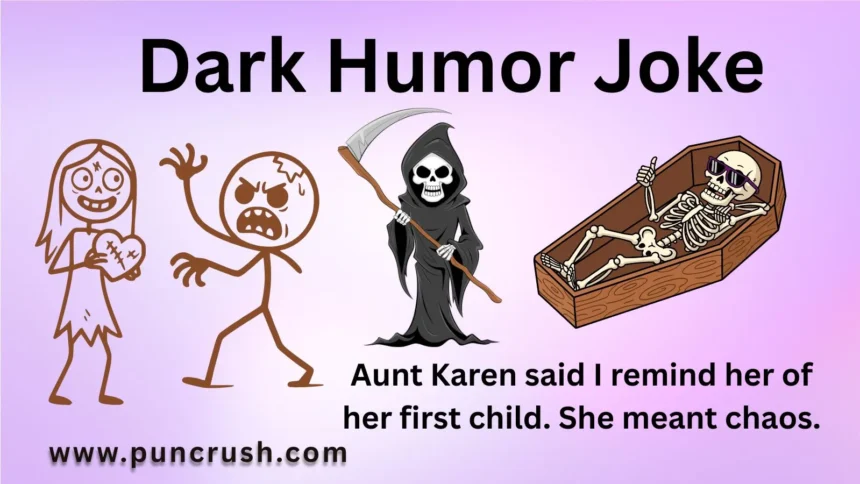

Dark humor jokes have a strange power over us. They make us laugh at things that, deep down, feel a little uncomfortable. Death, bad luck, awkward situations, life’s grim corners—somehow, comedy finds a way in. And here’s the thing: a lot of people secretly love this kind of humor, even if they don’t admit it out loud.
So let’s talk about it. What makes this style of comedy tick, why we enjoy it, and where it can go too far.
What Are Dark Humor Jokes, Exactly?
At its core, dark humor takes serious or taboo subjects and turns them into something funny. Think topics most people avoid at dinner parties—illness, failure, fear, or mortality.
It’s sometimes called black comedy. The idea is simple: instead of running from heavy stuff, the joke leans straight into it. The laugh comes from the surprise and the tension being broken.
To be honest, that mix of “I can’t believe they said that” and “okay, that was funny” is what defines the whole style.
How It Differs From Regular Comedy
Regular jokes usually play it safe. They stick to harmless setups—pets, food, dating mishaps.
Dark humor goes the other way. It pokes at the things we usually treat with respect or silence. That’s why it feels edgier and a little risky.
The Role of Tension
A good dark joke builds tension, then snaps it. Your brain expects sadness or seriousness, and the punchline flips it. That flip is where the laugh hides.
Why People Actually Enjoy Dark Humor
What’s interesting is that liking edgy comedy isn’t a sign that someone is cruel. Studies have suggested people who enjoy black comedy often have decent emotional intelligence. They can hold two ideas at once: “this is sad” and “this is also absurd.”
Here are a few reasons people connect with it.
It Helps Us Cope
Sometimes life throws awful stuff at us. Joking about it can make hard moments feel lighter. Nurses, soldiers, and emergency workers are famous for this. Their dark jokes aren’t about being heartless—they’re about surviving the weight of the job.
It Breaks Tension
A well-placed dark joke can cut through a tense room. It gives people permission to breathe.
It Feels Honest
Some people are tired of overly polite humor. Dark humor jokes feel raw and real, like someone finally saying what others won’t.
Where Dark Humor Crosses the Line
Now for the tricky part. Not every dark joke lands well, and some don’t deserve to.
There’s a big difference between joking about a tough topic and using that topic to attack a group of people. The first can be clever. The second is just mean.
Punching Down vs. Punching Up
A common rule among comedians: avoid “punching down.” That means don’t aim your jokes at people who are already struggling or vulnerable.
Shock humor that targets someone’s race, disability, or trauma usually stops being funny fast. It turns into offensive jokes that hurt more than they entertain.
Context Matters
The same joke can feel fine among close friends but awful in a public setting. Comedy boundaries shift depending on who’s listening.
Common Categories of Dark Humor
You don’t need cruel examples to understand the styles. Here are a few common buckets dark humor tends to fall into.
Mortality Jokes
These poke fun at death and our fear of it. Think jokes about wills, funerals, or the absurdity of how short life is. They work because everyone shares that fear.
Bad Luck Humor
This style laughs at misfortune—usually the joke-teller’s own. “Things keep going wrong, so I might as well laugh” energy.
Existential Jokes
These deal with the meaning of life, or the lack of it. They’re often clever, a little gloomy, and weirdly comforting.
Workplace Gallows Humor
You’ll find this in stressful jobs. People joke about burnout, deadlines, and chaos to stay sane.
The Online Culture Around Dark Humor
The internet changed everything for this kind of comedy. Memes, short clips, and quick text jokes spread dark humor faster than ever.
Why It Thrives Online
Online spaces let people share niche humor with others who “get it.” A joke that might flop in person can find a whole audience online.
But here’s the catch: context disappears online. A stranger scrolling past your post won’t know your tone or intent. That’s how edgy comedy sometimes blows up into a controversy.
The Risk of Going Viral
Once a joke leaves your circle, you lose control of how it’s read. Something meant as harmless can get misread as harmful in seconds.
Tips for Telling Dark Humor Jokes Responsibly

If you enjoy this style, you can still tell it well without hurting anyone. A few simple habits go a long way.
Know Your Audience
This is rule number one. Read the room before you speak. Close friends might love a grim joke. New coworkers? Maybe not.
Aim at Yourself First
Self-deprecating dark humor is usually the safest. When you’re the target, no one else feels attacked.
Avoid Real Victims
Jokes about general fears—death, failure, awkward life stuff—work better than jokes about specific tragedies or real people who are suffering.
Watch the Timing
A joke told too soon after a real event can sting. Give heavy moments some space before laughing at them.
Audience Awareness Makes or Breaks the Joke
Honestly, this point deserves its own section. The best dark comics aren’t reckless. They’re sharp readers of people.
They notice when a crowd is open to risk and when it isn’t. That awareness is the difference between a clever laugh and an awkward silence.
So if you want your dark humor jokes to land, pay attention. Comedy boundaries aren’t fixed walls. They move with the room.
Writing Better Dark Humor Jokes
Want to actually write this stuff? Here’s some practical advice.
Start With Truth
Great dark humor usually points at something true. Find the honest, uncomfortable thing first, then build the joke around it.
Keep It Short
Punchlines hit harder when they’re tight. Trim the extra words. Let the surprise do the work.
Use Misdirection
Set up one expectation, then flip it. That sudden turn is where black comedy gets its kick.
Test It Quietly
Try new dark humor jokes on people you trust before sharing them widely. Their reactions tell you if you’ve gone too far.
The Fine Balance Between Funny and Cruel
Here’s the thing about this whole topic: dark humor lives on a tightrope. Lean one way and it’s brilliant. Lean too far and it becomes offensive jokes nobody wanted.
The goal isn’t to avoid all risk. A little risk is what makes it funny. The goal is to be smart about that risk.
Intent Isn’t a Free Pass
“I was just joking” doesn’t undo real hurt. If a joke lands badly, owning it beats defending it.
Related Context: Comedy Has Always Pushed Limits
This isn’t new. Comedians have tested comedy boundaries for centuries. From old satire to modern stand-up, pushing limits has always been part of the craft.
Shock humor, in particular, has a long history on stage. Some of the most famous comics built careers on saying what others wouldn’t. The conversation about “too far” has existed just as long.
What changes is the audience and the times. Society keeps shifting, and so do the lines around dark humor jokes.
Final Thoughts on Dark Humor Jokes
Dark humor jokes aren’t going anywhere. They help us cope, connect, and laugh at the parts of life that scare us most.
The trick is balance. Enjoy the edge, respect the people around you, and stay aware of the room. Do that, and your dark humor can be sharp, smart, and genuinely funny—without crossing into cruelty.
At the end of the day, the best edgy comedy makes you laugh and think at the same time. And that’s a pretty rare thing to pull off.



