




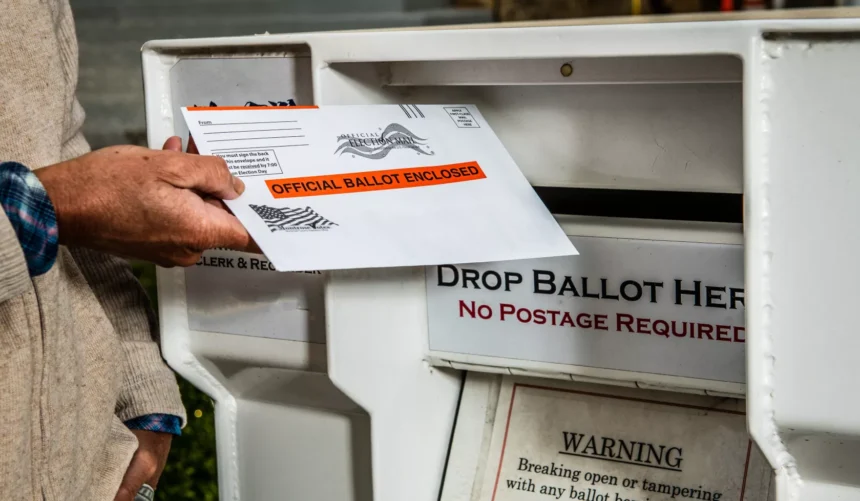

The judge sullivan usps ballot ruling became one of the most talked-about court moments of the 2020 election. And honestly, it’s easy to see why. A federal judge told the U.S. Postal Service to move fast on mail-in ballots — and then things got tense when the agency didn’t fully comply.
Here’s the thing. This wasn’t just legal drama. It was about making sure people’s votes actually got counted. Let me walk you through the whole story in plain English.
Read more: Union Saint Gilloise: The Remarkable Story of Belgian Football’s Greatest Comeback
Who Is Judge Emmet G. Sullivan?
Before we get into the ruling, it helps to know the man behind it. Judge Emmet Sullivan isn’t new to high-stakes cases. He’s been on the federal bench for decades and has handled some seriously big names.
He’s known for being direct. He asks tough questions. And he doesn’t seem to enjoy being ignored — which matters a lot in this story.
Quick Bio Table: Judge Emmet G. Sullivan
|
Detail |
Information |
|---|---|
|
Full Name |
Emmet Gael Sullivan |
|
Date of Birth |
June 4, 1947 |
|
Birthplace |
Washington, D.C. |
|
Education |
Howard University — BA (1968), JD (1971) |
|
Appointed to Federal Bench By |
President Bill Clinton, 1994 |
|
Current Role |
Senior U.S. District Judge, U.S. District Court for D.C. |
What’s interesting is that Sullivan was appointed to different courts by presidents from both parties. Reagan, Bush, and Clinton all played a part in his career. So he’s not easy to pin down politically.
The Background: A Career of Big Cases
Sullivan grew up in Washington, D.C., and studied at Howard University. He earned his law degree there in 1971.
Over the years, he presided over some famous matters. He handled the Ted Stevens corruption trial. He oversaw the Michael Flynn case. He even ruled on Title 42 immigration policy years later.
To be honest, by the time the 2020 election rolled around, Sullivan already had a reputation for holding powerful people accountable.
Why the 2020 USPS Ballot Fight Even Started
Let’s set the scene. In 2020, huge numbers of Americans planned to vote by mail. The pandemic pushed more people toward absentee ballots than ever before.
That put enormous pressure on the Postal Service. Any delay in election mail could mean votes arriving too late to count.
Groups like the NAACP and Vote Forward sued the USPS. They worried that new postal policies would slow down mail-in ballot delivery right when timing mattered most.
The October 28 Order: Lifting the Limits
On October 28, 2020, Sullivan stepped in with a clear order. He told USPS to lift limits on extra trips and overtime in the days before Election Day.
Why? Because delivery delays could keep ballots from reaching election offices on time. Removing those limits gave postal workers more room to move mail quickly.
He also ordered the Postal Service to report daily trip numbers — national, regional, and local. In other words, he wanted receipts.
What This Order Actually Meant
Think of it this way. Sullivan wasn’t running the Postal Service. He was making sure it didn’t create bottlenecks during a critical week.
This part of the judge sullivan usps ballot ruling was about speed and transparency. Get the ballots moving, and prove you’re doing it.
The November 3 Sweep Order on Election Day
Now here’s where it gets dramatic. On November 3 — Election Day itself — Sullivan issued a sharper order.
He told USPS to “sweep its facilities” in key swing states by 3 p.m. that day. The goal was simple: find any stuck ballots and send them out immediately.
The sweeps were supposed to run from 12:30 to 3 p.m. That’s a tight window, sure. But the stakes were massive.
When USPS Didn’t Comply
And then the plot twist. The USPS didn’t meet the deadline.
The government later said postal inspectors didn’t have enough people on site to do full certified sweeps in that short window. A Justice Department attorney told the court plainly: “There wasn’t enough time.”
Sullivan was not happy. At a hearing the next day, he said he wasn’t pleased about the “eleventh-hour development.” He wanted answers.
The Judge’s Reaction
“I would like you to explain just what the heck happened yesterday,” Sullivan told the government by videoconference.
He made a bigger point too. He said he would have been “very sensitive” to any complaint — so why didn’t they just tell him sooner that they couldn’t comply?
That’s the heart of the judge sullivan usps ballot ruling saga. It wasn’t only the missed sweep. It was the failure to speak up in time.
Ordering Postmaster General Louis DeJoy to Court
After the postal service noncompliance, Sullivan didn’t let it slide. He signaled that Postmaster General Louis DeJoy himself might have to appear before the court.
Sullivan said DeJoy “is either going to have to be deposed or appear before me and testify under oath about why some measures were not taken.”
That’s a big deal. When a federal judge starts talking about deposing the head of an agency, people pay attention.
The 300,000 Untracked Ballots Problem
Here’s another piece that raised eyebrows. Roughly 300,000 ballots had been scanned entering postal facilities — but had no recorded scan on the way out.
Sounds alarming, right? It certainly caused worry.
But a USPS official named Kevin Bray explained it. He said workers had pulled ballots from the normal mail stream to speed things up. They handled some by hand and delivered them without a final scan.
So Were Those Ballots Lost?
Not necessarily. Bray said the missing final scan didn’t mean the ballots weren’t delivered.
“We did that intentionally so we could expedite the delivery, not to cause somebody to think it’s lost,” he testified.
Still, he admitted there was no system tracking how many ballots were located during sweeps. That gap is exactly what made the court nervous.
The Swing State Focus: Carolinas and Pennsylvania
Sullivan and the plaintiffs zeroed in on specific places. Four USPS districts in the Carolinas and Pennsylvania got extra attention.
These were swing states. Every ballot mattered there. Plaintiffs even asked that site managers be available to certify that sweeps had happened.
There was also a report about boxes of mail-in ballots sitting on a loading dock in Greensboro, North Carolina. The government checked during the hearing and said no ballots remained on site.
The Post-Election Hearings
The court didn’t wrap things up overnight. Sullivan held hearings and pressed for real numbers.
He ordered the government to report how many ballots weren’t delivered on Election Day — by 9 a.m. the next morning. “I’m not a bully but this is very important information,” he said.
He also praised the postal workers themselves. He called Bray a “mail flow expert” and recognized the dedication of the people doing the actual delivery work.
“You’re Not Off the Hook”
Sullivan said he was willing to turn the other cheek on the missed sweep — for now. But he made his stance clear.
“Tell your clients they’re not off the hook,” he told the Justice Department. His focus stayed on one thing: getting ballots counted.
Why the Ruling Mattered for Mail-In Voting
So why does any of this still matter? Because it touched the core of election integrity.
Mail-in ballot delivery was under a microscope in 2020. Millions of voters trusted the system to carry their choice safely and on time.
The judge sullivan usps ballot ruling showed that a federal court order could push a giant agency to act fast — and be held accountable when it fell short.
The Bigger Lesson
Here’s the thing about election mail. It only works if people believe in it. Transparency builds that trust.
By demanding daily reports and swift sweeps, Sullivan sent a message. When it comes to absentee ballots and USPS election 2020 operations, delays and silence aren’t acceptable.
What This Means Going Forward
Every election cycle, mail-in voting keeps growing. That means the pressure on the Postal Service isn’t going away.
The judge sullivan usps ballot ruling created a kind of blueprint. Courts can step in, demand accountability, and keep the focus on voters — not paperwork.
And that’s really the takeaway. A federal court order isn’t just about legal wins. It’s about protecting the promise that your vote counts.
Final Thoughts
Looking back, the judge sullivan usps ballot ruling stands out as a defining moment in how courts safeguard elections. Sullivan pushed hard, asked blunt questions, and refused to let postal service noncompliance quietly pass.
The whole episode reminds us that election integrity depends on people willing to demand answers. If you want to dig deeper into Judge Sullivan’s long career and his role in cases like this one, you can read more on his Wikipedia page. It’s a solid starting point for understanding the man who kept the pressure on when it mattered most.