






Empire State Building climbers are people who scale the outside of one of the most recognizable skyscrapers on Earth — usually without permission, often facing arrest. Some do it for the thrill. Some do it for social media. And some, honestly, just want to prove they can.
Here’s the thing — this building isn’t just tall. It’s a cultural symbol, and that’s exactly why it keeps attracting the boldest (and most reckless) urban climbers in the world.
Let’s break down who these people are, why they do it, and what happens when they get caught.
Read more: Julian Quiñones: The Colombian-Born Star Now Firing for Mexico
What Is the Empire State Building, Anyway?
The Empire State Building is a 102-story Art Deco skyscraper in Manhattan, standing 1,454 feet tall including its antenna. It opened on May 1, 1931, at 350 Fifth Avenue.
For decades, it wore the crown as the world’s tallest building — from 1931 all the way until 1970. That’s a long time to sit at the top.
To be honest, it’s still one of the most famous buildings anywhere. Around 4 million people visit its observation decks every year.
A Quick Look at Its History
The building went up fast — construction ran from 1930 to 1931. Workers raced against the clock and the Great Depression, and somehow they still finished ahead of schedule.
It was designed in the Art Deco style, with that signature blonde limestone facade. The spire was originally meant to dock airships. That plan flopped (high winds made it impossible), but the mast stayed.
What’s interesting is that the building lost money for years after opening. New Yorkers even nicknamed it the “Empty State Building.” Funny how that reputation flipped completely.
Why Climbers Are Drawn to It
Empire State Building climbers aren’t chasing the tallest building anymore — plenty of skyscrapers dwarf it now. They’re chasing the icon.
This building has appeared in more than 250 films since King Kong climbed it in 1933. That fictional ape set the tone for everything that followed.
Here’s the pull:
- Global recognition — everyone knows this skyline shape.
- Cultural weight — climbing it means something bigger than height.
- The challenge — its Art Deco setbacks and steel frame make for a technical climb.
Scale this building and you’re instantly famous. That’s the whole draw for most urban climbers.
Alain Robert — The “French Spider-Man”
Alain Robert is the most famous Empire State Building climber, and he did it back in 1994. Born August 7, 1962, in France, he’s a professional rock and urban climber nicknamed the “French Spider-Man.”
He climbed the roughly 381-metre building free solo — no ropes, no net. Just a small chalk bag and climbing shoes. That’s it.
What Makes Robert Different
Robert doesn’t use gimmicks. He relies on grip strength and technique, gripping tiny window ledges and frames for hours at a time.
He’s scaled dozens of the world’s tallest structures, including:
- The Burj Khalifa in Dubai (828 metres)
- The Petronas Towers in Kuala Lumpur
- Taipei 101
- The Willis Tower in Chicago
He’s been arrested many times — police often wait for him at the top. Some climbs are legal and sponsored. Most aren’t.
To be honest, he’s the standard every other urban climber gets measured against.
Justin Casquejo — The Teen Rooftopper
Justin Casquejo made headlines in March 2014 when he scaled One World Trade Center at just 16 years old. Born October 24, 1997, he’s an American rooftopper of Filipino descent from Weehawken, New Jersey.
He slipped through a hole in a fence, dressed like a construction worker, and rode an elevator most of the way up. Then he walked past a sleeping guard and reached the antenna.
His Empire State Building Connection
Casquejo has posted social media images near the Empire State Building — those climbs went unapprehended. He’s built a big following on Instagram and YouTube documenting stunts like these.
But he hasn’t gotten away with everything. He’s been arrested repeatedly at other NYC high-rises, including 70 Pine Street and the Paramount tower. Trespassing and BASE jumping charges follow him around.
Here’s the warning — his story shows how young these climbers often are, and how quickly a viral stunt turns into a criminal record.
The 2026 Incident: A Proposal at the Top
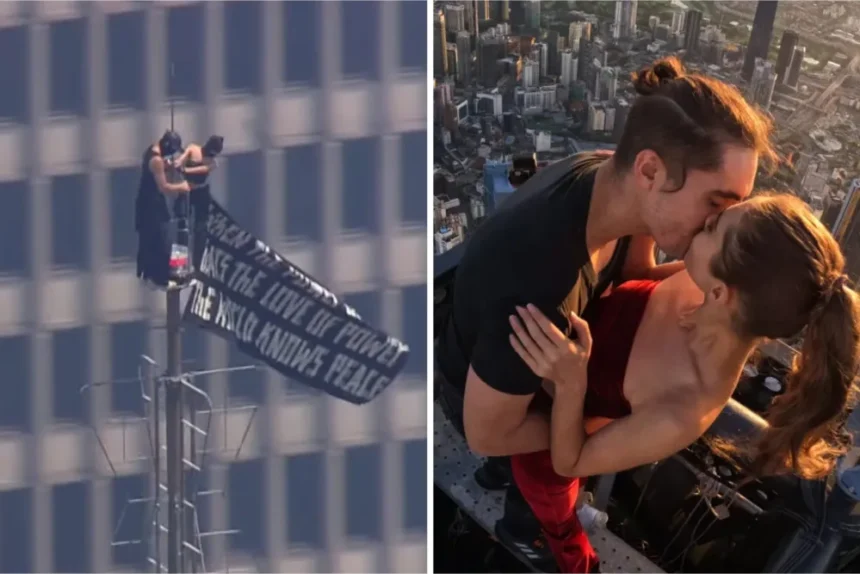
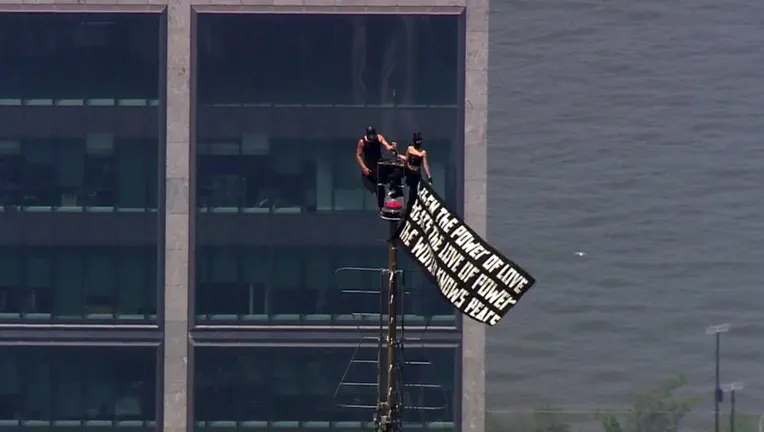
On July 1, 2026, rooftoppers Ivan Beerkus and Angela Nikolau climbed to the top of the Empire State Building spire — and then Beerkus proposed. They also unfurled a banner reading a peace-themed quote.
Both were taken into custody right after.
The stunt drew comparisons to Philippe Petit’s famous 1974 tightrope walk between the Twin Towers. Romantic? Maybe. Legal? Not even close.
How the Building Protects Itself
The Empire State Building has real security in place — and it’s tighter than most climbers assume. After the 1997 and 2012 shootings, security around the building increased sharply.
The upper observatory catwalk (the one meant for airship passengers decades ago) sits behind gates. The 103rd-floor balcony is off-limits to the public entirely.
If you’re thinking the guards are asleep like in Casquejo’s WTC story — don’t count on it. The building learned that lesson the hard way.
Legal Consequences Climbers Face
Climb this building without permission and you’re facing criminal charges — full stop. New York City has a specific misdemeanor law against scaling tall buildings without authorization.
Here’s what climbers typically face:
- Trespassing charges (often second-degree)
- Community service — Casquejo got 23 days plus an essay
- Probation — sometimes years of it
- Fines — Alain Robert has paid them across multiple countries
Get caught and the story writes itself: handcuffs at the top, a court date, and a permanent mark on your record.
Why Rooftopping Is So Dangerous
Rooftopping and free solo climbing kill people — that’s not an exaggeration. One slip, one gust of wind, one loose grip, and there’s no second chance.
Alain Robert himself has fallen seven times in his life. One 1982 fall left him in a coma for five days with fractures across his body. He nearly died.
The danger isn’t just falling, either:
- Weather — rain and wind turn a climb deadly fast.
- Fatigue — some climbs last hours with no rest.
- Legal risk — arrest is almost guaranteed.
If you’re inspired by these stories, admire them from the ground. Don’t copy them — the risk isn’t worth your life or a criminal record.
What’s Actually Worth Seeing: The Observation Decks
You don’t need to climb the outside to enjoy the view — the observation decks are the legal, safe way up. There are three: the 80th, 86th, and 102nd floors.
The 86th-floor deck is the classic one, open air, open 365 days a year. The 102nd floor sits higher and fully enclosed, redesigned in 2019 with floor-to-ceiling glass.
Roughly 4 million people visit these decks yearly. Tickets use dynamic pricing — book ahead and off-peak to avoid paying top rates.
The Bigger Picture on Urban Climbing in NYC
Rooftopping NYC has grown into its own subculture, fueled by Instagram and YouTube views. The Empire State Building sits at the center of it because of what it represents.
But the pattern is always the same: a daring climb, a viral post, then an arrest. High-rise trespassing doesn’t end well, no matter how good the photos look.
What’s interesting is how each new generation of climbers keeps trying anyway. The icon just won’t stop calling to them.
Final Thoughts
Empire State Building climbers keep proving one thing — this skyscraper still holds a grip on the imagination nearly a century after it opened. From Alain Robert’s bare-handed 1994 ascent to the 2026 spire proposal, the stories keep coming.
If you want the full record of the building’s history, its climbers, and every notable incident, the detailed Empire State Building Wikipedia page is the best place to dig deeper — it covers everything from construction to the most recent climbing stunt in careful detail.



