




If you take any prescription medication and you’re on Medicare, chances are you’ve bumped into Medicare Part D at some point. It’s the piece of Medicare that helps pay for your prescription drugs. And honestly, it can feel confusing at first.
So let’s break it down in plain language. No jargon, no fluff. Just what you actually need to know about how Part D works, what it costs, and the help that’s out there if money is tight.
Here’s the thing: millions of people rely on this program every day. In 2019 alone, about 47 million people were enrolled in Part D. That’s roughly three-quarters of everyone on Medicare. So you’re in good company if you’re trying to figure it out.
Read more: 60 Style Hairstyles That Are Making a Massive Comeback in 2024
What Is Medicare Part D?
Medicare Part D is the prescription drug benefit for people on Medicare. Simple as that. It helps cover the cost of medicines you pick up at the pharmacy.
The government doesn’t run the drug plans directly. Instead, private insurance companies offer plans that Medicare approves. You pay a premium, and the plan pays most of the cost of your covered prescriptions.
What’s interesting is that Part D is optional. Nobody forces you to sign up. But if you skip it and change your mind later, you might get hit with a late penalty. More on that in a minute.
A Quick Look at the History
Medicare didn’t always cover prescription drugs. When it started back in 1965, it only paid for medicines given by a doctor, not the ones you take at home.
That gap left a lot of older Americans struggling to afford their pills. Lawmakers tried to fix it several times over the years, but those efforts kept falling apart.
The real change came with the Medicare Modernization Act of 2003. President George W. Bush signed it, and the Part D program officially launched on January 1, 2006. That’s when everyday prescription coverage finally became part of Medicare.
Who Can Enroll and How Eligibility Works
To join Part D, you first need to be enrolled in either Medicare Part A or Part B. That’s the basic rule.
From there, you’ve got two paths:
- Sign up for a stand-alone prescription drug plan that works alongside Original Medicare.
- Get a Medicare Advantage plan that already includes drug coverage.
You can enroll directly through the plan or through someone who helps set it up for you. Easy enough.
Watch Out for the Late Enrollment Penalty
Here’s a small trap. If you wait too long to sign up for Part D and don’t have other drug coverage, you may owe a late-enrollment penalty. And that penalty sticks with you.
So even if you don’t take many medications right now, it’s worth thinking about signing up on time.
Costs and Premiums: What You’ll Actually Pay
Let’s talk money, because that’s what everyone really wants to know.
In 2020, the average monthly Part D premium across all plans was around $27. Prices swing a lot depending on where you live and which plan you pick, though.
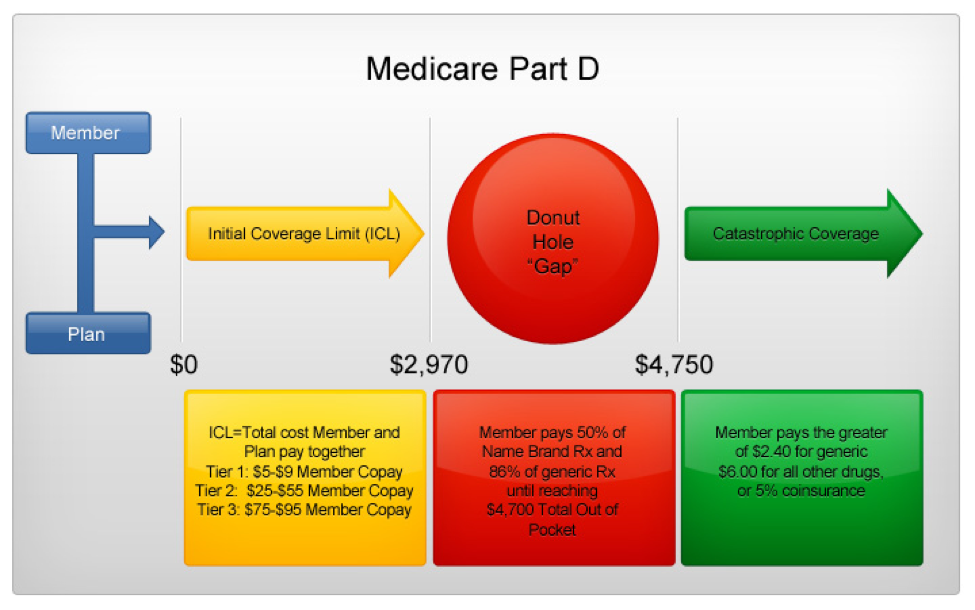
Most plans use a few cost stages. You start with a deductible, then move to a period where you pay a share of each drug’s cost. Your copay depends on the plan’s rules and the price of your medicine.
To be honest, comparing plans is where people get overwhelmed. Medicare offers a free online tool where you can plug in your medications and see your projected yearly costs under each plan. Use it. It saves real money.
The Medicare Part D Subsidy Program (Extra Help)
Now for the good news if your budget is tight. The Medicare Part D subsidy program, often called Extra Help or the Low Income Subsidy (LIS), can seriously cut your drug costs.
This program is aimed at people with limited income and assets. Generally, if your income falls below 150% of the poverty line, you may qualify.
And the value is no small thing. Extra Help is worth about $5,700 per person per year on average. That’s a huge difference for someone counting every dollar.
What Extra Help Actually Covers
With Extra Help, a lot of your usual costs shrink or disappear:
- Your Part D premium and deductible can be waived.
- Your copays for covered drugs drop to small, fixed amounts.
- You may qualify for a special enrollment period to switch plans more often.
If you already have Medicaid or Supplemental Security Income, you’re often enrolled automatically. If not, you can apply through the Social Security Administration.
How the Medicare Premium Subsidy Program Fits In
The Medicare premium subsidy program is really the premium side of that same Extra Help support. It helps knock down (or wipe out) the monthly premium for people who qualify.
Here’s why that matters. For low-income folks, even a $27 monthly premium can be a stretch. Cutting that cost keeps people from skipping their medicine just to save a few bucks.
Roughly one-quarter of all Part D enrollees receive some form of low-income subsidy. That’s a big chunk of people getting real help.
Talk of Medicare Subsidies Ending: What to Know
You may have seen scary headlines about Medicare subsidies ending. So let’s clear the air a bit.
Medicare programs change over time as Congress passes new laws. Rules around costs, the coverage gap, and subsidies have been adjusted many times. That’s normal.
The key thing to understand is that Part D subsidies like Extra Help remain a core part of the program. If you hear a claim about subsidies ending, don’t panic. Check official sources like Medicare.gov or Social Security before you believe it.
My honest advice? Rules shift, so review your coverage every year during open enrollment. Staying informed protects you far better than reacting to rumors.
Drugs That Part D Doesn’t Cover
Part D covers a lot, but not everything. Some drugs sit outside the standard benefit. These often include:
- Medicines for weight loss or weight gain
- Fertility drugs
- Drugs for erectile dysfunction
- Cosmetic treatments like hair growth
- Over-the-counter cough and cold products
A plan can sometimes add these as extra benefits, but they aren’t part of basic coverage. Always check a plan’s list before you assume your medicine is included.
Understanding Plan Formularies and Tiers
Every Part D plan has a formulary. That’s just a fancy word for the list of drugs it covers.
Formularies are usually split into tiers, and each tier has its own copay. Lower tiers cost less.
- Tier 1: Preferred generics, often just $5–$10
- Tier 2: Preferred brand-name drugs
- Tier 3: Non-preferred brand-name drugs
- Tier 4 and up: Specialty drugs, which cost the most
The catch is that the same drug can sit on different tiers in different plans. So a plan that’s great for your neighbor might be pricey for you.
How Medicare Part D Has Helped People
The impact here is real. A 2008 study found that fewer people skipped their medicine because of cost after Part D arrived.
The share of beneficiaries who skipped meds due to price dropped from about 15% in 2004 to roughly 11.5% by 2006. Fewer people also had to give up other basics just to afford their prescriptions.
That’s the heart of what this program does. It keeps people taking the medicine they need instead of rationing it.
The Criticisms Worth Knowing
No program is perfect, and Part D has its critics.
One big complaint: the federal government isn’t allowed to negotiate drug prices directly the way some other agencies can. Critics argue this drives up costs for taxpayers.
Another gripe was the old “donut hole,” a coverage gap where people suddenly paid a lot more out of pocket. The good news is the Affordable Care Act and later laws closed that gap for most beneficiaries.
Frequently Asked Questions
Is Medicare Part D mandatory?
No. It’s optional. But if you go without drug coverage and sign up late, you could face a lasting penalty.
How much does Medicare Part D cost each month?
It varies by plan and location. In 2020, the average premium was about $27 a month, though some plans cost less and others cost more.
Who qualifies for the Medicare Part D subsidy program?
People with limited income and assets, generally those below 150% of the poverty line. Extra Help can be worth around $5,700 a year.
What was the Medicare Part D donut hole?
It was a coverage gap where you paid much more out of pocket for a stretch. The Affordable Care Act phased it out for most people.
Can I change my Part D plan later?
Yes. You can switch during the annual open enrollment period each fall. If you have Extra Help, you may get extra chances to change plans.
Final Thoughts
Medicare Part D isn’t as scary as it looks once you break it into pieces. It helps you pay for prescriptions, offers real savings through Extra Help, and has kept millions of people from skipping their medicine.
Your next step is simple. Pull up your list of medications, use the Medicare plan finder, and compare a few options before you commit. Do it once a year and you’ll rarely overpay.
If you want to dig deeper into the program’s full history, costs, and structure, the detailed overview on Medicare Part D is a solid, well-sourced place to keep reading.