





A composite application framework is a platform that lets you build new software by combining pieces you already have. Instead of writing everything from scratch, you take existing functions, services, and data sources, then snap them together into one working app.
Here’s the thing though. A lot of people hear the term and assume it’s some complicated developer-only concept. It’s actually simpler than it sounds, and it solves a very real problem for businesses today.
Let me walk you through it in plain English.
Read more: King Charles Royal Residence Change: Why the King Won’t Live in Buckingham Palace
What Does a Composite Application Framework Actually Mean?
At its core, a composite application framework gives developers tools, building blocks, and a runtime environment. These help them assemble applications from smaller, reusable parts.
Think of it like building with Lego. You don’t melt down plastic to make each brick. You grab the bricks you need and click them together. That’s the whole idea behind this approach.
The Background: Where Did This Idea Come From?
Software used to be built as one giant block of code. Everything lived in one place. If you wanted to change a small feature, you often had to touch the whole system.
That got messy fast. As companies grew, they ended up with dozens of separate tools that didn’t talk to each other.
So developers started looking for a smarter way. The result was the composite application, which is software built by combining multiple existing functions into something new.
What’s a Composite Application, Exactly?
A composite application pulls data and functionality from several sources and presents it as one experience. The user sees a single app. Behind the scenes, though, it’s stitched together from many services.
The framework is what makes this stitching possible without a huge headache.
How a Composite Application Framework Works
Let me break the process down without getting too technical.
Step 1: Identify Reusable Components
First, you look at what you already have. Maybe it’s a payment system, a customer database, or a reporting tool. These become your building blocks.
Step 2: Connect Through Services
Next, the framework connects these blocks using services and APIs. This is where the “composite” part really shines. Each piece stays independent but works together.
Step 3: Build the New Layer
Then you add a new layer on top. This layer holds the logic and interface specific to your new app. It’s the glue that ties everything into one useful tool.
Step 4: Run It on a Shared Runtime
Finally, the whole thing runs on the framework’s runtime environment. That keeps things stable and manageable.
Common Types of Composite Application Frameworks
Not every composite application framework is the same. A few well-known ones have shaped how businesses think about this space.
SAP Composite Application Framework (SAP CAF)
SAP CAF is a composition tool built into the SAP NetWeaver Developer Studio, which is an Eclipse-based IDE. It also includes a runtime on SAP Web platforms.
To be honest, if your company already uses SAP products, this one feels natural. It’s designed to help you build composite apps that plug right into the SAP world.
WS-CAF by OASIS
WS-CAF stands for Web Services Composite Application Framework. It’s an open framework developed by OASIS, a group that works on open standards.
Its goal is to define a generic and open framework for applications that use web services. What’s interesting is that being open means it isn’t tied to one vendor. That gives teams more flexibility.
Custom and Vendor-Specific Frameworks
Beyond these two, many software vendors offer their own versions. Some are cloud-based. Others focus on specific industries. The core idea stays the same across all of them.
Why Businesses Care About This Approach
Now let’s talk about the part that matters most. Why would a company actually use a composite application framework?
You Save Time
Building from scratch takes forever. When you reuse existing parts, you skip a huge chunk of the work. Projects that used to take months can move much faster.
You Cut Costs
Less new code means fewer developer hours. It also means fewer bugs to fix later. That adds up to real savings.
You Get Flexibility
Business needs change all the time. With a modular setup, you can swap out one piece without rebuilding the whole app. That kind of flexibility is hard to beat.
You Reduce Duplication
Here’s the thing about big organizations. They often build the same feature five different times in five different tools. A composite application framework helps you build once and reuse everywhere.
Real-World Use Cases
Talking about benefits is fine, but examples make it click. Here are a few ways companies put this into practice.
Customer Service Dashboards
A support team needs data from billing, orders, and account systems all in one screen. A composite application framework pulls those together so agents don’t have to jump between five tabs.
Internal Business Portals
Many companies build internal portals where employees access HR, payroll, and project tools. These portals are often composite applications under the hood.
Cross-Department Reporting
Finance wants numbers from sales, operations, and inventory. Instead of three separate reports, a composite app blends them into one clear view.
Composite Applications vs. Traditional Apps
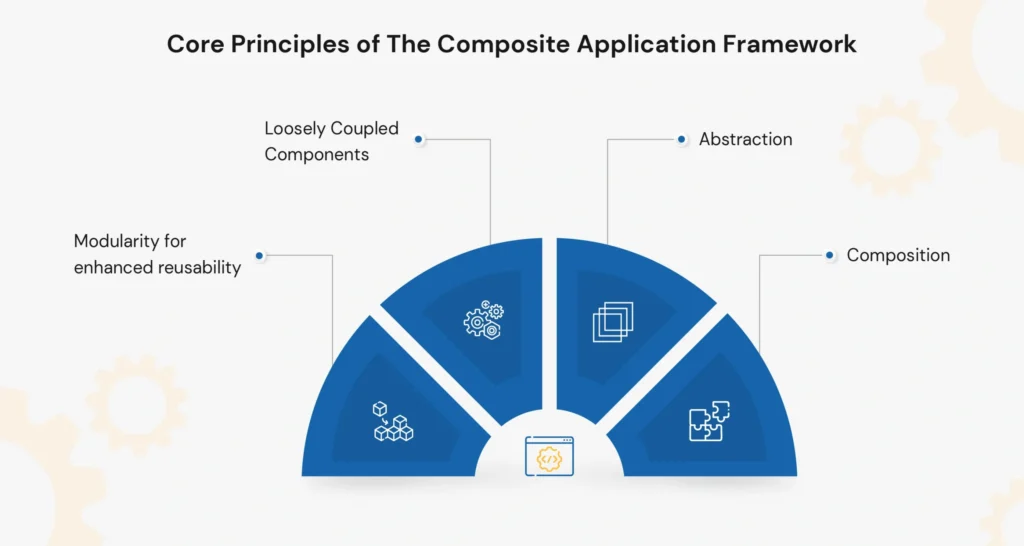
So how does this compare to the old way of building software?
Traditional apps are usually built as one solid unit. They work, but they’re hard to change. A composite application framework flips that script by keeping things modular and connected.
That doesn’t mean traditional apps are bad. For small, simple tools, they still make sense. The composite approach really pays off when things get complex.
Things to Keep in Mind Before You Start
I don’t want to make this sound like magic. There are a few real challenges worth knowing.
Integration Can Get Tricky
Connecting older systems isn’t always smooth. Some legacy tools weren’t built to share data easily. You may need extra work to bridge those gaps.
Governance Matters
When lots of pieces connect, you need clear rules. Otherwise things can turn into a tangled mess. Good planning up front saves pain later.
Skills Are Required
Your team needs to understand the framework you choose. SAP CAF, for example, expects some familiarity with the SAP ecosystem. Training is often part of the deal.
Is a Composite Application Framework Right for You?
Ask yourself a simple question. Do you have several systems that need to work together? If yes, this approach probably fits.
If you’re just building one tiny standalone tool, you may not need all this structure. Match the solution to the actual problem.
The Future of Composite Applications
Software keeps moving toward smaller, connected pieces. Microservices, APIs, and cloud platforms all push in this direction.
That means the composite application framework idea isn’t fading. If anything, it’s becoming more common as businesses demand faster, more flexible software.
Quick Recap of the Key Points
Let me pull the main ideas together before we wrap up.
- A composite application framework helps you build apps from reusable parts.
- SAP CAF and WS-CAF by OASIS are two well-known examples.
- The approach saves time, cuts costs, and adds flexibility.
- Integration and governance still need careful attention.
Final Thoughts
A composite application framework really comes down to one smart idea: don’t rebuild what you already have. Reuse it, connect it, and shape it into something new that fits your needs.
For growing businesses juggling many systems, that’s a huge win. It keeps software adaptable and saves a ton of effort along the way.
If you want to read more about the technical side, this Wikipedia page on composite applications is a solid place to start, since it explains how these apps combine existing functions into something genuinely useful.