





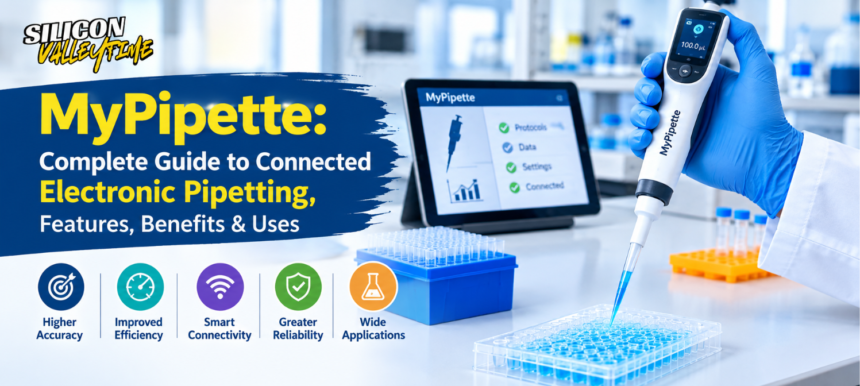

Laboratories are increasingly adopting connected technologies to make repetitive processes more consistent, organized, and easier to manage. MyPipette is part of this shift, bringing together compatible electronic pipettes and software-based protocol management to create a more connected approach to liquid handling.
Rather than relying entirely on manual programming or repeatedly entering the same instructions on an instrument, the My Pipette Creator environment allows compatible users to prepare pipetting programs through a computer, transfer them to supported electronic pipettes, and share protocols across a laboratory team.
The goal is not to turn a pipette into a completely autonomous laboratory robot. Instead, MyPipette is designed to make repetitive liquid-handling procedures more structured and reproducible while keeping important scientific decisions in the hands of laboratory professionals.
For anyone unfamiliar with the broader concept, pipetting on Wikipedia provides useful background on pipettes and their role in laboratory liquid handling.
What Is MyPipette?
MyPipette refers to a connected pipetting ecosystem associated with Thermo Fisher Scientific, particularly the My Pipette Creator software and compatible E1-ClipTip electronic pipettes.
The software provides a computer-based environment where users can create and manage pipetting programs. Depending on the compatible setup, programs can be transferred to electronic pipettes through wireless or USB connectivity.
In a conventional workflow, a researcher may need to configure repeated pipetting actions directly on the instrument. A connected approach moves much of the programming process to a computer, making complicated or frequently repeated procedures easier to organize.
A typical MyPipette workflow can involve:
- Developing or selecting a laboratory procedure.
- Creating the corresponding program in My Pipette Creator.
- Transferring the program to a compatible electronic pipette.
- Performing the liquid-handling sequence.
- Sharing the program with other authorized users when appropriate.
- Reusing the same standardized procedure for recurring work.
This can be particularly useful in laboratories where several researchers perform similar assays or sample-preparation procedures.
How Does MyPipette Work?
The easiest way to understand the system is to look at its three main elements: software, electronic hardware, and programmed protocols.
1. Software
My Pipette Creator provides the digital side of the workflow. Instead of requiring every protocol to be programmed directly through the pipette interface, users can prepare programs on a computer.
For laboratories managing numerous recurring procedures, this can make protocols easier to review, organize, modify, and distribute.
Compatible systems can use wireless connectivity or USB connections to move programs between the computer environment and the supported electronic pipette.
2. Electronic Pipette
The physical pipette carries out the liquid-handling operations.
The Thermo Scientific E1-ClipTip family uses electronic operation and an air-displacement principle for aspirating and dispensing liquids. These pipettes are designed for use with compatible ClipTip tips.
Depending on the specific model, available capabilities can include programmable protocols, electronic tip ejection, multiple operating modes, user profiles, and other workflow-oriented functions.
Because different models can have different capabilities, users should always confirm specifications for their particular instrument rather than assuming that every E1-ClipTip model offers identical features.
3. Digital Protocol
The protocol is the set of programmed instructions that determines how the pipette should perform a sequence.
A recurring procedure might involve:
- Aspirating a defined volume
- Dispensing into multiple wells
- Mixing samples
- Repeating transfers
- Changing dispensing behavior
- Following a specific sequence
- Performing standardized liquid-handling cycles
Programming these actions can reduce the need to repeatedly recreate the same instructions.
However, the software does not replace laboratory judgment. Researchers still need to determine whether a particular protocol is scientifically appropriate for their experiment.
Why Is Protocol Standardization Important?
One of the biggest advantages of connected pipetting is the potential to reduce unnecessary differences between users.
Consider a laboratory where several researchers perform the same assay. If everyone independently enters a complicated sequence, there are multiple opportunities for small programming differences. One person could select a different setting, another could enter an incorrect volume, and someone else could accidentally leave out a step.
A shared digital protocol can reduce these opportunities for variation.
My Pipette Creator is designed to support the creation, transfer, and sharing of programs between compatible instruments and users. The associated Protocol Library can also provide selected preprogrammed protocols for supported assays and reagent kits.
However, standardization does not equal validation.
A shared protocol can make execution more consistent, but laboratories still need to verify that the procedure matches their samples, reagents, equipment, and approved experimental methods.
Key Benefits of MyPipette
The usefulness of MyPipette depends on the laboratory’s workflow and the specific compatible equipment being used. Several benefits can nevertheless make connected pipetting attractive.
More Consistent Repetitive Procedures
Repeated liquid handling can introduce variation when instructions are manually recreated.
A programmed sequence gives users a consistent set of instructions for recurring operations. This can help reduce avoidable programming differences between operators.
It does not guarantee perfect pipetting performance, however. Calibration, tips, liquid characteristics, environmental conditions, and user technique continue to influence results.
Convenient Protocol Sharing
When multiple researchers perform the same procedure, sharing a digital program can be more practical than asking each person to recreate a complicated sequence.
A laboratory can maintain a common version of a recurring protocol and distribute it to compatible instruments where appropriate.
Easier Program Management
Laboratories may have separate procedures for sample preparation, plate setup, reagent distribution, serial transfers, and other applications.
Managing these programs digitally can make recurring workflows easier to organize than relying only on handwritten instructions or individually configured instruments.
Less Repetitive Programming
Entering complex procedures through a small instrument interface can be time-consuming.
Preparing a program on a computer can make complicated sequences easier to construct and review. It may also reduce errors associated with repeatedly entering the same instructions manually.
Access to Preprogrammed Protocols
For supported assays and reagent kits, the Protocol Library can provide ready-made programs.
This may save time when a suitable protocol already exists. However, researchers should compare any downloaded program with the current manufacturer instructions and their laboratory’s approved procedure before using it.
MyPipette and Experimental Reproducibility
Reproducibility is an important consideration in laboratory work because liquid handling can affect downstream experimental results.
For example, a procedure involving several reagent additions may produce different outcomes if operators introduce unnecessary variation during pipetting. A connected system can address part of this problem by making the programmed instructions more consistent.
But it is essential to understand the limitation:
A consistent digital program does not automatically guarantee accurate pipetting.
Results can still be affected by:
- Incorrect calibration
- Incompatible or unsuitable tips
- Poor tip attachment
- Difficult liquid properties
- Improper aspiration or dispensing technique
- Contamination
- Environmental conditions
- An unsuitable experimental protocol
- Instrument maintenance issues
For this reason, MyPipette should be viewed as one component of a larger laboratory quality process.
Does Electronic Pipetting Eliminate the Need for Good Technique?
No.
Electronic operation can simplify repetitive actions, but laboratory technique remains important. Air-displacement pipettes are influenced by the interaction between the instrument, tip, liquid, operator, and surrounding conditions.
Important considerations include:
- Maintaining an appropriate pipetting angle
- Selecting compatible tips
- Avoiding unnecessary liquid contact
- Using appropriate aspiration and dispensing settings
- Considering viscosity and other liquid characteristics
- Reducing aerosol and contamination risks
- Changing tips when required
- Following established contamination-control practices
Digital programming improves repeatability of instructions, but it cannot compensate for every physical variable involved in liquid handling.
MyPipette for High-Throughput Laboratories
Connected pipetting can be especially useful in laboratories handling large numbers of samples.
A repetitive process may require a researcher to select a volume, aspirate liquid, dispense it, mix, move to another container, and repeat the same sequence many times.
When this happens hundreds or thousands of times, even small workflow inefficiencies can become significant.
Electronic pipetting can simplify interaction with the instrument, while programmable protocols can make recurring sequences easier to reproduce.
The E1-ClipTip platform also includes multi-channel configurations. Certain Equalizer models provide adjustable tip spacing, which can be useful when transferring samples between different labware formats.
For laboratories working extensively with microplates, multi-channel functionality can therefore be an important consideration alongside software connectivity.
Ergonomic Advantages of Electronic Pipetting
Ergonomics should not be ignored when evaluating pipetting equipment.
Laboratory personnel who perform repetitive pipetting for long periods may experience physical strain from repeated hand and finger movements. Electronic features can help reduce some of these repetitive interactions.
The E1-ClipTip design includes electronic operation and electronic tip ejection, features intended to improve the overall user experience during repetitive work.
The practical benefit depends heavily on workload. Someone performing a few transfers may notice little difference, while an operator performing repetitive pipetting for several hours may place much greater value on ergonomics.
When assessing a pipette, consider:
- Grip comfort
- Instrument weight
- Balance
- Activation force
- Tip-ejection mechanism
- Hand position
- Battery requirements
- Programming convenience
- Frequency of use
For high-volume laboratory work, ergonomic design can be an important part of productivity.
Important MyPipette Features
Several capabilities may be particularly useful in day-to-day laboratory workflows.
Programmable Protocols
Users can create and manage recurring pipetting sequences rather than manually repeating every instruction.
Protocol Sharing
Programs can be distributed among compatible users and instruments, supporting greater consistency within teams.
Wireless and USB Connectivity
Compatible E1-ClipTip systems can connect with the My Pipette Creator environment through supported wireless or USB configurations.
User Profiles
Certain E1-ClipTip models support multiple user profiles, which can be useful when several researchers share one instrument.
Program Storage
Supported configurations can store frequently used programs, allowing commonly performed procedures to remain readily available.
Maintenance and Calibration Tracking
Some compatible configurations provide service or calibration-related tracking features. These can support routine equipment maintenance and help laboratories keep attention on instrument condition.
How to Start Using MyPipette
A successful implementation should begin with the laboratory workflow rather than the software itself.
Step 1: Check Your Pipette Model
First, identify the exact electronic pipette model you have.
Do not assume that every Thermo Scientific pipette supports all My Pipette Creator functions. Confirm compatibility using the documentation for the specific instrument.
Step 2: Confirm Software and Connectivity Requirements
Determine which software, utilities, and connectivity options are required.
Thermo Fisher provides tools intended to connect compatible E1-ClipTip electronic pipettes with the My Pipette Creator environment.
Step 3: Define the Laboratory Procedure
Before building a digital program, clearly document the actual procedure.
Include:
- Required volumes
- Number of transfers
- Mixing steps
- Dispensing sequence
- Tip changes
- Labware
- Reagents
- Timing requirements
This helps ensure that software programming follows the laboratory method instead of replacing proper protocol development.
Step 4: Build the Program
Create the digital sequence using the available software.
Review each instruction carefully. One advantage of a digital protocol is repeatability—but an incorrect program can also repeat an error consistently.
Step 5: Test the Program
A newly created program should be tested before routine laboratory use.
Verify:
- The sequence is correct
- Volumes match the intended procedure
- Pipetting behavior is suitable
- Tips are appropriate
- The instrument performs as expected
Step 6: Document the Approved Version
After testing, document the version that has been approved for use.
Version control becomes especially important when several people use the same instrument.
Step 7: Train Laboratory Users
Users should receive training on both the electronic instrument and the underlying pipetting technique.
Training may include:
- Instrument operation
- Tip attachment
- Protocol selection
- Program verification
- Contamination prevention
- Troubleshooting
- Maintenance
- Calibration procedures
Common MyPipette Mistakes to Avoid
Even advanced technology can produce poor results if basic practices are overlooked.
Assuming Software Guarantees Accuracy
Programming controls instructions, but actual pipetting performance depends on the complete system.
Ignoring Calibration
Pipettes need to remain within the accuracy and precision requirements established by the laboratory. Follow the manufacturer’s maintenance recommendations and the laboratory’s calibration program.
Treating Every Liquid the Same
Water-like liquids may behave very differently from viscous, volatile, foaming, or otherwise challenging liquids.
Pipetting settings and techniques should be appropriate for the liquid being handled.
Using an Unverified Protocol
A program created for one experiment should not automatically be applied to another.
Application-specific instructions from reagent or assay manufacturers may contain important requirements that need to be followed.
Neglecting Tip Compatibility
The connection between pipette and tip is fundamental to reliable operation.
For E1-ClipTip systems, the ClipTip interface is designed to provide a secure connection between the compatible tip and pipette.
Forgetting Software and Firmware Updates
Connected laboratory instruments depend on software as well as physical hardware.
Software, connectivity utilities, and instrument firmware can influence the overall user experience and available functionality. Keeping supported systems appropriately maintained is therefore important.
MyPipette Applications in Molecular Biology
Molecular biology laboratories often perform repetitive, volume-sensitive liquid-handling procedures.
Potential applications can include:
- Reagent preparation
- Sample transfers
- PCR setup
- Plate preparation
- Repeated liquid dispensing
- Multi-sample workflows
A programmable electronic pipette can be useful when the same sequence needs to be performed across many samples.
However, contamination control remains critical. No electronic pipette can compensate for poor laboratory hygiene or inappropriate sample handling.
A reliable molecular biology workflow should combine:
- Correct tip selection
- Proper sample handling
- Consistent pipetting technique
- Appropriate programming
- Cleaning procedures
- Accurate sample identification
- Proper equipment maintenance
MyPipette in Pharmaceutical Research
Pharmaceutical research often involves structured procedures, repeatability, documentation, and quality requirements.
Connected pipetting can support recurring liquid-handling tasks by making commonly used programs easier to reproduce.
For example, a laboratory may establish an approved program for a routine preparation step and make that program available to authorized users.
However, an electronic pipetting program should not automatically be considered a validated pharmaceutical process. Validation requirements depend on the specific application, laboratory procedures, organizational requirements, and applicable regulations.
MyPipette in Clinical and Diagnostic Laboratories
Clinical and diagnostic environments place strong emphasis on consistency, documentation, equipment maintenance, and quality control.
A connected pipetting workflow can potentially support standardized liquid handling when appropriately integrated into the laboratory’s quality system.
Relevant considerations may include:
- Equipment qualification
- Calibration
- Maintenance records
- Approved procedures
- User training
- Quality control
- Documentation
- Traceability
The technology works best when it strengthens established laboratory processes rather than being used as a replacement for them.
How to Decide If MyPipette Is Right for Your Laboratory
Before adopting connected pipetting technology, consider the actual needs of your laboratory.
How Repetitive Is Your Workflow?
If your team performs the same liquid-handling sequence regularly, programmable operation may provide meaningful benefits.
How Many Users Share the Instrument?
Shared instruments can benefit from common programs and, on supported models, user profiles.
How Complex Are Your Procedures?
A simple one-step transfer may not require advanced programming. More complicated, repetitive procedures are generally more likely to benefit.
Do You Need Protocol Sharing?
If multiple researchers need to perform the same procedure, centralized digital programs can be useful.
Is Your Equipment Compatible?
Compatibility is essential. Verify the exact pipette model, software requirements, and connectivity options before implementation.
Is Ergonomics Important?
For users performing repetitive pipetting throughout the day, ergonomic features can have a significant practical impact.
What Are Your Maintenance Requirements?
Calibration and service should be considered part of ownership and laboratory quality management rather than treated as optional extras.
MyPipette vs. Traditional Manual Pipetting
Manual pipettes remain valuable in many laboratory environments.
For occasional transfers, rapidly changing procedures, or flexible tasks, a manual pipette may still be the most practical choice.
Connected electronic pipetting becomes more attractive when a laboratory needs:
- Repeatable sequences
- Programmable procedures
- Protocol sharing
- Reduced repetitive programming
- More standardized workflows
- Greater convenience for recurring tasks
The choice does not necessarily have to be between manual and electronic pipetting.
Many laboratories can use both.
Manual pipettes can remain useful for flexible or occasional tasks, while electronic connected systems can handle standardized and repetitive workflows.
The better question is:
Which parts of your laboratory workflow benefit from standardization, and which still require direct user control?
MyPipette and the Future of Connected Laboratory Workflows
Laboratories are increasingly connecting instruments, software, users, and digital protocols.
Instead of treating every instrument as an isolated device, connected systems can create a more integrated workflow.
My Pipette Creator fits into this broader movement by creating a link between protocol development and electronic pipette operation.
Its purpose is not to eliminate the researcher from the process. Rather, it can reduce repetitive work while leaving scientific decisions with trained laboratory professionals.
Researchers still determine:
- What experiment should be performed
- Which reagents are appropriate
- Which controls are needed
- How samples should be handled
- Whether a protocol is suitable
- How experimental results should be interpreted
The pipette becomes a more programmable part of the overall workflow rather than an autonomous replacement for laboratory expertise.
What Does MyPipette Not Replace?
Connected pipetting technology has clear limitations.
It does not replace:
- Experimental design
- Laboratory training
- Calibration
- Quality control
- Proper pipetting technique
- Appropriate tips
- Contamination control
- Reagent quality
- Sample integrity
- Scientific judgment
- Laboratory safety procedures
The strongest benefit comes from reducing avoidable variation without creating the false impression that technology alone guarantees reliable results.
Best Practices for Reliable MyPipette Workflows
Laboratories using connected electronic pipetting systems can adopt several simple practices to improve reliability.
Use clear protocol names. A descriptive name makes it easier to identify the correct procedure.
Review the program before execution. This is particularly important when multiple programs are stored on one instrument.
Maintain the instrument properly. Follow manufacturer recommendations as well as laboratory maintenance requirements.
Use compatible tips. Confirm that tips are appropriate and securely attached.
Train every operator. Electronic operation does not remove the need for laboratory training.
Review recurring programs regularly. Laboratory procedures can change, and an old digital program may remain available after the underlying method has been updated.
Separate convenience from validation. A convenient digital program is not automatically an approved laboratory method.
Where Can You Find Official MyPipette Information?
For current information about supported instruments, software, connectivity, downloads, and product documentation, users should consult the official Thermo Fisher Scientific resources.
The manufacturer’s information is especially important because software compatibility, supported equipment, specifications, and available resources can change over time.
Frequently Asked Questions
What is MyPipette used for?
MyPipette is associated with Thermo Fisher Scientific’s connected pipetting ecosystem. My Pipette Creator is designed to create, manage, transfer, and share programs for compatible electronic pipettes.
Is MyPipette a physical pipette?
The terminology can refer to different elements of the ecosystem. My Pipette Creator is the software component, while compatible E1-ClipTip electronic pipettes provide the physical liquid-handling hardware.
Can MyPipette protocols be shared?
Yes. The connected environment is designed to support protocol and program sharing between compatible users and electronic pipettes.
Does MyPipette guarantee pipetting accuracy?
No. Programming can improve consistency, but accuracy and precision still depend on calibration, tips, liquid properties, instrument condition, technique, and appropriate protocol design.
Can MyPipette work with every pipette?
No. Compatibility depends on the specific instrument and software configuration. My Pipette Creator is associated with compatible Thermo Scientific electronic pipettes, including the E1-ClipTip platform.
Why use MyPipette instead of manually programming a pipette?
The primary advantage is workflow management. Creating programs on a computer, transferring them to compatible instruments, sharing protocols, and reusing stored procedures can be more efficient for repetitive laboratory work.
Final Thoughts
MyPipette represents a practical step toward more connected and standardized laboratory liquid handling.
Its value goes beyond simply replacing a manual pipette with an electronic instrument. The combination of programmable protocols, computer-based management, connectivity, protocol sharing, and reusable workflows can make repetitive laboratory procedures easier to organize and reproduce.
For laboratories that repeatedly perform similar liquid-handling tasks, these capabilities can reduce unnecessary programming and help teams work from more consistent procedures.
At the same time, connected pipetting should never be treated as a substitute for laboratory expertise. Calibration, maintenance, correct tip selection, appropriate technique, contamination control, and protocol verification remain essential.
Ultimately, the strongest use of MyPipette is not automation simply for the sake of automation. Its real value comes when digital programming solves a genuine workflow problem and helps a laboratory perform repetitive liquid-handling tasks in a more controlled, organized, and consistent way



