What channel management is, the main types of sales channels, how to choose and support partners, how to prevent channel conflict and which numbers to track.
Quick answer: Channel management is how a business plans, supports and measures the routes its products take to reach customers, such as its own website, retailers, distributors or resellers. Good channel management means choosing the right mix, giving partners what they need, and stopping channels from competing unfairly with each other.
A great product can still fail if customers cannot easily find or buy it. Channel management is about getting that route right. This guide explains the basics, with practical steps for small and growing businesses.
In this article
- What Is Channel Management?
- What Are the Main Types of Sales Channels?
- What Is the Difference Between Direct and Indirect Channels?
- How Do You Choose the Right Channels?
- What Is Channel Conflict?
- How Do You Support Channel Partners?
- How Does Omnichannel Fit In?
- What Are the Benefits of Good Channel Management?
- Which Numbers Should You Track?
- What Are Common Mistakes?
- How to Get Started
- Frequently Asked Questions
- Final Thoughts
- Explore More
What Is Channel Management?
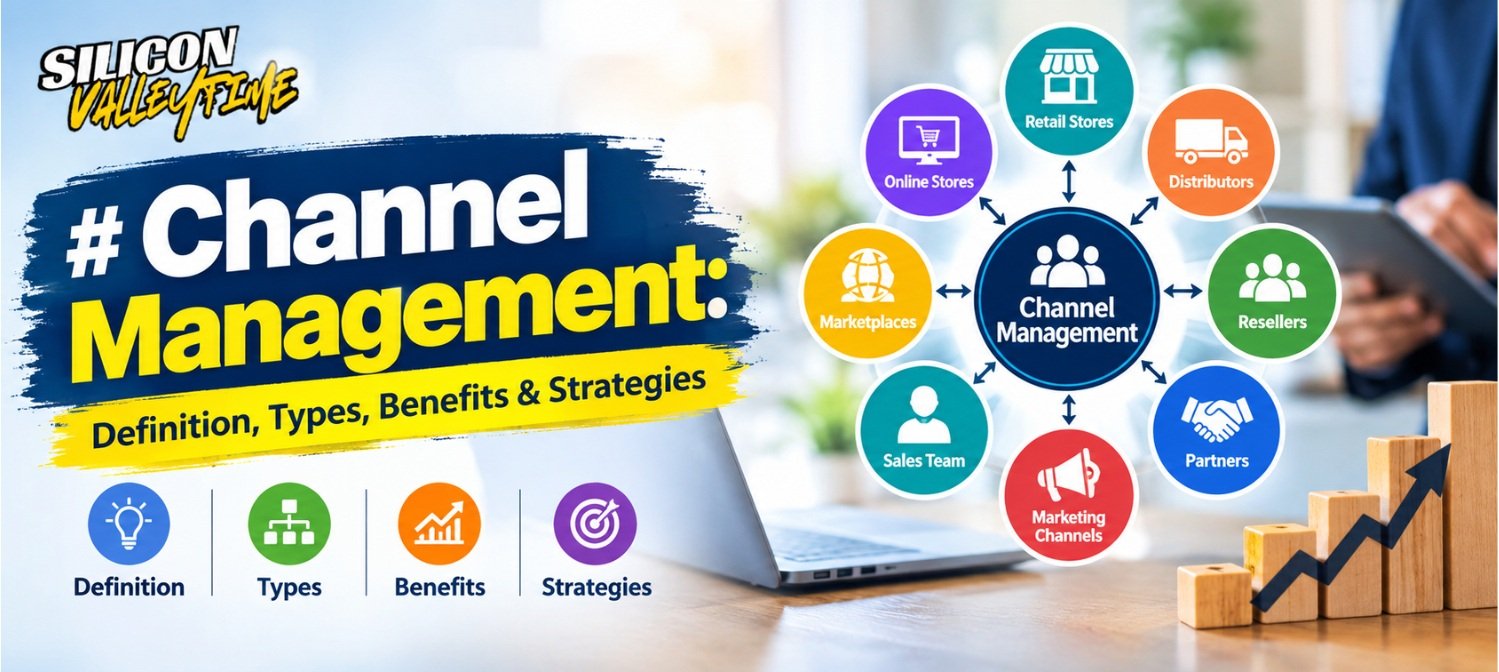
A sales channel, also called a distribution channel, is the path a product takes from the business to the customer. Channel management is the work of choosing those paths, setting rules for them, supporting the partners involved and checking how well each one performs.
- Plan: decide which channels fit your product and customers.
- Recruit: choose partners such as retailers or resellers.
- Support: give them training, materials and fair terms.
- Measure: track sales, costs and customer feedback by channel.
What Are the Main Types of Sales Channels?
| Channel | How it works | Example |
|---|---|---|
| Direct | The business sells straight to customers | Own website, shop or sales team |
| Retail | Stores buy and resell to customers | Supermarkets, electronics shops |
| Wholesale and distributors | Middlemen buy in bulk and supply retailers | A food distributor supplying corner shops |
| Resellers and partners | Third parties sell, often with added services | IT firms reselling software |
| Marketplaces | Online platforms host many sellers | Large online marketplaces |
| Affiliates | Partners earn a fee for referrals | Review sites and creators |
Example 1
A small skincare brand sells on its own website, through two local pharmacies and on an online marketplace. Each channel reaches different customers: loyal fans online, older shoppers in pharmacies, and bargain hunters on the marketplace.
What Is the Difference Between Direct and Indirect Channels?
Direct channels give you full control over price, branding and customer data, but you must do all the selling and support yourself. Indirect channels reach more customers faster through partners, but you share margin and lose some control over how the product is presented.
Silicon Valley Time Tip
Do not choose channels based only on reach. Work out the profit per sale in each channel after fees, discounts and returns. A smaller channel with a healthy margin can be worth more than a big one that barely breaks even.
How Do You Choose the Right Channels?
1. Start with the customer
Find out where your customers already look and buy.
2. Match the product
Complex products often need partners who can explain and install them, while simple products can sell online.
3. Check the costs
Compare fees, discounts, shipping and the time needed to manage each channel.
4. Test before scaling
Try one new channel at a time and measure the results before adding more.
What Is Channel Conflict?
Channel conflict happens when channels compete with each other in a way that hurts the business. For example, a brand might undercut its own retailers by selling more cheaply on its website, which makes retailers less willing to stock it.
- Price conflict: different prices in different channels.
- Territory conflict: partners chasing the same customers.
- Online versus offline: shops losing sales to the brand’s own site.
Example 2
A bike maker notices dealers are unhappy because its website runs bigger discounts. It agrees a standard minimum advertised price, sends website orders for servicing to local dealers, and offers dealers exclusive models. Relations improve and dealers start promoting the brand again.
How Do You Support Channel Partners?
Partners sell more when they understand the product and feel treated fairly. Support does not need to be expensive, but it does need to be consistent.
- Training: short guides or videos on features, pricing and common questions.
- Sales materials: product photos, descriptions and simple brochures they can use.
- Clear terms: discounts, payment terms and targets written down from the start.
- Regular contact: a monthly check-in or update email keeps partners engaged.
- Rewards: bonuses, better margins or co-marketing for strong performers.
Ask partners what slows them down. Often the fix is small, such as faster stock delivery or a clearer returns process, and it can make a big difference to sales.
How Does Omnichannel Fit In?
Omnichannel means giving customers a joined-up experience across every channel. A customer might discover a product on social media, check reviews on a marketplace, then buy in a shop. Good channel management keeps the product information, prices and brand message consistent at each step.
| Approach | What it means | Main challenge |
|---|---|---|
| Single-channel | One way to buy, such as only a website | Limited reach |
| Multichannel | Several channels run separately | Inconsistent prices and messages |
| Omnichannel | Several channels that work together | Needs shared stock and customer data |
Most small businesses do not need full omnichannel systems on day one. Start by making sure prices and product details match everywhere, then connect stock and customer data as you grow.
What Are the Benefits of Good Channel Management?
- Wider reach: more customers can find and buy the product.
- Better margins: you focus on channels that are actually profitable.
- Stronger partners: well-supported partners sell more and stay loyal.
- Clear data: you can see which channels work and why.
- Less conflict: fair rules protect relationships.
Which Numbers Should You Track?
- Sales by channel: how much each route brings in.
- Profit by channel: what remains after all channel costs.
- Customer acquisition cost: how much it costs to win a customer in each channel.
- Partner activity: how many partners are actively selling.
- Returns and complaints: problems that point to poor fit or poor support.
Try this today
List every place your product is sold today. Next to each one, write the price customers pay and roughly what you earn after fees. Look for any channel where the two numbers are far apart.
What Are Common Mistakes?
- Adding too many channels too fast: support gets thin and quality drops.
- Ignoring partners after signing them: unsupported partners stop selling.
- No clear pricing rules: this quickly leads to conflict.
- Not sharing information: partners need product updates and training.
- Measuring only revenue: profit tells you much more.
Most of these problems come from treating channels as set-and-forget. Review each channel at least every quarter, and be willing to change course when the numbers show a problem.
How to Get Started
- Map how customers currently buy from you.
- List your channels and their costs.
- Set clear pricing and territory rules.
- Give partners simple training and sales materials.
- Review results every month or quarter.
- Drop or fix channels that do not perform.
Frequently Asked Questions
What is channel management in simple words?
It is managing the different ways your product reaches customers, so each route works well and they do not clash.
What are examples of sales channels?
Your own website, physical shops, retailers, distributors, resellers, online marketplaces and affiliates.
What is channel conflict?
When sales channels compete unfairly, such as a brand undercutting its own retailers.
What is a channel partner?
A business that sells or supports your product, such as a reseller or distributor.
Is channel management only for big companies?
No. Even a small business with a website and one shop benefits from clear rules and tracking.
Final Thoughts
- Channel management covers how products reach customers.
- Mix direct and indirect channels based on profit, not just reach.
- Clear rules prevent channel conflict.
- Track sales and profit by channel.
Explore More
Sources: Wikipedia: Distribution (marketing) · Wikipedia: Channel conflict
Last updated: November 2026.