




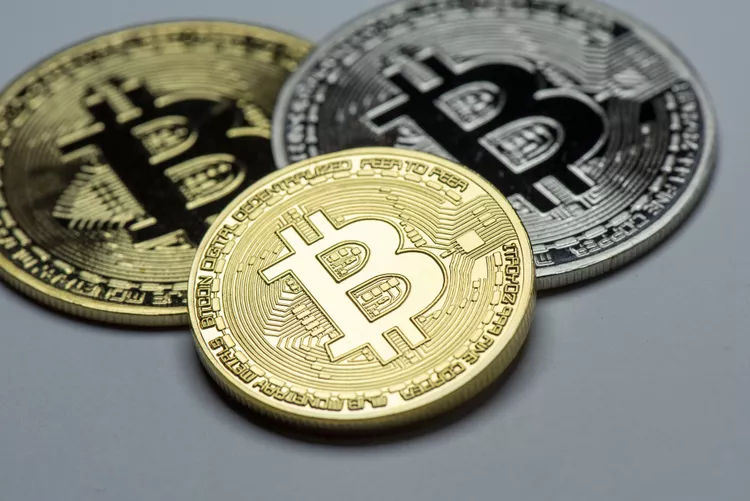

Bitcoin does not have a physical appearance. Unlike a dollar bill, euro coin, or gold bar, Bitcoin is a digital asset recorded on a decentralized blockchain. When people picture a shiny gold coin with the ₿ symbol, they are looking at a visual representation—not an actual Bitcoin.
In practice, you may “see” Bitcoin as a balance such as 0.025 BTC inside a wallet, a transaction displayed on a blockchain explorer, a QR code representing a Bitcoin address, or the familiar orange Bitcoin logo.
Featured Snippet: What Does Bitcoin Look Like?
Bitcoin does not look like a physical coin because it has no physical form. Bitcoin exists digitally as records maintained on the Bitcoin blockchain. Users typically see Bitcoin as a BTC balance in a wallet or exchange, a transaction record, a wallet address, or the ₿ symbol. Gold-colored Bitcoin coins commonly shown online are physical representations or collectibles, not the Bitcoin network’s actual currency.
1. What Does Bitcoin Look Like in Real Life?
The simplest answer is surprising: Bitcoin itself does not look like anything you can physically hold.
Bitcoin is a digital cryptocurrency. There are no official Bitcoin banknotes or government-issued Bitcoin coins sitting inside a vault somewhere.
The familiar image of a gold-colored coin bearing a ₿ is a logo or artistic representation. It is useful for communicating the idea of Bitcoin, but it should not be confused with the underlying digital asset.
Bitcoin’s official symbol is ₿, while BTC is commonly used as its currency code. Bitcoin’s network maintains a public ledger of transactions rather than manufacturing physical coins.
2. Why Do People Think Bitcoin Is a Physical Coin?
The confusion largely comes from the word “coin.”
Traditional currencies are often represented by physical objects. A person can hold a $1 bill or a metal coin. Bitcoin borrowed the familiar monetary language of “coins,” but its underlying technology works very differently.
Websites, newspapers, advertisements, and cryptocurrency applications frequently use a shiny orange or gold coin with the Bitcoin logo because it instantly communicates “Bitcoin” to readers.
That image is a visual metaphor.
It is not a photograph of an actual Bitcoin.
3. What Does the Bitcoin Symbol Look Like?
Bitcoin’s most recognizable visual representation is the ₿ symbol.
It resembles a capital B with vertical strokes running through it. The design has become one of the most recognizable symbols associated with cryptocurrency.
You may encounter several related representations:
- ₿ — the Bitcoin currency symbol
- BTC — the commonly used ticker symbol
- Bitcoin logo — generally an orange circular design containing the white Bitcoin symbol
- Bitcoin coin imagery — artistic depictions used in media and marketing
The Unicode Consortium officially included the Bitcoin sign, U+20BF, in the Unicode Standard.
4. What Does Bitcoin Look Like on a Phone?
For most people, this is the closest practical answer to “what does Bitcoin look like?”
Open a Bitcoin wallet or cryptocurrency exchange and you will normally see information such as:
| What you see | What it represents |
|---|---|
| 0.015 BTC | Your displayed Bitcoin balance |
| BTC | Bitcoin’s ticker |
| ₿ | Bitcoin’s currency symbol |
| QR code | A convenient representation of a receiving address |
| Transaction history | Records of Bitcoin transfers |
| Price chart | Bitcoin’s market price over time |
| Wallet address | An identifier used to receive Bitcoin |
Importantly, the number displayed by your wallet is not a picture of a Bitcoin.
It is a representation of the amount of Bitcoin associated with the keys your wallet controls.
5. Does a Bitcoin Wallet Actually Hold Bitcoin?
This is one of the most important distinctions for beginners.
A Bitcoin wallet does not function like a physical wallet containing miniature digital coins.
Instead, the Bitcoin blockchain records transactions and ownership conditions. A wallet primarily manages the cryptographic keys that allow a user to authorize transactions involving Bitcoin associated with those keys.
Think of it this way:
Blockchain = public record
Wallet = tool for managing keys and interacting with that record
Private key = secret authorization information
This is why losing access to your wallet’s credentials can be so serious. Control of the relevant cryptographic keys is fundamental to controlling Bitcoin.
Bitcoin.org explains that the network shares a public blockchain containing processed transactions, while users use wallets to send and receive Bitcoin.
6. What Does Bitcoin Look Like on the Blockchain?
If you want to get closer to seeing what Bitcoin actually is, look beyond the logo and examine the blockchain.
A Bitcoin transaction can be represented through technical data, including:
- Transaction IDs
- Bitcoin addresses
- Inputs and outputs
- Amounts denominated in BTC
- Transaction fees
- Block numbers
- Confirmation information
- Cryptographic signatures
This looks much more like structured computer data than a traditional monetary object.
Bitcoin’s accounting model uses unspent transaction outputs (UTXOs). Rather than individual physical coins moving from one person’s pocket to another, transactions create and consume these digital outputs according to the Bitcoin protocol.
So if someone asks, “Show me a real Bitcoin,” a technically accurate answer would involve showing the relevant blockchain state—not handing them a metal coin.
7. What Does a Bitcoin Address Look Like?
Another way beginners encounter Bitcoin is through a Bitcoin address.
A Bitcoin address is a string of characters used to receive Bitcoin. Wallet software can also represent an address as a QR code, making it easier to scan with a smartphone.
Depending on the address format, Bitcoin addresses can have noticeably different appearances. Modern addresses may begin with prefixes such as:
- bc1q
- bc1p
- 1
- 3
A Bitcoin address is not the Bitcoin itself.
It is better understood as an identifier used within Bitcoin’s payment system.
Also, a Bitcoin address should not be confused with a private key. A receiving address can be shared; private-key information must remain secret.
8. What Does a Physical Bitcoin Look Like?
Physical Bitcoin-themed coins do exist.
They can look exactly like what you might imagine: small metallic discs, often gold-colored, with the Bitcoin logo engraved or printed on the surface.
But there is a critical distinction:
A physical Bitcoin-themed coin is not automatically actual Bitcoin.
Many are simply souvenirs, decorative objects, promotional items, or collectibles.
Historically, some physical products were designed to incorporate information that could provide access to real BTC. Casascius coins are a famous example discussed in cryptocurrency history. However, these objects should not be confused with an official physical form of Bitcoin itself.
9. Are Gold Bitcoin Coins Real?
Yes—and no.
If by “real” you mean a physical object, then a gold-colored Bitcoin coin can certainly be real as an object.
If you mean an actual unit of Bitcoin, the answer is different.
A decorative coin with a Bitcoin logo does not contain Bitcoin simply because it has “₿” engraved on it.
The safest rule is:
The appearance of a physical coin does not prove that it represents actual BTC.
This distinction matters because Bitcoin’s value is not derived from the metal, weight, or artwork of a physical token.
10. What Does One Bitcoin Look Like in a Wallet?
Suppose a wallet shows:
0.25000000 BTC
That is a digital representation of the amount of Bitcoin controlled through the wallet’s keys.
You may also see a corresponding fiat valuation, such as a dollar, euro, pound, or rupee amount. That value changes with the market price of Bitcoin.
Bitcoin can also be divided into much smaller units.
The smallest commonly recognized unit is a satoshi, equal to 0.00000001 BTC.
That means you do not need to own one whole Bitcoin to use Bitcoin.
11. What Does Bitcoin Look Like When You Send It?
Sending Bitcoin does not involve physically moving a coin.
Instead, wallet software creates and signs a transaction. The transaction is broadcast to the Bitcoin network, where participating nodes validate it according to the protocol.
Eventually, it can be included in a block on the blockchain.
From a user’s perspective, the process might look like:
- Enter the recipient’s Bitcoin address.
- Enter the amount of BTC.
- Review the transaction fee.
- Authorize the transaction.
- Broadcast the transaction.
- Wait for network confirmation.
On your screen, you may see a transaction ID, pending status, confirmation count, and transferred amount.
Behind that simple interface is a sophisticated cryptographic and distributed-network system.
12. What Does Bitcoin Look Like in Code?
If you examine Bitcoin software rather than a wallet interface, things become even less coin-like.
Bitcoin is supported by software implementing a set of consensus rules. Bitcoin Core, one of the major Bitcoin software implementations, is open-source and written primarily in C++.
Developers working with Bitcoin encounter:
- Source code
- Cryptographic functions
- Transaction structures
- Scripts
- Block data
- Network messages
- Hashes
- Digital signatures
- Consensus rules
So Bitcoin can be “seen” in several different ways depending on what layer you are examining.
To a casual user, it is a balance in an app.
To a developer, it is software and protocol rules.
To a blockchain analyst, it is transaction and ledger data.
13. How Does Bitcoin Compare With Physical Money?
The easiest way to understand Bitcoin’s appearance is to compare it with conventional currency.
| Feature | Bitcoin | Traditional physical cash |
| Physical coin | No official form | Yes |
| Paper notes | No | Yes |
| Digital representation | Yes | Yes |
| Public transaction ledger | Yes | Generally no public ledger of every transaction |
| Currency symbol | ₿ | Varies |
| Blockchain | Yes | No |
| Cryptographic keys | Fundamental to Bitcoin ownership | Not fundamental |
| Can be represented by artwork? | Yes | Yes |
The major difference is that Bitcoin’s monetary existence is digital rather than physical.
14. Why Is Bitcoin Shown as a Gold Coin?
The gold coin image is effective because humans naturally associate coins with money.
Gold also traditionally represents scarcity, durability, and value. Designers therefore use a gold-colored coin to make an unfamiliar digital concept immediately understandable.
But this imagery can create a misconception.
Bitcoin does not derive its value from gold, and Bitcoin’s network does not require a physical coin to operate.
The visual representation is simply a convenient way of saying:
“This article, app, chart, or conversation is about Bitcoin.”
15. Is Bitcoin Invisible?
In one sense, yes.
You cannot physically touch a Bitcoin or put one in your pocket.
But calling Bitcoin “invisible” can also be misleading because its existence produces observable digital information.
You can inspect:
- Public blockchain transactions
- Block data
- Transaction IDs
- Addresses
- Wallet balances
- Network activity
- Market prices
Bitcoin therefore has no physical appearance, but it has a very substantial digital footprint.
Bitcoin.org describes the blockchain as a public ledger shared across the network, allowing users and computers to verify transactions.
16. Can You See Who Owns a Bitcoin?
Not directly.
Bitcoin transactions are publicly recorded, but Bitcoin addresses do not automatically display the real-world identity of their users.
This is why Bitcoin is commonly described as pseudonymous rather than completely anonymous.
Blockchain activity can potentially be analyzed and linked to individuals or organizations when additional information is available.
Therefore, seeing a Bitcoin transaction on the blockchain does not necessarily tell you the person’s name behind the address.
17. What Is the Difference Between Bitcoin, BTC, and ₿?
These terms are related but serve different purposes.
Bitcoin
Bitcoin refers to the cryptocurrency and, depending on context, the broader protocol and network.
BTC
BTC is the commonly used ticker abbreviation for Bitcoin.
For example:
0.05 BTC
means an amount of Bitcoin.
₿
₿ is the Bitcoin currency symbol.
It is commonly used in price displays and Bitcoin-related branding.
In everyday conversation, people often use all three terms interchangeably, but understanding their roles makes Bitcoin terminology much easier to follow.
18. What Does Bitcoin Look Like to a Beginner?
For someone encountering Bitcoin for the first time, it may appear as several things at once.
You might see:
On a website:
A Bitcoin logo, price chart, or BTC price.
Inside a wallet:
A BTC balance, receiving address, QR code, and transaction history.
On a blockchain explorer:
Transaction hashes, addresses, inputs, outputs, amounts, fees, and confirmations.
In financial news:
The ₿ symbol alongside a market price.
On merchandise:
A physical gold-colored coin featuring the Bitcoin logo.
All of these can represent Bitcoin visually, but none of them should be confused with a physical Bitcoin sitting inside a computer or wallet.
19. Common Misconceptions About What Bitcoin Looks Like
“Bitcoin is a gold coin.”
False. Gold-colored Bitcoin coins are usually visual representations or collectibles.
“My wallet contains physical Bitcoin.”
False. A Bitcoin wallet manages the cryptographic credentials used to control Bitcoin recorded on the blockchain.
“Bitcoin is just a picture of the ₿ logo.”
False. The symbol is simply Bitcoin’s visual identity.
“One Bitcoin is one digital file.”
Not exactly. Bitcoin’s accounting system tracks transaction outputs and conditions through the blockchain rather than treating BTC as a conventional standalone file.
“Bitcoin is completely anonymous.”
False. Bitcoin transactions are publicly recorded, although identifying the real-world person behind an address may require additional information.
20. How to Recognize a Genuine Bitcoin Transaction

If your goal is to determine whether you are looking at actual Bitcoin rather than a decorative representation, focus on the digital transaction record, not the physical appearance.
Useful indicators include:
- A legitimate Bitcoin wallet
- A Bitcoin network transaction
- A verifiable transaction ID
- A Bitcoin address
- Blockchain confirmation data
- An amount denominated in BTC or satoshis
A physical coin with the Bitcoin logo, by itself, proves nothing about ownership of BTC.
This distinction is particularly important when buying collectibles or receiving cryptocurrency-related products from another person.
21. What Does Bitcoin Look Like? The Simple Mental Model
If you’re still wondering what Bitcoin “looks like,” use this mental model:
Traditional money:
Physical object → coin or note → represents value
Bitcoin:
Digital ledger → cryptographic ownership/control → represents value
The Bitcoin logo is simply the visual shortcut people use to represent that system.
In other words, Bitcoin is closer to a digitally recorded financial state than to a physical object.
That is the surprising truth behind the question.
22. Frequently Asked Questions
What does a real Bitcoin look like?
A real Bitcoin has no physical appearance. It exists within Bitcoin’s digital accounting system and is represented through blockchain data and wallet interfaces.
Can I hold a Bitcoin in my hand?
You cannot hold actual BTC as a physical object. You can hold a physical Bitcoin-themed collectible, but that is different from holding Bitcoin itself.
What color is Bitcoin?
Bitcoin itself has no color. The familiar orange color belongs to a widely recognized visual representation of the Bitcoin brand.
What does Bitcoin look like on a computer?
It may appear as a BTC balance, transaction history, address, QR code, price chart, or blockchain transaction data.
Does Bitcoin have a coin?
Bitcoin has no official physical coin issued by the Bitcoin network. Physical Bitcoin-themed coins have existed as collectibles and other representations.
What does ₿ mean?
₿ is the Bitcoin symbol. It is commonly displayed alongside Bitcoin prices and amounts.
What does BTC stand for?
BTC is the commonly used ticker symbol for Bitcoin.
Is Bitcoin a physical currency?
No. Bitcoin is a digital cryptocurrency operating through a decentralized network and blockchain.
Where does Bitcoin actually exist?
Bitcoin is represented through records maintained by the distributed Bitcoin network. Wallets provide users with the cryptographic tools needed to control and transact with those records.
23. Final Answer: What Does Bitcoin Look Like?
So, what does Bitcoin look like?
The honest answer is that Bitcoin does not look like a traditional coin at all.
There is no official Bitcoin coin that you can pull from your pocket. The familiar gold-colored object with the ₿ symbol is a visual representation created to make an intangible digital currency easier to recognize.
Actual Bitcoin is experienced digitally—as balances in wallets, transactions on a blockchain, cryptographic data, and entries governed by the Bitcoin protocol.
Once you understand that distinction, the strange-looking question becomes much clearer: Bitcoin isn’t something you physically see; it’s something you interact with through software and a decentralized digital ledger.
For a broader technical and historical overview, see the Wikipedia article on Bitcoin, which covers Bitcoin’s origins, blockchain, mining, protocol, and development history