







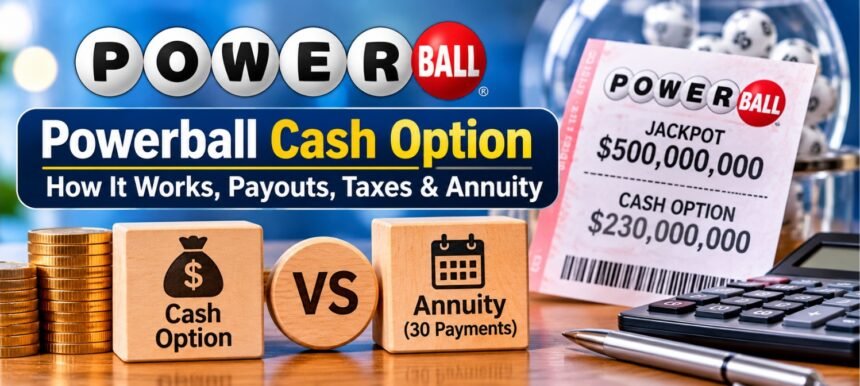

Winning the Powerball jackpot can change someone’s financial future, but receiving the prize is not as simple as collecting the amount displayed on the lottery website. Jackpot winners generally have two payment choices: a one-time cash payment or an annuity spread across several years. Understanding the Powerball cash option is important because the amount available as a lump sum is usually much smaller than the advertised jackpot.
The difference between these options can affect how a winner manages money, pays taxes, plans investments, and supports family members. Some winners prefer receiving a large amount immediately, while others may feel more comfortable receiving scheduled payments over time.
This guide explains what the Powerball cash option means, how the cash value is determined, how taxes work, and what winners should consider before selecting a payment method.
What Is the Powerball Cash Option?
The Powerball cash option is a payment choice that allows a jackpot winner to receive their prize as one lump-sum payment instead of collecting the advertised jackpot through annual installments.
The advertised Powerball jackpot normally represents the estimated total value of the annuity option. The cash option represents the amount of money available to fund that prize on the drawing date.
For example, imagine a hypothetical Powerball jackpot advertised at $500 million with an estimated cash value of $230 million. A winner selecting the cash option would generally receive the applicable cash prize amount, before taxes and other required deductions, rather than the advertised $500 million annuity total.
The difference does not mean that the lottery simply removes a random percentage from the winner’s prize. The two figures represent different payment structures.
According to the official Powerball FAQ, the cash value is generally the amount required in the jackpot prize pool to fund the estimated annuity prize.
How Does the Powerball Cash Option Work?
The process starts when someone purchases a valid Powerball ticket and matches all the required numbers to win the jackpot.
After the winning ticket is verified, the winner follows the relevant lottery authority’s claim procedure. They must then select an available payment method according to the rules of the jurisdiction where the ticket was purchased.
The two main options work differently.
1. Cash option
The winner receives a single lump-sum payment based on the applicable cash value of the jackpot. This option provides access to a substantial amount of money without waiting for annual installments.
2. Annuity option
The winner receives one initial payment followed by 29 annual payments. These payments increase by 5% each year, making 30 payments over 29 years in total.
Both advertised payment amounts are before applicable federal and jurisdictional taxes.
The winner should understand that selecting a payment method is a major financial decision. Once the election becomes final under the applicable lottery rules, changing it may not be possible.
Why Is the Powerball Cash Option Lower Than the Advertised Jackpot?
One of the most common questions about Powerball is why the cash option is so much smaller than the advertised jackpot.
The answer is connected to how an annuity works.
The advertised jackpot represents the total amount that the winner is scheduled to receive over the payment period. The lottery uses the available prize funds to purchase securities that support the future payments.
The cash option, on the other hand, represents the current amount available to fund the estimated annuity prize.
Interest and investment returns over the payment period help make it possible for the annuity’s total scheduled payments to reach the advertised jackpot amount.
This means the cash option is not simply the advertised jackpot minus taxes. It is a different way of calculating and distributing the prize.
What Factors Affect the Cash Value?
Several factors can influence the relationship between the advertised jackpot and its cash value.
-
Ticket sales: Powerball jackpot funding depends partly on ticket sales and the amount allocated to the prize pool.
-
Interest rates: The annuity factor is influenced by the cost of purchasing securities that fund future payments.
-
Prize pool: The available money in the jackpot pool helps determine the cash value.
-
Final ticket sales: Advertised figures are estimates, and final amounts can change after ticket sales close.
-
Number of jackpot winners: When multiple winning tickets share a jackpot, the applicable prize is divided among the winning plays.
These factors explain why two Powerball jackpots with similar advertised amounts may not necessarily have identical cash values.
Powerball Cash Option vs. Annuity: What Is the Difference?

Both payment methods can provide a life-changing financial reward, but they offer different advantages.
| Feature | Cash option | Annuity option |
|---|---|---|
| Payment structure | One lump sum | 30 annual payments |
| First payment | Single payment after claim processing | One immediate payment under the annuity structure |
| Future payments | No scheduled jackpot installments | 29 additional annual payments |
| Annual increase | Not applicable | 5% each year |
| Total advertised amount | Lower than annuity total | Advertised jackpot total |
| Financial control | Immediate access to funds | Money distributed over time |
| Tax treatment | Subject to applicable taxes | Subject to applicable taxes |
Benefits of Choosing the Cash Option
The main attraction of the cash option is immediate access to the prize money.
A winner who receives a lump sum can make financial decisions without waiting for future annual payments.
Some potential benefits include:
Immediate financial flexibility: A winner can use the money to pay debts, purchase property, support family members, or establish a financial reserve.
Investment opportunities: The winner can work with qualified financial professionals to build a diversified investment portfolio that reflects their goals and risk tolerance.
Control over financial decisions: A lump sum gives the winner more direct control over how the money is managed and distributed.
Estate planning: A large available balance may provide flexibility when planning inheritances, trusts, and other financial arrangements. However, appropriate legal and tax planning is essential.
The cash option also has disadvantages. A large amount of money can be difficult to manage, and poor financial decisions may reduce the winner’s wealth much faster than expected.
Benefits of Choosing the Annuity Option
The annuity option provides a structured payment schedule over several decades.
This can help winners who prefer receiving money gradually rather than managing a very large lump sum.
Its main advantages include:
-
Regular annual income over the payment period.
-
Payments that increase by 5% annually.
-
Less pressure to manage the entire prize immediately.
-
A structured approach to long-term financial planning.
-
Reduced need to make every major investment decision at once.
However, an annuity does not remove every financial risk. Winners still need to plan for taxes, spending, inflation, and personal expenses.
How Much Tax Do You Pay on the Powerball Cash Option?
Powerball jackpot winnings are generally subject to federal income tax in the United States. Depending on the location where the ticket was purchased and the winner’s tax situation, state and other applicable taxes may also apply.

An important point is that the advertised cash value is not the amount a winner automatically takes home.
For certain lottery winnings exceeding $5,000, the IRS requires 24% federal income tax withholding. This is a withholding amount, not necessarily the winner’s final tax rate.
The final federal tax liability depends on the applicable tax rules and the winner’s complete financial situation.
For example, consider a hypothetical cash prize of $100 million before taxes. A 24% federal withholding calculation would equal $24 million.
That does not mean the winner’s final federal tax bill will necessarily be $24 million. Additional tax may be due when the winner files their tax return.
The same general federal income tax principles apply to lottery winnings paid through an annuity, although the timing of payments and withholding differs.
Winners should review the latest IRS Publication 505 on tax withholding and estimated tax and consult a qualified tax professional before making financial decisions.
State tax treatment can vary, so winners should also check their local lottery authority’s official guidance.
How to Calculate the Powerball Cash Option
There is no single fixed percentage that applies to every Powerball jackpot.
The official cash value is published for each drawing, and the final amount may be adjusted when ticket sales are complete.
However, a simple hypothetical calculation can help explain the difference.
Imagine the following jackpot:
| Description | Amount |
|---|---|
| Advertised jackpot | $500 million |
| Estimated cash value | $230 million |
| Difference | $270 million |
| Federal withholding at 24% on $230 million | $55.2 million |
| Illustrative amount after that withholding | $174.8 million |
These figures are only an example, not an actual Powerball jackpot or a guaranteed final payment.
The calculation does not include possible state taxes, other deductions, or additional federal tax owed when filing.
To estimate a winner’s actual payment, the official cash value and the rules of the relevant lottery must be checked.
How Long Do Powerball Winners Have to Choose the Cash Option?
The deadline for selecting a payment method is important because missing it can affect how the prize is paid.
Powerball rules and state lottery procedures govern the election period. The official game guidance should always be checked before assuming that every jurisdiction follows the same claim process.
For example, Florida Lottery guidance states that jackpot winners who want the cash payment must claim their prizes within the first 60 days after the drawing date.
Other lottery authorities may describe the election period in relation to the date the prize is claimed or approved.
This is why winners should contact the lottery that issued their ticket as soon as possible.
They should also understand that selecting a payment method can become irrevocable after the required election documents are completed and submitted.
What Happens If There Are Multiple Powerball Jackpot Winners?
Sometimes more than one ticket matches all the numbers required to win the Powerball jackpot.
When this happens, the jackpot prize is shared among the winning tickets rather than being paid in full to every winner.
For example, if two eligible winning tickets share a hypothetical $400 million jackpot, each ticket would generally represent half of the applicable jackpot prize.
The payment choice and final amounts depend on the official prize calculation and lottery rules.
This distinction matters because the advertised jackpot is not automatically the amount that every individual winner receives.
Group claims can also involve additional arrangements. Lottery authorities may have specific procedures for multiple claimants, and the selected payment method may apply to the group according to the relevant rules.
Can Powerball Winners Invest Their Cash Option?
Yes. A winner who chooses the cash option can generally use the money for different financial purposes after completing the official claim and payment process.
However, receiving a large amount of money does not automatically create long-term financial security.
A winner may need professional help with:
-
Building a diversified investment portfolio.
-
Creating an emergency reserve.
-
Planning for federal and state tax obligations.
-
Managing property and business purchases.
-
Establishing trusts and estate plans.
-
Protecting assets against unnecessary financial risks.
Before investing, winners should understand the difference between potential returns and guaranteed income.
For example, a diversified portfolio may help spread investment risk, but it cannot guarantee profits or eliminate market losses.
Readers interested in understanding investment planning can also explore investment strategies for building wealth and learn how diversification, time horizons, and risk tolerance influence financial decisions.
It is also useful to understand how income and tax deductions affect personal finances. The NC Salary Calculator guide provides an example of how federal and state deductions can affect take-home income.
Is the Powerball Cash Option Available in the UK?
Powerball’s international availability makes this an important question.
The US and UK payment arrangements are not identical.
According to Powerball’s official FAQs, US jackpot winners can choose between the cash option and the annuity option under the applicable US lottery rules.
However, UK Powerball jackpot winners do not receive the same one-time cash option. Their jackpot prize is paid over 30 years through the UK National Lottery.
This means a person should not assume that the payment rules are identical simply because the same Powerball jackpot is involved.
The location and jurisdiction of the winning ticket determine the applicable claim and payment procedures.
Anyone participating through a licensed lottery should check its official terms before relying on information written for US winners.
What Should You Consider Before Choosing the Cash Option?
A jackpot winner should not select a payment method only because one appears larger or more attractive.
The right decision depends on personal circumstances, financial knowledge, spending habits, family responsibilities, and long-term goals.
Before making a final choice, consider these points:
1. Your financial management experience
If you have limited experience managing large amounts of money, receiving everything at once may create challenges. Professional financial advice can help establish a suitable plan.
2. Your long-term income needs
The annuity provides scheduled payments, while the cash option requires the winner to manage the money independently.
3. Taxes and deductions
The amount displayed by Powerball is not necessarily the final amount received. Federal, state, and other applicable tax rules must be considered.
4. Investment risk
A lump sum provides investment flexibility, but investment losses are possible. No financial strategy can guarantee that the money will grow.
5. Family and estate planning
Winners should consider how their decision could affect dependents, beneficiaries, inheritance arrangements, and future financial responsibilities.
Taking time to understand these factors can help prevent decisions based on excitement or pressure.
Frequently Asked Questions About the Powerball Cash Option
1. What does the Powerball cash option mean?
The Powerball cash option allows a jackpot winner to receive a one-time lump-sum payment instead of receiving the advertised annuity prize through annual payments.
2. Why is the Powerball cash value lower than the jackpot?
The advertised jackpot represents the estimated total of the annuity payments. The cash value represents the current amount available to fund those future payments.
3. Is the Powerball cash option taxable?
Yes. US Powerball jackpot winnings are subject to applicable federal income taxes. State and other taxes may also apply depending on the winner’s circumstances and location.
4. How many payments does the Powerball annuity provide?
The Powerball annuity consists of 30 payments over 29 years. It starts with one immediate payment, followed by 29 annual payments that increase by 5% each year.
5. Can a Powerball winner change from annuity to cash later?
Generally, the payment election becomes final once the applicable lottery claim and election procedures have been completed. Winners should confirm the rules and deadline with the lottery authority before signing their documents.
Conclusion
The Powerball cash option gives jackpot winners an opportunity to receive their prize as one lump-sum payment rather than waiting for annual annuity installments. It offers immediate financial flexibility, but the cash value is lower than the advertised annuity jackpot because the two options represent different payment structures.
The annuity provides 30 increasing payments over 29 years, while the cash option provides access to the applicable prize pool amount in one payment. Both options have tax implications, and the final amount a winner receives depends on applicable deductions and tax rules.
Before choosing, winners should carefully review the official lottery requirements, understand their financial responsibilities, and seek qualified tax and financial advice. A well-informed decision can make a significant difference in how effectively a jackpot supports long-term financial security.