







Finding comfortable contact lenses can be difficult when your eyes feel dry, irritated, or tired throughout the day. Some contact lenses may make these symptoms worse, especially when you spend long hours looking at screens, work in air-conditioned rooms, or already have an underlying dry-eye condition.
The good news is that several modern contact lenses are designed with moisture-retaining materials and surface technologies that may improve wearing comfort. Daily disposable lenses, silicone hydrogel materials, and water-gradient designs are among the options worth discussing with an eye-care professional.
However, the best contacts for dry eyes depend on more than the brand name. Your prescription, tear film, eye health, lens fit, and wearing schedule all matter. Understanding these factors can help you make a more informed decision.
This guide explores eight contact lens options, explains their main features, compares daily and monthly lenses, and shares practical tips for managing dryness safely.
What Are the Best Contacts for Dry Eyes?
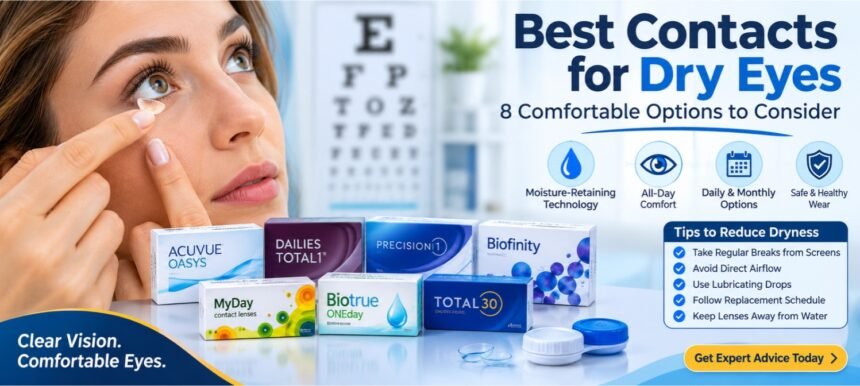
Some popular contact lenses worth discussing with an eye-care professional include DAILIES TOTAL1, ACUVUE OASYS 1-Day with HydraLuxe, PRECISION1, Bausch + Lomb INFUSE One-Day, CooperVision MyDay, Biotrue ONEday, Biofinity, and Alcon TOTAL30.
These lenses use different materials, designs, and replacement schedules. Some feature moisture-focused surface technologies, while others use silicone hydrogel materials to support oxygen transmission.
According to the National Eye Institute’s guide to dry eye, dry eye can occur when the eyes do not produce enough tears or when tears do not work properly. This is important because changing contact lens brands alone may not address the underlying problem.
1. DAILIES TOTAL1
DAILIES TOTAL1 is a daily disposable contact lens manufactured by Alcon. It is known for its water-gradient design, which creates a gradual change in water content from the lens core toward its surface.
This technology is designed to provide a highly hydrated lens surface while maintaining the properties needed for vision correction.
For people who experience discomfort with conventional contact lenses, this surface design may be worth discussing with an optometrist.
Key features:
- Daily disposable replacement schedule.
- Water-gradient lens technology.
- Highly hydrated lens surface.
- Available in different prescription options.
Who should consider it?
People who prefer fresh lenses every morning and want to explore a water-gradient design may find this option worth discussing during a professional fitting.
2. ACUVUE OASYS 1-Day with HydraLuxe
ACUVUE OASYS 1-Day with HydraLuxe is a daily disposable contact lens from Johnson & Johnson Vision.
Its HydraLuxe technology is designed to work with the natural tear film and support comfortable lens wear. This makes it an option for people who experience dryness during everyday activities, including screen use.
Daily replacement also means that users do not need to clean or store the lenses overnight.
Key features:
- Daily disposable design.
- HydraLuxe technology.
- Silicone hydrogel material.
- No overnight cleaning or storage required.
Who should consider it?
It may be worth discussing if you want daily lenses with a tear-inspired design and your prescription is available in this product range.
3. PRECISION1
PRECISION1 is another daily disposable contact lens manufactured by Alcon.
It uses SMARTSURFACE technology, which is designed to maintain a moisture-rich surface on the lens. The lens is made from verofilcon A, a silicone hydrogel material.
Its design focuses on combining surface moisture with the oxygen-transmission properties of silicone hydrogel.
Key features:
- Daily disposable replacement.
- SMARTSURFACE technology.
- Silicone hydrogel material.
- Designed for everyday wear.
Who should consider it?
People comparing daily disposable lenses may want to ask their eye-care professional whether PRECISION1 is suitable for their prescription and tear-film condition.
4. Bausch + Lomb INFUSE One-Day
Bausch + Lomb INFUSE One-Day is a daily disposable contact lens developed with ProBalance Technology.
It is designed to support lens comfort by addressing factors associated with the ocular environment. Its daily replacement schedule also avoids the need for routine reusable-lens cleaning.
Key features:
- Daily disposable contact lens.
- ProBalance Technology.
- Silicone hydrogel material.
- Fresh lens replacement each day.
Who should consider it?
It may be an option for people who prefer daily disposable lenses and want to compare different moisture-focused lens designs.
5. CooperVision MyDay
MyDay is a daily disposable silicone hydrogel contact lens manufactured by CooperVision.
It uses Aquaform Technology, which is designed to balance water content and oxygen transmission within the lens material.
Silicone hydrogel lenses allow more oxygen to pass through to the cornea than many conventional hydrogel materials. However, oxygen transmission alone does not guarantee that a lens will feel comfortable in dry eyes.
Key features:
- Daily disposable replacement.
- Silicone hydrogel material.
- Aquaform Technology.
- Available in different prescription designs.
Who should consider it?
MyDay may be worth comparing if you want a silicone hydrogel daily lens and need an option that matches your prescription.
6. Biotrue ONEday
Biotrue ONEday is a daily disposable contact lens from Bausch + Lomb.
It is made from nesofilcon A and has a water content of 78%. Its material and design are intended to support moisture retention during daily wear.
Although water content is one factor to consider, it should not be the only measurement used when selecting contact lenses for dry eyes.
Key features:
- Daily disposable design.
- 78% water content.
- Hypergel material.
- Designed for everyday vision correction.
Who should consider it?
People comparing conventional hydrogel daily lenses may want to discuss Biotrue ONEday with their eye-care professional.
7. Biofinity
Biofinity is a monthly silicone hydrogel contact lens range manufactured by CooperVision.
Unlike daily disposable products, Biofinity lenses are designed for repeated use according to their prescribed replacement and care schedule.
The range uses Aquaform Technology, which helps the material retain water while allowing oxygen to pass through the lens.
Key features:
- Monthly replacement schedule.
- Silicone hydrogel material.
- Aquaform Technology.
- Available in different prescription designs.
Who should consider it?
Biofinity may be suitable for people whose prescription and eye condition allow reusable lenses and who can follow the required cleaning and disinfection routine.
People with dry eyes should not assume monthly lenses are unsuitable, but their eye-care professional should assess the lens fit, tear film, and overall comfort.
8. Alcon TOTAL30
TOTAL30 is a monthly replacement contact lens from Alcon.
It features Water Gradient Technology, which is designed to provide a high-water-content surface. The lens also uses a material designed to support comfort over its replacement cycle.
Unlike daily disposable products, TOTAL30 requires appropriate cleaning, disinfection, and storage.
Key features:
- Monthly replacement schedule.
- Water Gradient Technology.
- Silicone hydrogel lens material.
- Designed for repeated daily wear within its approved schedule.
Who should consider it?
People who prefer monthly lenses may ask their optometrist whether TOTAL30 is appropriate for their prescription and dry-eye symptoms.
Daily vs. Monthly Contact Lenses for Dry Eyes
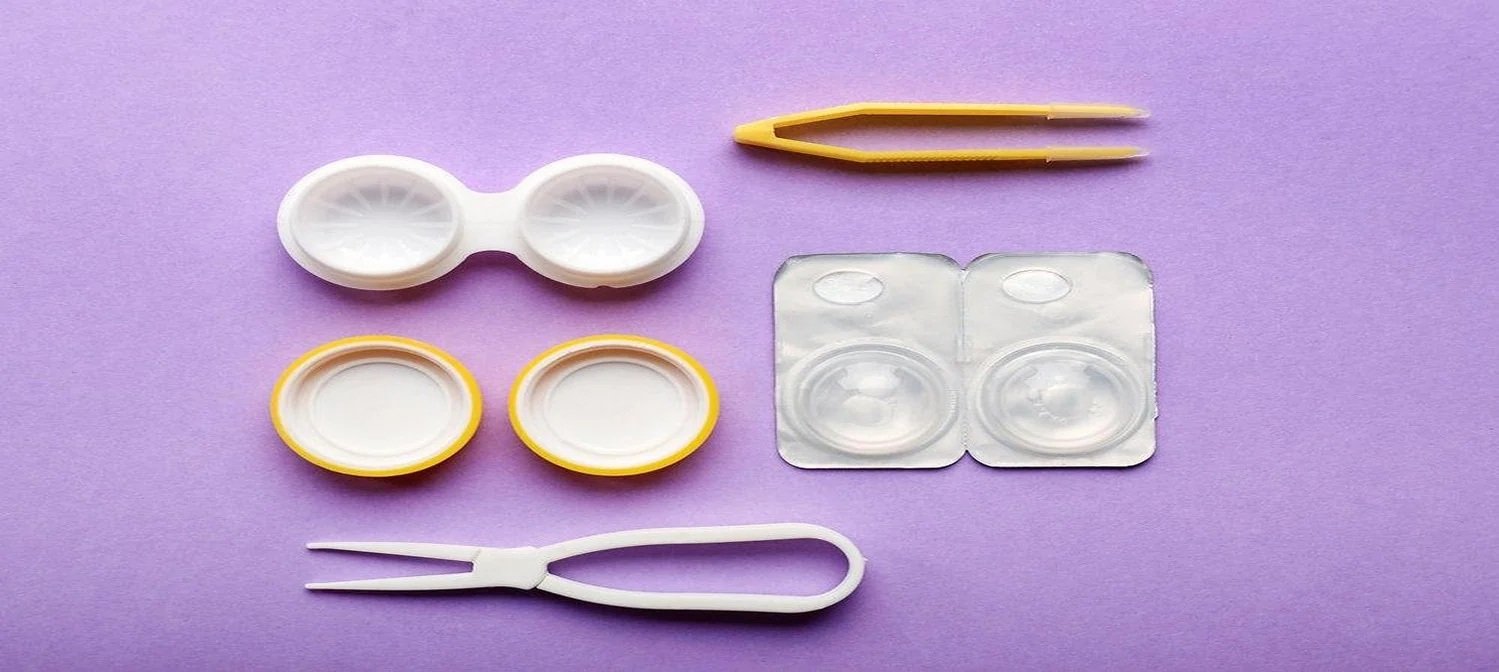
The replacement schedule can make a difference when comparing contact lenses.
Daily disposable lenses are used once and discarded after removal. Monthly lenses are cleaned, disinfected, stored, and replaced according to their prescribed schedule.
| Feature | Daily disposable lenses | Monthly lenses |
|---|---|---|
| Replacement | Every day | According to monthly schedule |
| Cleaning | No overnight cleaning | Requires proper cleaning |
| Storage | Not required overnight | Requires a clean lens case |
| Deposit buildup | Fresh lens each day | Deposits may accumulate |
| Convenience | Generally simpler | Requires additional care |
| Cost | Can be higher over time | May have a lower purchase cost per day |
Daily lenses can be a useful option for some people with dry-eye symptoms because they avoid repeated exposure to deposits that can accumulate on reusable lenses.
However, daily lenses do not cure dry eye. Monthly lenses can also work for some people when the material, fit, and care routine are appropriate.
For more information about safe lens handling, the CDC’s contact lens infection prevention recommendations explain why proper cleaning, storage, and replacement habits are important.
How to Choose the Right Contact Lenses for Dry Eyes
Before buying a new contact lens brand, consider these factors.
1. Check the Lens Material
Silicone hydrogel lenses allow substantial oxygen transmission to the cornea. This can be an important consideration when choosing contact lenses.
However, a higher oxygen-transmission rating does not automatically mean better moisture retention or greater comfort. The complete lens design matters.
2. Consider Daily Disposable Lenses
Daily disposables provide a fresh lens each day and remove the need for overnight storage and cleaning.
For some wearers, this can reduce discomfort associated with deposits on reusable lenses.
3. Look Beyond Water Content
A common mistake is assuming that lenses with the highest water content are always the best for dry eyes.
Water content is only one characteristic. Material chemistry, surface properties, lens thickness, oxygen transmission, and tear-film compatibility also influence comfort.
4. Check the Lens Fit
Even a well-designed contact lens may cause discomfort if it does not fit properly.
An eye-care professional can evaluate lens movement, positioning, prescription accuracy, and the condition of your cornea and tear film.
5. Match the Lens to Your Prescription
Some lenses are available in standard, toric, multifocal, or other prescription designs.
If you have astigmatism or need correction for near and distance vision, make sure the specific lens is available in the appropriate design.
Tips to Reduce Dryness While Wearing Contact Lenses
Choosing a suitable lens is only one part of managing dryness. Everyday habits can also help.
Take regular screen breaks: Long periods of screen use can reduce how often you blink. Take regular breaks and make an effort to blink fully. Developing better digital habits and taking regular breaks can also support your overall routine, as explained in this Silicon Valley Time guide to building a balanced lifestyle and managing screen time.
Avoid direct airflow: Air conditioners, fans, and car vents can increase tear evaporation. Avoid directing airflow straight toward your face.
Use suitable lubricating drops: Ask your eye-care professional about preservative-free artificial tears or contact lens-compatible rewetting drops. Not every eye drop is suitable for use with contact lenses.
Follow your replacement schedule: Never extend the recommended wearing period simply because the lenses still look clean.
Keep your lenses away from water: Remove contact lenses before swimming, showering, or using a hot tub.
Give your eyes a break: If your eyes become uncomfortable, remove your lenses and use your prescribed glasses instead.
You can also make routine eye examinations part of your general healthcare schedule. Silicon Valley Time’s guide to managing healthcare appointments through an online health portal explains how digital healthcare services can help patients manage appointments and medical information.
When Should You Stop Wearing Contact Lenses?
Mild dryness can sometimes improve after removing contact lenses, but certain symptoms need prompt medical attention.
Remove your lenses immediately and contact an eye-care professional if you experience:
- Eye pain or significant discomfort.
- Unusual redness.
- Sudden blurred or reduced vision.
- Light sensitivity.
- Excessive watering or discharge.
- A persistent gritty or burning sensation.
These symptoms may indicate irritation, an infection, or another eye problem. Do not put the lenses back in until an eye-care professional advises you that it is safe.
The American Academy of Ophthalmology’s contact lens care guide also explains why proper lens hygiene, replacement schedules, and professional eye examinations are important.
People with severe or difficult-to-treat dry eyes may not be suitable candidates for contact lens wear.
Frequently Asked Questions
1. What are the best contacts for dry eyes?
DAILIES TOTAL1, ACUVUE OASYS 1-Day with HydraLuxe, PRECISION1, and Bausch + Lomb INFUSE One-Day are among the options worth discussing with an optometrist. The best choice depends on your prescription, tear film, eye health, and lens fit.
2. Are daily contacts better for dry eyes?
Daily disposable contacts may help some people because they provide a fresh lens each day and avoid repeated exposure to deposits on reusable lenses. However, they do not eliminate dry-eye symptoms.
3. Are silicone hydrogel contacts good for dry eyes?
Silicone hydrogel lenses allow oxygen to reach the cornea efficiently. Some people find them comfortable, but the material alone does not determine whether a lens is suitable for dry eyes.
4. Can I wear contact lenses if I have dry eyes?
Some people with mild dry-eye symptoms can wear contact lenses after a professional assessment. People with severe or persistent dryness may need treatment or alternative vision correction.
5. Should I choose high-water-content contact lenses?
Not necessarily. High water content does not automatically mean better comfort. Lens material, surface technology, fit, and tear-film condition should all be considered.
Conclusion
Finding the best contacts for dry eyes requires more than choosing a popular brand or looking for the highest water content. Daily disposable products such as DAILIES TOTAL1, ACUVUE OASYS 1-Day with HydraLuxe, PRECISION1, and MyDay offer different designs worth comparing with an eye-care professional.
Monthly options such as Biofinity and TOTAL30 may also suit some wearers when their eye health and prescription allow them.
Most importantly, persistent dryness should not be ignored. A professional eye examination can help identify the cause of discomfort and determine whether contact lenses remain a suitable choice. The right prescription, lens fit, replacement schedule, and eye-care routine are essential for comfortable and safer contact lens wear.