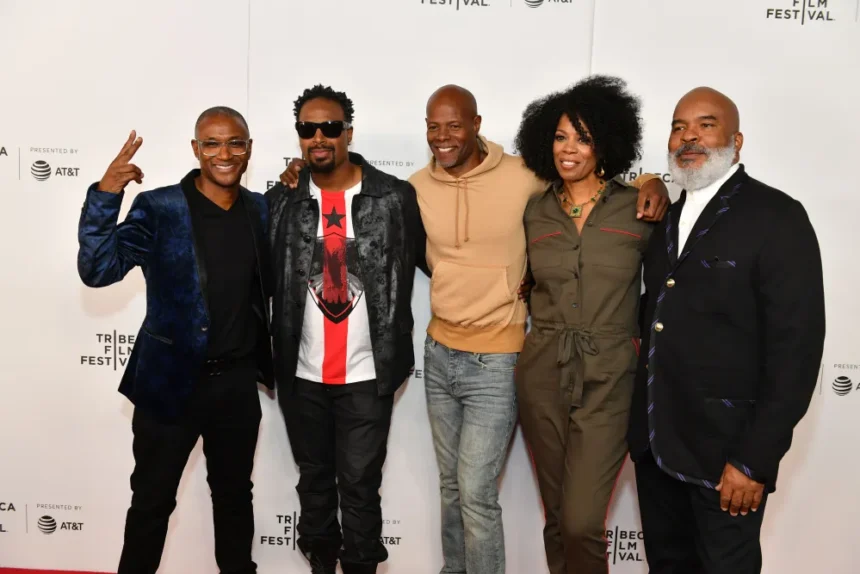

Keenen Ivory Wayans is a name that echoes through the halls of comedy history. A true multi-talented force, he is a comedian, actor, writer, director, and producer who redefined television and film comedy in the late 20th and early 21st centuries. His vision not only launched his own career but also served as a launchpad for his incredibly talented family and countless other comedians. This article explores the life, career, and enduring legacy of the man who brought us In Living Color and so much more. From his early days in New York City to his blockbuster films, we will cover the journey of a comedy pioneer.
Key Takeaways
- Pioneering Vision: Keenen Ivory Wayans is the creative mind behind the groundbreaking sketch comedy show In Living Color, which changed the landscape of television.
- A Family Dynasty: He is the eldest of the Wayans siblings, a family renowned for its comedic talent, and he was instrumental in launching their careers.
- Multi-Faceted Talent: Wayans is not just a performer; he is a successful writer, director, and producer, with major film credits to his name.
- Cultural Impact: His work consistently challenged norms, pushed boundaries, and gave a voice to Black culture in mainstream entertainment.
The Early Life and comedic beginnings of Keenen Ivory Wayans
Born in New York City on June 8, 1958, Keenen Ivory Wayans was the second of ten children to Howell and Elvira Wayans. Growing up in the Fulton Houses, a housing project in Manhattan, he learned early on that humor was a powerful tool for navigating life. His father, a supermarket manager, and his mother, a homemaker and social worker, instilled a strong work ethic and a sense of family unity in their children. It was within this large, bustling household that the seeds of a comedy dynasty were planted.
From a young age, Keenen was known for his sharp wit and observational humor. He attended Seward Park High School and later earned a scholarship to study engineering at Tuskegee University in Alabama. However, the call of comedy was too strong to ignore. During his time at college, he realized his true passion wasn’t in engineering but in making people laugh. In his senior year, he made the bold decision to drop out and move back to New York to pursue a career as a stand-up comedian. This pivotal choice set him on a path that would change his life and the world of entertainment forever.
Cutting His Teeth in Stand-Up
The stand-up comedy scene in New York City in the late 1970s and early 1980s was a tough and competitive environment. Keenen Ivory Wayans began performing at legendary clubs like The Improv, where he honed his craft alongside other aspiring comedians. It was here he befriended fellow performers like Eddie Murphy, Chris Rock, and Robert Townsend. This period was crucial for his development as a comedian. He learned to read an audience, perfect his timing, and develop the unique comedic voice that would become his signature. His stand-up act was a mix of sharp observations, character work, and social commentary, laying the groundwork for his future projects.
This experience was more than just telling jokes on a stage; it was his education in the business of entertainment. He learned what made audiences tick and, more importantly, what was missing from the comedy landscape. This insight would become invaluable.
Early Acting and Writing Roles
While making a name for himself in stand-up, Keenen Ivory Wayans started to land small acting roles in film and television. His on-screen career began with appearances in shows like CHiPs and A Different World. His first significant film role came in 1983 with Star 80. However, he quickly realized that the roles available to Black actors were often limited and stereotypical. This frustration fueled his ambition to write and create his own projects, where he could control the narrative and create more authentic, multi-dimensional characters.
His big break as a writer came when he co-wrote the 1987 satirical comedy film Hollywood Shuffle with Robert Townsend. The film, which was funded by the credit cards of its creators, was a biting critique of the racial stereotypes Black actors faced in Hollywood. Its success proved that there was an audience for smart, socially-aware comedy from a Black perspective. This film put Keenen Ivory Wayans on the map as a writer with a unique and powerful voice.
The Genesis of a TV Revolution: In Living Color
After the success of Hollywood Shuffle, Keenen Ivory Wayans was ready for his next big move. He envisioned a sketch comedy show that was edgier, more diverse, and more reflective of contemporary culture than Saturday Night Live. He pitched his idea to the fledgling Fox network, which was looking for bold programming to establish its brand. Fox took a chance, and in 1990, In Living Color premiered. The show was an instant sensation, and its impact was immediate and profound.
From its iconic opening sequence to its fearless sketches, In Living Color was unlike anything else on television. It was unapologetically Black, urban, and hip. The show featured a talented and diverse cast, including Keenen’s siblings Damon, Kim, Shawn, and Marlon, as well as future superstars like Jim Carrey, Jamie Foxx, Jennifer Lopez, and Rosie Perez. Keenen Ivory Wayans served as the creator, host, and a writer, ensuring his vision was executed flawlessly. He created a platform where comedy could be both hilarious and thought-provoking, pushing boundaries and challenging the status quo week after week.
Iconic Sketches and Lasting Characters
In Living Color is remembered for its unforgettable characters and sketches that have become a part of pop culture history. Characters like Fire Marshall Bill (played by Jim Carrey), the flamboyant film critics Men on Film (Damon Wayans and David Alan Grier), and the loud-mouthed Homey D. Clown (Damon Wayans) are still quoted today. Keenen himself contributed with characters like the Frenchy, a suave but inappropriate entertainer.
The show’s humor was fearless. It tackled topics like race, politics, and celebrity culture with a sharp, satirical edge that was often controversial but always funny. The musical performances, featuring artists from the world of hip-hop and R&B, and the dynamic dance numbers by the “Fly Girls” dance troupe, choreographed by a young Rosie Perez, added to the show’s vibrant, block-party atmosphere. In Living Color was more than a TV show; it was a cultural event.
The “Fly Girls” Phenomenon
The Fly Girls were the resident dance troupe on In Living Color, and they became stars in their own right. Choreographed by Rosie Perez, this group of talented dancers brought an energy and style to the show that was pure ’90s hip-hop culture. Their dance segments, which opened and closed commercial breaks, were a highlight for many viewers. The group was notable for launching the career of Jennifer Lopez, who joined in the third season. The Fly Girls represented a fusion of street style and professional dance that was new to network television, further cementing the show’s reputation as a cultural trendsetter.
Transition to the Big Screen: Directing and Writing Films
While In Living Color was his television masterpiece, Keenen Ivory Wayans also made a significant mark in the world of film. After leaving the show in 1992 over disputes with the network, he turned his focus to directing and writing for the big screen. His first major directorial effort was the 1994 action-comedy A Low Down Dirty Shame, which he also wrote and starred in. The film was a commercial success and proved that his comedic sensibilities could translate to a feature-length format.
However, his biggest box-office hits would come in the new millennium. He directed the horror-comedy parody Scary Movie (2000) and its sequel, Scary Movie 2 (2001). The first Scary Movie, which he co-wrote with his brothers Shawn and Marlon, was a massive success. It spoofed popular horror films of the time, like Scream and I Know What You Did Last Summer, and became one of the highest-grossing R-rated comedies of all time. This film franchise solidified the Wayans family’s status as masters of parody and a dominant force in comedy filmmaking.
The Scary Movie Franchise
The Scary Movie franchise, initiated by Keenen Ivory Wayans, reinvented the parody film for a new generation. The first film was a cultural phenomenon, lampooning the clichés of the teen slasher genre that had been revived in the late ’90s. Its blend of slapstick, gross-out humor, and clever satire resonated with audiences worldwide. Keenen’s direction kept the pace fast and the jokes flying, creating a film that was both a loving homage and a ruthless takedown of its source material. The success of Scary Movie and Scary Movie 2 demonstrated his keen understanding of what makes young audiences laugh and his ability to tap into the cultural zeitgeist.
White Chicks: A Cult Classic
In 2004, Keenen Ivory Wayans directed another comedy classic, White Chicks. Starring his brothers Shawn and Marlon as two Black FBI agents who go undercover as white socialites, the film was a wild, high-concept comedy that pushed boundaries. While it received mixed reviews from critics upon its release, White Chicks was a box office success and has since become a beloved cult classic. The film is celebrated for its outrageous premise, memorable one-liners, and the incredible prosthetic work that transformed Shawn and Marlon. It remains one of the most quotable and re-watched comedies of the 2000s, a testament to the Wayans’ unique brand of humor.
|
Film Directed by Keenen Ivory Wayans |
Year |
Starring |
Genre |
|---|---|---|---|
|
I’m Gonna Git You Sucka |
1988 |
Keenen Ivory Wayans |
Action-Comedy |
|
A Low Down Dirty Shame |
1994 |
Keenen Ivory Wayans |
Action-Comedy |
|
Scary Movie |
2000 |
Shawn & Marlon Wayans |
Horror-Comedy |
|
Scary Movie 2 |
2001 |
Shawn & Marlon Wayans |
Horror-Comedy |
|
White Chicks |
2004 |
Shawn & Marlon Wayans |
Comedy |
|
Little Man |
2006 |
Marlon & Shawn Wayans |
Comedy |
The Wayans Family Dynasty
One of the most remarkable aspects of the career of Keenen Ivory Wayans is the role he played in building a family entertainment dynasty. He is the patriarch of the “first family of comedy,” having paved the way for his nine younger siblings to enter the industry. By creating In Living Color, he gave his brothers Damon, Shawn, and Marlon, and his sister Kim, a national stage to showcase their immense talents.
This collaborative spirit is a hallmark of the Wayans brand. They frequently write, direct, produce, and act in projects together, creating a powerful creative force. This family-first approach is rare in the competitive world of Hollywood. From In Living Color to the Scary Movie franchise and their own sitcom, The Wayans Bros., their collective body of work is staggering. Keenen’s leadership and willingness to share the spotlight have been instrumental in their collective success. His influence extends to the next generation as well, with his nephew Damon Wayans Jr. and his son, Keenen Ivory Wayans Jr., also pursuing careers in entertainment. This is a family that understands the business of comedy, a fact that’s echoed in many analyses, such as those you might find on a tech and business news outlet like https://siliconvalleytime.co.uk/.
Later Career and Lasting Legacy
In the years since his major blockbuster hits, Keenen Ivory Wayans has continued to work in the industry, albeit with a more selective and lower-profile approach. He has served as a judge on the reality competition show Last Comic Standing, using his expertise to mentor a new generation of comedians. He has also taken on occasional acting roles and continues to develop projects behind the scenes.
His legacy, however, is already firmly cemented. He is a trailblazer who broke down barriers and created opportunities for a generation of Black artists. In Living Color remains the gold standard for sketch comedy, and its influence can be seen in countless shows that followed. He proved that comedy could be smart, socially relevant, and commercially successful. More than just a comedian, Keenen Ivory Wayans is an architect of culture, a visionary who saw what was missing in entertainment and had the talent and determination to create it himself. His impact on comedy and on the broader cultural landscape is immeasurable and continues to be felt today.
Conclusion
From the housing projects of New York City to the heights of Hollywood, the journey of Keenen Ivory Wayans is a story of talent, ambition, and vision. He transformed television with In Living Color, creating a cultural touchstone that launched dozens of careers. He conquered the box office with films like Scary Movie and White Chicks, proving his comedic genius was just as potent on the big screen. As the head of a comedy dynasty, he established a family brand that has become synonymous with laughter. Keenen Ivory Wayans didn’t just find success in the entertainment industry; he reshaped it in his own image, leaving behind a legacy that will continue to inspire and entertain for generations to come.
Frequently Asked Questions (FAQ)
1. What is Keenen Ivory Wayans best known for?
Keenen Ivory Wayans is best known for creating and starring in the groundbreaking 1990s sketch comedy series In Living Color. He is also famous for directing the blockbuster comedy films Scary Movie, Scary Movie 2, and White Chicks.
2. How many siblings are in the Wayans family?
There are ten Wayans siblings in total. Keenen is the second oldest. Many of his siblings, including Damon, Kim, Shawn, and Marlon, have also had successful careers in the entertainment industry.
3. Did Keenen Ivory Wayans win any awards for In Living Color?
Yes. In 1990, Keenen Ivory Wayans won the Primetime Emmy Award for Outstanding Variety, Music or Comedy Series for In Living Color, sharing the award with the show’s other producers.
4. What other films has Keenen Ivory Wayans directed?
Besides the Scary Movie films and White Chicks, Keenen Ivory Wayans has also directed I’m Gonna Git You Sucka (1988), A Low Down Dirty Shame (1994), and Little Man (2006).
5. Is Keenen Ivory Wayans still active in the entertainment industry?
Yes, though he is more selective with his projects. He has appeared as a judge on Last Comic Standing and continues to develop projects as a writer, director, and producer. He also occasionally performs stand-up comedy.