


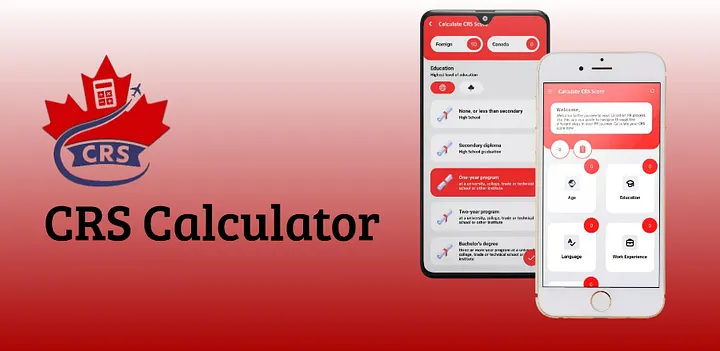

Moving to a new country is a huge life decision. It’s exciting, a little scary, and involves a lot of paperwork. If you are looking at Canada as your new home, you have probably heard about the Express Entry system. This is the main way skilled workers get invited to become permanent residents. But here is the big question: How does the Canadian government decide who gets an invite and who doesn’t? That is where the crs calculator comes into play.
This tool is essentially the gatekeeper. It helps you figure out where you stand in the pool of candidates. Understanding your score isn’t just about knowing a number; it’s about knowing your future options. Whether you are a fresh graduate or a seasoned professional, knowing how this system works is your first real step toward a new life in the Great White North.
Key Takeaways
- What is CRS? The Comprehensive Ranking System (CRS) is a points-based system used to assess and score your profile in the Express Entry pool.
- Factors Matter: Age, education, language skills, and work experience all play a huge role in your final score.
- Improvement is Possible: A low score isn’t permanent. We will discuss specific ways to boost your ranking.
- The Tool: Using a crs calculator correctly is vital for setting realistic expectations.
What Exactly Is the CRS Calculator?
The Comprehensive Ranking System (CRS) is a points-based mechanism used by Immigration, Refugees and Citizenship Canada (IRCC). Think of it like a report card for your potential as an immigrant. The government wants to select people who have the best chance of succeeding economically in Canada. To do this, they assign points to different parts of your background.
When people talk about the crs calculator, they are referring to the online tools that simulate this scoring system. You input your details—like your age, your degrees, and your English test scores—and the calculator spits out a number. That number is your CRS score. The maximum score you can get is 1,200 points, though most successful candidates score between 450 and 500.
It is important to understand that this isn’t a random lottery. The candidates with the highest scores in the pool are issued an Invitation to Apply (ITA) for permanent residence. This happens during regular draws, usually every two weeks. If your score is above the cut-off for that specific draw, you get an invitation. If it’s below, you stay in the pool and try to improve your profile.
Using a reliable crs calculator is your starting line. It gives you a reality check. If you check your score and it is sitting at 300, you know you have some serious work to do. If it’s at 480, you might want to start gathering your documents right away. It removes the guesswork and helps you build a strategy rather than just hoping for the best.
Why Your CRS Score Matters for Express Entry
Your CRS score is the single most critical factor in your Express Entry journey. Without a competitive score, your profile sits in the pool of candidates like a resume in a giant stack that never gets read. The Canadian government conducts “draws” periodically. In each draw, they set a minimum score requirement. Only those who meet or exceed that number get the golden ticket—the Invitation to Apply (ITA).
This system creates a merit-based environment. It doesn’t matter who you know; it matters what skills and attributes you bring to the table. This is why understanding the components of the score is so vital. A difference of just a few points can mean getting an invite in the next draw or waiting for months (or even years). For example, a birthday can lower your score, while a slightly better language test result can raise it significantly.
Furthermore, the cut-off scores change. They depend on how many people are in the pool and how high their scores are. If the pool is full of people with PhDs and perfect English scores, the cut-off goes up. If the government decides to invite a larger number of people in a specific draw, the score might go down. By using a crs calculator, you can track these trends and see how close you are to the current cut-off thresholds.
If you are serious about immigration, you cannot ignore this metric. It dictates your timeline. High scores lead to quick processing (sometimes under six months), while lower scores require alternative strategies, such as Provincial Nominee Programs (PNP), to boost your points.
Breaking Down the CRS Scoring Factors
The CRS score isn’t just one big number; it is a sum of four major categories. Understanding these categories is like having the answer key to a test. You need to know where the points come from so you can maximize them. The total score is out of 1,200, but it is split into “Core” points and “Additional” points.
A. Core / Human Capital Factors
This section looks at you as an individual. It assesses your age, level of education, official language proficiency (English and French), and Canadian work experience. If you are applying with a spouse or common-law partner, your points are calculated slightly differently, as some of your points are reallocated to your partner’s credentials.
B. Spouse or Common-Law Partner Factors
If you are moving with a partner, their skills matter too! Canada looks at your spouse’s language skills, education, and Canadian work experience. It is often a strategic decision: should the main applicant be the one with the higher education or better language skills? Sometimes, swapping who the principal applicant is can result in a higher household score.
C. Skill Transferability Factors
This is where the magic happens. This section rewards you for combinations of skills. For example, if you have a high level of education AND high language test scores, you get bonus points. These are often called “cross-match” points. They can give your score a massive boost—up to 100 points—without you doing anything extra other than having a strong profile in two areas simultaneously.
D. Additional Points
These are the “cherry on top” points. You can get points for having a sibling in Canada, having arranged employment (a valid job offer), a provincial nomination, or French language skills. The biggest booster here is a Provincial Nomination, which gives you an automatic 600 points—essentially guaranteeing you an invitation in the next draw.
How Age Impacts Your CRS Score
Age is one of the trickiest factors in the crs calculator because it is the only one you cannot control or improve. The system is biased towards younger applicants. The ideal age range for maximum points is between 20 and 29. If you are in this bracket, you get the maximum points available for age (110 points if single).
Once you turn 30, you start losing points. It’s a slow decline at first—you lose about 5 or 6 points for every year you age. By the time you reach your 40s, the points for age drop significantly. At age 45, you get zero points for age. This doesn’t mean you can’t immigrate if you are over 40; it just means you have to work harder in other areas, like language or work experience, to make up for the lost age points.
This reality creates a sense of urgency. If you are 29 years old and thinking about applying, waiting a year effectively “costs” you points. It’s often better to enter the pool sooner rather than later to “lock in” your age, although technically your age score updates automatically in the pool until you receive an ITA.
Many applicants use the crs calculator to forecast their future scores. You can plug in your age for next year to see what happens if you delay your application. This can be a huge motivator to get your language tests done quickly or to finalize your educational assessments.
The Importance of Education Levels
Education is a major pillar of the Express Entry system. Generally speaking, the higher your education, the higher your score. A Master’s degree gets you more points than a Bachelor’s degree, and a PhD gets you even more. But it is not just about having the degree; it is about having it recognized.
If your degree was earned outside of Canada, you must get an Educational Credential Assessment (ECA). This report tells the Canadian government what your foreign degree is equivalent to in Canadian standards. Sometimes, a “Post-Graduate Diploma” in your home country might be evaluated as a Master’s degree, or vice versa. You cannot just guess this; you need the official report.
Another smart way to boost points here is the “Two or More Certificates” rule. If you have a Bachelor’s degree (3+ years) and another certificate or diploma (1+ year), you get more points than just the Bachelor’s degree alone. This is often an easier route than completing a full Master’s degree.
Here is a quick look at how education points typically scale for a single applicant:
|
Education Level |
Typical CRS Points (Single Applicant) |
|---|---|
|
Secondary School (High School) |
30 |
|
One-year program (College/Uni) |
90 |
|
Two-year program (College/Uni) |
98 |
|
Bachelor’s Degree (3+ years) |
120 |
|
Two or more certificates/degrees |
128 |
|
Master’s Degree |
135 |
|
Doctoral (PhD) |
150 |
Note: These are base points and do not include transferability bonuses.
Language Proficiency: The Game Changer
If there is one area where you have the most control, it is language proficiency. Canada has two official languages: English and French. You must take an approved language test (like IELTS or CELPIP for English, TEF or TCF for French) to enter the pool. Your scores on these tests are converted into Canadian Language Benchmark (CLB) levels.
This is where many people underestimate the crs calculator. They think, “I speak English well, I will be fine.” But “well” isn’t enough. There is a “magic number” in the language scores: CLB 9. If you score CLB 9 or higher in all four abilities (Reading, Writing, Listening, Speaking), your score skyrockets.
Why? Because hitting CLB 9 triggers massive bonus points in the “Skill Transferability” section we mentioned earlier. If you have CLB 9 plus a degree, you get extra points. If you have CLB 9 plus work experience, you get even more extra points. Falling just one point short in one area (getting a CLB 8 instead of 9) can cost you upwards of 50 total CRS points.
This is why many applicants retake their English test multiple times. Moving from CLB 8 to CLB 9 is often the fastest, cheapest way to boost a CRS score significantly. It requires study and practice, but unlike getting a new degree, it can be done in a few months.
Can Learning French Help?
Absolutely. Canada is actively trying to increase Francophone immigration outside of Quebec. If you have strong French skills (even as a second language), you can get significant bonus points. If you are bilingual (strong English and moderate French), the crs calculator will show a very healthy score bump.
Work Experience Requirements
Work experience is the third leg of the stool alongside education and language. The system looks at two types of work experience: Canadian Work Experience and Foreign Work Experience.
Foreign Work Experience
For most applicants outside Canada, this is what you are relying on. To get points, you need at least one year of continuous, full-time, skilled work experience. “Skilled” means it falls under TEER categories 0, 1, 2, or 3 of the National Occupational Classification (NOC) system. The more years you have (up to 3 years), the more points you get. After 3 years, the points for foreign experience cap out.
Canadian Work Experience
If you have worked in Canada legally, you are in a great position. Canadian experience is highly valued. Even one year of work inside Canada gives you significant points. This is why many students come to Canada, study, get a work permit, and then apply for permanent residence. They get points for their Canadian education and their Canadian job.
It is crucial to be accurate when entering this data into the crs calculator. You must ensure your job title and duties match the NOC code you select. If you claim to be a “Software Engineer” but your duties look more like “Technical Support,” the immigration officer might reject your application later, even if your score was high. Honesty and accuracy are paramount.
Spouse Factors: Adding or Subtracting Points?
Deciding whether to accompany your spouse or partner to Canada impacts your score calculation. The maximum score is always 1,200, but how those points are distributed changes if you are married or in a common-law partnership.
If you apply as a single applicant, your personal attributes (age, education, language) are worth more.
If you apply with a spouse, your personal attributes are worth slightly less, and the remaining points depend on your spouse’s attributes.
Essentially, your spouse needs to “pull their weight” to maintain a high score. If your spouse has low English scores or low education, they might drag your average down compared to if you applied as single. However, you can’t just lie and say you are single if you aren’t—that is misrepresentation and is illegal.
However, you can list your spouse as “non-accompanying” in some rare cases, which calculates your score as if you were single. But this means your spouse cannot come with you initially, which is a difficult choice for families.
Usually, a spouse can add up to 40 points to your profile through their own education, language skills, and Canadian work experience. Using a crs calculator lets you toggle between “Married” and “Single” (hypothetically) to see exactly how much your partner’s credentials are contributing to the total.
Provincial Nominee Programs (PNP)
This is the secret weapon for anyone with a low CRS score. Canada’s provinces (like Ontario, British Columbia, Alberta) have their own immigration programs called Provincial Nominee Programs (PNP). They look for people with specific skills that their local economy needs.
If a province likes your profile, they give you a “Nomination.” This nomination is worth 600 CRS points. considering most cut-off scores are around 450-500, getting an extra 600 points essentially guarantees you will receive an invitation in the very next draw. Your score would jump to over 1,000.
You don’t always need to apply separately for these. Many provinces scan the Express Entry pool and send “Notifications of Interest” to candidates they like. This is why getting into the pool, even with a lower score, is beneficial. You can’t get scouted if you aren’t in the game.
When you use a crs calculator, there is usually a section asking if you have a provincial nomination. Be careful: only check “Yes” if you actually have the official nomination certificate. Simply hoping for one doesn’t count!
How to Calculate Your Score: Step-by-Step
Ready to see where you stand? Here is a simple workflow to use any crs calculator effectively.
- Gather Your Documents: You don’t need the physical papers yet, but you need the data. Know your exact language test scores (or estimated ones) and your ECA results.
- Find a Calculator: Use a reputable tool or the official government website.
- Marital Status: Start by selecting your status. Remember, this changes the point distribution.
- Age: Enter your age.
- Education: Enter your highest level of education. If you have two degrees, make sure the tool allows you to select that option.
- Language: Input your IELTS/CELPIP/TEF scores. Play around with these numbers to see how improving them affects your total.
- Work Experience: Enter your years of skilled work. Be careful to separate Canadian vs. Non-Canadian work.
- Additional Points: Do you have a job offer? A sibling in Canada? A nomination? Enter these here.
- Calculate: Hit the button and see your number.
Take a screenshot or write this number down. This is your baseline. As you browse sites like Silicon Valley Time, you might find more tips on career growth that could indirectly help you improve your profile over time.
Common Mistakes When Using a CRS Calculator
It is easy to get excited and make small errors that lead to a fake high score. This leads to heartbreak later when the official score is lower than expected.
- Overestimating Language Scores: Don’t put CLB 10 if you haven’t taken the test yet. Put a conservative estimate, or take a practice test first.
- Counting Non-Continuous Work: Foreign work experience usually needs to be continuous (no gaps) for the first qualifying year.
- Misunderstanding “Job Offer”: In Express Entry terms, a “valid job offer” is very specific. It usually requires a Labour Market Impact Assessment (LMIA). Just having a job offer letter from a random employer often counts for zero points unless it is supported by an LMIA. This is the most common mistake.
- Wrong Education Level: Counting a foreign degree as a Master’s before getting the ECA report. Wait for the report to be sure.
Tips to Improve Your CRS Score
So, you used the crs calculator and the score is lower than you wanted. Don’t panic! Here are actionable steps to raise it:
- Retake the English Test: Aim for CLB 9. This is the single most effective way to gain points.
- Learn French: Even basic proficiency can add bonus points.
- Get Another Degree: Can you complete a one-year diploma? Combining it with your existing degree adds points.
- Gain More Experience: If you have 2 years of experience, working one more year gets you to the 3-year max point bracket.
- Spousal Points: Can your spouse retake their English test? Or get their degree assessed? Every point helps.
- Look for PNPs: Research which provinces need your specific job skills.
Frequently Asked Questions (FAQ)
1. Is the CRS calculator score final?
No. The crs calculator gives you an estimate based on the data you provide. Your official score is calculated by IRCC when you submit your profile into the Express Entry pool. Even then, your score can change if your circumstances change (e.g., you have a birthday or gain more work experience).
2. What is a “good” CRS score?
A “good” score is whatever gets you an invite! Historically, scores around 470-500 have been competitive for all-program draws. However, specific draws for trades or French speakers often have much lower cut-offs.
3. Does my CRS score go down on my birthday?
Yes. After age 29, you lose roughly 5 to 6 points every year on your birthday. It happens automatically in the system.
4. Can I update my CRS score after submitting my profile?
Yes! Your profile is dynamic. If you retake a language test and get a better score, you can log in and update your profile. Your CRS score will update immediately.
5. Do I need a job offer to get a CRS score?
No. You can have a very high score and get invited without a job offer. A job offer just gives you additional points (usually 50 or 200, depending on the role).
Conclusion
Navigating the Canadian immigration system can feel like walking through a maze, but the crs calculator is your compass. It tells you exactly where you are and helps you map out where you need to go. Remember, a low score today is not a “no” forever. It is simply a “not yet.”
By understanding the factors that influence your score—age, education, language, and experience—you can take control of your immigration journey. Whether it is studying for a few extra nights to nail that English test or pursuing a Provincial Nomination, there are always levers you can pull to improve your standing.
Don’t let the numbers scare you. Use them to your advantage. Be realistic, be strategic, and keep your eye on the goal. Canada is looking for skilled talent, and with the right preparation, that talent could be you.
Ready to explore more about global opportunities and tech trends? Check out more insights at Silicon Valley Time for the latest updates.