




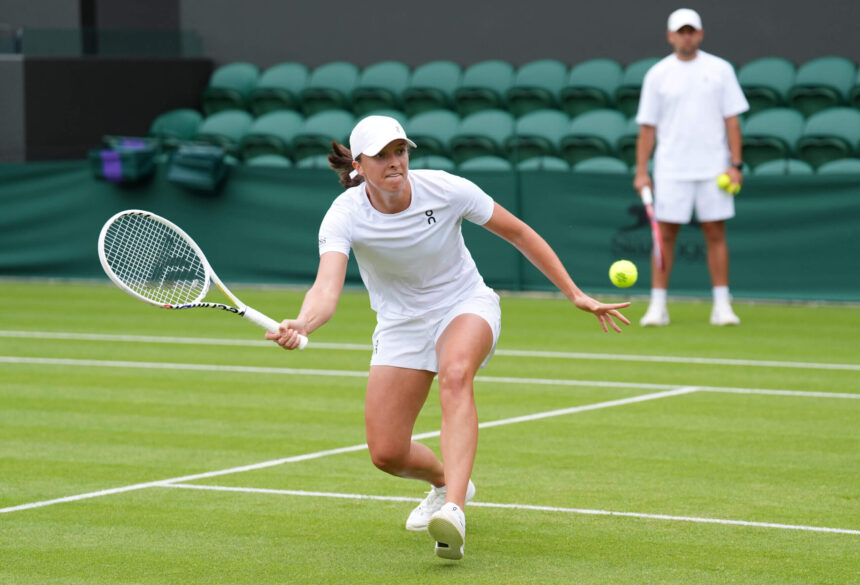

Welcome to the world of Wimbledon, the oldest and most prestigious tennis tournament on the planet. Even if you’re not a die-hard tennis fan, you’ve likely heard of it. It’s a unique blend of world-class sport, deep-rooted tradition, and British summertime charm. Held annually in London, England, this event is more than just a competition; it’s a cultural phenomenon. From the iconic all-white dress code to the delicious strawberries and cream, Wimbledon offers an experience unlike any other Grand Slam.
This article will serve as your ultimate guide. We’ll dive into its rich history, explore its cherished traditions, and get to know the legendary players who have graced its hallowed grass courts. We will also cover what makes the tournament stand out, the different championship events, and how you can enjoy the action. Get ready to explore everything that makes Wimbledon a truly special event on the global sporting calendar.
Key Takeaways
- Wimbledon is the oldest tennis tournament in the world, founded in 1877, and is the only Grand Slam still played on grass courts.
- The tournament is famous for its strict all-white dress code for players, a tradition that dates back to the 1800s.
- Strawberries and cream are the quintessential snack of the championships, with tons consumed by spectators each year.
- The tournament takes place over two weeks in late June and early July at the All England Lawn Tennis and Croquet Club in London.
- Key events include Gentlemen’s and Ladies’ Singles, Doubles, Mixed Doubles, and junior championships.
The Storied History of Wimbledon
To truly appreciate Wimbledon, you have to look back at its beginnings. The story starts in 1877 at the All England Lawn Tennis and Croquet Club. The club, located in the Wimbledon district of London, decided to hold a tennis tournament to raise money for a new pony-drawn roller for their lawns. That first tournament was a gentlemen’s singles event with only 22 participants. The winner, Spencer Gore, took home the first-ever Wimbledon trophy.
From these humble beginnings, the tournament grew rapidly. Ladies’ Singles were introduced in 1884, with Maud Watson becoming the first female champion. That same year, Gentlemen’s Doubles was added to the schedule. The event’s popularity soared, and it quickly became the premier tennis tournament in the United Kingdom. It has been held every year since 1877, with the only exceptions being during the two World Wars and in 2020 due to the global pandemic. This long and uninterrupted history is a huge part of what gives Wimbledon its unique and respected status in the world of sports.
The All England Club: The Heart of the Tournament
The host of Wimbledon is the All England Lawn Tennis and Croquet Club, often referred to simply as the AELTC. This private members’ club is the keeper of the tournament’s traditions and is responsible for staging the event each year. The grounds are meticulously maintained year-round to ensure the grass courts are in perfect condition for the two weeks of competition. The club’s official colors—dark green and purple—are visible everywhere, from the umpire’s chairs to the towels used by the players.
The club features 18 championship grass courts, including the iconic Centre Court. This world-famous venue, with its retractable roof, has been the stage for some of the most memorable moments in tennis history. The club is more than just a venue; it’s a living museum of tennis. For those interested in the latest tech and sports news, a site like https://siliconvalleytime.co.uk/ often covers the innovations that even traditional institutions like Wimbledon adopt, such as advanced broadcasting technologies and digital ticketing.
Centre Court: The Cathedral of Tennis
Centre Court is the main show court at Wimbledon and is arguably the most famous tennis court in the world. It has a capacity of nearly 15,000 spectators and is known for its intimate and electric atmosphere. A Royal Box is reserved for members of the Royal Family and other distinguished guests. One of its most important features is the retractable roof, added in 2009. This ensures that play can continue during the frequent London rain showers, much to the relief of players, spectators, and television broadcasters worldwide. The famous inscription above the players’ entrance from a Rudyard Kipling poem reads, “If you can meet with Triumph and Disaster and treat those two impostors just the same.”
No. 1 Court and Beyond
While Centre Court gets most of the attention, No. 1 Court is another premier show court with its own retractable roof and a seating capacity of over 12,000. It hosts major matches throughout the tournament and has a fantastic atmosphere. Beyond the two main courts, there are numerous outer courts where fans can watch top-ranked players up close during the early rounds. Wandering the grounds and catching different matches on these smaller courts is a quintessential part of the Wimbledon experience for many attendees.
Grass Courts: A Unique Challenge
One of the defining features of Wimbledon is that it’s the only one of the four major tennis tournaments (the Grand Slams) still played on natural grass. The Australian Open and US Open use hard courts, while the French Open is played on clay. This makes Wimbledon truly unique. Playing on grass presents a special set of challenges for the players.
The grass surface is much faster than clay or hard courts. The ball tends to stay low and skid upon bouncing, which favors players with big serves and aggressive, attacking styles of play. Rallies are often shorter, and points can be won or lost in a flash. Players who excel at volleying and have a strong net game, often called “serve-and-volley” players, have historically found great success at Wimbledon. The surface requires players to adapt their movement and strategy, making the tournament a test of versatility and skill. Maintaining these courts is a science in itself, with a team of groundskeepers working tirelessly to keep the rye grass at a precise playing height of 8mm.
The Unbreakable Traditions of Wimbledon
Wimbledon is as much about tradition as it is about tennis. These customs give the tournament its distinctive character and set it apart from other sporting events. They connect the present-day tournament to its Victorian roots and are cherished by fans and players alike.
The All-White Dress Code
The most famous Wimbledon tradition is the strict all-white dress code for competitors. This rule dates back to the 1800s when it was considered improper to see sweat stains on colored clothing. Today, the rule is enforced strictly. Players must be dressed in “almost entirely white” attire from the moment they step onto the court. This includes everything from shorts and shirts to headbands, wristbands, and even the soles of their shoes. While some players have tried to push the boundaries over the years, the All England Club remains firm on this iconic rule.
Strawberries and Cream
What’s the official snack of Wimbledon? Strawberries and cream, of course! This simple yet delicious treat has been served at the tournament since its earliest days. During the two-week event, an astonishing amount is consumed by spectators. We’re talking about tens of thousands of pounds of strawberries and thousands of gallons of cream. The strawberries are always Grade 1 Kent berries, picked the day before they are served to ensure maximum freshness. For many, a trip to Wimbledon isn’t complete without enjoying a bowl.
Royal Patronage
The British Royal Family has a long-standing relationship with Wimbledon. The Queen was a patron for many years, and now the Princess of Wales holds that role. Members of the Royal Family often attend the tournament, watching matches from the Royal Box on Centre Court. Players used to be required to bow or curtsy to the Royal Box, but this tradition was discontinued in 2003. Now, players only do so if the King or the Prince and Princess of Wales are present, as a sign of respect.
The Championships: Events and Trophies
Wimbledon consists of several different championship events held simultaneously. While the singles tournaments get the most headlines, the doubles and junior events are also highly competitive and prestigious.
The five main events are:
- Gentlemen’s Singles
- Ladies’ Singles
- Gentlemen’s Doubles
- Ladies’ Doubles
- Mixed Doubles
In addition to these, there are also junior events for boys and girls (singles and doubles) and invitational events for retired former players.
Trophy Details
|
Event |
Trophy Name |
Inscription |
|---|---|---|
|
Gentlemen’s Singles |
The Gentlemen’s Singles Trophy |
“The All England Lawn Tennis Club Single Handed Champion of the World” |
|
Ladies’ Singles |
The Venus Rosewater Dish |
A silver salver decorated with mythological figures |
|
Gentlemen’s Doubles |
The Gentlemen’s Doubles Trophy |
A silver challenge cup |
|
Ladies’ Doubles |
The Duchess of Kent Challenge Cup |
A silver cup and cover |
|
Mixed Doubles |
The Mixed Doubles Challenge Cup |
A silver challenge cup and cover |
The winners don’t get to keep the original trophies. Instead, they receive a three-quarter size replica to take home. Of course, there is also significant prize money, with millions of dollars distributed among the competitors.
Legends of the Grass Courts
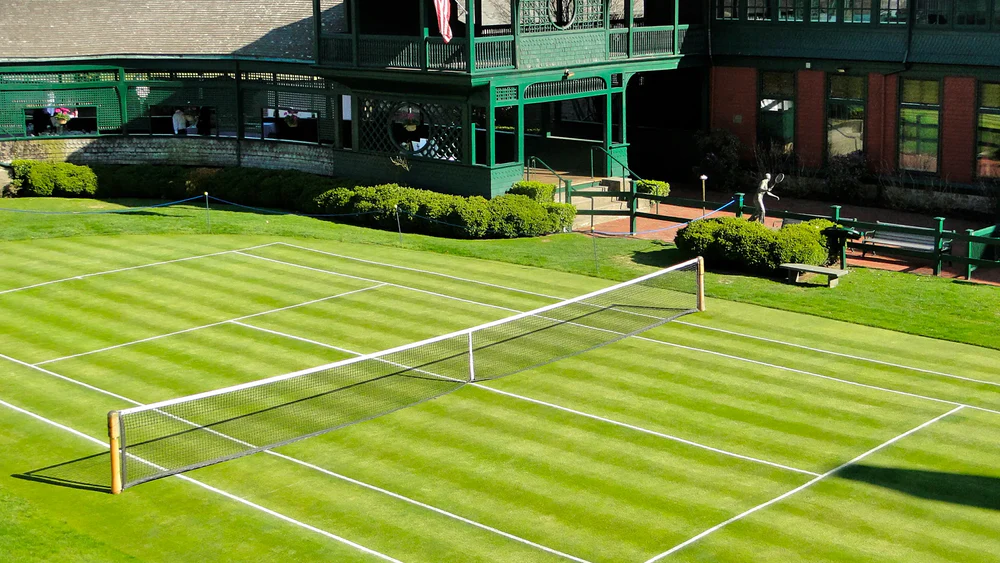
The lawns of Wimbledon have been graced by the greatest tennis players in history. Winning the tournament is often seen as the ultimate achievement in the sport.
Gentlemen’s Champions
In the modern era, a few names stand out. Roger Federer holds the record for the most Gentlemen’s Singles titles with eight wins. His elegant style and mastery of the grass court made him a fan favorite for two decades. Before him, Pete Sampras dominated the 1990s with his powerful serve-and-volley game, winning seven titles. And you can’t forget Björn Borg, who won five consecutive titles from 1976 to 1980. More recently, Novak Djokovic has become a dominant force, tying Federer’s record with multiple wins and showcasing incredible athleticism.
Ladies’ Champions
On the ladies’ side, Martina Navratilova is the undisputed queen of Wimbledon, holding the all-time record with nine Ladies’ Singles titles. Her aggressive style was perfectly suited for the fast grass. In the 1980s, her rivalry with Chris Evert defined an era. Later, Steffi Graf captured seven titles with her powerful forehand and athletic play. The modern era has been dominated by the Williams sisters, Venus and Serena. Together, they have won a staggering 12 singles titles (seven for Serena, five for Venus), revolutionizing the women’s game with their power and determination.
How to Experience Wimbledon
For tennis fans, attending Wimbledon is a bucket-list experience. However, getting tickets can be a challenge due to the massive demand. There are several ways to try and secure a spot.
The Public Ballot
The main way for the public to get tickets is through the Wimbledon Public Ballot. This is essentially a lottery system. UK residents must apply months in advance, and successful applicants are randomly selected and offered tickets. It’s a game of chance, but it’s the fairest way to distribute tickets to the general public.
The Queue
For those who are more spontaneous or don’t succeed in the ballot, there’s “The Queue.” Wimbledon is one of the few major sporting events where you can still buy premium tickets on the day of play. However, it requires a serious commitment. Fans line up for hours, and many even camp out overnight, to get their hands on one of the limited number of tickets available for the show courts. It’s a unique part of the Wimbledon culture and a testament to the dedication of tennis fans.
Watching from Home
Of course, millions of people around the world watch Wimbledon from the comfort of their own homes. The tournament is broadcast globally, with extensive coverage on major sports networks. With high-definition cameras capturing every angle and expert commentary, the television experience is better than ever, bringing the magic of the grass courts to fans everywhere.
Frequently Asked Questions (FAQ)
Q1: When is Wimbledon held?
Wimbledon is held annually over two weeks, starting in late June and ending in early July. The exact dates change slightly each year.
Q2: Why do players have to wear white?
The all-white dress code is a tradition dating back to the 1800s. It was originally implemented because it was considered more genteel and it minimized the visibility of sweat. The All England Club has maintained this tradition to preserve the unique character of the tournament.
Q3: What is a Grand Slam in tennis?
The Grand Slams are the four most important annual tennis tournaments. They are the Australian Open (played on hard court), the French Open (played on clay), Wimbledon (played on grass), and the US Open (played on hard court).
Q4: Who has won the most Wimbledon singles titles?
For the men, Roger Federer holds the record in the Open Era with eight titles. For the women, Martina Navratilova holds the all-time record with nine titles.
Q5: What is “Middle Sunday”?
Traditionally, the middle Sunday of the tournament was a rest day with no play scheduled. This was to allow the courts to recover. However, due to rain delays, play has been held on Middle Sunday on a few occasions. Starting in 2022, the rest day was eliminated, and play now occurs on all 14 days of the tournament.
Conclusion
Wimbledon is so much more than a series of tennis matches. It is a spectacular event where sport, history, and tradition come together in a beautiful setting. From the perfectly manicured grass courts to the iconic all-white dress code, every detail is steeped in a sense of heritage and prestige. It’s a place where legends are made, and where fans can witness sporting history unfold before their eyes.
Whether you are a seasoned tennis enthusiast or a casual observer, the charm of Wimbledon is undeniable. It represents a standard of excellence and sportsmanship that resonates far beyond the world of tennis. The combination of thrilling athletic competition and timeless traditions ensures that Wimbledon will remain one of the most beloved and anticipated sporting events in the world for generations to come.