




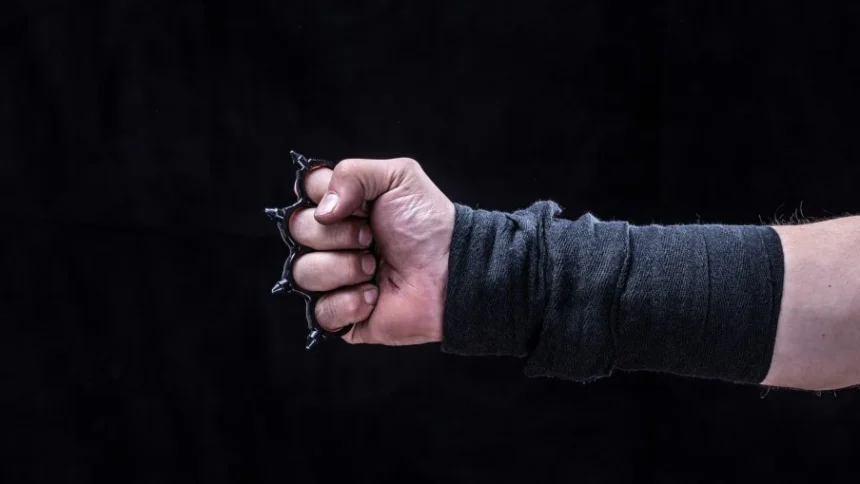

Navigating the world of personal safety tools can be confusing. You want to feel secure, but you also need to follow the law. One item that often comes up in conversation is brass knuckles. They’ve been featured in movies and stories for decades, but what’s the real story behind their legality? The simple question, are brass knuckles illegal, doesn’t have a simple yes or no answer. It depends entirely on where you live.
Laws surrounding weapons can be incredibly specific, varying from one state to another, and sometimes even from one city to the next. What is perfectly legal to own in one place could lead to serious legal trouble in another. This guide is here to help you understand the complex legal landscape surrounding brass knuckles in the United States. We’ll break down the different levels of legality, explore the nuances of state laws, and provide the information you need to make informed and responsible decisions.
Key Takeaways
- The legality of brass knuckles varies significantly across the United States; there is no single federal law that applies everywhere.
- States fall into three main categories: illegal to own, carry, and sell; legal with certain restrictions; and mostly legal to own.
- Even in states where ownership is legal, carrying them concealed or openly can be a separate crime.
- The definition of “brass knuckles” can be broad, sometimes including plastic or carbon fiber versions, and even items with similar designs.
- It is crucial to check your specific state and local city or county ordinances, as they can be stricter than state-level laws.
- Penalties for illegal possession or use can range from minor fines to serious felony charges, including jail time.
Understanding What Brass Knuckles Are
Before we dive into the legal specifics, let’s clarify what we’re talking about. Traditionally, brass knuckles are pieces of metal, usually brass, shaped to fit around the knuckles. They are designed to be gripped in the fist, concentrating the force of a punch into a smaller, harder surface area to increase the impact and potential for injury. This design is why many legal systems classify them as a dangerous weapon.
The term itself, however, has evolved. Modern versions can be made from a wide range of materials, including:
- Hard plastics
- Carbon fiber
- Titanium
- Aluminum
- Other durable polymers
Legal definitions often account for this. Many state laws use broad language like “metal knuckles,” “knuckle dusters,” or “any device worn on the hand that enhances the force of a punch.” This means that even if the item isn’t made of brass, it can still be considered illegal if it fits the functional description. This is an important distinction because creative designs, like those integrated into keychains or phone cases, might still fall under the legal definition of brass knuckles.
Why Is the Legality So Complicated?
The core of the issue is that the United States operates under a system of federalism. The federal government has its powers, and states have theirs. The regulation of most weapons, especially those for personal use, falls under state jurisdiction. This is why you see such a wide variety of laws on everything from firearms to knives and, of course, brass knuckles.
Each state legislature decides how to classify different items. Some states view brass knuckles as inherently offensive weapons with no legitimate use other than to cause harm. These states tend to ban them completely. Other states take a more nuanced approach, perhaps allowing for collection or home ownership but restricting public carrying. A few states have very few or no specific laws addressing them at all, which often means their legality is determined by other, broader weapon laws. The ongoing debate over the question are brass knuckles illegal is a direct result of these differing philosophies on personal defense and public safety.
States Where Brass Knuckles Are Strictly Illegal
In a significant number of states, the answer to the question are brass knuckles illegal is a clear and resounding “yes.” In these jurisdictions, it is illegal to possess, manufacture, transport, or sell brass knuckles under almost any circumstance. Owning them, even as a collector’s item kept in your home, can result in criminal charges.
These states have laws that specifically name “metal knuckles” or “brass knuckles” as prohibited weapons. A violation is often classified as a misdemeanor, but in some cases, it can be a felony, especially if they are carried to a school or government building.
States with complete bans often include:
- California: The law is very strict, classifying brass knuckles as a “per se” dangerous weapon. Mere possession is a crime.
- New York: Possession of “metal knuckles” is a criminal offense.
- Illinois: Carrying or possessing them is illegal under the state’s unlawful use of a weapon statute.
- Massachusetts: The law explicitly bans the possession of “metallic knuckles.”
- Washington: It is illegal to manufacture, sell, or possess them.
- Michigan: Possession and sale are prohibited.
This is not an exhaustive list. It is vital to remember that laws can and do change. What is accurate today might be different tomorrow. Always check the most current version of your state’s penal code or consult with a legal professional for the most up-to-date information.
States with Restrictions: The Gray Areas
This is where things get more complex. A number of states don’t have an outright ban but impose significant restrictions on how and where you can have brass knuckles. These laws often distinguish between owning and carrying.
Ownership vs. Carrying
In some states, it might be legal to own brass knuckles and keep them inside your private residence. You could have them as part of a collection or for home defense. However, the moment you put them in your pocket and leave the house, you could be breaking the law.
These states often have laws against carrying a “concealed weapon.” Brass knuckles almost always fall into this category. The legal issue isn’t ownership, but the act of carrying them on your person in public.
Intent Matters
In other jurisdictions, legality can hinge on your intent. For example, a state might make it illegal to possess brass knuckles with the “intent to unlawfully use” them against another person. While this may sound like it offers some leeway, it can be difficult to prove your intent was lawful if you are found carrying them during a confrontation. Law enforcement and prosecutors might argue that the very nature of the item implies an intent to use it as a weapon.
This creates a risky legal situation where you could be charged with a crime based on an officer’s interpretation of the circumstances. The question are brass knuckles illegal becomes less about the object and more about your perceived actions.
States Where Brass Knuckles Are Generally Legal
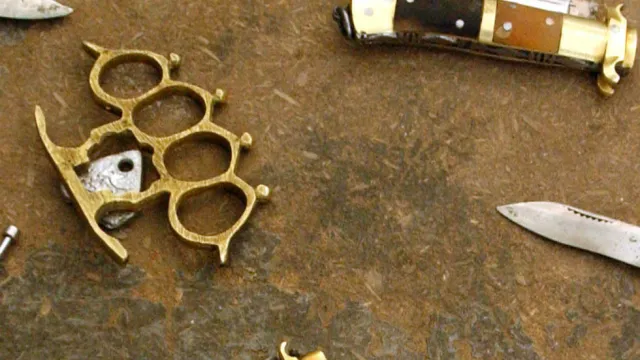
A smaller number of states have very few, if any, specific laws that mention brass knuckles. In these states, they are often legal to own and, in some cases, even to carry openly or concealed.
States that tend to have more permissive laws include:
- Arizona
- Utah
- Wyoming
However, “legal” does not always mean “no rules.” Even in these states, there are important caveats:
- Local Ordinances: A city or county can have its own ordinance that is stricter than state law. For example, a state might permit brass knuckles, but its largest city may ban them entirely. This is common and a critical factor to check.
- Use in a Crime: If you use brass knuckles to assault someone, you will face much more severe charges. The act of using a weapon—any weapon—during an assault elevates the crime to an aggravated assault, which is typically a felony.
- Prohibited Places: You are almost always prohibited from carrying any weapon, including brass knuckles, into places like schools, airports, courthouses, and government buildings.
The freedom to own something doesn’t provide a license to use it irresponsibly. Legal ownership comes with the heavy responsibility of handling the item safely and lawfully.
State-by-State Legality Overview
Laws change frequently, and this table is for informational purposes only. It is not a substitute for legal advice. Always verify your local and state laws.
|
State |
General Status of Brass Knuckles |
Notes |
|---|---|---|
|
Alabama |
Generally legal to own. |
Concealed carry may be restricted. |
|
Alaska |
Illegal |
Prohibited as a dangerous weapon. |
|
Arizona |
Generally legal. |
Check local city ordinances. |
|
Arkansas |
Illegal |
Possession, sale, and manufacture are prohibited. |
|
California |
Illegal |
Strict ban on possession, sale, and manufacture. |
|
Colorado |
Illegal |
Classified as an illegal weapon. |
|
Connecticut |
Generally legal to own. |
Carrying may be restricted. |
|
Delaware |
Illegal |
Banned under concealed deadly weapon laws. |
|
Florida |
Legal to own, restricted carry. |
Open carry is generally permitted; concealed carry requires a CWFL. |
|
Georgia |
Legal with a Weapons Carry License. |
Otherwise, restricted. |
|
Hawaii |
Illegal |
Possession, manufacture, and sale are banned. |
|
Idaho |
Generally legal. |
Local ordinances may apply. |
|
Illinois |
Illegal |
Banned under unlawful use of weapons statutes. |
|
Indiana |
Illegal |
Classified as a “knuckle knife” and banned. |
|
Iowa |
Legal to own. |
Permit required for concealed or open carry. |
|
Kansas |
Generally legal. |
Check local city ordinances. |
|
Kentucky |
Legal to own. |
Concealed carry is restricted without a permit. |
|
Louisiana |
Generally legal. |
Check local ordinances. |
|
Maine |
Illegal |
Banned as a dangerous weapon. |
|
Maryland |
Legal to own. |
Open or concealed carry is illegal. |
|
Massachusetts |
Illegal |
Strict ban on possession. |
|
Michigan |
Illegal |
Banned for possession and sale. |
|
Minnesota |
Illegal |
Banned as a dangerous weapon. |
|
Mississippi |
Generally legal. |
Enhanced penalties if used in a crime. |
|
Missouri |
Illegal |
Unlawful to possess, manufacture, or sell. |
|
Montana |
Generally legal. |
Concealed carry requires a permit. |
|
Nebraska |
Generally legal. |
Local ordinances may apply. |
|
Nevada |
Illegal |
Classified as a dangerous weapon. |
|
New Hampshire |
Illegal |
Banned as a dangerous weapon. |
|
New Jersey |
Illegal |
Strict ban on possession. |
|
New Mexico |
Generally legal. |
Check local city ordinances. |
|
New York |
Illegal |
Criminal possession of a weapon. |
|
North Carolina |
Legal to own. |
Concealed carry is illegal. |
|
North Dakota |
Generally legal. |
Concealed carry may require a permit. |
|
Ohio |
Legal to own. |
Concealed carry is illegal. |
|
Oklahoma |
Legal to own. |
Restrictions on carry may apply. |
|
Oregon |
Legal to own. |
Concealed carry is illegal. |
|
Pennsylvania |
Illegal |
Possession is a criminal offense. |
|
Rhode Island |
Illegal |
Banned for possession or carry. |
|
South Carolina |
Generally legal to own. |
Cannot be carried to certain places like schools. |
|
South Dakota |
Generally legal. |
Local ordinances may apply. |
|
Tennessee |
Illegal |
Possession with intent to go armed is a crime. |
|
Texas |
Legal. |
As of 2019, brass knuckles are legal to carry. |
|
Utah |
Generally legal. |
Few restrictions at the state level. |
|
Vermont |
Illegal |
Banned for possession and sale. |
|
Virginia |
Illegal |
Concealed carry is illegal. |
|
Washington |
Illegal |
Strict ban on possession and manufacture. |
|
West Virginia |
Legal to own. |
Concealed carry requires a permit. |
|
Wisconsin |
Legal to own. |
Concealed carry is illegal without a permit. |
|
Wyoming |
Generally legal. |
Few restrictions at the state level. |
What About “Novelty” Brass Knuckles?
One area of growing confusion is the market for “novelty” items that look like brass knuckles but are marketed for other purposes. These can include:
- Belt Buckles: A belt buckle designed to be removable and used as knuckles.
- Paperweights: Heavy, knuckle-shaped items sold as desk accessories.
- Keychains: Often made of plastic or carbon fiber with finger holes.
Be extremely cautious with these items. Law enforcement and the courts often look at the function of an item, not its name or marketing. If a belt buckle is designed to be quickly detached and used as a weapon, it will likely be treated as one. A “paperweight” that fits perfectly in your hand and has all the features of brass knuckles is unlikely to be seen as just a desk decoration if found in your car’s glove box. The question are brass knuckles illegal extends to these look-alike products, and in most strict states, they are treated exactly the same.
The Penalties for Illegal Possession
The legal consequences for violating brass knuckle laws can be severe and should not be taken lightly. The penalty depends on several factors, including the specific state law, the circumstances of the offense, and your criminal history.
- Misdemeanor Charges: In many states, a first-time offense for simple possession is a misdemeanor. This can result in fines, probation, and even jail time (typically up to one year).
- Felony Charges: Possession can become a felony under certain conditions, such as if you have a prior criminal record or if you carry the weapon into a prohibited area like a school. A felony conviction has life-altering consequences, including the loss of voting rights and the right to own firearms, in addition to a lengthy prison sentence.
- Weapon Enhancement: If you commit another crime while possessing brass knuckles, you can face a “weapon enhancement.” This adds extra time to your sentence. Using them in an assault almost guarantees a felony charge of aggravated assault.
Conclusion: Responsibility Is Key
The debate over are brass knuckles illegal is a perfect example of how complex weapon laws can be in the United States. There is no one-size-fits-all answer. Legality is a patchwork of state and local regulations, ranging from complete prohibition to near-total freedom of ownership.
The most important takeaway is the need for personal responsibility. Before you even consider purchasing or carrying brass knuckles or any similar item, you must do your homework. A quick search on a site like https://siliconvalleytime.co.uk/ might give you tech news, but for legal matters, you need to consult official sources. Read your state’s penal code, check your city and county ordinances, and when in doubt, consult with a qualified legal professional. Ignorance of the law is not a valid defense, and a mistake could lead to serious and lasting consequences. Stay informed, stay safe, and always act within the boundaries of the law.
Frequently Asked Questions (FAQ)
Q1: Is it legal to own brass knuckles for self-defense?
A: It depends entirely on your state. In states with strict bans (like California or New York), even owning them for self-defense in your home is illegal. In states where ownership is legal but carrying is not, you could potentially use them for defense within your home. However, using them against another person will always be scrutinized, and you must be able to prove it was a justifiable act of self-defense.
Q2: Are plastic or carbon fiber knuckles legal?
A: In most cases, no. Most state laws use broad definitions like “metal knuckles” or “knuckle weapons” that are interpreted to include any material, not just brass. If the item is designed to be worn on the hand to enhance a punch, it will likely be treated as illegal in states that ban traditional brass knuckles.
Q3: Can I order brass knuckles online and have them shipped to my state?
A: You can, but it may be illegal. Many online sellers will ship to any state, putting the legal burden on the buyer. If brass knuckles are illegal to possess in your state, ordering them online is also illegal. You could be charged with a crime if the package is intercepted or if you are later found in possession of them.
Q4: What’s the difference between open carry and concealed carry for brass knuckles?
A: Open carry means carrying the weapon in plain sight for others to see. Concealed carry means hiding it from view, such as in a pocket or bag. Some states have different rules for each. For example, a state might allow you to own brass knuckles but make it illegal to carry them concealed without a permit. In states with strict bans, both open and concealed carry are illegal.
Q5: If I live in a legal state, can I travel with brass knuckles to an illegal state?
A: No. When you cross state lines, you become subject to the laws of the state you are in. If you travel from a state where brass knuckles are legal to one where they are illegal, you are in violation of that state’s law and can be arrested and charged. You cannot bring prohibited items across state borders.