







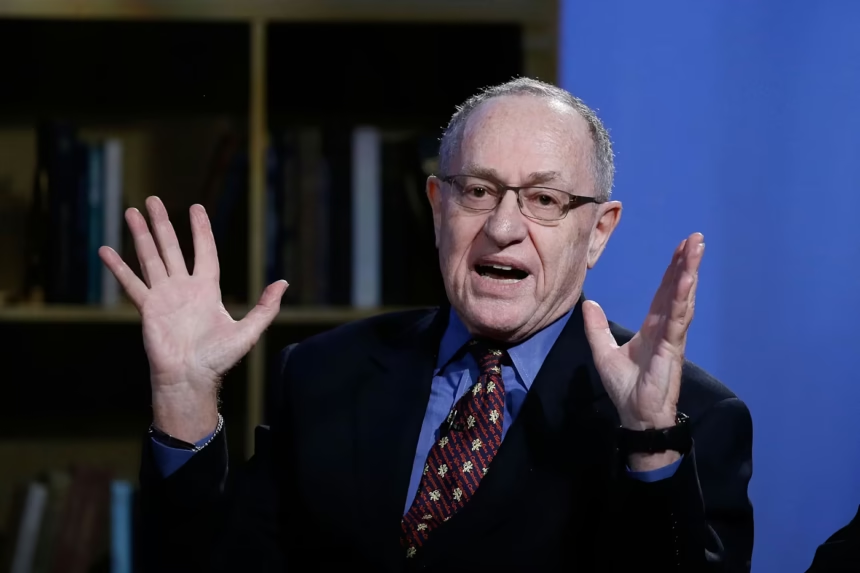

Alan Dershowitz is a name that often sparks conversation. For decades, he has been a prominent figure in the American legal and political landscape. As a constitutional law scholar, a prolific author, and a defense attorney in several high-profile cases, his career has been both influential and controversial. This article explores the life, career, legal philosophy, and public perception of alan dershowitz, offering a comprehensive look at one of America’s most recognizable legal minds.
From his early days at Harvard Law School to his arguments in front of the Supreme Court and his frequent appearances in the media, Dershowitz has consistently placed himself at the center of national debates. Understanding his journey provides insight into some of the most significant legal battles and constitutional questions of our time. We will delve into his major cases, his staunch defense of civil liberties, and the evolution of his public and political stances.
Key Takeaways
- Alan Dershowitz is a distinguished American lawyer and Harvard Law School professor emeritus, known for his work in constitutional and criminal law.
- He has been involved in numerous high-profile legal cases, often defending controversial clients and unpopular causes.
- Dershowitz is a staunch advocate for civil liberties and free speech, principles that guide his legal arguments and public commentary.
- His career includes significant contributions as an author, with over 40 non-fiction books on law, politics, and justice.
- Over the years, his political views have shifted, leading to debates and discussions among his peers and the public.
The Early Life and Education of Alan Dershowitz
Born in Brooklyn, New York, in 1938, alan dershowitz grew up in an Orthodox Jewish household. His early life was shaped by his community and a strong emphasis on education and debate. This environment fostered the intellectual curiosity and argumentative skills that would become hallmarks of his career. He attended Yeshiva University High School, where he excelled academically, before moving on to Brooklyn College.
A Foundation in Law
After graduating from Brooklyn College, Dershowitz set his sights on one of the most prestigious law schools in the country: Yale Law School. He graduated first in his class in 1962, a remarkable achievement that signaled his potential. His academic prowess was immediately recognized, and he clerked for Judge David L. Bazelon of the U.S. Court of Appeals for the D.C. Circuit. Following that, he clerked for Justice Arthur Goldberg of the U.S. Supreme Court, an experience that provided him with an unparalleled view of the nation’s highest court.
These clerkships were not just resume builders; they were formative experiences. They exposed him to the inner workings of the federal judiciary and deepened his understanding of constitutional law. This foundation prepared him for his next major step: joining the faculty of Harvard Law School.
Becoming Harvard’s Youngest Professor
In 1964, at the age of 25, alan dershowitz joined the faculty at Harvard Law School. Just three years later, he became a full professor at 28, making him the youngest in the school’s history. For nearly five decades, he was a fixture at Harvard, teaching generations of students about criminal and constitutional law. His classes were known for their rigor and his Socratic teaching style, which challenged students to think critically and defend their positions.
His tenure at Harvard established him as a leading academic voice. He wasn’t content to remain in the ivory tower, however. He actively combined his academic work with a robust legal practice, believing that theory and practice should inform each other.
Landmark Cases and Legal Career
The public persona of alan dershowitz is largely defined by the high-profile cases he has taken on. He has a reputation for defending the “damned,” taking on clients and causes that many others would avoid. His client list is a who’s who of controversial figures, and his involvement often brought significant media attention.
The Claus von Bülow Appeal
One of his first major cases to capture national attention was the appeal of Claus von Bülow. The British socialite had been convicted of the attempted murder of his wife, Sunny. Dershowitz was brought in for the appeal and successfully argued that evidence had been improperly obtained and withheld from the defense. The conviction was overturned, and von Bülow was acquitted in a second trial. This case cemented Dershowitz’s reputation as a brilliant appellate lawyer.
The O.J. Simpson “Dream Team”
Perhaps his most famous case was his role as an appellate advisor to the defense team for O.J. Simpson, famously dubbed the “Dream Team.” While he was not the lead trial attorney, alan dershowitz was instrumental in crafting the legal strategy, particularly concerning constitutional issues like search and seizure. The case was a media circus, and his involvement made him a household name. He later wrote a book about his experience, offering his perspective on the trial and its outcome.
Other Notable Clients
Dershowitz’s client list extends far beyond these two cases. He has provided counsel or representation for a diverse group of individuals, often focusing on the constitutional principles at stake rather than the public’s perception of his client.
A Selection of Alan Dershowitz’s Clients
|
Client Name |
Context of Representation |
|---|---|
|
Mike Tyson |
Appellate work related to a rape conviction. |
|
Leona Helmsley |
Handled the appeal of her tax evasion conviction. |
|
Jeffrey Epstein |
Negotiated a controversial 2008 non-prosecution agreement. |
|
Donald Trump |
Defended him during his first impeachment trial. |
|
Harvey Weinstein |
Served as a consulting appellate lawyer. |
This willingness to represent unpopular figures is central to his legal philosophy. He argues that everyone, regardless of the accusations against them, is entitled to a robust legal defense.
Core Legal and Political Philosophy
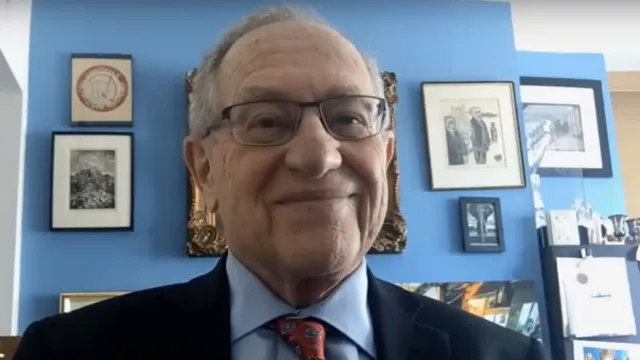
Understanding alan dershowitz requires looking beyond his clients to the principles that guide his work. His philosophy is rooted in a deep commitment to civil liberties, free speech, and the protections afforded by the U.S. Constitution.
A Civil Libertarian
At his core, Dershowitz is a classic civil libertarian. He believes in zealously protecting individual rights against government overreach. This principle is the common thread that runs through his defense of clients from all parts of the political spectrum. He argues that if the rights of the most disliked members of society are not protected, then no one’s rights are truly safe. This stance has often put him at odds with both the political left and right.
The “Shoe on the Other Foot” Test
Dershowitz frequently employs what he calls the “shoe on the other foot” test. He urges people to consider whether they would support a particular rule or law if it were applied to a person or cause they opposed. For example, he might ask someone who wants to limit the speech of a group they dislike if they would want that same rule applied to a group they support. This test is his way of promoting a principled, rather than partisan, approach to civil liberties. He argues that rights must be universal to be meaningful.
Free Speech Absolutism
A fierce defender of the First Amendment, alan dershowitz is a near-absolutist when it comes to free speech. He has consistently argued against the creation of “hate speech” laws and has defended the right of individuals to express even the most offensive views. He believes the best way to combat bad speech is with more speech, not censorship. His views on this topic are particularly relevant today, with ongoing debates about content moderation on social media and free speech on college campuses. Exploring these modern challenges, as detailed by platforms like https://siliconvalleytime.co.uk/, shows how timeless these constitutional debates are.
A Prolific Author and Commentator
Beyond the courtroom, alan dershowitz has been a constant presence in public discourse through his writing and media appearances. He has authored more than 40 books and written countless articles, making complex legal arguments accessible to a broad audience.
Key Literary Works
His books cover a wide range of topics, from legal theory and specific cases to politics and his own life story. Some of his most notable works include:
- Chutzpah (1991): A personal and cultural exploration of Jewish identity and assertiveness in America.
- Reasonable Doubts: The O.J. Simpson Case and the Criminal Justice System (1996): His insider account of the Simpson trial.
- The Case for Israel (2003): A passionate defense of Israel’s right to exist and defend itself, which became a focal point of his advocacy.
- The Case Against Impeaching Trump (2018): An argument that the constitutional standards for impeachment had not been met in the case of President Donald Trump.
These books are not just legal treatises; they are arguments meant to persuade the public. They reflect his dual role as both a legal scholar and a public intellectual.
Media Presence
For decades, alan dershowitz has been a sought-after commentator for television news networks. His ability to break down complex legal issues into understandable soundbites has made him a go-to expert for outlets like CNN, Fox News, and MSNBC. However, his political evolution in recent years has changed his relationship with some media platforms. Once a staple on left-leaning networks, he is now more frequently seen on conservative ones, a shift that reflects his criticism of what he sees as the Democratic party’s move away from traditional liberal values.
Controversy and Criticism
A career as long and public as that of alan dershowitz is bound to be filled with controversy. He has faced criticism from all sides of the political spectrum for his clients, his legal arguments, and his personal and political statements.
The Jeffrey Epstein Plea Deal
One of the most significant controversies surrounds his role in negotiating a 2008 non-prosecution agreement for financier Jeffrey Epstein, who was facing allegations of sex crimes involving underage girls. The deal has been widely criticized as being too lenient. Dershowitz has vehemently defended his actions, arguing that he secured a deal that guaranteed Epstein would serve prison time and register as a sex offender, which he believed was a better outcome than the risk of a trial where Epstein might have been acquitted.
Political Alienation
In recent years, Dershowitz has spoken openly about feeling alienated from his long-time political allies on the left. His defense of President Trump during his impeachment and his criticism of progressive movements have led to public disputes and a loss of friendships. He claims he has not changed his liberal principles but that the political left has moved away from him. Critics, on the other hand, argue that Dershowitz himself has shifted his allegiances for personal or professional reasons. This evolution has made him a polarizing figure, admired by some for his principled stand and condemned by others for what they see as a betrayal of his past ideals.
Legacy and Influence
As he moves into the later stages of his career, the legacy of alan dershowitz is still being written. He remains an active voice, continuing to write, teach, and comment on the legal and political issues of the day.
His influence is undeniable. He has shaped the careers of thousands of law students at Harvard. He has been at the center of some of the most significant legal cases of the last half-century. And he has forced the public to confront difficult questions about justice, civil liberties, and the meaning of the Constitution.
Whether one views him as a principled defender of rights or a self-serving provocateur, there is no denying the impact alan dershowitz has had on American law and public life. His career serves as a powerful case study in the complexities of the legal profession and the enduring debates that define a free society.
Frequently Asked Questions (FAQ)
Why is Alan Dershowitz famous?
Alan Dershowitz is famous for being a prominent constitutional law scholar, a long-time Harvard Law School professor, and a defense attorney in many high-profile cases, including those of O.J. Simpson and Claus von Bülow. He is also a well-known author and media commentator.
What is Alan Dershowitz’s main legal argument?
His primary legal philosophy is rooted in civil libertarianism. He strongly believes in protecting the constitutional rights of all individuals, regardless of how unpopular they or their alleged actions may be. He often uses the “shoe on the other foot” test to argue for universal application of legal principles.
Is Alan Dershowitz retired?
Alan Dershowitz retired from his position as a professor at Harvard Law School in 2013, but he remains active in the legal field. He continues to write books, appear in the media, and provide legal consultation and representation.
What are some of the most famous cases involving Alan Dershowitz?
Some of his most famous cases include the successful appeal for Claus von Bülow, his role as an appellate advisor for O.J. Simpson’s “Dream Team,” and his legal work for clients like Mike Tyson, Leona Helmsley, and Jeffrey Epstein. He also served on President Donald Trump’s defense team during his first impeachment trial.



