





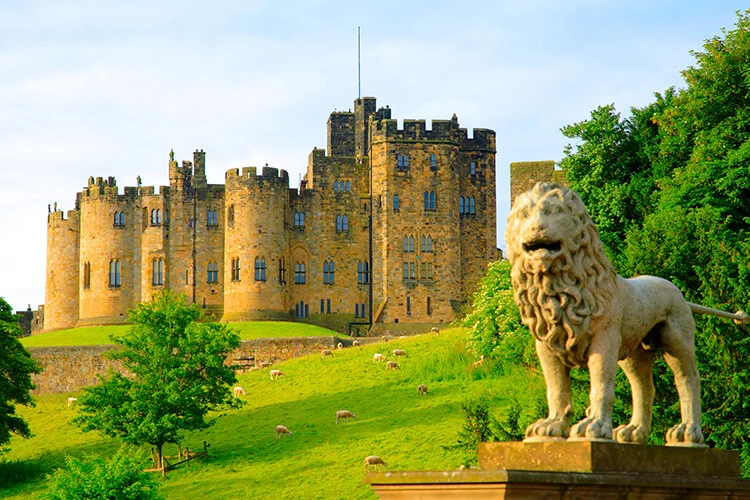

Welcome to a journey through time, magic, and British history! Nestled in the heart of Northumberland, England, Alnwick Castle stands as a testament to nearly a thousand years of drama, resilience, and cinematic fame. For many, it’s instantly recognizable as the real-life Hogwarts from the Harry Potter films. But its story is so much deeper and more fascinating than just broomstick lessons and wizardry. This iconic fortress is a living museum, the family home of the Duke of Northumberland, and a gateway to understanding English heritage.
Whether you are a history enthusiast, a film buff, or a family looking for an unforgettable adventure, this guide will walk you through everything you need to know about visiting Alnwick Castle. We will explore its storied past, its starring roles on the silver screen, the incredible art it houses, and the fun activities that await you behind its ancient stone walls. Prepare to be enchanted by a place where history and magic collide.
Key Takeaways
- Alnwick Castle is one of the largest inhabited castles in the United Kingdom, second only to Windsor Castle.
- It famously served as a primary filming location for Hogwarts School of Witchcraft and Wizardry in the first two Harry Potter movies.
- The castle has been the home of the Percy family, the Dukes of Northumberland, for over 700 years.
- Visitors can participate in unique activities like broomstick training, archery, and explore magnificent State Rooms filled with priceless art.
- The castle’s history is filled with conflict, including battles during the Anglo-Scottish wars and the Wars of the Roses.
The Storied History of Alnwick Castle
The origins of Alnwick Castle trace back to the Norman period, shortly after the Norman Conquest of England in 1066. The first parts of the castle were constructed around 1096 by Yves de Vescy, a Norman nobleman. Its strategic location near the border with Scotland made it a crucial defensive stronghold. For centuries, the castle was at the forefront of the frequent and bloody conflicts between England and Scotland. It was besieged multiple times, most notably in 1136 by King David I of Scotland and again in 1172 and 1174 by William the Lion, King of Scots. During the latter siege, William was captured just outside the castle walls, a significant victory for the English.
In 1309, the castle’s fate changed forever when it was purchased by the Percy family. This powerful and influential dynasty transformed the modest Norman fortress into the formidable structure we see today. The Percys were one of the most prominent families in Northern England, and they invested heavily in expanding and fortifying Alnwick Castle. They added the iconic towers and the imposing curtain walls, turning it into a military powerhouse. Over the centuries, the castle has been renovated and adapted by successive generations of the Percy family, reflecting changing architectural styles and needs.
The Powerful Percy Family
To understand Alnwick Castle, you must understand the Percy family. For over 700 years, they have been the custodians of this great estate. Their history is deeply intertwined with the history of England itself. The Percys have been soldiers, politicians, rebels, and patrons of the arts. One of the most famous members of the family was Sir Henry Percy, better known as “Hotspur,” who was immortalized by William Shakespeare in his play Henry IV, Part 1. Hotspur was a fiery and renowned warrior who ultimately rebelled against the king and was killed in battle in 1403.
The family’s fortunes have ebbed and flowed with the political tides. They were involved in the Wars of the Roses and were key players in the Tudor and Stuart courts. The 1st Duke of Northumberland, Hugh Percy, undertook a massive restoration of the castle in the 18th century with the help of the famous architect Robert Adam, transforming the interiors into a showcase of Georgian elegance. Today, the 12th Duke of Northumberland and his family still live in a private section of Alnwick Castle, continuing a legacy that has endured for centuries. This makes it a rare example of a historic castle that remains a cherished family home.
Architectural Evolution Through the Ages
The architecture of Alnwick Castle is a fascinating patchwork of different historical periods. Its journey began as a simple Norman motte-and-bailey structure. The early stone fortifications were practical and defensive, designed to withstand sieges. The major additions by the Percy family in the 14th century gave the castle its distinctive medieval appearance, with the Abbot’s Tower, the Middle Gateway, and the imposing Octagonal Towers. These additions were not just for defense; they were a statement of the Percy family’s power and wealth.
The 18th century brought a dramatic change. The 1st Duke and Duchess hired Robert Adam to create lavish, Gothic-style interiors within the medieval shell. This was a fashionable trend at the time, but much of Adam’s work was later replaced. In the 19th century, the 4th Duke, Algernon Percy, undertook another massive refurbishment. He felt the Georgian interiors were out of step with the castle’s medieval exterior. He hired the architect Anthony Salvin to create the magnificent Italian Renaissance-style State Rooms that visitors can admire today. This blend of medieval fortifications and opulent, palatial interiors makes Alnwick Castle a truly unique architectural gem.
A Real-Life Hogwarts: Alnwick Castle on Screen
For millions of fans around the world, Alnwick Castle is, and always will be, Hogwarts. In 2000, the castle’s Outer Bailey was filled with young actors for the filming of Harry Potter and the Sorcerer’s Stone. It was here that Harry and his classmates had their first flying lesson with Madam Hooch. The scene where Neville Longbottom’s broomstick goes rogue and he ends up dangling from a statue was filmed right on the castle grounds. The castle’s courtyards and baileys were used for shots of students walking between classes, and the Lion Arch served as a gateway to the school grounds.
The castle returned for Harry Potter and the Chamber of Secrets. The inner bailey was the location where Ron Weasley’s flying Ford Anglia crash-landed, much to the displeasure of the Whomping Willow. Its magical atmosphere and authentic medieval architecture made it the perfect stand-in for the famed school of witchcraft and wizardry. Even today, visiting Alnwick Castle feels like stepping into the pages of the books. The castle fully embraces this legacy, offering visitors the chance to take part in their own “broomstick training” sessions on the very spot where Harry learned to fly.
Other Famous Filming Locations
While its role as Hogwarts is what Alnwick Castle is most famous for, its cinematic career is extensive. The castle’s dramatic appearance has made it a popular choice for filmmakers and television producers for decades.
- Downton Abbey: The castle had a starring role in two Christmas specials of the beloved series. It was transformed into Brancaster Castle, the grand Northumberland estate of Lord Sinderby. The magnificent State Rooms and the castle grounds were featured prominently, providing a suitably grand setting for the Crawley family’s holiday escapades.
- Robin Hood: Prince of Thieves: The 1991 blockbuster starring Kevin Costner used Alnwick Castle for several key scenes. The imposing battlements and dramatic landscape provided the perfect backdrop for the medieval adventure.
- Transformers: The Last Knight: In a departure from historical dramas, the castle was featured in this action-packed sci-fi film. Its ancient stones provided a stark contrast to the high-tech action, proving the castle’s versatility as a filming location.
- The Hollow Crown: This series of BBC adaptations of Shakespeare’s history plays used the castle to represent various royal palaces, bringing its historical connections to the forefront.
This extensive filmography highlights the castle’s timeless appeal, which continues to capture the imaginations of audiences worldwide. You can find more information on current events and creative industries on platforms like siliconvalleytime.co.uk.
What to See and Do at Alnwick Castle
A visit to Alnwick Castle is packed with activities for all ages. From exploring opulent rooms to trying your hand at medieval crafts, there is something to keep everyone entertained for a full day.
The Magnificent State Rooms
The heart of the castle’s interior is its collection of State Rooms. Designed by the Italian architect Anthony Salvin in the 19th century, these rooms are a breathtaking example of Renaissance-style splendor. As you walk through, you’ll be surrounded by ornate carved ceilings, luxurious silk wall coverings, and an incredible collection of art and furniture. The library is a highlight, with over 14,000 books and a stunningly beautiful ceiling. The drawing room and dining room offer a glimpse into the lavish lifestyle of the Dukes of Northumberland. These rooms are still used by the Percy family for private functions, adding to their unique and living atmosphere.
Art and Collections
The State Rooms at Alnwick Castle house one of the finest private art collections in the country. The collection includes masterpieces by artists such as Titian, Raphael, Canaletto, and Van Dyck. The Canaletto room is particularly impressive, featuring a series of large paintings depicting scenes of Venice. In addition to paintings, you’ll find exquisite collections of Meissen and Chelsea porcelain, along with priceless furniture that has been in the Percy family for generations. Knowledgeable guides are stationed in each room to answer questions and share stories about the incredible treasures on display.
Notable Artwork in the Collection
|
Artist |
Famous Work at Alnwick Castle |
Style |
|---|---|---|
|
Raphael |
The Madonna of the Pinks |
High Renaissance |
|
Titian |
Various portraits |
Venetian School |
|
Canaletto |
Views of Venice |
Rococo/Veduta |
|
Van Dyck |
Portraits of the Percy family |
Baroque |
Broomstick Training and Other Activities
You can’t visit the real-life Hogwarts without learning to fly! One of the most popular activities at Alnwick Castle is the broomstick training class. Held on the very lawn where the famous Harry Potter scene was filmed, resident “wizarding professors” will teach you how to handle a broom and take some fantastic photos that make it look like you’re hovering in mid-air. It’s great fun for both kids and adults.
Beyond broomsticks, the castle offers a range of other hands-on activities. You can try your hand at archery in the shadow of the castle walls, a skill that was essential for the castle’s medieval defenders. There are also opportunities to meet costumed characters who bring the castle’s history to life, sharing stories of knights, ladies, and jesters. Craft sessions in the Artisan’s Courtyard allow you to try medieval crafts, making your visit an interactive and educational experience.
The Alnwick Garden: A Modern Marvel
Adjacent to Alnwick Castle is The Alnwick Garden, a separate but equally stunning attraction. Conceived by Jane Percy, the current Duchess of Northumberland, the garden is a contemporary masterpiece that has transformed a derelict space into one of the most exciting modern gardens in the world. It features a spectacular Grand Cascade, a magnificent water feature that forms the garden’s centerpiece.
The garden is home to a variety of themed areas, including a beautiful Rose Garden, a tranquil Bamboo Labyrinth, and the world’s largest Taihaku Cherry Orchard. However, its most famous feature is the Poison Garden. Locked behind imposing black gates, this section is home to over 100 deadly and narcotic plants, including hemlock, strychnine, and ricin. Guided tours explain the lethal properties of these plants and the stories behind them, making it a thrilling and slightly dangerous educational experience. The Alnwick Garden also boasts one of the world’s largest treehouses, complete with a restaurant, rope bridges, and walkways.
Planning Your Visit to Alnwick Castle
A trip to Alnwick Castle requires a bit of planning to make the most of your day. The castle and garden are separate attractions, so you will need to purchase tickets for each.
Tickets and Opening Times
Alnwick Castle is generally open to the public from late March to late October. It is closed during the winter months as it is the family’s private residence. It’s essential to check the official website for the exact dates, opening times, and any special events before you travel. You can purchase tickets online in advance, which is highly recommended, especially during peak season, as this can save you time on the day. Combination tickets that provide access to both the castle and The Alnwick Garden are available and offer better value if you plan to visit both.
Getting There
Alnwick is a historic market town located in Northumberland, in the northeast of England.
- By Car: It is situated just off the A1, the main highway running from London to Edinburgh. The journey from London is approximately 5 hours, and from Edinburgh, it’s about 1.5 hours. There is designated parking available near the castle.
- By Train: The nearest mainline train station is Alnmouth, which is about four miles away. It’s on the main East Coast line, with regular services from London, York, Newcastle, and Edinburgh. From Alnmouth station, you can take a short taxi ride or a local bus to Alnwick.
- By Bus: National Express and other bus services run to Alnwick from major cities across the UK.
Best Time to Visit
The summer months of July and August are the most popular times to visit Alnwick Castle, thanks to the warm weather and school holidays. However, this is also the busiest period. For a more relaxed experience, consider visiting during the shoulder seasons of May, June, or September. The weather is still pleasant, and the crowds are smaller. Special events, such as jousting tournaments and historical reenactments, often take place during the summer, so check the event schedule if you’re interested in seeing something specific.
Conclusion
Alnwick Castle is so much more than just a beautiful building. It is a portal to the past, a canvas for cinematic magic, and a living piece of English heritage. From its bloody beginnings as a border fortress to its current dual role as a ducal home and a world-class tourist attraction, the castle’s story is one of power, survival, and transformation. A visit here is a chance to walk in the footsteps of knights, dukes, and wizards. You can immerse yourself in history, admire priceless works of art, and even learn to fly a broomstick. It’s a place that captivates, educates, and inspires, leaving every visitor with a touch of its enduring magic. Whether you are drawn by its history or its Hollywood fame, Alnwick Castle promises an unforgettable experience.
Frequently Asked Questions (FAQ)
Is Alnwick Castle suitable for children?
Absolutely! Alnwick Castle is extremely family-friendly. Activities like broomstick training, archery, and meeting costumed characters are designed to engage younger visitors. The vast grounds are also perfect for kids to run around and explore.
Can I visit the parts of the castle where the Percy family lives?
No, the private quarters of the Duke and Duchess of Northumberland are not open to the public. However, the tour includes the magnificent State Rooms, which the family uses for official functions and events.
How long should I plan for my visit to Alnwick Castle?
To see everything at a comfortable pace, you should allow at least 3 to 4 hours for your visit to Alnwick Castle. If you also plan to visit The Alnwick Garden, you should set aside a full day for both attractions.
Are dogs allowed at Alnwick Castle?
No, with the exception of assistance dogs, pets are not permitted within the castle or its grounds.
Is photography allowed inside the State Rooms?
No, photography and videography are not permitted inside the State Rooms to protect the delicate contents and artwork. However, you are welcome to take photos in all other areas of the castle grounds.



