



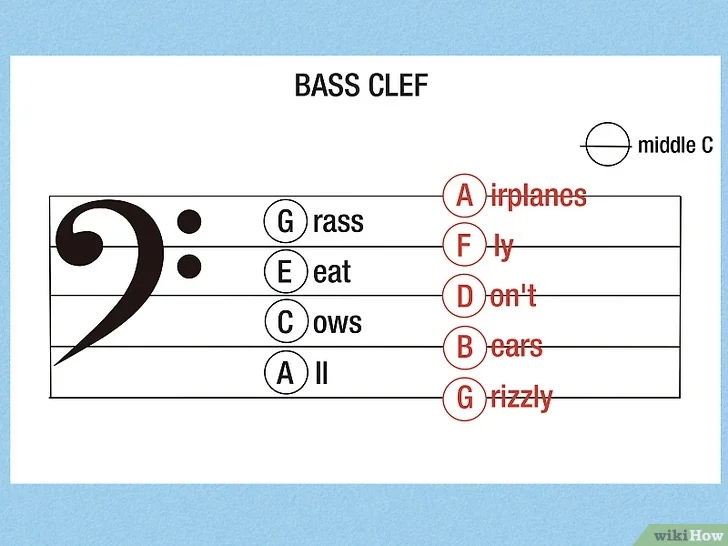

The bass clef is one of the first things you’ll meet when you start reading sheet music, especially if you play a low-pitched instrument or use your left hand on the piano. It looks like a fancy backward “C” with two little dots, and it tells you exactly which notes sit where on the staff. Once you get the hang of it, reading it feels almost second nature.
Here’s the thing though — a lot of beginners find the bass clef a little confusing at first. That’s completely normal. Let’s break it down together, step by step, so it actually makes sense.
Read more: Skindex: The Ultimate Guide to Minecraft’s Biggest Skin Community
What Is the Bass Clef?
The bass clef is a musical symbol placed at the start of a staff to show that the notes written there are lower in pitch. It’s used for the deeper sounds in music — think rumbling low notes rather than bright high ones.
You’ll often see it paired with the treble clef in piano music, where the two clefs work together on a grand staff. The bass clef handles the low end while the treble clef takes care of the higher notes.
Why It’s Also Called the F Clef
What’s interesting is that the bass clef has another name: the F clef. That’s not random.
Those two dots you see? They sit right above and below the fourth line of the staff. That line marks the note F. So the clef literally points to F, which is where the “F clef” name comes from. Handy little trick to remember.
A Quick Look at the History
The bass clef has been around for centuries. Music notation slowly developed during the medieval period, and clefs were invented to help singers and players know which pitch range they were reading.
Over time, the shape of the F clef changed from a plain letter “F” into the stylized symbol we use today. To be honest, early music looked pretty different from modern sheet music, but the core idea stuck around.
How the Musical Staff Works
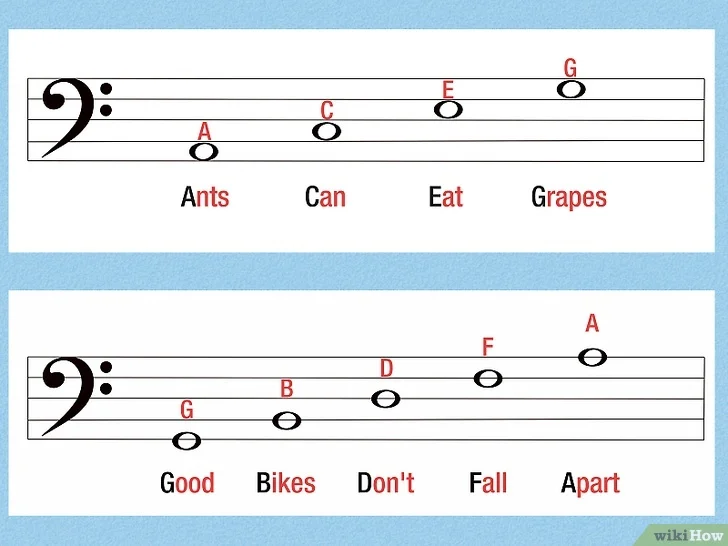
Before we read notes, let’s talk about the musical staff. It’s made of five horizontal lines with four spaces between them. Notes sit either on a line or in a space.
The bass clef sits at the far left of the staff. Once it’s there, every line and space gets its own note name. Simple enough so far, right?
The Lines of the Bass Clef
The five staff lines in the bass clef, from bottom to top, are:
- G
- B
- D
- F
- A
A common way people remember this is the phrase “Good Boys Do Fine Always.” Silly, sure, but it works.
The Spaces of the Bass Clef
The four spaces, again from bottom to top, spell out:
- A
- C
- E
- G
Many folks remember these with “All Cows Eat Grass.” It sticks in your head fast, and that’s exactly the point.
How to Read Bass Clef Notes
Reading bass clef notes comes down to knowing where each note lives on the staff. Once you memorize the lines and spaces above, you can name any note you see.
Start slow. Point at a note, figure out if it’s on a line or in a space, then recall the name. With a little daily practice, your brain will do this automatically.
Don’t rush it. Even experienced players took time to get comfortable reading music notation.
What About Notes Beyond the Staff?
Sometimes notes go higher or lower than the five staff lines. That’s where ledger lines come in.
Ledger lines are short extra lines drawn above or below the staff to hold notes that don’t fit. They let the bass clef stretch its range without needing a huge staff.
Instruments That Use the Bass Clef
The bass clef shows up a lot in music written for low-pitched instruments. If an instrument plays deep, warm tones, chances are it reads from the bass clef.
Here are some of the most common ones:
- Cello — its rich, low sound fits the bass clef perfectly
- Double bass — one of the lowest instruments in an orchestra
- Bassoon — a deep woodwind voice
- Trombone and tuba — brass instruments with plenty of low range
Low male voices in choir music also often read from the bass clef.
The Piano Left Hand
For piano players, the bass clef usually handles the left hand. The left hand plays the lower notes, so it makes sense for it to read from the bass clef.
Meanwhile, the right hand normally reads the treble clef. Both clefs sit together on the grand staff, letting a pianist read high and low at the same time.
Bass Clef vs Treble Clef
People mix these two up all the time, so let’s clear it up.
The treble clef is for higher notes and instruments like the violin, flute, or the piano’s right hand. The bass clef is for lower notes and instruments like the cello, double bass, and the piano’s left hand.
The key difference is pitch range. Treble = higher. Bass = lower. That’s really the heart of it.
Why We Use Two Different Clefs
You might wonder why music doesn’t just use one clef for everything. Good question.
If we used a single clef, low notes would need tons of ledger lines below the staff, and it’d be a nightmare to read. Splitting music into treble and bass clefs keeps things clean and easy on the eyes.
Tips for Beginners Learning the Bass Clef
Learning the bass clef doesn’t have to be stressful. A few small habits make a big difference.
First, practice a little every day rather than a lot once a week. Short and steady wins here.
Second, use the memory phrases. “Good Boys Do Fine Always” and “All Cows Eat Grass” really do help when you’re starting out.
Practice With Real Music
Try reading simple songs written in the bass clef instead of just flashcards. Real music keeps things fun and shows you how the notes actually connect.
Play slowly at first. Speed comes naturally once your reading gets solid.
Don’t Ignore the Ledger Lines
A lot of beginners skip practicing ledger lines, then panic when they show up in a song. Spend a little time on them early. Future you will be grateful.
Key Facts About the Bass Clef
Let’s wrap up the main points in a quick, easy list:
- The bass clef is also called the F clef because it marks the note F
- It’s used for low-pitched instruments and the piano left hand
- The lines spell G, B, D, F, A from bottom to top
- The spaces spell A, C, E, G from bottom to top
- It pairs with the treble clef on the grand staff
- Ledger lines extend its range above and below the staff
Keep these handy and you’ll have a strong foundation.
Final Thoughts
The bass clef might feel tricky on day one, but it becomes second nature faster than you’d expect. Learn the lines and spaces, practice with real songs, and be patient with yourself. Before long, reading those low notes will feel totally natural.
If you’d like to explore more about how clefs work in music notation, this Wikipedia article on clefs is a solid place to keep reading and dig a little deeper.