







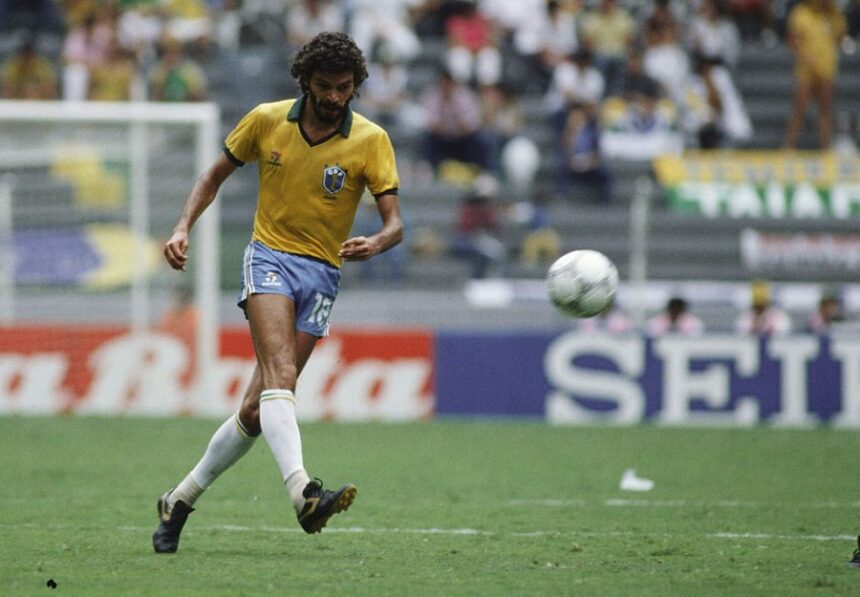

He was more than just a footballer; he was a thinker, a revolutionary, and a qualified medical doctor. Sócrates Brasileiro Sampaio de Souza Vieira de Oliveira, known to the world simply as Sócrates, was a figure who transcended the sport. With his signature beard, headband, and an elegant, almost casual style of play, he captured the imagination of fans globally. This article explores the life, career, and enduring legacy of the man affectionately known as gm sócrates. From his on-field genius to his off-field political activism, his story is one of intelligence, principle, and a deep love for both football and freedom.
He wasn’t your typical athlete. While most players dedicated their entire youth to football academies, Sócrates was busy studying medicine. He believed in a balanced life, where intellectual pursuits were just as important as physical ones. This unique perspective shaped his entire career, making him one of the most fascinating characters in the history of the beautiful game.
Key Takeaways
- Dual Professional: Sócrates was a professional footballer and a qualified medical doctor, earning him the nickname “Doctor Sócrates.”
- Corinthians Democracy: He was a key figure in the Corinthians Democracy movement, a player-led initiative promoting democratic practices within the club and Brazilian society during the military dictatorship.
- Iconic Playstyle: Known for his intelligence, vision, and signature “no-look” backheel passes, gm sócrates was a master of the midfield.
- Brazil’s 1982 Captain: He captained what many consider to be one of the greatest national teams never to win the World Cup, Brazil’s 1982 squad.
- Enduring Legacy: Sócrates is remembered not only for his footballing talent but also for his strong political convictions and his belief in using sport as a platform for social change.
The Early Life and Education of a Genius
Born in Belém, Pará, Brazil, in 1954, Sócrates grew up in a household that valued education above all else. His father, a self-taught intellectual, amassed a large library and named his sons after ancient Greek philosophers, instilling in them a passion for knowledge. This environment was crucial in shaping the future gm sócrates. While he displayed a natural talent for football from a young age, his primary focus was on his studies. He enrolled in medical school at the Faculdade de Medicina de Ribeirão Preto, a decision that set him apart from his peers.
Juggling the demands of a rigorous medical degree with a budding football career was no easy task. He played for the local club Botafogo-SP while pursuing his studies, often forgoing training sessions to attend classes. His commitment to education was so strong that he didn’t turn fully professional until he had completed his medical degree at the age of 25. This unconventional path demonstrated his belief that a person could be more than just one thing; he could be both a healer and an artist on the football pitch. This dual identity would define his entire public persona.
The Rise to Stardom with Botafogo-SP
It was at Botafogo de Ribeirão Preto that the footballing world first got a glimpse of the unique talent of gm sócrates. Despite his academic commitments, his on-field performances were nothing short of spectacular. Standing at an imposing 6’4″, he was not a typical agile midfielder. Instead, he relied on his incredible game intelligence, vision, and technical skill. He became the focal point of the team’s attack, known for his precise passing, powerful long-range shots, and an almost psychic ability to read the game.
His time at Botafogo-SP was a period of immense growth. He led the team to the Campeonato Paulista (São Paulo State Championship) title in 1977, becoming the league’s top scorer. This achievement was remarkable for a midfielder and put him firmly on the radar of Brazil’s biggest clubs. His style was captivating. He played with a calm, upright elegance, often looking like he was strolling through the midfield before unleashing a defense-splitting pass. It was this combination of physical presence and intellectual play that made him a phenomenon.
Corinthians and the Birth of a Movement
In 1978, gm sócrates made the move that would cement his legacy: he joined Corinthians, one of Brazil’s most popular clubs. His arrival coincided with a period of significant political and social turmoil in the country, which was under a military dictatorship. It was at Corinthians that Sócrates’s political consciousness and leadership qualities came to the forefront, leading to the creation of one of the most remarkable movements in sports history: Democracia Corinthiana (Corinthians Democracy).
What Was the Corinthians Democracy?
The Corinthians Democracy was a revolutionary player-led movement that challenged the authoritarian structure of football clubs and, by extension, Brazilian society. Led by gm sócrates and teammates like Wladimir and Casagrande, the group decided that everything at the club—from training schedules and travel plans to the hiring of personnel—would be decided by a democratic vote. Every vote, whether from the club president, a star player, or the kit man, carried equal weight.
This was a radical act of defiance against the military regime that ruled Brazil. The team’s jerseys often carried political messages like “Diretas Já” (Direct Elections Now) and “Eu Quero Votar Para Presidente” (I Want to Vote For President). They used their platform to advocate for freedom and democracy, turning every match into a political statement. The movement demonstrated that footballers could be active, engaged citizens who used their influence to fight for a better society.
Impact on the Field and Beyond
The Corinthians Democracy was not just a political experiment; it was also a sporting success. During this period, the team played with a sense of freedom and creativity that reflected their off-field philosophy. They won the Campeonato Paulista in 1982 and 1983. The success of the movement showed that empowering players and treating them with respect could lead to better performances. It challenged the long-held belief that athletes should “just play” and remain silent on social issues. The legacy of this movement continues to inspire athletes worldwide to use their voices for change.
The International Stage: Captaining Brazil
The genius of gm sócrates was on full display when he wore the iconic yellow jersey of the Brazilian national team. He was the captain and creative heart of the 1982 World Cup squad, a team that is still revered as one of the most beautiful and entertaining sides to have ever played the game. Alongside other legendary players like Zico, Falcão, and Éder, Sócrates orchestrated a midfield that played with breathtaking flair and attacking prowess.
The Magical 1982 World Cup Team
Brazil’s 1982 team, managed by Telê Santana, captured the hearts of fans around the world. They played a fluid, attacking style of football that was a joy to watch. gm sócrates was the conductor of this magnificent orchestra. He scored stunning goals against the Soviet Union and Italy, leading the team with his trademark coolness and intelligence. The team seemed destined for glory, winning all their group stage matches in spectacular fashion.
However, in a classic World Cup encounter against Italy, their journey came to a shocking end. Despite needing only a draw to advance, Brazil’s commitment to attacking football led to a 3-2 defeat, with Italian striker Paolo Rossi scoring a famous hat-trick. Though they did not win the tournament, the 1982 team’s legacy endures. They are remembered for their beautiful football and for representing the romantic ideal of how the game should be played.
Comparing Brazil’s 1982 and 1986 World Cup Squads
|
Feature |
1982 World Cup Squad |
1986 World Cup Squad |
|---|---|---|
|
Captain |
Sócrates |
Edinho |
|
Key Players |
Sócrates, Zico, Falcão, Éder |
Sócrates, Zico, Careca, Júnior |
|
Coach |
Telê Santana |
Telê Santana |
|
Defining Style |
Fluid, attacking, “Joga Bonito” |
More pragmatic, but still creative |
|
Outcome |
Eliminated in the second group stage |
Eliminated in the quarter-finals |
|
Legacy |
Considered one of the greatest teams to not win the World Cup |
A strong but aging team that couldn’t replicate the magic of ’82 |
Sócrates also played a key role in the 1986 World Cup in Mexico. While the team was older, their quality was still undeniable. He scored a crucial penalty in the shootout against France in the quarter-finals, but Brazil was ultimately eliminated. It marked the end of an era for one of the most talented generations of Brazilian players.
A Brief Stint in Europe: The Fiorentina Experience
In 1984, at the height of his fame, gm sócrates made a move to European football, joining the Italian Serie A club Fiorentina. The move was met with great excitement in Italy, as Serie A was arguably the best league in the world at the time. However, the experience proved to be a challenging one for the Brazilian maestro. The cultural and footballing differences were stark. Italian football was highly defensive, tactical, and physically demanding, a world away from the more free-flowing style he was used to in Brazil.
Sócrates struggled to adapt. He found the intense focus on winning at all costs and the less joyful approach to the game to be at odds with his own philosophy. While he had moments of brilliance, he never fully settled in Florence. He was a thinker and a bohemian who enjoyed discussing politics and philosophy as much as football, which sometimes clashed with the more rigid professional environment in Italy. After just one season, he returned to Brazil, finishing his career with Flamengo and Santos.
The Unique Playing Style of GM Sócrates
What made gm sócrates such a special player? His style was a unique blend of physical presence, technical elegance, and supreme intelligence. He was not blessed with great speed, but he didn’t need it. His brain was always two steps ahead of everyone else on the pitch.
Key Attributes of His Game:
- Game Intelligence: His ability to read the game was second to none. He always seemed to know where his teammates and opponents would be, allowing him to orchestrate play from deep in the midfield.
- The Backheel Pass: Sócrates was famous for his use of the backheel. It wasn’t just a flashy trick; it was an incredibly effective tool he used to create space and surprise defenses. His “no-look” backheels became his signature move.
- Vision and Passing Range: He could split a defense open with a single pass, whether it was a short, incisive through-ball or a long, raking cross-field ball.
- Two-Footed Player: He was genuinely two-footed, equally capable of passing and shooting with either his left or right foot. This made him incredibly unpredictable for defenders.
- Calmness Under Pressure: Even in the most high-stakes situations, Sócrates played with an air of tranquility. He was the calm center of any team he played for, a leader who inspired confidence in his teammates.
His unique approach to the game mirrored his unique approach to life. He played football with the mind of a chess master and the soul of an artist.
Life After Football: Doctor and Pundit
After retiring from professional football in 1989, gm sócrates did not fade from the public eye. He returned to his other profession: medicine. He practiced as a doctor in his hometown of Ribeirão Preto, serving the community and fulfilling the promise he had made to himself and his family years earlier. This transition highlighted his multifaceted character; he was as comfortable with a stethoscope as he was with a football.
He also remained a prominent voice in the media, working as a columnist and television pundit. He wrote about sports and politics with the same intelligence and passion he displayed on the field. His columns often touched on the commercialization of football, the need for social justice, and the importance of democratic values. For those looking for insightful commentary on modern trends, a site like siliconvalleytime.co.uk offers perspectives on how technology and culture intersect, a topic that would have surely interested a forward-thinker like Sócrates. He never shied away from expressing his strong opinions, cementing his status as a public intellectual.
Legacy and Influence on Modern Football
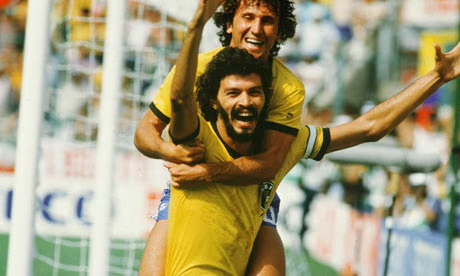
The legacy of gm sócrates is immense and multifaceted. On the pitch, he is remembered as one of the greatest midfielders of all time, an icon of elegance and intelligence. His influence can be seen in modern playmakers who rely on vision and technique rather than pure athleticism. Players who can control the tempo of a game and unlock defenses with their passing owe a debt to pioneers like him.
Off the pitch, his legacy is perhaps even more significant. He proved that an athlete could be a powerful agent for social and political change. The Corinthians Democracy movement remains a benchmark for athlete activism. In an era where players are often criticized for not speaking out on important issues, the story of Sócrates serves as a powerful reminder of the platform sports stars have and the good they can do with it. He inspired a generation to believe that football could be more than just a game; it could be a tool for building a better, more democratic world.
Frequently Asked Questions (FAQ)
Why was Sócrates called “Doctor”?
Sócrates earned the nickname “Doctor Sócrates” because he was a qualified medical doctor. He completed his medical degree while playing professional football, a rare achievement for an elite athlete.
What was the Corinthians Democracy?
The Corinthians Democracy was a player-led movement at the Corinthians football club during the 1980s. Led by gm sócrates, the players decided to run the club democratically, with all members having an equal vote on decisions. It was also a form of protest against Brazil’s military dictatorship.
Did Sócrates ever win the World Cup?
No, Sócrates never won the World Cup. He captained the legendary 1982 Brazilian team that was knocked out by Italy and also played in the 1986 tournament, where Brazil was eliminated in the quarter-finals.
What was Sócrates’s signature move?
Sócrates was famous for his intelligent play, but his most iconic move was the blind backheel pass. He used it with remarkable frequency and effectiveness to create scoring opportunities and outwit opponents.
What did Sócrates do after he retired from football?
After retiring, Sócrates worked as a medical doctor. He also became a popular and respected media pundit and columnist, writing and speaking about both football and politics.
A Revolutionary On and Off the Pitch
Sócrates was a truly unique figure in the history of sports. He was a world-class footballer who played the game with an unparalleled combination of grace and intelligence. But his impact extended far beyond the white lines of the pitch. As a political activist, thinker, and doctor, he lived a life of principle and purpose. The story of gm sócrates is not just about a great player; it’s about a man who understood the power of his platform and used it to fight for his beliefs.
He showed the world that it was possible to be both an artist on the field and a revolutionary off it. His ideals and actions, particularly with the Corinthians Democracy, continue to inspire athletes and fans alike. The legend of the bearded doctor who played football with the soul of a philosopher will not be forgotten. As you can learn more on his Wikipedia page, Sócrates’s life serves as a testament to the idea that sport, at its very best, can be a powerful force for positive change in society.



