


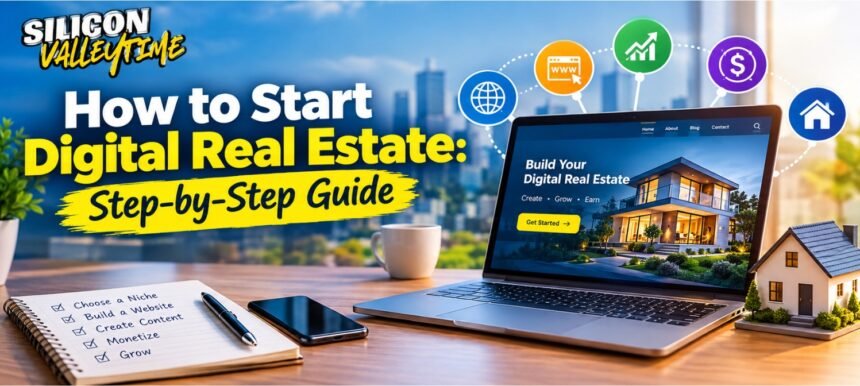

Digital real estate has become an interesting way to build online assets that can attract visitors, generate leads, and create income. Unlike physical property, digital assets can often be started with a smaller budget and managed from almost anywhere.
If you are wondering how to start digital real estate, the key is to treat your online property like a real business. You need the right asset, a clear audience, useful content, and a plan for monetization.
This guide explains what digital real estate means, why it matters, the main types, and the practical steps beginners can follow.
What Is Digital Real Estate?
Digital real estate refers to online assets that can attract users, build an audience, generate leads, or produce revenue. Examples include websites, domain names, blogs, newsletters, social media accounts, and other digital properties with commercial value.
The idea is similar to physical real estate. A website can occupy a valuable position in search results, just as a shop can occupy a valuable location in a busy area.
Common examples include:
- Niche websites
- Blogs
- Domain names
- E-commerce stores
- Email newsletters
- YouTube channels
- Online communities
- Social media pages
- Digital directories
- Lead-generation websites
Digital real estate is closely related to the broader concept of the digital economy, where online assets and services can create economic value. For background, see Digital economy on Wikipedia.
Why Is Digital Real Estate Important?
The internet gives businesses and individuals access to large audiences without requiring a physical storefront.
A well-built website, for example, can continue attracting visitors through search engines long after its original content has been published.
Digital real estate can be important because it can provide:
- Lower starting costs: Many online assets can be started without buying physical property.
- Global reach: A website can attract visitors from different countries.
- Multiple income options: Assets can earn through advertising, affiliate marketing, products, or leads.
- Long-term value: An established website with traffic and revenue can become a valuable business asset.
- Flexible management: Many digital assets can be managed remotely.
However, digital real estate is not automatic income. Building traffic, trust, and revenue normally requires consistent work.
Key Benefits of Digital Real Estate
1. Lower Entry Barrier
Starting a website usually costs much less than purchasing physical commercial property. You may need a domain, hosting, design, and content, but the initial investment can remain relatively modest.
2. Multiple Monetization Methods
A successful digital property can potentially make money through:
- Display advertising
- Affiliate marketing
- Sponsored content
- Digital products
- Online courses
- Memberships
- Lead generation
- E-commerce
3. Scalable Growth
A physical store has limits based on location and opening hours. A website can serve visitors 24/7 and potentially reach a much larger audience.
4. Asset Ownership
When you build a website, domain, email list, or online brand, you are creating an asset that may have value beyond its monthly income.
5. Data and Audience Insights
Digital platforms can provide useful information about visitor behavior, popular content, search queries, and conversions. This can help you improve the asset over time.
How to Start Digital Real Estate: Step-by-Step Guide
Starting digital real estate does not require building everything at once. A simple, focused approach is often easier for beginners.
Step 1: Choose a Profitable Niche
Start by choosing a specific topic rather than trying to cover the entire internet.
Good niche ideas may include:
- Personal finance
- Technology
- Home improvement
- Travel
- Education
- Fitness
- Business
- Software
- Hobbies
- Local services
Look for a niche where people regularly search for information and where businesses spend money to reach customers.
Tip: Choose a topic you understand or are willing to research deeply. Expertise and useful information make it easier to build trust.
Step 2: Research Your Audience
Before buying a domain, understand the people you want to attract.
Ask:
- What problems do they have?
- What questions do they search online?
- What products or services do they need?
- What websites already serve them?
- What information is missing from existing content?
This research helps you build a digital property around actual demand instead of personal assumptions.
Step 3: Choose Your Digital Asset
Next, decide what type of digital real estate you want to build.
For beginners, a niche website or blog can be a practical starting point because it gives you control over the content, branding, and monetization strategy.
Other options include:
- Buying an existing website
- Building an e-commerce store
- Developing a newsletter
- Creating a lead-generation site
- Purchasing a potentially valuable domain
- Building a content-focused social media property
Each option has different costs, risks, and skills.
Step 4: Buy a Relevant Domain
Choose a domain that is:
- Easy to spell
- Easy to remember
- Relevant to your brand
- Short enough to type comfortably
- Free from obvious trademark problems
Avoid choosing a domain simply because it contains a popular keyword. A memorable brand can become more valuable over time.
Step 5: Build a Professional Website
Your website should be simple, fast, and easy to navigate.
Important elements include:
- Clear navigation
- Mobile-friendly design
- HTTPS security
- About page
- Contact page
- Privacy policy
- Helpful category structure
- Search-friendly URLs
Your goal is to create an online property that visitors trust.
Step 6: Create Helpful Content
Content is one of the biggest drivers of many website-based digital real estate businesses.
Create articles that answer real questions instead of publishing content simply to increase word count.
For example, a gardening website could publish:
- How to grow tomatoes at home
- Best soil for indoor plants
- How often should you water herbs?
- Beginner gardening tools
- Common plant problems and solutions
Use topic clusters so related pages support one another through internal links.
Step 7: Build Search Visibility
SEO can help your digital property appear when people search for relevant information.
Focus on:
- Search intent
- Keyword research
- Helpful content
- Internal linking
- Page speed
- Descriptive titles
- Strong headings
- Original information
- Natural backlinks
Do not focus only on keywords. Search engines increasingly need content that clearly satisfies the user’s purpose.
Step 8: Add a Monetization Strategy
Once your digital asset starts attracting an audience, choose monetization methods that fit the niche.
For example, a technology website might use affiliate links and software partnerships, while a local service website might generate customer leads.
Common models include:
Advertising: Earn from displaying ads.
Affiliate marketing: Earn a commission when users purchase through qualifying links.
Lead generation: Connect potential customers with businesses.
Digital products: Sell templates, guides, courses, or other downloadable products.
Services: Use the website to attract clients.
Step 9: Track Performance
Use analytics and search tools to understand what is working.
Monitor metrics such as:
- Organic traffic
- Search impressions
- Click-through rate
- Conversion rate
- Top-performing pages
- Revenue per visitor
- Returning visitors
If one topic performs well, consider creating more useful content around that subject.
Step 10: Improve and Expand the Asset
Digital real estate requires maintenance.
Update outdated information, improve weak pages, fix broken links, and strengthen internal linking.
Over time, you can also expand into related topics, add new monetization channels, or build another digital property.
Common Mistakes to Avoid
Beginners often make avoidable mistakes when starting digital real estate.
Choosing a Niche Only for Money
A profitable niche still needs useful content and audience demand. Picking a topic you cannot consistently cover can make growth difficult.
Buying Too Many Domains
Owning many domains does not automatically create value. One strong website is often easier to develop than several unfinished projects.
Publishing Low-Quality Content
Large quantities of weak articles rarely create a strong brand. Focus on helpful, original, well-organized information.
Ignoring Technical SEO
Slow pages, broken links, poor mobile usability, and confusing navigation can hurt the user experience.
Expecting Fast Results
Digital assets usually need time to build authority, traffic, and revenue. Treat the process as building a long-term asset rather than chasing instant returns.
FAQs About Digital Real Estate
What is digital real estate for beginners?
Digital real estate is an online asset that can attract users or generate business value. Beginners can start with websites, domains, blogs, newsletters, or other online properties and develop them through content, marketing, and monetization.
Is digital real estate profitable?
It can be profitable, but profitability is not guaranteed. Results depend on factors such as market demand, competition, traffic, operating costs, content quality, and monetization.
How much money do I need to start digital real estate?
The cost varies widely. A basic website can be started with relatively little compared with physical property, while buying an established website or premium domain can require significantly more capital.
What is the easiest digital real estate to start?
For many beginners, a focused niche website is a straightforward starting point because it can combine content, SEO, affiliate marketing, advertising, and lead generation.
How long does digital real estate take to make money?
There is no fixed timeline. Some assets may generate small amounts relatively early, while others require months or longer to build meaningful traffic and revenue.
Can I make money from a website without selling products?
Yes. Website owners can potentially earn through advertising, affiliate marketing, sponsored content, lead generation, memberships, or services.
Is buying an existing website digital real estate?
Yes. An established website can be considered a digital asset. Before buying one, carefully review its traffic sources, revenue records, backlinks, content quality, expenses, and business risks.
Conclusion
Digital real estate is the process of building, owning, or developing valuable online assets. Websites, domains, newsletters, e-commerce stores, and other digital properties can become useful business assets when they attract the right audience and have a sustainable monetization model.
If you are starting from scratch, keep the process simple: choose a focused niche, research your audience, build a useful digital property, create quality content, grow traffic, and develop a suitable revenue model.
The strongest approach is to think beyond quick income. Build something useful that people trust, then improve it consistently. Over time, that digital property can become a stronger and more valuable online asset