







As artificial intelligence continues to reshape industries and daily life around the globe, every nation is grappling with how to manage this powerful technology. Japan, a country known for its technological innovation, is taking a unique and closely watched approach. Understanding the latest Japan AI regulation news today is crucial for anyone interested in technology, business, or global policy. Japan is forging a path that tries to balance stimulating innovation with managing the potential risks of AI, offering a fascinating case study for the rest of the world.
This comprehensive guide will walk you through everything you need to know about Japan’s current stance on AI regulation. We’ll explore recent laws, the government’s core philosophy, how Japan’s approach compares to other nations, and the real-world impact on its economy and society. From the high-level strategy discussions in the government to the cultural nuances shaping public opinion, you’ll get a complete picture of this dynamic landscape.
Key Takeaways
- Pro-Innovation Stance: Japan has adopted a “light-touch” regulatory approach to AI, prioritizing economic growth and technological leadership over strict, preemptive rules.
- The AI Promotion Act: Enacted in May 2025, this is the cornerstone of Japan’s AI strategy. It promotes development and cooperation while establishing guidelines for safety and human rights.
- Emphasis on Guidelines, Not Hard Laws: Instead of creating a massive, all-encompassing law like the EU’s AI Act, Japan relies on a combination of existing laws and flexible, ministry-led guidelines to address AI risks.
- Global Leadership Role: Through initiatives like the Hiroshima AI Process, Japan is actively working to build international consensus on safe, secure, and trustworthy AI.
- Cultural Paradox: Despite strong government support for AI, public adoption of AI tools in Japan is surprisingly low, creating a gap between national strategy and citizen behavior that the country must address.
- Focus on Economic and Demographic Challenges: Japan sees AI as a critical tool to combat its aging population, shrinking workforce, and economic stagnation, which heavily influences its regulatory decisions.
The Core of Japan’s Strategy: The AI Promotion Act
The most significant piece of Japan AI regulation news today is the full implementation of the Act on Promotion of Research and Development, and Utilization of Artificial Intelligence-related Technology, commonly known as the AI Promotion Act. Enacted in May 2025 and put into full effect later that year, this law is the central pillar of Japan’s national AI strategy. Unlike the restrictive, risk-based frameworks seen in other parts of the world, Japan’s act is fundamentally designed to promote AI. Its primary goal is to boost the national economy and improve the quality of life for its citizens by accelerating AI research, development, and adoption across all sectors.
The act establishes a clear framework for the government’s role. It mandates the creation of an Artificial Intelligence Strategic Headquarters, a powerful body chaired by the Prime Minister and comprising all Cabinet ministers. This ensures that AI policy is a top-level, coordinated national priority. This headquarters is tasked with developing and executing the national Artificial Intelligence Basic Plan, which outlines the government’s long-term vision and specific policies for fostering an AI-powered society. The legislation is built on a philosophy of encouraging voluntary cooperation from businesses, offering guidance and support to help them innovate responsibly rather than imposing heavy-handed compliance burdens from the outset.
Principles Guiding the AI Promotion Act
The AI Promotion Act is not just a set of rules; it’s a statement of principles. It lays out the foundational ideas that guide Japan’s entire approach to AI governance. These principles are crucial for understanding the intent behind the latest japan ai regulation news today.
- Economic and National Security: The act explicitly recognizes AI’s importance to Japan’s economic competitiveness and national security. It aims to maintain the country’s R&D capabilities and enhance its position on the global stage.
- Comprehensive Promotion: The strategy covers the entire AI lifecycle, from fundamental academic research to practical commercial applications, ensuring that support is provided at every stage of innovation.
- Ensuring Trust through Transparency: While promoting AI, the act also emphasizes the need for transparency, fairness, and safety. The goal is to build public trust so that citizens feel secure using and interacting with AI systems.
- Leadership in International Cooperation: The act positions Japan to take a leading role in global discussions on AI governance, promoting its human-centric, innovation-friendly model as a viable international standard.
A “Light-Touch” Approach: How Japan Differs from the EU and US
When discussing Japan AI regulation news today, the most striking theme is its “light-touch” philosophy. This deliberately sets Japan apart from the world’s other major regulatory powers, particularly the European Union and the United States. While all share the goal of safe AI, their methods for achieving it are vastly different. Japan is betting that by fostering innovation first, it can secure a competitive advantage while managing risks through more agile and adaptive means.
The Japanese government has concluded that overly strict, preemptive regulation could stifle the very innovation it needs to address pressing national challenges like a shrinking workforce and economic revitalization. Instead of a single, comprehensive law that attempts to foresee every possible risk, Japan’s framework relies on a combination of existing laws (like the Penal Code and personal information protection laws) and specific, evolving guidelines issued by relevant government ministries. This approach allows for a more nimble response to the fast-moving world of AI, where new risks and capabilities emerge constantly. If a new problem arises, the relevant ministry can issue or update guidelines much faster than a parliament can amend a major law.
Comparing Global AI Regulatory Models
|
Feature |
Japan (AI Promotion Act) |
European Union (EU AI Act) |
United States (Executive Orders & State Laws) |
|---|---|---|---|
|
Primary Goal |
Promote innovation and economic growth while mitigating risks. |
Protect fundamental rights and safety through comprehensive regulation. |
Stimulate innovation and leadership, with a mix of federal guidance and state-level laws. |
|
Regulatory Model |
“Light-touch.” Relies on guidelines, voluntary cooperation, and existing laws. |
“Hard law.” A comprehensive, risk-based framework with strict compliance rules. |
A patchwork approach. Federal executive orders promote standards, while states like California create specific laws. |
|
Risk Classification |
Does not formally use a rigid risk-tier system. Addresses risks as they emerge through sector-specific guidance. |
Uses a strict, tiered system (unacceptable, high, limited, minimal risk) with different rules for each. |
Focuses on standards for “safety and security” and relies on existing agencies to regulate AI in their domains. |
|
Flexibility |
High. Guidelines can be updated quickly to respond to technological changes. |
Low. The legislative process is slow, making it difficult to adapt to new AI developments. |
Medium. Federal actions can be swift, but the state-by-state approach creates a complex and fragmented landscape. |
|
Focus |
Encouraging development and adoption, especially among businesses. |
Compliance and risk management, especially for high-risk AI systems. |
Removing barriers to innovation, promoting competition, and coordinating federal efforts. |
This table clearly illustrates Japan’s unique position. It is actively carving out a middle path, one that it hopes will combine the innovative dynamism encouraged in the US with a structured, society-wide approach to safety, without succumbing to the potentially growth-inhibiting “hard law” model of the EU.
The Hiroshima AI Process: Japan’s Bid for Global Governance Leadership
Japan’s strategy extends far beyond its own borders. A key element of the current Japan AI regulation news today is the country’s leadership in the Hiroshima AI Process. Launched during Japan’s G7 presidency in 2023, this initiative is a major diplomatic effort to establish international rules and norms for the governance of advanced AI systems. It represents Japan’s ambition to shape the global conversation and export its vision of a safe, secure, and trustworthy AI ecosystem that is also open to innovation.
The process brought together G7 countries to agree on a set of guiding principles and a Code of Conduct for organizations developing advanced AI. This was a landmark achievement, as it was one of the first major international agreements on how to manage the risks of frontier AI models. The core principles emphasize human rights, the rule of law, and democratic values, calling for transparency, accountability, and robust risk management from AI developers. By spearheading this initiative, Japan positioned itself as a crucial bridge-builder between the heavily regulatory EU and the more market-driven US, advocating for a practical, interoperable framework that all major economies could adopt.
Key Outcomes of the Hiroshima AI Process
The Hiroshima AI Process is more than just a declaration; it has produced tangible frameworks that are now being implemented. Understanding these is vital to grasping the full scope of japan ai regulation news today and its international implications.
- International Guiding Principles: A set of 11 principles that provide a high-level framework for all actors in the AI ecosystem, from researchers to end-users. These principles cover goals like promoting safety, mitigating risks, and protecting privacy.
- International Code of Conduct: This is aimed specifically at organizations developing the most advanced AI systems. It outlines concrete actions developers should take, such as extensive pre-deployment testing, implementing security controls to prevent misuse, and being transparent about their models’ capabilities and limitations.
- The Reporting Framework: To ensure accountability, a monitoring system was developed. Companies voluntarily commit to the Code of Conduct and report on their progress. This transparency mechanism, supported by organizations like the OECD, allows governments and the public to see how companies are living up to their safety commitments.
- Hiroshima AI Process Friends Group: To broaden the consensus beyond the G7, Japan launched this group, inviting other like-minded countries to join the process. This expanded dialogue includes key players in the global south and technology hubs like Singapore, fostering a more inclusive and global approach to AI governance.
Through the Hiroshima AI Process, Japan has successfully elevated the global conversation from abstract fears to concrete, actionable steps, cementing its role as a central and constructive voice in the future of AI.
The AI Paradox: Government Ambition vs. Public Adoption
While the government is forging ahead with ambitious plans, one of the most puzzling aspects of Japan AI regulation news today is the stark contrast between these top-down efforts and the reality of grassroots adoption. Recent surveys have revealed a surprising “AI paradox” in Japan: despite being a tech powerhouse, its citizens are among the most hesitant to use AI tools. One report highlighted that only around 20% of Japanese internet users had engaged with generative AI tools like ChatGPT or Gemini. This figure is significantly lower than in the US, the UK, and even regional neighbors like South Korea.
This gap presents a major challenge to Japan’s national strategy. The government’s goal of using AI to boost productivity and overcome demographic challenges can only be realized if the workforce and general public actually use the technology. The low adoption rate suggests that simply creating a friendly regulatory environment and attracting investment from tech giants like OpenAI and Google is not enough. The government and industry must also address the cultural, linguistic, and social barriers that are causing this hesitation among the Japanese public. This paradox is a critical issue that policymakers are now working to understand and solve.
Why Are Japanese Citizens Hesitant to Use AI?
Several factors contribute to this low adoption rate, painting a complex picture of a society grappling with rapid technological change.
Cultural and Linguistic Nuances
- Language Complexity: Japanese is a highly nuanced language with multiple writing systems (kanji, hiragana, katakana) and intricate levels of politeness. Early versions of large language models struggled with these complexities, producing awkward or unnatural text. This may have created a lasting negative first impression for many potential users.
- Value of Human Craftsmanship: Japanese culture has a deep respect for takumi (artisanship) and omotenashi (wholehearted hospitality). There is a cultural preference for human-to-human interaction and a potential skepticism toward delegating creative or service-oriented tasks to a machine, which can be seen as impersonal and inauthentic.
Demographic and Workplace Factors
- Aging Population: Japan has the world’s oldest population. While many seniors are tech-savvy, on average, older demographics are slower to adopt new digital tools. Digital literacy programs have struggled to bridge this generational gap effectively.
- Risk-Averse Corporate Culture: Many Japanese companies, especially small and medium-sized enterprises (SMEs) that form the backbone of the economy, are famously cautious and consensus-driven. They are often slow to integrate new technologies, meaning many workers have little to no exposure to AI in their professional lives. The reliance on traditional tools like fax machines and paper-based processes remains surprisingly common.
Privacy and Trust Concerns
- Data Privacy: Japanese consumers are generally more cautious about sharing personal data than their counterparts in other countries. The country’s Personal Information Protection Act is strict, and public awareness of data privacy is high. Many people are wary of AI tools that collect vast amounts of conversational and personal data.
Economic and Societal Implications of Japan’s AI Strategy
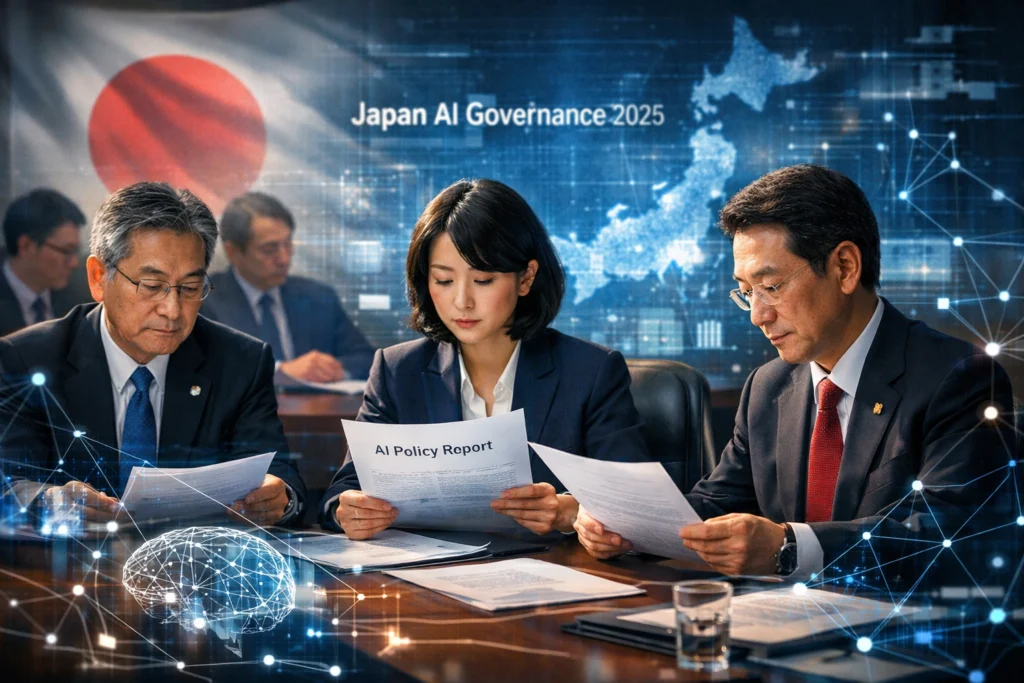
Japan’s regulatory choices are not being made in a vacuum. They are a direct response to some of the most profound economic and demographic challenges faced by any developed nation. This context is essential for a deep understanding of the Japan AI regulation news today. The government views artificial intelligence not as a luxury or a novelty, but as an existential tool for securing the country’s future prosperity. Its pro-innovation stance is a calculated gamble that the benefits of accelerated AI adoption will far outweigh the risks.
The most pressing issue is Japan’s demographic crisis. With a rapidly aging and shrinking population, the country faces a severe and worsening labor shortage. Projections show that the working-age population could decline by nearly 30% by 2060. This threatens to cripple industries and shrink the economy. For policymakers, AI is the most promising solution. It can automate tasks, augment the capabilities of the existing workforce, and maintain productivity even as the number of workers falls. From AI-powered robots in manufacturing and elder care to intelligent systems that streamline administrative work, the technology is seen as a way to do more with fewer people.
AI’s Role in Revitalizing the Japanese Economy
Beyond addressing labor shortages, Japan’s AI strategy is aimed at sparking a broader economic revitalization.
Boosting Productivity in SMEs
The vast majority of Japanese companies are SMEs, which have historically lagged in digital transformation. The government hopes that by promoting user-friendly and affordable AI tools, it can unlock massive productivity gains across the economy. This includes AI for inventory management, customer service, marketing, and process optimization.
Enhancing Global Competitiveness
Japan is home to world-leading companies in sectors like automotive manufacturing, robotics, and high-tech materials. Integrating advanced AI into these industries is critical for maintaining their competitive edge. This involves using AI for designing new products, optimizing supply chains, and developing next-generation smart factories.
Creating New Industries and Services
The government’s promotion of AI is also intended to foster a vibrant startup ecosystem. By investing in AI research and creating a favorable regulatory environment, Japan hopes to become a hub for new AI-driven businesses in fields like healthcare, finance, and entertainment, creating new jobs and sources of economic growth.
The success of this entire economic strategy, however, hinges on overcoming the “AI paradox.” If companies and workers do not embrace these new tools, the potential productivity gains will never materialize, and the demographic bomb will hit the economy with its full force. This is why closing the adoption gap is now a top priority.
Future Outlook: Challenges and Next Steps
The landscape of Japan AI regulation news today is one of dynamic progress and significant challenges. Japan has successfully laid the groundwork with its AI Promotion Act and has taken a commendable leadership role on the global stage with the Hiroshima AI Process. However, the road ahead requires navigating complex issues, from domestic adoption hurdles to the ever-accelerating pace of technological change. The government’s “light-touch” approach will be put to the test as AI becomes more powerful and integrated into society.
One of the biggest challenges will be adapting its guideline-based system to the emergence of Artificial General Intelligence (AGI) or other frontier models with unforeseen capabilities. While the flexible system is an advantage now, it must prove that it can respond effectively to truly disruptive, high-risk developments without needing to resort to slow, heavy-handed legislation. Maintaining public trust will be paramount. If a major AI-related incident occurs, public pressure could force a shift toward a more restrictive regulatory model, potentially derailing the current pro-innovation strategy.
Key Priorities on the Horizon
Looking forward, several key areas will dominate the conversation around japan ai regulation news today.
- Closing the Adoption Gap: The government and industry will need to launch concerted efforts to boost AI literacy and adoption. This includes public education campaigns, workforce retraining programs, and developing AI tools that are specifically tailored to Japanese linguistic and cultural norms.
- Strengthening SME Digitalization: More targeted support and subsidies will be needed to help small and medium-sized enterprises integrate AI into their operations. Demonstrating clear return on investment will be key to convincing these cautious business owners.
- Navigating Copyright and Data Issues: Like all countries, Japan is grappling with the legal questions surrounding the use of copyrighted material to train AI models. While its current copyright law is relatively permissive, ongoing legal challenges and international debates will require Japan to clarify its stance to provide certainty for developers.
- Continuing International Diplomacy: Japan will continue to promote the Hiroshima AI Process and work to create interoperable governance frameworks with key partners like the US, EU, and Singapore. Maintaining its role as a global consensus-builder will be a top diplomatic priority.
Japan’s journey with AI regulation is a marathon, not a sprint. Its unique approach offers valuable lessons for the world, but its ultimate success will depend on its ability to turn its strategic vision into a widely embraced reality.
Conclusion
The world of Japan AI regulation news today reveals a nation taking a bold and distinctive path. By consciously choosing to prioritize innovation and economic growth through a “light-touch” regulatory framework, Japan is positioning itself as a key player in the global AI race. The AI Promotion Act provides a solid foundation, while diplomatic efforts like the Hiroshima AI Process showcase its ambition to lead the international conversation on responsible AI governance. This strategic approach is driven by the urgent need to solve pressing demographic and economic challenges, making AI not just a technological tool, but a cornerstone of its national future.
However, the journey is not without its obstacles. The significant gap between government ambition and low public adoption of AI tools presents a major hurdle that must be overcome. Japan’s success will ultimately depend on its ability to build a bridge between its high-level strategy and the everyday lives of its citizens and businesses. As the technology continues to evolve, Japan’s ability to adapt its flexible regulatory model while maintaining public trust will be critical. The world will be watching closely to see if Japan’s calculated gamble on innovation-first regulation pays off, offering a compelling alternative to the more restrictive models taking shape elsewhere. For more general information about the country’s governance, you can explore the politics of Japan to understand the broader context in which these decisions are made.
Frequently Asked Questions (FAQ)
1. What is the main AI law in Japan?
The main piece of legislation is the Act on Promotion of Research and Development, and Utilization of Artificial Intelligence-related Technology, often called the AI Promotion Act. Enacted in 2025, it focuses on promoting AI development for economic growth while using flexible guidelines to manage risks.
2. Is Japan’s AI regulation strict?
No, Japan’s approach is considered “light-touch” and pro-innovation. Compared to the European Union’s comprehensive EU AI Act, Japan avoids strict, preemptive rules. It relies on a combination of existing laws and voluntary, government-issued guidelines for businesses.
3. How does Japan’s approach differ from the EU AI Act?
The EU AI Act is a “hard law” that creates a strict, risk-based classification system (e.g., high-risk, unacceptable risk) with heavy compliance burdens. Japan’s approach is more flexible, promoting voluntary cooperation and using adaptable guidelines to address risks as they emerge, rather than a rigid, tiered system.
4. What is the Hiroshima AI Process?
The Hiroshima AI Process is a major international initiative launched by Japan during its G7 presidency in 2023. It aims to establish global rules and a code of conduct for developing advanced AI systems, promoting a shared vision for safe, secure, and trustworthy AI.
5. Why is AI adoption low in Japan?
Despite strong government support, public adoption of AI tools is low due to several factors. These include the complexity of the Japanese language for AI models, a cultural preference for human interaction, a risk-averse corporate culture, and privacy concerns among the general public.
6. How is Japan using AI to solve its population problem?
Japan faces a severe labor shortage due to its aging and shrinking population. The government sees AI as a critical solution to automate tasks, increase worker productivity, and maintain economic output. This includes using AI in manufacturing, administration, healthcare, and elder care to do more with fewer people.



