








Key Takeaways
- Memphis Depay is a Dutch professional soccer player known for his flair, skill, and unique playing style.
- He has played for major clubs like PSV Eindhoven, Manchester United, Lyon, Barcelona, and Atlético Madrid.
- Off the pitch, Memphis is also a talented musician and fashion icon.
- His journey has been one of resilience, overcoming a difficult childhood to become a global star.
- He is a key figure for the Netherlands national team, often referred to as the “Oranje.”
Who Is Memphis Depay and Why Is He Famous?
When you talk about modern Dutch football, one name that immediately stands out is Memphis Depay. He isn’t just a soccer player; he is a brand, an artist, and a symbol of resilience. Born on February 13, 1994, in Moordrecht, Netherlands, Memphis has grown from a troubled youth into one of the most recognizable athletes in the world. His fame comes from a combination of his explosive talent on the field and his charismatic personality off it. He plays as a forward, capable of operating as a striker or a left-winger, and is known for his powerful right foot, incredible dribbling skills, and ability to score from free-kicks.
In the United States, soccer is growing rapidly, and fans who follow European leagues know exactly who he is. But his fame extends beyond just sports enthusiasts. Memphis Depay has cultivated a massive following on social media, where he shares glimpses of his life, his music, and his bold fashion choices. He represents a new generation of athletes who refuse to be put in a box. He is as comfortable in a recording studio as he is on the pitch at Old Trafford or Camp Nou. His story is inspiring because it shows that no matter where you start, dedication and self-belief can take you to the very top.
The Early Days: Growing Up in Moordrecht
The story of Memphis Depay begins in a small town called Moordrecht in the Netherlands. His early life was far from easy. His father, who was Ghanaian, left the family when Memphis was very young, leaving his Dutch mother to raise him alone. This abandonment left a deep scar on him, which he has spoken about openly in interviews. For a long time, he even refused to have “Depay” on the back of his jersey, preferring just “Memphis” to distance himself from his father’s name. This early adversity fueled a fire within him. He was a kid with a lot of anger and energy, and he needed an outlet.
Football became that outlet. It was the place where he could express himself freely without judgment. He started playing for his local club, VV Moordrecht, before moving to Sparta Rotterdam. Even as a child, his talent was undeniable, but so was his difficult temperament. Coaches often struggled to manage him, but they also saw a raw potential that was rare. He was faster, stronger, and more skillful than most kids his age. Those early years in Moordrecht were crucial in shaping the tough, resilient character we see today. He learned that he had to fight for everything he wanted, a lesson that would serve him well throughout his career.
Breaking Through at PSV Eindhoven
The real turning point in the career of Memphis Depay came when he joined the youth academy of PSV Eindhoven. PSV is one of the biggest clubs in the Netherlands, known for developing world-class talent. Moving there was a huge step up. Under the guidance of experienced coaches, Memphis began to refine his raw skills. However, his behavioral issues persisted. He was close to being kicked out of the academy multiple times. It took the mentorship of life coach Joost Leenders to help him channel his emotions and focus on his game. This relationship was pivotal. Memphis learned to trust people again and realized that discipline was just as important as talent.
He made his professional debut for PSV in 2011, and it didn’t take long for him to make an impact. By the 2013-2014 season, he was a regular starter and a nightmare for defenders in the Eredivisie (the top Dutch league). His breakout season came in 2014-2015, where he was the league’s top scorer with 22 goals. He led PSV to the league title, ending a seven-year drought for the club. Fans loved him for his audacity; he would try tricks and shots that other players wouldn’t dare attempt. At this point, scouts from the biggest clubs in Europe, including Manchester United, were watching his every move. He was the hottest prospect in Dutch football, ready for the big stage.
The Big Move: Manchester United and the Number 7 Shirt
In the summer of 2015, Memphis Depay made a dream move to Manchester United for a reported fee of around £25 million. This was huge news in the soccer world. Manchester United is one of the biggest and most historic clubs globally, and their manager at the time was Louis van Gaal, who had given Memphis his international debut for the Netherlands. The expectations were sky-high. To add to the pressure, Memphis requested the legendary number 7 shirt. This jersey had been worn by icons like George Best, Eric Cantona, David Beckham, and Cristiano Ronaldo. By taking that number, Memphis was signaling that he intended to be a legend.
However, his time in England did not go as planned. The Premier League is physically demanding and incredibly fast-paced, and Memphis struggled to find consistency. There were flashes of brilliance—moments where he showed why United had bought him—but they were too few and far between. Critics argued that he was more focused on his flashy lifestyle than his football. The British press can be ruthless, and they scrutinized his cars, his clothes, and his attitude. Despite the difficulties, Memphis Depay never lost his self-belief. He later admitted that he wasn’t happy with his performance at United, but he also felt he wasn’t given enough time or the right tactical freedom to succeed. It was a humbling experience, but one that taught him valuable lessons about the realities of elite-level football.
Why Did He Struggle in the Premier League?
Analyzing why a player as talented as Memphis Depay struggled in the Premier League is complex. Several factors played a role. First, the transition from the Dutch league to the English Premier League is massive. In the Netherlands, attackers are often given more time and space on the ball. In England, defenders are aggressive and close you down instantly. Memphis often found himself crowded out before he could perform his signature moves. Secondly, the tactical system under Louis van Gaal was rigid. Memphis thrives when he has the freedom to roam and express himself, but at United, he was often restricted to specific defensive duties and positional play that didn’t suit his natural instincts.
Another factor was his age and maturity. He was still a very young man living in a foreign country under immense scrutiny. The weight of the number 7 shirt likely added psychological pressure. Every bad pass or missed shot was magnified because of the number on his back. Furthermore, after Van Gaal was fired and José Mourinho took over, Memphis found his playing time severely limited. Mourinho preferred more defensive-minded wingers, and Memphis didn’t fit that mold. It became clear that for his career to progress, he needed to leave Manchester United. He needed a fresh start at a club where he could be the main man again and regain the confidence that made him special.
Statistical Comparison: PSV vs. Manchester United
Here is a quick look at his stats during those critical transition years:
|
Club |
Season |
Appearances |
Goals |
Assists |
|---|---|---|---|---|
|
PSV Eindhoven |
2014-2015 |
30 |
22 |
5 |
|
Manchester United |
2015-2016 |
29 |
2 |
1 |
Note: These stats reflect league appearances only.
The Renaissance at Lyon
In January 2017, Memphis Depay moved to Olympique Lyonnais (Lyon) in France. This move was widely seen as a step down from Manchester United, but for Memphis, it was exactly what he needed. Lyon offered him a platform where he could be the star player without the crushing pressure of the British media. The French Ligue 1, while physical, allowed him more creative freedom. From the moment he arrived, he looked like a different player. He seemed happier, lighter, and more focused. He quickly established himself as a leader in the team, eventually becoming the captain.
During his time at Lyon, Memphis produced some of the best football of his career. He scored spectacular goals, including a famous strike from the halfway line against Toulouse that went viral around the world. His partnership with other attackers like Nabil Fekir was lethal. He wasn’t just scoring; he was creating chances for his teammates, showing a maturity in his game that was missing in Manchester. Over four and a half seasons, he scored 76 goals in 178 appearances for Lyon. He rebuilt his reputation completely. He proved that he was indeed a world-class talent capable of leading a top European team. His success at Lyon put him back on the radar of the absolute giants of football, leading to interest from FC Barcelona.
Playing Style and Tactical Evolution
At Lyon, the playing style of Memphis Depay evolved significantly. Initially, he was a classic winger who would hug the touchline, use his speed to beat a defender, and cut inside to shoot. While he still possessed those skills, he began to drift more centrally. He started playing as a “false nine” or a second striker. This position allowed him to drop deep, pick up the ball in midfield, and dictate the play. He became a playmaker as much as a goalscorer. His vision improved, and his ability to thread precise passes through tight defenses became a key weapon in his arsenal.
One of his most dangerous attributes is his physical strength. Despite not being the tallest player, Memphis is incredibly strong and hard to knock off the ball. He uses his body well to shield possession from defenders, allowing his teammates to make runs. His technique on set-pieces is also elite. Whether it’s a corner kick or a free-kick just outside the box, Memphis Depay is a constant threat. He strikes the ball with a unique technique that generates a lot of power and swerve, making it difficult for goalkeepers to judge the flight of the ball. This evolution from a flashy winger to a complete forward made him one of the most versatile attackers in Europe.
Leadership and Captaincy
It wasn’t just his feet that did the talking at Lyon; his leadership qualities also came to the forefront. Being named captain was a significant milestone. It showed that his coaches and teammates respected him not just for his talent, but for his dedication and influence in the locker room. A younger Memphis might have struggled with this responsibility, but the mature Memphis embraced it. He was vocal on the pitch, encouraging younger players and holding everyone to high standards.
This leadership extended to the national team as well. As older stars like Robin van Persie and Arjen Robben retired, Memphis Depay naturally stepped up as the talisman for the Netherlands. He became the focal point of the attack and a leader for the new generation of Dutch talent. He takes this responsibility seriously. You can see it in the way he plays for his country—with passion, intensity, and a deep desire to win. He understands that he is a role model for many young kids, especially those from difficult backgrounds, and he strives to lead by example through his work ethic and determination.
Joining the Giants: FC Barcelona
In the summer of 2021, Memphis Depay achieved another lifelong dream by signing for FC Barcelona. He joined on a free transfer after his contract with Lyon expired. This move reunited him with Ronald Koeman, his former national team coach who was managing Barcelona at the time. Joining Barcelona is the pinnacle for many footballers. It is a club with a rich philosophy of attacking football, which suited Memphis perfectly. However, he arrived at a very difficult time for the club. Barcelona was in a financial crisis, and the legendary Lionel Messi had just left the club in a shocking turn of events.
Memphis was essentially brought in to help fill the void left by Messi. That is an impossible task for anyone, but Memphis handled the pressure with grace. He started his Barcelona career brightly, scoring goals and providing assists. He became the team’s main attacking threat in a season that was full of turmoil and transition. Fans appreciated his effort and his willingness to take responsibility when the team was struggling. Although his time at Barcelona was relatively short and impacted by injuries and coaching changes (Xavi Hernandez replaced Koeman), he still managed to leave his mark as a top-quality forward who could perform on the biggest stage.
Adaptation to Spanish Football
Spanish football, specifically La Liga, is different from both the English and French leagues. It is highly technical. Possession is king, and teams are very organized tactically. For Memphis Depay, this meant adapting his game yet again. At Barcelona, he had to be sharper with his passing and movement. He couldn’t just rely on physical power; he had to outsmart defenders with quick one-twos and intelligent positioning. He showed that he could link up well with technical midfielders like Pedri and Frenkie de Jong.
His ability to hold up the ball was crucial for Barcelona. He would receive the ball with his back to the goal, hold off a defender, and lay it off to an onrushing midfielder. This link-up play is vital in the Barcelona system. While he wasn’t a guaranteed starter under Xavi towards the end of his stint, whenever he played, he offered something different—a directness and unpredictability that Barcelona sometimes lacked. His time in Spain proved that he has the technical quality to play in a league that prioritizes skill and intelligence above pure athleticism.
Atletico Madrid and Beyond
After his spell at Barcelona, Memphis Depay moved to another Spanish giant, Atlético Madrid, in January 2023. This was a fascinating move because Atlético, under manager Diego Simeone, plays a very different style of football compared to Barcelona. Simeone values hard work, defensive discipline, and rapid counter-attacks. Many wondered if a creative spirit like Memphis would fit into such a rigid system. However, Memphis showed his adaptability once again. He proved he could work hard for the team while providing the spark of magic needed to unlock defenses.
At Atlético, he has had moments of brilliance, scoring crucial goals in the league and the Champions League. His experience is invaluable to the squad. He offers a different option to the other strikers. While injuries have occasionally interrupted his rhythm, when fit, he is a player that opponents fear. His journey through these top clubs highlights his status as an elite player. Very few footballers can say they have played for Manchester United, Barcelona, and Atlético Madrid. It is a testament to his enduring quality and reputation in the game.
The “Oranje” Connection: International Career
One cannot discuss Memphis Depay without highlighting his incredible record for the Netherlands national team. He made his debut in 2013 and was part of the squad that finished third at the 2014 World Cup in Brazil. He scored two goals in that tournament, announcing himself to the world. Since then, he has become one of the top scorers in the history of the Dutch national team. He is chasing the all-time scoring record held by Robin van Persie.
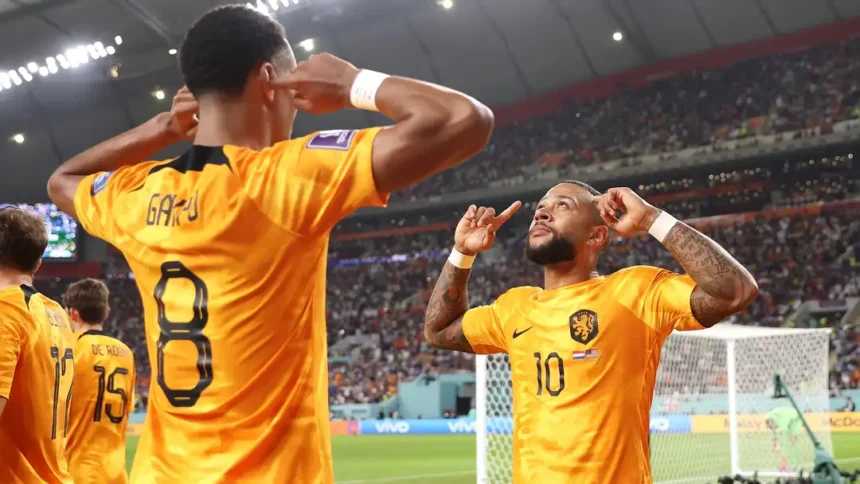
For the “Oranje,” Memphis is often the main man. The team is built around his strengths. He usually plays in a free role upfront, where he can roam and influence the game. His chemistry with teammates like Denzel Dumfries and Frenkie de Jong is excellent. He has led the team through World Cup qualifiers and European Championships. Fans of the Netherlands view him as a hero. When he puts on that orange jersey, he seems to grow in stature. He plays with a sense of pride and patriotism that is infectious. His goal celebration—fingers in his ears—signifies his ability to block out the noise and criticism, focusing only on his game.
Off the Pitch: Music and Fashion
Memphis Depay is a true modern icon because his influence extends far beyond the football pitch. He is a passionate musician, specifically a rapper. He has released several singles and freestyles that have garnered millions of views on YouTube. His music is not just a hobby; he takes it seriously. Through his lyrics, he tells his story, discussing his struggles, his wealth, and his ambition. Music allows him to express emotions that he might not be able to share in a post-match interview. It is a therapeutic outlet for him.
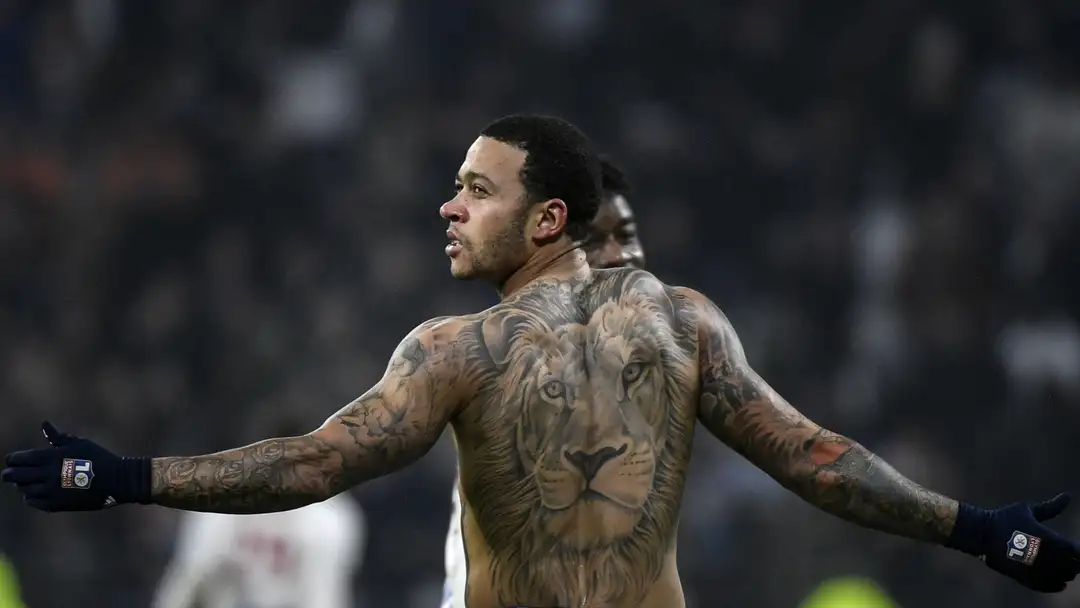
In addition to music, Memphis is a fashion icon. He is known for his bold and sometimes controversial style. He loves designer brands and isn’t afraid to wear outfits that stand out. Whether he is arriving at training or attending a gala, all eyes are on him. He has his own clothing line, “Memphis Depay Clothing,” which features his signature logo—a lion. The lion is significant to him; he has a massive tattoo of a lion covering his entire back. To him, the lion represents courage, strength, and being the king of his own jungle. This personal branding is smart business. It ensures that his name will remain relevant even after he retires from professional football.
The Significance of the “Blind and Deaf to the World” Celebration
One of the most recognizable things about Memphis Depay is his goal celebration. After scoring, he often puts his index fingers into his ears and closes his eyes. This gesture is known as “Blind and Deaf to the World.” It is a powerful message. It symbolizes his mental fortitude. It means he doesn’t listen to the haters, the critics, or the negative noise. He focuses entirely on his inner voice and his goals.
This celebration resonates with many of his fans. It teaches a lesson about mental health and self-confidence. In a world dominated by social media, where criticism is constant and often harsh, Memphis shows that the key to success is staying true to yourself. He encourages his followers to block out the negativity and pursue their dreams relentlessly. This philosophy is also central to his charitable work. He is involved in various foundations, helping deaf and blind children in Ghana, his father’s homeland. This connection adds a deeper layer of meaning to his celebration.
Future Prospects
As Memphis Depay enters the later stages of his career, questions naturally arise about what comes next. He is still performing at a high level, but in football, things change quickly. Will he return to the Eredivisie to finish his career at PSV? Will he try a new challenge in the MLS in the United States or perhaps in Saudi Arabia? His adventurous spirit suggests he might be open to anything.
Regardless of where he plays next, his legacy is secure. He will be remembered as one of the most talented Dutch players of his generation. He has scored goals in the biggest stadiums, won titles, and inspired millions. His transition from a troubled youth in Moordrecht to a global superstar is a story worth telling. Fans will continue to watch his journey with interest, knowing that with Memphis, there is never a dull moment.
Exploring Digital Trends
It is interesting to note how modern athletes like Memphis leverage digital platforms. Just as businesses look for the latest tech news, athletes are building digital empires. For insights into the tech world that often intersects with modern sports marketing, you might visit sites like https://siliconvalleytime.co.uk/. Understanding digital trends is crucial for modern celebrities to maintain their brand, something Memphis does exceptionally well.
FAQ
Q: What is Memphis Depay’s current team?
A: As of the most recent updates, Memphis Depay plays for Corinthians in Brazil. (Note: Transfer situations can change rapidly, so it is always good to check current sports news).
Q: Why does he use the name “Memphis” on his jersey?
A: He uses his first name because his father left the family when he was a child, and he does not want to be associated with his father’s last name, Depay.
Q: Does Memphis Depay have any tattoos?
A: Yes, he is heavily tattooed. His most famous tattoo is a large lion that covers his entire back.
Q: Is Memphis Depay a rapper?
A: Yes, he has released several hip-hop tracks and music videos, accumulating millions of views on YouTube.
Q: Which country does Memphis Depay play for?
A: He plays for the Netherlands national team. He was eligible to play for Ghana through his father but chose to represent the country of his birth.
Conclusion
In conclusion, Memphis Depay is a multifaceted individual who defies simple categorization. He is a world-class athlete, a creative artist, and a resilient human being. His career has been a rollercoaster of highs and lows, from the disappointment at Manchester United to the redemption at Lyon and the stardom at Barcelona and Atlético Madrid. Through it all, he has remained true to himself.
His story teaches us valuable lessons about perseverance. It shows that talent is not enough; you need mental strength to overcome obstacles. Whether you are a fan of his football, his music, or his fashion, you cannot deny his impact. As he continues to write the chapters of his career, one thing is certain: the lion will keep roaring. He remains a fascinating figure in the world of sports, and his influence will likely be felt for years to come. Whether he is scoring a free-kick or dropping a new track, Memphis commands attention, and he has earned every bit of it.



