







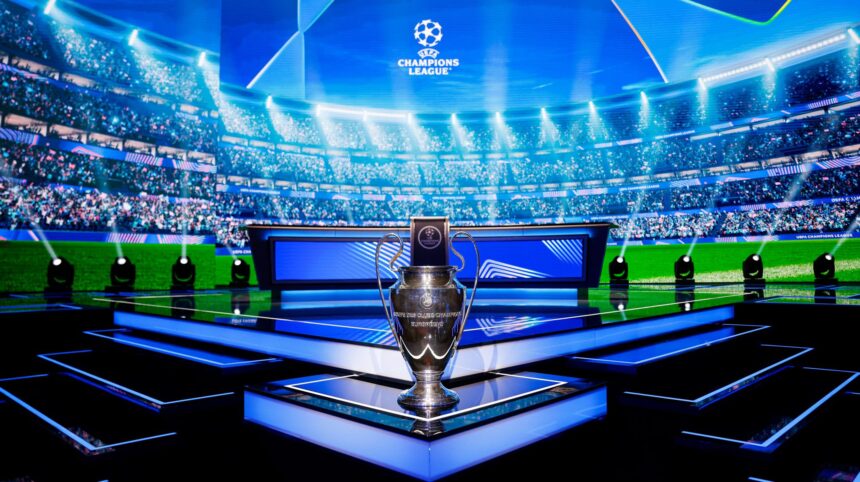

The world of sports is filled with iconic competitions, but few capture the global imagination quite like the UEFA Champions League. For soccer fans, hearing that iconic anthem signals that the best of the best are about to take the field. This tournament brings together Europe’s elite clubs in a battle for supremacy, creating unforgettable moments, legendary rivalries, and crowning the undisputed kings of European soccer. Whether you’re a lifelong fan or new to the sport, the Champions League offers a spectacle of skill, passion, and drama that is simply unmatched. It’s more than just a competition; it’s a showcase of the world’s greatest players competing for the most coveted prize in club soccer.
Key Takeaways
- The Champions League is Europe’s premier club soccer tournament, featuring top teams from across the continent.
- The competition has a rich history, evolving from the European Cup to the modern format we know today.
- Teams qualify based on their performance in their domestic leagues, making every league match count.
- The tournament format includes a group stage followed by a knockout phase, culminating in a single-match final.
- Real Madrid is the most successful club in the history of the competition, with a record number of titles.
What is the Champions League?
At its heart, the UEFA Champions League is an annual soccer tournament organized by the Union of European Football Associations (UEFA). It pits the top-division clubs from Europe against one another to determine the continent’s best team. Think of it as the Super Bowl of European club soccer, but played out over an entire season. Winning this trophy is considered the highest achievement a European club can attain.
The competition is a global phenomenon, watched by hundreds of millions of people worldwide. It’s where legends are made, and dreams are either realized or shattered. The teams that participate are the champions and top finishers from their respective national leagues, such as the English Premier League, Spain’s La Liga, and Germany’s Bundesliga. This ensures that every match features an incredibly high level of talent, with star players from around the globe gracing the pitch. The blend of different playing styles from various countries is part of what makes the Champions League so captivating.
A Glimpse into the History of the Competition
The tournament wasn’t always known as the Champions League. Its story begins in 1955 when it was founded as the European Champion Clubs’ Cup, more commonly known as the European Cup. Initially, it was a straight knockout tournament exclusively for the champion club of each European nation. The idea was simple: a contest to find the best champion club on the continent.
The Rebranding and Modern Era
In 1992, the competition underwent a major transformation. It was rebranded as the UEFA Champions League and introduced a group stage format for the first time. This change allowed for more games, generated more revenue, and created a more dynamic and engaging tournament. Over the years, the format has continued to evolve. The tournament expanded to include not just the champions of each league but also the runners-up and even the third and fourth-placed teams from Europe’s strongest leagues. This expansion has made the path to glory even more challenging, cementing the Champions League as the pinnacle of club football.
How Teams Qualify for the Champions League
Earning a spot in the Champions League is a massive achievement for any club, both for the prestige and the significant financial rewards involved. Qualification is primarily determined by a club’s performance in its domestic league during the previous season.
UEFA uses a “coefficient” system to rank the national leagues. The stronger a league is deemed to be (based on the recent performance of its clubs in European competitions), the more spots it gets.
Here’s a simplified breakdown:
- Top-ranked leagues (like England, Spain, Germany, and Italy) get up to four automatic spots in the group stage.
- Mid-ranked leagues receive fewer spots, with some teams entering the group stage directly and others having to go through qualifying rounds.
- Lower-ranked leagues typically only get one spot, which usually requires the team to navigate several preliminary and qualifying rounds to reach the group stage.
This tiered system ensures that the competition features a mix of powerhouse clubs and underdog champions from smaller nations, creating a fascinating blend of matchups. For more insights on how technology and performance metrics are tracked in modern sports, you can find interesting articles like those on https://siliconvalleytime.co.uk/.
The Tournament Format Explained
The Champions League format is designed to build excitement and drama throughout the season, from late summer to the final in late spring. It is primarily divided into two main phases: the Group Stage and the Knockout Phase.
The Group Stage
The main competition begins with 32 teams divided into eight groups of four. The seeding process ensures that each group has a mix of teams from different countries and of varying strengths. In this stage, each team plays the other three teams in its group twice—once at home and once away.
A win earns a team 3 points, a draw earns 1 point, and a loss earns 0 points. After all six matches are played, the top two teams from each group advance to the next round. The third-place team gets a consolation prize: they drop down into the knockout stages of the UEFA Europa League, Europe’s second-tier club competition. The fourth-place team is eliminated from European competition entirely.
The Knockout Phase
The Knockout Phase is where the real high-stakes drama begins. The 16 remaining teams are paired up for the Round of 16. This stage consists of two-legged ties, meaning each team plays the other twice, once at their home stadium and once at their opponent’s.
- Round of 16: The winners from each group are drawn against the runners-up from a different group.
- Quarter-Finals: The eight winners from the Round of 16 advance.
- Semi-Finals: The four remaining teams battle for a spot in the final.
The winner of each two-legged tie is determined by the aggregate score (the total goals from both matches). If the aggregate score is tied, the team that scored more away goals advances. If away goals are also equal, the tie goes to extra time and, if necessary, a penalty shootout.
The Final
The two teams that survive the knockout rounds meet in the Champions League Final. Unlike the previous rounds, the final is a single match played at a neutral venue that is selected years in advance. The winner of this one-off game is crowned the champion of Europe. It is one of the most-watched annual sporting events in the world, a true celebration of soccer at its finest.
Iconic Clubs of the Champions League
Over the decades, certain clubs have become synonymous with the Champions League, building legacies through their consistent success and memorable performances.
|
Club |
Country |
Number of Titles |
Fun Fact |
|---|---|---|---|
|
Real Madrid |
Spain |
15 |
They won the first five tournaments from 1956 to 1960. |
|
AC Milan |
Italy |
7 |
Known for their dominant teams in the late 80s and mid-2000s. |
|
Liverpool |
England |
6 |
Famous for their dramatic comeback win in the 2005 final. |
|
Bayern Munich |
Germany |
6 |
Won three consecutive titles in the mid-1970s. |
|
Barcelona |
Spain |
5 |
Their “tiki-taka” style dominated Europe under Pep Guardiola. |
Real Madrid: The Kings of the Competition
No club embodies the spirit of the Champions League quite like Real Madrid. The Spanish giants have a love affair with this trophy, having won it a record 15 times. Their dominance dates back to the very beginning of the European Cup, where they won the first five editions led by the legendary Alfredo Di Stéfano. In the modern era, they achieved an incredible three-peat, winning the title in 2016, 2017, and 2018 with Cristiano Ronaldo leading the line.
AC Milan: The Italian Powerhouse
AC Milan has a storied history in the competition, with seven titles to their name. The club is famous for several legendary teams, including the side from the late 1980s with Dutch trio Ruud Gullit, Marco van Basten, and Frank Rijkaard, and the team from the mid-2000s led by Paolo Maldini and Kaká. Their success has made them one of the most respected clubs in European history.
Liverpool: The Comeback Kings
Liverpool’s six titles are filled with tales of passion and incredible drama. Their most famous victory came in the 2005 final in Istanbul. Down 3-0 to AC Milan at halftime, Liverpool staged one of the greatest comebacks in sports history, tying the game 3-3 and eventually winning on penalties. This “Miracle of Istanbul” perfectly captures the never-say-die attitude associated with the club on European nights.
The Most Memorable Champions League Finals
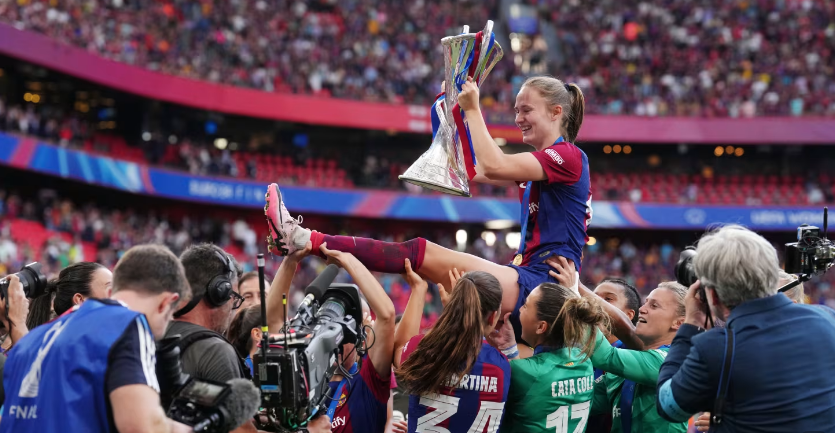
The final is the stage where heroes are born and legacies are cemented. Some finals have gone down in history for their sheer drama, quality of football, and unforgettable moments.
Manchester United vs. Bayern Munich (1999)
Often cited as the greatest comeback in Champions League history, the 1999 final was a rollercoaster of emotions. Bayern Munich led 1-0 for almost the entire game. As the match entered stoppage time, Manchester United scored two goals in just over a minute to snatch the trophy from Bayern’s grasp. It was a stunning conclusion that sealed a historic “treble” (winning the domestic league, domestic cup, and Champions League) for the English club.
AC Milan vs. Liverpool (2005)
As mentioned earlier, the “Miracle of Istanbul” is a final that will never be forgotten. AC Milan, with a team of superstars, raced to a 3-0 lead by halftime and looked certain to lift the trophy. However, a spirited Liverpool team, inspired by their captain Steven Gerrard, scored three goals in a frantic six-minute spell in the second half to level the score. The match went to a penalty shootout, where Liverpool’s goalkeeper Jerzy Dudek became the hero, securing an improbable victory.
Barcelona vs. Manchester United (2011)
This final is often regarded as one of the most one-sided in modern history, but for a different reason: the sheer brilliance of one team. Pep Guardiola’s Barcelona, featuring Lionel Messi at his absolute peak, delivered a masterclass in possession-based soccer. They completely outplayed a very strong Manchester United side, winning 3-1 at Wembley Stadium. The performance was so dominant that many consider that Barcelona team to be the greatest club side of all time.
The Financial Impact of the Champions League
Participating in the Champions League is incredibly lucrative. The prize money distributed by UEFA is substantial and can transform a club’s finances. The revenue comes from a combination of television rights, sponsorships, and ticket sales, which are pooled and distributed among the participating clubs.
The distribution is based on:
- Participation Fee: A fixed amount for qualifying for the group stage.
- Performance Bonuses: Payments for each win or draw in the group stage, and for advancing to each knockout round.
- Market Pool: A significant portion of the revenue is distributed based on the value of the television market in each country.
For a club that goes all the way and wins the final, the total prize money can exceed €100 million. This doesn’t even include the additional revenue from increased ticket sales, merchandise, and sponsorship deals that come with a successful Champions League campaign. This financial windfall allows top clubs to attract and retain the best players, further cementing their status at the top of the sport.
The Future of the Champions League
The Champions League is not a static competition. UEFA is constantly looking for ways to keep it fresh and exciting. Starting with the 2024-25 season, the tournament is undergoing another significant format change. The traditional 32-team group stage is being replaced by a single 36-team league phase.
In this new “Swiss model” format, each team will play eight matches against eight different opponents (four at home, four away). The top eight teams in the league table will qualify directly for the Round of 16. The teams finishing from 9th to 24th will enter a two-legged playoff round to determine the other eight teams that advance to the Round of 16. This new format is designed to create more meaningful matches from the very start of the competition and ensure that more teams remain in contention for longer.
The UEFA Champions League is a celebration of everything that makes soccer the world’s most popular sport: skill, teamwork, passion, and drama. It’s a stage where the best clubs and players compete for the ultimate glory, creating memories that last a lifetime. As the competition continues to evolve, its status as the pinnacle of club soccer remains firmly intact, captivating fans from every corner of the globe. You can learn more about the intricate history and stats of the competition by exploring its extensive coverage on platforms like Wikipedia.
Frequently Asked Questions (FAQ)
What does UEFA stand for?
UEFA stands for the Union of European Football Associations. It is the governing body of soccer in Europe.
Who is the all-time top scorer in the Champions League?
Cristiano Ronaldo is the all-time leading goalscorer in the history of the Champions League, having scored the majority of his goals for Real Madrid.
Why is it called the Champions League if not all teams are champions?
The name is a holdover from its original format as the European Cup, which was only open to the champions of each domestic league. The competition was rebranded and expanded in 1992 to include non-champions from stronger leagues to increase the level of competition and commercial appeal.
Can American teams play in the Champions League?
No, the UEFA Champions League is exclusive to clubs that are members of UEFA (the European confederation). North and Central American teams compete in their own continental tournament, the CONCACAF Champions Cup.
How is the final venue chosen?
The venue for the Champions League final is selected by the UEFA Executive Committee about two years in advance. Stadiums must meet strict criteria regarding capacity, infrastructure, and security to be considered for hosting.



