

Have you ever seen a small, chubby doll with a mischievous smile and big, side-glancing eyes? Chances are, you’ve encountered a kewpie doll. These iconic figures have been capturing hearts for over a century, evolving from a simple comic strip character into a beloved collectible and cultural symbol. But what is it about these impish little characters that gives them such lasting appeal?
This article will take you on a journey through the fascinating world of the kewpie doll. We will explore its origins with the talented artist Rose O’Neill, trace its rise to international fame, and uncover the features that make it so unique. You will learn how to identify different types of Kewpies, understand their value as collectibles, and see how their influence continues to be felt in art and culture today. Get ready to discover the story behind one of the most recognizable dolls in history.
Key Takeaways
- The kewpie doll was created by American illustrator Rose O’Neill in 1909, first appearing in Ladies’ Home Journal.
- The name “Kewpie” is derived from Cupid, the Roman god of love, reflecting their mission to spread happiness and fun.
- Authentic Kewpies are characterized by their chubby bodies, top-knot hairstyle, big side-glancing eyes, and a roguish smile.
- Early Kewpie dolls were made from bisque porcelain, but later versions were produced in celluloid, composition, and vinyl.
- The value of a kewpie doll depends on its age, material, condition, manufacturer, and rarity.
Who Invented the Kewpie Doll? The Story of Rose O’Neill
The whimsical world of the kewpie doll began in the imagination of a remarkable woman named Rose O’Neill. Born in Wilkes-Barre, Pennsylvania, in 1874, O’Neill was a self-taught artistic prodigy. By her early teens, she was already winning drawing competitions and submitting illustrations to national magazines. Her talent eventually led her to New York City, where she became the first and only female staff artist for Puck, a leading humor magazine of the era. O’Neill’s work was groundbreaking, as she broke into the male-dominated field of commercial illustration and became one of the highest-paid illustrators in the nation.
Her most famous creation, the Kewpies, first appeared as comic strip characters in a 1909 issue of Ladies’ Home Journal. These little winged “sprites” were an instant hit. O’Neill described them as “a sort of little round fairy whose one idea is to teach people to be merry and kind at the same time.” Their purpose was simple: to do good deeds in a fun-loving way. The characters’ popularity soared, and readers couldn’t get enough of their playful antics. It wasn’t long before the demand for a three-dimensional version of these charming figures led Rose O’Neill to design the first kewpie doll.
The Birth of a Doll Phenomenon
Following the overwhelming success of the Kewpie comic strips, Rose O’Neill saw an opportunity to bring her characters to life. In 1912, she traveled to Germany, a hub for high-quality doll manufacturing, with her designs. She partnered with the J.D. Kestner & Co. factory in Waltershausen, a renowned porcelain manufacturer, to produce the very first bisque kewpie doll. O’Neill was incredibly hands-on in the production process, ensuring that every detail, from the chubby cheeks to the tiny blue wings, perfectly matched her original drawings. These dolls were an immediate commercial success upon their release in 1913.
The public’s appetite for everything Kewpie seemed insatiable. The dolls became a global sensation, and the brand expanded to include a vast range of merchandise. You could find the Kewpie image on everything from stationery and housewares to clothing and advertisements. The kewpie doll was more than just a toy; it was a cultural icon that represented innocence, joy, and a touch of gentle mischief. This success cemented Rose O’Neill’s status not only as a brilliant artist but also as a savvy businesswoman who created an enduring legacy.
What Makes a Kewpie Doll Unique?
At first glance, a kewpie doll is instantly recognizable. But what are the specific features that set it apart from other dolls? Rose O’Neill’s design was very specific, creating a character that was both cherubic and slightly impish. Understanding these characteristics is key to identifying an authentic Kewpie.
Physical Characteristics
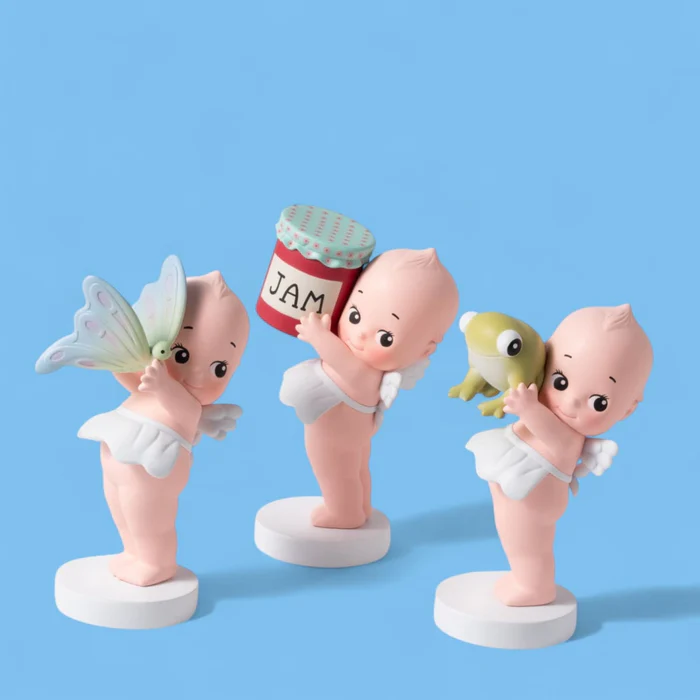
The classic kewpie doll has a very distinct appearance. It is a chubby, plump baby figure, often depicted standing with its legs together and arms slightly outstretched. One of their most famous features is their large, round head, which is topped with a molded tuft of hair, known as a “top knot.” A few strands of hair are also painted on the sides of the head.
Their faces are dominated by big, round eyes that glance off to one side, giving them a curious and mischievous expression. Completing the look is a watermelon-slice smile or smirk that hints at their playful nature. On their back, you’ll find a pair of tiny, molded blue wings, a nod to their fairy-like origins.
The Heart-Shaped Label
Another hallmark of an authentic kewpie doll is its label. Early bisque and celluloid versions came with a red, heart-shaped paper sticker on the chest that read “Kewpie” and “Germany” for the imports. Later dolls produced in other materials and countries had different markings, but this heart symbol became synonymous with the brand. Additionally, many dolls had O’Neill’s signature incised or printed on the bottom of their feet. These markings are crucial for collectors looking to verify a doll’s authenticity and origin.
Materials Used Through the Years
The kewpie doll has been in production for over a century, and during that time, it has been made from a variety of materials. The materials used often reflect the manufacturing trends and technological advancements of the era, and they are a key factor in determining a doll’s age and value.
|
Material |
Era of Production |
Key Characteristics |
|---|---|---|
|
Bisque Porcelain |
Early 1910s – 1920s |
Unglazed porcelain, matte finish, fragile, made in Germany. |
|
Celluloid |
1920s – 1940s |
Lightweight, slightly transparent, highly flammable, prone to dents. |
|
Composition |
1930s – 1950s |
Made from a mix of sawdust and glue, heavier, prone to crazing. |
|
Hard Plastic |
1950s – 1960s |
Durable, smooth finish, less detailed than earlier versions. |
|
Vinyl |
1960s – Present |
Soft, flexible, widely used for modern and mass-produced versions. |
From Bisque to Vinyl
The Original Bisque Dolls
The first and most coveted Kewpie dolls were crafted from bisque porcelain. This unglazed ceramic material gave the dolls a beautiful, lifelike skin texture. Produced in Germany, these early dolls are highly prized by collectors for their quality and historical significance. They were often jointed at the shoulders and sometimes at the hips, allowing for some posability. Because of their fragile nature, finding an early bisque kewpie doll in perfect condition is quite rare.
The Rise of Celluloid and Composition
As manufacturing evolved, so did the kewpie doll. Celluloid, an early plastic, became a popular alternative to bisque because it was cheaper and less fragile. These dolls were lightweight and could be mass-produced more easily. However, celluloid is notoriously flammable and can degrade over time. Following this, composition—a mixture of sawdust, glue, and other materials—became the standard. Composition dolls were sturdier than celluloid ones but were susceptible to “crazing,” or fine-line cracking in the paint and surface, especially when exposed to moisture.
Modern Materials: Plastic and Vinyl
After World War II, advancements in plastics led to the creation of hard plastic and, eventually, vinyl Kewpie dolls. Companies like Cameo Doll Company, which held the primary license for many years, produced millions of these dolls. Vinyl, in particular, proved to be the ideal material for a children’s toy. It was durable, flexible, and easy to clean. While these modern versions may not have the same monetary value as their antique bisque counterparts, they introduced the lovable kewpie doll to new generations of children and continue to be popular today.
Identifying and Valuing a Kewpie Doll
Do you think you have a vintage kewpie doll in your attic? Identifying and determining its value can be an exciting treasure hunt. Several factors come into play, including the doll’s material, manufacturer, condition, and any special features it might have. A genuine antique kewpie doll will typically have markings that indicate its origin. For example, early German bisque dolls are often marked with “O’Neill” on the foot and may have the “Kewpie Germany” heart sticker. Later versions by American manufacturers like Cameo will have different markings.
The condition of the doll is paramount. A doll in mint condition, with no chips, cracks, crazing, or repairs, will always be worth more than one that is damaged. Original clothing or accessories can also significantly increase a doll’s value. Rarity is another crucial factor. Some Kewpie dolls were made in limited numbers or featured unusual poses, outfits, or actions (known as “Action Kewpies”).
These rare examples, such as a Kewpie holding a specific item or paired with an animal, are highly sought after by collectors. You can find valuable information in collector’s guides and online databases that track auction results for similar dolls. For instance, some technology news sites, like those you might find at https://siliconvalleytime.co.uk/, occasionally cover trends in collectibles and nostalgic tech, which can provide context on market dynamics.
Kewpie Doll in Pop Culture and Art
The influence of the kewpie doll extends far beyond the toy box. Since its creation, it has been a persistent figure in popular culture and the art world. Its distinct look has been referenced, parodied, and celebrated in various forms of media. In the early 20th century, Kewpies were so popular that they became a common prize at carnivals and fairs, solidifying their place in the American cultural landscape. This association with games of chance is so strong that many people today still think of a “kewpie doll” as a generic carnival prize.
Artists have also been inspired by the Kewpie’s unique aesthetic. The doll’s blend of innocence and subtle strangeness has made it a compelling subject for photographers and painters exploring themes of childhood, nostalgia, and commercialism. The kewpie doll has appeared in films, television shows, and even inspired a brand of Japanese mayonnaise, which features a Kewpie on its logo and is a massive commercial success in its own right. This enduring presence demonstrates the powerful and versatile appeal of Rose O’Neill’s original design. It has managed to remain relevant by adapting to new cultural contexts while never losing its core identity.
Collecting Kewpie Dolls Today
Collecting the kewpie doll is a hobby enjoyed by people all over the world. For some, it’s a way to connect with a piece of their childhood or family history. For others, it’s the thrill of the hunt for a rare and valuable antique. Whatever the motivation, building a collection can be a rewarding experience. New collectors often start with more affordable vinyl dolls from the mid-20th century before seeking out older and rarer examples. Online auction sites, antique stores, doll shows, and flea markets are all excellent places to find Kewpies.
When collecting, it’s important to do your research. Familiarize yourself with the different manufacturers, materials, and markings. Joining a collector’s group or online forum can be incredibly helpful, as experienced collectors are often willing to share their knowledge. Whether you aim to acquire a single bisque kewpie doll as a display piece or build a comprehensive collection that spans its entire history, the world of Kewpie collecting offers endless opportunities for discovery. Each doll has a story to tell, representing a small piece of a century-long legacy of joy and charm.
Conclusion: The Timeless Appeal of a Cultural Icon
From its humble beginnings as a doodle in a magazine to its status as a global phenomenon, the kewpie doll has proven to have remarkable staying power. It is a testament to the genius of its creator, Rose O’Neill, who crafted a character that was simple, lovable, and universally appealing. The Kewpie’s mission to spread cheer has resonated with people for over 100 years, allowing it to transcend generations and trends. It has been a plaything for children, a prized possession for collectors, and a muse for artists.
The story of the kewpie doll is a story of creativity, business acumen, and the enduring power of a good idea. It reminds us that sometimes the simplest characters can have the biggest impact. As long as there is a place for whimsy, innocence, and a little bit of playful fun in the world, the charming, side-glancing smile of the Kewpie will continue to capture hearts. For those interested in a deeper dive into its history, more information can be found on its dedicated page on sites like Wikipedia.
Frequently Asked Questions (FAQ)
Q1: What is a kewpie doll?
A kewpie doll is a type of doll characterized by its chubby baby-like appearance, large side-glancing eyes, a top-knot hairstyle, and a mischievous smile. It was created by American artist Rose O’Neill in 1909.
Q2: Why is it called a Kewpie?
The name “Kewpie” is a shortened version of “Cupid,” the Roman god of love. Rose O’Neill named them this because she envisioned them as little sprites whose mission was to spread love and happiness.
Q3: Are Kewpie dolls valuable?
The value of a kewpie doll varies greatly. Antique bisque dolls from the early 1910s made in Germany are highly valuable, especially if they are in excellent condition. Later versions made of celluloid, composition, or vinyl are generally more common and affordable, though rare examples can still be valuable.
Q4: How can I tell if my kewpie doll is old?
You can identify an older kewpie doll by its material (bisque, celluloid, or composition), markings (such as “O’Neill” on the foot or a heart-shaped sticker), and manufacturing details. Early bisque dolls are heavier and have a matte finish, while celluloid is very lightweight.
Q5: What are the tiny wings on a kewpie doll’s back for?
The small blue wings are part of Rose O’Neill’s original concept. In her comics, the Kewpies were fairy-like beings or sprites who flew around doing good deeds. The wings are a nod to their magical, otherworldly nature.