





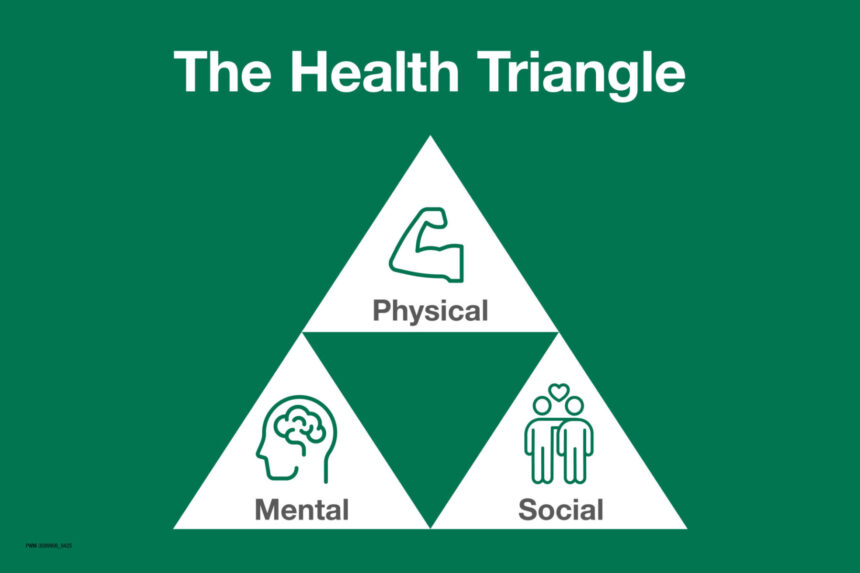

Have you ever wondered why you can feel physically strong but still feel “off” or tired? Or maybe you have great friends and a fun social life, yet you struggle with anxiety or stress? The answer usually lies in something called the health triangle. This simple concept is one of the most important tools we have for understanding what it truly means to be healthy. It isn’t just about eating your veggies or running a mile; it’s about balancing three distinct sides of yourself.
In this guide, we will break down exactly what the health triangle is and why it matters so much. We aren’t just going to talk theory; we will give you practical, easy steps to improve your life today. When you understand how these three sides connect, you unlock the secret to feeling your absolute best.
Key Takeaways
- Total Wellness: True health is a combination of physical, mental/emotional, and social well-being.
- Interconnection: If one side of the triangle breaks or weakens, the other two sides will likely suffer.
- Balance is Key: You don’t need to be perfect in every area, but you do need to pay attention to all three.
- Actionable Steps: Small changes in your daily routine can strengthen your health triangle significantly.
What Is the Health Triangle?
The health triangle is a framework used to measure total health. Imagine an equilateral triangle—a triangle where all three sides are equal in length. Each side represents a specific aspect of your health: physical, mental/emotional, and social. When all three sides are balanced, the triangle holds its shape, and you experience what is known as wellness.
However, if you neglect one side, the triangle becomes lopsided. For example, if you focus only on school or work (mental) and ignore your friends (social) and exercise (physical), your triangle collapses. The goal isn’t to be a superhero in one area, but to maintain a steady balance across all three. This concept is often taught in health classes across the United States because it helps students visualize that health is multi-dimensional. It’s a lifelong lesson that applies whether you are 14 or 40.
The Three Sides Defined
To truly grasp the concept, we need to look at the three pillars that hold up the health triangle. While they are distinct, they constantly influence one another.
- Physical Health: This deals with the condition of your body. It includes nutrition, exercise, sleep, and hygiene.
- Mental/Emotional Health: This covers your thoughts, feelings, and how you cope with the ups and downs of life.
- Social Health: This involves how you interact with others, build relationships, and navigate social situations.
When you look at your own life, can you see which side might be the strongest? Which one might be struggling? Identifying these strengths and weaknesses is the first step toward building a stronger foundation for yourself.
Pillar 1: Understanding Physical Health
Physical health is often what comes to mind first when people think about being “healthy.” It is the most visible side of the health triangle. Physical health refers to how well your body functions. Having a high level of physical health means you have enough energy to perform your daily activities, deal with everyday stress, and avoid injury. It isn’t just about having big muscles or being skinny; it’s about your body working the way it is supposed to.
Taking care of your physical health involves listening to your body. Are you tired all the time? Do you get sick often? These are signs that this side of your triangle needs attention. Good physical health builds a strong immune system, which protects you from disease. It also gives you the stamina to enjoy your hobbies and hang out with friends. Without a solid physical foundation, it becomes much harder to maintain mental clarity or social energy.
The Role of Nutrition
Food is fuel. Just like a car can’t run on empty or with the wrong type of gas, your body can’t function without proper nutrients. Eating a balanced diet is critical for the physical side of the health triangle. This means consuming a mix of fruits, vegetables, whole grains, and lean proteins. It also means drinking plenty of water.
In the US, it is easy to fall into the trap of eating processed foods that are high in sugar and unhealthy fats. These foods might give you a quick burst of energy, but they often lead to a “crash” later on. To support your physical health, try to eat a rainbow of colors on your plate. Different colored vegetables provide different vitamins that keep your organs running smoothly. Remember, you don’t have to be perfect. Enjoying a treat now and then is fine, as long as your main fuel source is nutritious.
The Importance of Sleep
We often underestimate sleep, but it is actually when your body does its most important work. While you are sleeping, your body repairs cells, builds muscle, and consolidates memories. Teenagers and young adults typically need between 8 to 10 hours of sleep per night to function at their best. If you are constantly cutting sleep short to play video games or study, your physical health will suffer.
Lack of sleep weakens your immune system, making you more likely to catch a cold or the flu. It also affects your coordination and reaction time. Think of sleep as the charger for your internal battery. If you only charge your phone to 20%, it dies quickly. The same happens to you. Prioritizing sleep is one of the easiest ways to instantly improve your physical health.
Pillar 2: Exploring Mental and Emotional Health
The second side of the health triangle is mental and emotional health. This side is all about your feelings and thoughts. It encompasses how you feel about yourself, how well you meet the demands of daily life, and your ability to process information. Someone with good mental health generally has a positive outlook on life and accepts responsibility for their actions. They stand up for their beliefs and values.
Emotional health is closely tied to this. It involves expressing your emotions in appropriate ways. It is normal to feel sad, angry, or frustrated sometimes. Being emotionally healthy doesn’t mean you are happy 24/7. Instead, it means you know how to manage those difficult feelings without letting them overwhelm you or hurt others. It’s about resilience—the ability to bounce back from setbacks.
Managing Stress and Anxiety
Stress is a natural part of life, but how we handle it defines our mental health. Chronic stress can shrink the mental side of your health triangle. When you are stressed, your body releases hormones like cortisol. In short bursts, this helps you focus. But over time, high stress can lead to headaches, stomach issues, and even depression.
Finding healthy ways to cope with stress is essential. This could be deep breathing exercises, journaling, listening to music, or talking to a counselor. Recognizing when you are feeling overwhelmed is a sign of strength, not weakness. In our fast-paced society, taking a mental break is just as important as taking a physical rest. If you ignore stress, it will eventually manifest as physical illness or social withdrawal.
The Power of Self-Esteem
Self-esteem is how much you value, respect, and feel confident about yourself. It is the core of your emotional well-being. When you have healthy self-esteem, you are more likely to take care of your body and choose friends who treat you well. Conversely, low self-esteem can lead to poor choices that damage all sides of the triangle.
Building self-esteem takes time. It involves silencing your inner critic and focusing on your strengths. Set small, achievable goals for yourself. When you reach them, celebrate! This builds confidence. Remember that everyone makes mistakes. Instead of beating yourself up, look at mistakes as opportunities to learn. A healthy self-view acts as a shield, protecting your mental health from the negativity of others.
Pillar 3: Navigating Social Health
The third side, often the most overlooked, is social health. This refers to how well you get along with others. It involves your ability to make and keep friends, work and play in cooperative ways, and seek and lend support when necessary. Humans are social creatures; we are not meant to live in isolation. The connections we build with family, friends, peers, and teachers are vital for our survival and happiness.
Social health also includes how you communicate. Are you a good listener? Do you speak clearly and respectfully? Can you handle conflict without violence or insults? These are all skills that strengthen the social side of your health triangle. Strong social networks provide a safety net. When life gets tough, having people to turn to can make a massive difference in how you cope.
Building Healthy Relationships
Quality is more important than quantity when it comes to relationships. Having 500 followers on social media does not necessarily mean you have strong social health. True social health comes from deep, meaningful connections where you can be yourself. Healthy relationships are built on mutual respect, trust, and communication.
If you are in friendships where you feel drained, criticized, or unsafe, it damages your social health. It is okay to distance yourself from toxic people. Focus on surrounding yourself with people who uplift you and encourage you to be your best self. This positive reinforcement feeds back into your mental health, making you feel more confident and secure.
Communication Skills
Good communication is the glue that holds relationships together. This involves both talking and listening. Active listening means truly hearing what the other person is saying, rather than just waiting for your turn to speak. It shows that you value the other person’s thoughts and feelings.
Being assertive is another key part of communication. Assertiveness means expressing your needs and wants clearly and respectfully, without being aggressive or passive. For example, saying “I feel hurt when you cancel our plans” is assertive. It allows you to set boundaries, which is crucial for maintaining a balanced health triangle. When you can communicate effectively, you avoid misunderstandings and build stronger bonds with those around you.
How the Three Sides Connect
The magic of the health triangle lies in the connection between the sides. You cannot change one without affecting the others. This is often called the “mind-body connection.” Let’s look at a few examples of how this interplay works in real life.
- Physical affecting Mental: If you don’t get enough sleep (Physical), you will likely feel irritable and have trouble focusing (Mental).
- Mental affecting Social: If you are feeling very anxious or depressed (Mental), you might withdraw from your friends and avoid social gatherings (Social).
- Social affecting Physical: If your friends love to play sports (Social), you are more likely to be active and fit (Physical). Conversely, if your social group engages in unhealthy habits, you might too.
This interconnection means that if you are struggling in one area, you can sometimes use the other sides to help fix it. If you are feeling down mentally, going for a run (Physical) or calling a friend (Social) can boost your mood. Recognizing these links gives you more power over your own wellness.
Table: Interaction of the Health Triangle
|
Scenario |
Physical Impact |
Mental/Emotional Impact |
Social Impact |
|---|---|---|---|
|
Joining a Sports Team |
Improves fitness and strength. |
Boosts confidence and reduces stress. |
Creates new friendships and teamwork skills. |
|
Pulling an All-Nighter |
Weakens immune system, causes fatigue. |
Increases anxiety, lowers focus. |
Makes you irritable with friends/family. |
|
Volunteering |
Can be physically active. |
Creates a sense of purpose and joy. |
Expands your community connections. |
Assessing Your Own Health Triangle
Now that you understand the theory, it is time to look at your own life. Assessing your health triangle isn’t a test you can fail; it’s a status check. Be honest with yourself. Which side feels the strongest right now? Which feels the weakest?
Sometimes, the imbalance is temporary. During exam week, your mental side might be overworked while your physical and social sides take a back seat. That is normal. The danger comes when the imbalance becomes a permanent lifestyle. If you spend years neglecting your physical health, it will eventually catch up to you. Regular self-assessment allows you to make small course corrections before problems become big issues.
Checklist for Self-Assessment
Ask yourself these questions to gauge where you stand:
Physical:
- Do I get 8-10 hours of sleep most nights?
- Do I exercise for at least 60 minutes a few times a week?
- Do I eat fruits and vegetables every day?
Mental/Emotional:
- Do I like and accept who I am?
- Can I express my anger or sadness without hurting others?
- Do I have healthy ways to manage stress?
Social:
- Do I have at least one close friend I can trust?
- Do I respect the rights of others?
- Can I say “no” to peer pressure?
If you answered “no” to several questions in one category, that is the side of your triangle that needs some extra love and attention.
Practical Tips to Improve Physical Health
Improving your physical health doesn’t require a gym membership or expensive equipment. It starts with small choices you make every day. The goal is consistency, not perfection.
Start by looking at your hydration. Water is essential for every cell in your body. Try carrying a water bottle with you to school or work. Replace one soda or sugary drink a day with water. Your skin will look better, and you’ll have more energy.
Get Moving
You don’t have to run a marathon. Find an activity you actually enjoy. This could be dancing in your room, skateboarding, hiking, or playing basketball. If you enjoy it, you are more likely to stick with it. The recommendation is usually 60 minutes of activity a day, but you can break that up into smaller chunks. Ten minutes here and there adds up!
Also, pay attention to your hygiene. Regular showers, brushing your teeth, and washing your hands are basic but vital parts of physical health. They prevent illness and help you feel fresh and ready to tackle the day.
Practical Tips to Improve Mental Health
strengthening your mental health is about building resilience and finding peace. One of the best things you can do is limit your screen time. Social media can be fun, but constantly comparing your life to the “highlight reels” of others can damage your self-esteem.
Take breaks from your phone. Read a book, draw, or just sit outside. Giving your brain a rest from constant digital stimulation allows it to recharge. You might find that your anxiety levels drop significantly when you disconnect for a while.
Practice Gratitude
It sounds cheesy, but it works. Try writing down three things you are grateful for every day. They can be small things, like a good lunch or a sunny day. This practice trains your brain to look for the positive rather than focusing on the negative. Over time, this shifts your general outlook on life to be more optimistic.
Also, don’t be afraid to learn new things. Challenging your brain with puzzles, learning a new language, or playing an instrument keeps your mind sharp. It improves your memory and cognitive function, adding strength to the mental side of your health triangle.
Practical Tips to Improve Social Health
To boost your social health, focus on being present. When you are with friends or family, put your phone away. Give them your full attention. Eye contact and active engagement show people that they matter to you.
Try to expand your social circle. Join a club, a team, or a group that interests you. This is a great way to meet people who share your passions. Shared interests are a fantastic foundation for new friendships.
Be a Good Friend
Friendship is a two-way street. If you want good friends, you have to be one. Check in on your friends when they are having a hard time. Celebrate their successes. Be reliable—if you say you will do something, do it. Trust is the currency of social health; once it is broken, it is hard to repair.
Also, learn to forgive. Holding onto grudges only hurts you. Forgiving someone doesn’t mean what they did was okay; it means you are choosing not to carry the burden of anger anymore. This frees up emotional space for more positive interactions.
The Danger of an Unbalanced Triangle
What happens when we ignore the health triangle for too long? An unbalanced triangle eventually collapses. If you ignore your physical health, you might develop chronic diseases like diabetes or heart issues later in life. If you ignore your mental health, you risk burnout, anxiety disorders, or depression. If you ignore social health, you risk loneliness and isolation, which studies show can be as damaging to your health as smoking.
For more insights on maintaining a balanced lifestyle and staying updated with tech and health trends, you can visit resources like Silicon Valley Time. Keeping informed is another way to support your mental growth.
Balance protects you. It acts as a buffer against the hardships of life. When you have a strong triangle, a bad day at school or a fight with a friend won’t completely derail you because you have other strengths to lean on.
Creating Your Personal Health Plan
You don’t need a doctor to create a health plan (though talking to one is always good!). You can make a simple plan right now. Take a piece of paper and draw a triangle. Label the sides.
Write down one goal for each side.
- Physical: “I will drink 5 glasses of water today.”
- Mental: “I will read for 20 minutes before bed instead of scrolling TikTok.”
- Social: “I will call my grandma this weekend.”
Keep it simple. Achievable goals build momentum. Review your plan every week. Did you meet your goals? If not, why? Adjust your plan as needed. Your health triangle is dynamic; it changes as you grow and change. Your plan should evolve with you.
FAQ: Frequently Asked Questions
Q: What is the most important side of the health triangle?
A: No single side is more important than the others. The entire concept relies on balance. If one side is missing or weak, the whole structure becomes unstable.
Q: Can my health triangle change from day to day?
A: Yes! Your health is fluid. One day you might be physically tired but socially thriving. The goal is long-term balance, not daily perfection.
Q: How does social media affect the health triangle?
A: It can be both good and bad. It can help social health by connecting you with friends, but it can hurt mental health if it causes anxiety or low self-esteem. It can also hurt physical health if it leads to a sedentary lifestyle.
Q: Is spiritual health part of the triangle?
A: In some models, spiritual health is considered a part of mental/emotional health, or sometimes the triangle is expanded into a square. For the standard health triangle, it is usually included under the mental/emotional pillar as it relates to values and purpose.
Q: What should I do if I feel my triangle is collapsing?
A: Reach out for help. Talk to a parent, teacher, school counselor, or doctor. You don’t have to fix it alone. Asking for help is a sign of strong mental and social health.
Conclusion
The health triangle is more than just a diagram in a textbook; it is a roadmap for a happy, healthy life. By understanding how your physical, mental, and social well-being are connected, you can make better choices every day. You realize that skipping sleep hurts your mood, and isolating yourself hurts your body.
Remember, balance is a journey, not a destination. You will have days where you eat too much junk food or feel grumpy, and that is okay. The important thing is that you keep trying to bring your triangle back into shape. Start small. Pick one area to improve today. Maybe it’s taking a walk, maybe it’s being kinder to yourself, or maybe it’s sending a nice text to a friend.
Every positive choice you make strengthens your health triangle. For a broader definition and history of health concepts, you can check out this link on Health from Wikipedia. Take control of your wellness today, and build a life that is strong on every side.



