


We often take the coins in our pockets for granted, but every now and then, a piece of currency comes along that tries to change the game. The Susan B. Anthony dollar is exactly that kind of coin. Introduced in the late 1970s, it was a bold experiment by the United States Mint. It was the first time a real woman—not a symbolic figure like Lady Liberty—appeared on a circulating U.S. coin.
This guide will take you on a journey through the life of this unique coin. We will explore why it was made, why people were confused by it, and what it is worth today. Whether you are a serious collector or just found an odd-looking coin in an old jar, you have come to the right place to learn everything about the Susan B. Anthony dollar.
Key Takeaways
- Historical First: It was the first U.S. circulating coin to feature a real woman, honoring the famous suffragette.
- Confusing Size: The public disliked the coin because it felt too similar to a quarter.
- Minting Years: It was primarily minted from 1979 to 1981, with a surprise return in 1999.
- Collector Value: While most are worth face value, certain “Wide Rim” varieties and high-grade coins are valuable.
- Legacy: Despite its initial failure, it paved the way for the Sacagawea dollar.
Who Was Susan B. Anthony?
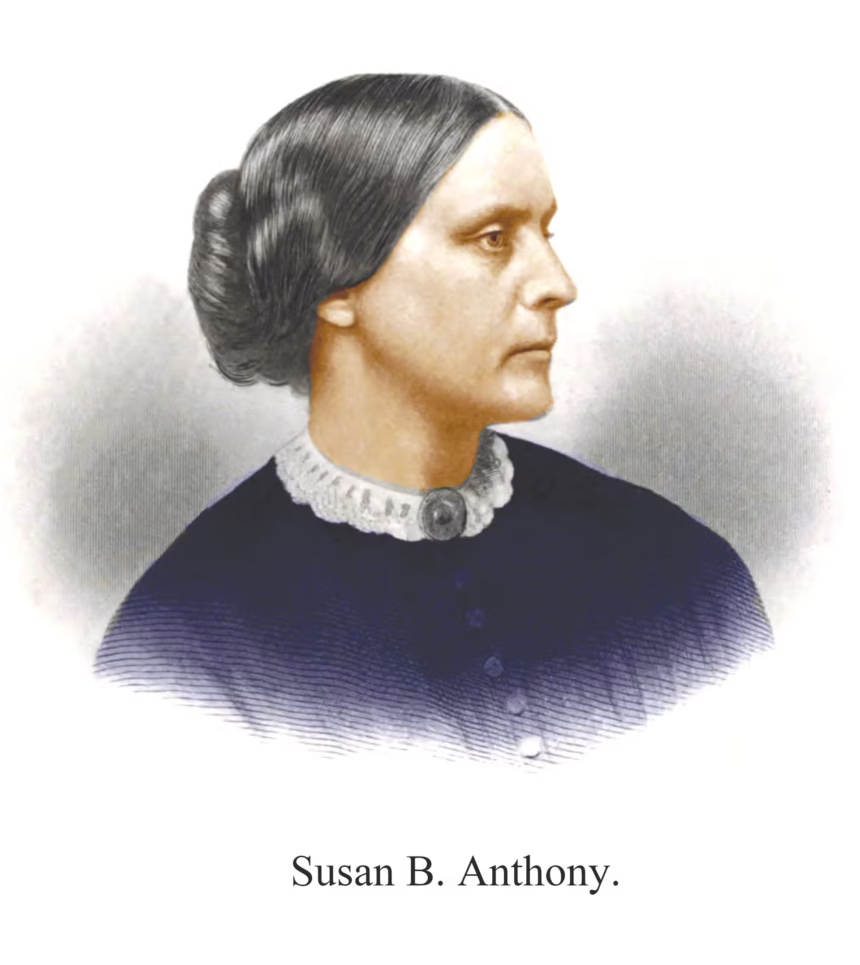
To understand the coin, we first need to appreciate the woman on the front. Susan B. Anthony was a powerhouse in American history. Born in 1820, she dedicated her life to social reform. She is most famous for her work in the women’s suffrage movement, fighting tirelessly for women’s right to vote.
She didn’t just fight for voting rights; she also campaigned against slavery and advocated for fair labor laws. Putting her face on a coin was a massive tribute. Before the Susan B. Anthony dollar, only mythical figures appeared on our small change. By placing her profile on the coin, the government wanted to honor her incredible contribution to American democracy. It was a step toward recognizing that history is made by women as much as men.
Why Was a New Dollar Coin Needed?
In the 1970s, the United States had a problem with its dollar bills. They were expensive to print because they wore out so quickly—usually in less than 18 months. The government looked at the large, heavy Eisenhower dollar and realized it wasn’t practical either. Nobody wanted to carry around heavy “silver dollars” (which were actually copper-nickel by then) in their pockets.
The Treasury Department conducted a study and found that a smaller, lighter dollar coin could save millions of dollars in production costs. A coin can last for 30 years or more, unlike paper money. The goal was to create a coin that would replace the dollar bill in vending machines and transit systems. This practical need gave birth to the Susan B. Anthony dollar.
The Design Process of the Coin
Creating a new coin isn’t as simple as drawing a picture and stamping metal. It involves artists, committees, and politicians. Originally, there was a push to put a generic “Liberty” head on the new small dollar. However, Congress and various women’s organizations flooded the Treasury with requests to honor a real historical female figure. Susan B. Anthony was the clear choice.
Frank Gasparro, the Chief Engraver of the U.S. Mint at the time, was tasked with the design. He originally sketched a different design for Liberty but had to pivot to Anthony. He used photos of her at different ages to create the profile. For the reverse (the back) of the coin, the law required the design to symbolize the Apollo 11 moon landing, similar to the Eisenhower dollar that came before it. This created an interesting mix of 19th-century history on the front and 20th-century space exploration on the back.
Specifications of the Susan B. Anthony Dollar
The physical makeup of the coin was very specific. It wasn’t silver, and it wasn’t gold. It was a “clad” coin, meaning it had a copper core sandwiched between outer layers of copper and nickel. This gave it a silver appearance, similar to dimes and quarters.
Here is a breakdown of the coin’s physical stats:
|
Specification |
Details |
|---|---|
|
Diameter |
26.5 mm |
|
Weight |
8.1 grams |
|
Thickness |
2.0 mm |
|
Composition |
75% Copper, 25% Nickel (outer layers); 100% Copper (core) |
|
Edge |
Reeded (grooved) |
The size was the biggest gamble. It was significantly smaller than the old Eisenhower dollar but only slightly larger than a quarter. This specific size decision would eventually cause major headaches for the American public.
The Launch in 1979
The U.S. Mint had high hopes when they released the Susan B. Anthony dollar in 1979. They printed fewer one-dollar bills, hoping to force people to use the new coins. There was a lot of marketing and fanfare. The government believed that once people got used to the convenience of a smaller dollar, they would love it.
Banks stocked up on millions of them. Vending machine companies spent money upgrading their slots to accept the new currency. It was supposed to be the coin of the future. However, things did not go according to plan. The public reaction was swift and, unfortunately, very negative. The coin was entering a hostile environment where people were very attached to their paper money.
Why the Public Rejected the Coin
The rejection of the Susan B. Anthony dollar is legendary in numismatic (coin collecting) history. The main issue was confusion. Because the coin was the same color and roughly the same size as a quarter, people kept mixing them up. Imagine reaching into your pocket to pay for a 50-cent item, thinking you are handing over two quarters, only to realize later you spent two dollars.
This confusion led to the coin being nicknamed the “Carter Quarter,” after President Jimmy Carter, who was in office at the time. Bartenders hated them because they looked like quarters in the dim light of a pub. Store clerks hated them because they had to double-check every transaction. Despite the unique eleven-sided (hendecagon) border on the inside of the rim, it just wasn’t distinct enough for the average person in a hurry.
Comparison to the Quarter
To understand the frustration, look at the numbers. A Washington Quarter is 24.26 mm wide. The Susan B. Anthony dollar is 26.5 mm wide. That is a difference of only about 2 millimeters.
- Quarter Weight: 5.67 grams
- SBA Dollar Weight: 8.1 grams
While the dollar was heavier, the visual similarity was too strong. Unless you were paying close attention, they looked identical in a handful of change. This design flaw is widely considered the primary reason the coin failed to circulate widely.
The Production Halt (1981)
Because nobody wanted to use them, the coins started piling up in bank vaults and government storage facilities. The Mint produced hundreds of millions of them in 1979 and 1980. By 1981, the demand was practically zero.
In 1981, the Mint decided to stop producing the coins for circulation entirely. They minted a small batch just for collectors, but they ceased making them for everyday use. The Susan B. Anthony dollar had effectively died after only three years of production. The government was left with a stockpile of 500 million coins that sat in storage for nearly two decades.
The Surprise Return in 1999
Here is a twist in the story. Remember those 500 million coins in storage? Slowly, over nearly 20 years, they actually did get used. They became popular in vending machines, especially in post offices for buying stamps and in mass transit systems for buying subway tokens. By the late 1990s, the stockpile was finally running low.
The government was preparing to release the new golden Sacagawea dollar in 2000, but they ran out of the old Anthony dollars in 1999. They needed a stopgap measure to keep vending machines working. So, surprisingly, the U.S. Mint fired up the presses one last time. In 1999, they produced a final run of the Susan B. Anthony dollar. This makes the 1999 edition unique because of the massive time gap between it and the previous issue.
Mint Marks Explained
If you find one of these coins, you might wonder where it was made. You can identify the origin by looking for a small letter on the coin, known as the mint mark. It is located on the obverse (front), just to the left of Susan B. Anthony’s bust.
- P: Philadelphia Mint
- D: Denver Mint
- S: San Francisco Mint
The “S” mint mark is usually found on proof coins (special high-quality coins made for collectors) or specific circulation years. Knowing the mint mark is crucial if you are trying to determine if your coin is rare or common.
Key Varieties and Rarities
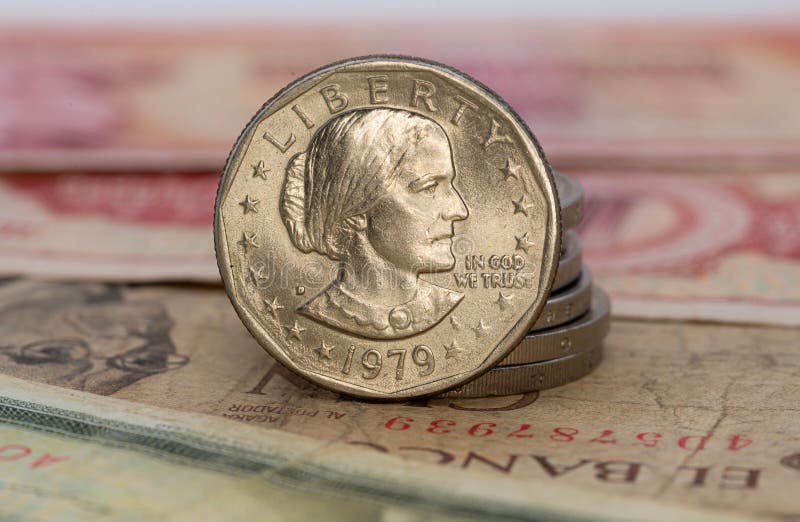
Most people assume that because the coin is “old” (from 1979), it must be worth a lot of money. Unfortunately, because so many were made and saved, most circulated coins are only worth one dollar. However, there are specific varieties of the Susan B. Anthony dollar that collectors pay good money for.
The most famous variety is the 1979-P Wide Rim (also called the Near Date). In late 1979, the Mint modified the design slightly to make the rim wider. This pushed the date closer to the edge. The “Wide Rim” variety is much scarcer than the “Narrow Rim” version. If the date on your 1979 coin is almost touching the rim, you might have a coin worth $10 to $20 or more, depending on its condition.
The 1981 Proof Sets
Another area of interest for collectors is the 1981 proof sets. Since 1981 coins were not issued for circulation, they were only available in sets from the Mint. Among these, the “Type 2” mint mark is highly sought after.
On the “Type 2” San Francisco proof coins, the “S” mint mark is clear and has bulbous serifs (the little feet on the ends of the letter). On the “Type 1,” the “S” is less distinct and looks flatter. A high-grade Type 2 proof can be worth significantly more than a standard proof coin. It requires a magnifying glass to spot, but the hunt is part of the fun.
Grading Your Coin
How much your coin is worth depends heavily on its “grade” or condition. Coin grading is a scale from 1 to 70.
- Circulated: These coins show wear on the high points of Anthony’s hair and cheek. They are dull and scratched. Value: Face value ($1).
- Uncirculated (MS-60 to MS-65): These have no wear and retain their original “mint luster” (shine). Value: $2 to $10.
- Top Grade (MS-66 to MS-70): These are flawless. Finding a Susan B. Anthony dollar in this condition is very difficult because they scratch easily in bags. Value: Can reach hundreds of dollars.
Collecting the Series
Collecting this series is actually quite approachable for beginners. Since the run was so short (1979-1981, 1999), you don’t need to hunt down 50 different years. You can assemble a complete set relatively cheaply.
A “date and mint mark” set would include coins from Philadelphia, Denver, and San Francisco for all four years. Many collectors also try to add the Proof versions to their sets. Because the base metal is inexpensive, you can often buy entire rolls of these dollars on the secondary market without breaking the bank. It is a great way to introduce children or history buffs to the hobby of numismatics.
Storing Your Coins Correctly
If you decide to collect the Susan B. Anthony dollar, you need to store it properly. Copper-nickel coins can tarnish or develop ugly spots if left in humid environments.
- Do: Use 2×2 cardboard holders, plastic flips, or coin albums designed for small dollars.
- Do: Keep them in a cool, dry place.
- Don’t: Store them loose in a jar where they scratch each other.
- Don’t: Clean them! Cleaning a coin destroys its collector value immediately.
The Legacy of the SBA Dollar
Even though it was considered a failure at launch, the Susan B. Anthony dollar taught the U.S. Mint valuable lessons. They learned that size matters and that distinct colors are necessary for different denominations.
These lessons were applied directly to the Sacagawea dollar released in 2000. That coin was gold-colored and had a smooth edge, making it instantly distinguishable from a quarter. Without the stumble of the Anthony dollar, we might not have had the modern innovations in coinage we see today. Furthermore, it broke the “glass ceiling” for women on currency, leading to more diverse representation on modern money.
Comparison to Modern Dollar Coins
Today, we have the Presidential Dollars and the American Innovation Dollars. They all follow the physical specifications set by the Susan B. Anthony dollar. They are the same weight, diameter, and electromagnetic signature.
This means that a vending machine built in 1980 to accept an Anthony dollar can also accept a shiny new Innovation dollar today. The legacy of the SBA dollar lives on inside the mechanics of millions of machines across the country. It standardized the “small dollar” format that the U.S. uses to this day.
Is It Worth Investing?
If you are looking at coins as an investment, the Susan B. Anthony dollar is a mixed bag. As mentioned, most are not rare. However, high-grade examples (MS-67 and above) have been steadily rising in value.
Because the coins were tossed into bags at the Mint, they banged against each other, leaving “bag marks.” Finding a pristine example is genuinely rare. If you have a sharp eye and can identify high-quality coins or rare varieties like the 1979 Wide Rim, there is profit to be made. But for the average person, it is better to view them as a fun historical keepsake rather than a retirement fund.
FAQ: Common Questions About the Susan B. Anthony Dollar
Here are answers to the most frequent questions people have about this coin.
Q: Is my 1979 Susan B. Anthony dollar worth a lot of money?
A: Most likely, it is worth $1. However, if it is uncirculated or the “Wide Rim” variety, it could be worth more.
Q: Can I still spend these coins at the store?
A: Yes! They are still legal tender in the United States. You can use them anywhere, though a young cashier might look at you funny because they haven’t seen one before.
Q: Why does the coin have 11 sides on the rim?
A: The 11-sided polygon (hendecagon) inside the rim was designed to help the blind identify the coin by touch, distinguishing it from the round quarter.
Q: Is the coin made of silver?
A: No. It is made of copper and nickel, just like a dime or a quarter.
Q: Why did they start making them again in 1999?
A: The supply of 1979-1981 coins finally ran out, and the Mint needed more dollar coins for vending machines before the Sacagawea dollar was ready in 2000.
Q: Are there any gold Susan B. Anthony dollars?
A: The Mint never produced a gold version for circulation. If you see a gold-colored one, it has likely been plated by a third-party company and is considered damaged or a novelty item by serious collectors.
Conclusion
The Susan B. Anthony dollar occupies a strange but important place in American history. It was a pioneering effort to honor a great woman and modernize our currency, but it stumbled on the practical design element of size. While it may have annoyed people in 1979 who confused it for a quarter, today it stands as an interesting collectible and a stepping stone in the evolution of U.S. money.
Whether you keep one for good luck, spend it at a vending machine, or scrutinize it under a microscope for a rare mint mark, this coin tells a story of ambition, failure, and redemption. If you are interested in more financial history or tech trends, check out the resources at Silicon Valley Time.
The next time you hear the clink of change, remember the small dollar that tried to make a big difference. For even more detailed historical records, you can visit the Wikipedia page dedicated to the Susan B. Anthony dollar.