








Have you ever wondered how your smartphone manages to download a high-definition movie in just a few minutes, or how a live video call stays perfectly smooth without any annoying lag? The secret lies in the complex, behind-the-scenes communication between your phone and the cellular tower. A massive part of making this seamless connection happen involves something called the transport block size. While it might sound like complicated technical jargon at first, understanding this concept is actually quite straightforward once we break it down.
When you send or receive information over a cellular network, that data does not travel all at once in one giant wave. Instead, it gets neatly packed into smaller, manageable chunks before it makes its journey through the airwaves. By learning about how these data chunks are sized and managed, you gain a deeper appreciation for the incredible technology that keeps us connected every single day. In this comprehensive guide, we will explore everything from the basic definitions to how networks calculate these sizes, all while keeping things friendly and easy to understand.
Key Takeaways
Before we dive deep into the technical details and explanations, let us look at some of the most important points you will learn from this guide:
- The transport block size is essentially the amount of data that a network sends to your device in one specific time slot.
- Larger block sizes usually mean faster data speeds, but they require a strong and clear signal to work effectively.
- Network engineers use complex mathematical formulas to determine the perfect size based on current signal conditions.
- The evolution from 4G LTE to modern 5G networks has drastically changed how we handle these data blocks.
- Properly optimizing these sizes is crucial for avoiding dropped calls, buffering videos, and slow internet browsing.
What is a Transport Block Size?
To truly grasp the concept of a transport block size, it helps to imagine a bustling delivery company trying to ship a massive mountain of goods across the country. The delivery company cannot just toss all the goods into one giant pile and hope it reaches the destination. Instead, they carefully pack the items into standard-sized shipping boxes. In the world of mobile communications, a transport block is exactly like one of those shipping boxes. The transport block size dictates exactly how much digital “stuff” or data can fit inside that box before it is sent from the cell tower to your phone, or from your phone back to the cell tower.
Every millisecond, your mobile network is making rapid-fire decisions about how big these digital boxes should be. If the signal is incredibly strong and there is no interference from buildings or weather, the network will use a massive box to send a lot of data all at once. If the signal is weak or you are moving quickly in a car, the network will choose a smaller, safer box to ensure the data does not get lost or corrupted along the way. Understanding this dynamic sizing helps us see why our internet speeds can change dramatically depending on where we are and what we are doing.
Why Does Transport Block Size Matter in Networks?
You might be asking yourself why network providers spend so much time and money worrying about the exact size of a data block. The answer boils down to efficiency and user experience. If a network consistently chooses the wrong transport block size, the entire system can slow down to a crawl. Imagine if a delivery driver tried to drive a massive semi-truck down a tiny, winding dirt road. The truck would get stuck, deliveries would be late, and customers would be unhappy. Similarly, if a network tries to send a massive block of data over a weak, noisy radio connection, the data will likely become corrupted.
When data becomes corrupted, the network has to pause and send the entire block all over again. This constant resending of data causes the frustrating buffering wheels you see on YouTube or the sudden drops in audio quality during a phone call. On the flip side, if the network uses tiny blocks on a perfectly clear highway, it is wasting valuable time and resources. By constantly adjusting the size to perfectly match the current radio conditions, networks ensure that you get the fastest, most reliable connection possible, whether you are streaming music, playing games, or simply browsing your favorite tech news on platforms like https://siliconvalleytime.co.uk/.
The Role of Data Transmission
Data transmission is the beating heart of our modern digital world, and the transport block size is the crucial vehicle that makes it happen. Every time you tap a link, send a text, or upload a photo, that information is broken down into a series of ones and zeros. These bits of data must be organized efficiently to travel across the invisible radio waves that connect your device to the broader internet. The block size determines the payload capacity for every single transmission cycle, which usually happens every single millisecond in modern LTE and 5G networks.
Think of this process as a highly orchestrated dance between your phone and the network tower. The tower must evaluate the environment, decide on the payload, package the data, and transmit it, all in the blink of an eye. If the transmission is successful, your phone sends back a quick acknowledgment message. If the block size is optimized correctly, this back-and-forth communication happens flawlessly, resulting in the incredibly fast download and upload speeds we have come to expect from our modern smartphones.
How Speed and Efficiency Connect
Speed and efficiency are the two main pillars of any successful mobile network, and they are directly controlled by how the network manages its data blocks. Speed is simply how fast you can get your data, while efficiency is about using the network’s limited resources in the smartest way possible. If a network wants to give you the highest possible speed, it needs to use the largest transport block size it can safely manage. This means packing as many bits of data into the transmission as possible without causing errors.
However, efficiency requires the network to be incredibly careful. Radio waves are a shared resource. You are sharing the cell tower with hundreds or thousands of other people in your neighborhood. If the network becomes inefficient and has to constantly resend dropped packets because the block sizes were too large for the current conditions, it slows down the connection for everyone. Therefore, network engineers spend countless hours developing smart algorithms that strike the perfect balance between raw speed and reliable efficiency.
How to Calculate Transport Block Size
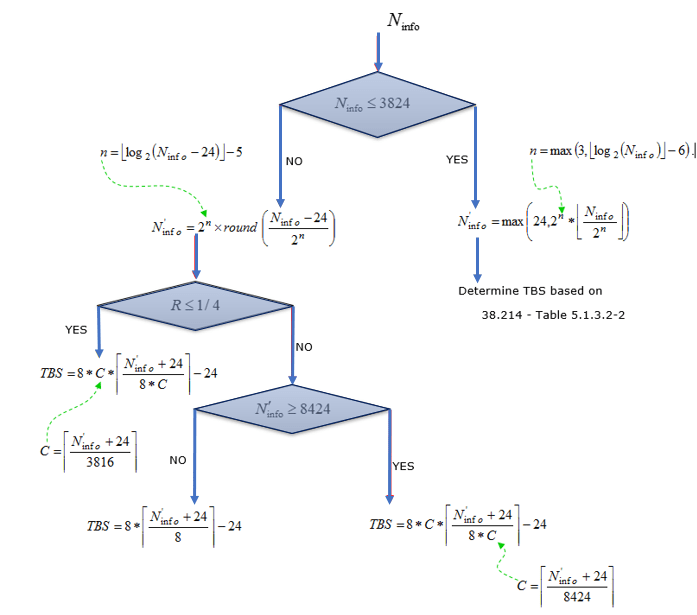
Calculating the correct transport block size is not a guessing game; it is a highly precise mathematical process performed by the “brain” of the cell tower (known as the baseband unit). The calculation must happen instantly, thousands of times per second, for every single user connected to the tower. To do this, the network relies on a set of standardized tables and formulas created by telecommunications organizations. These tables cross-reference different variables to output the exact number of bits that should be included in the next transmission.
The process begins with your smartphone reporting back to the network about the quality of the signal it is receiving. Your phone sends a special indicator that basically says, “Hey, the signal is great right now!” or “I’m struggling to hear you clearly.” The cell tower takes this feedback, looks at how much spectrum (radio frequency) is available to use, and then dives into its reference tables to find the maximum safe block size for those specific conditions. It is a brilliant, automated system that keeps our data flowing smoothly.
Factors Influencing the Calculation
Several highly dynamic factors influence the final calculation of the block size. Because a mobile user is often moving—walking down the street, riding in a train, or driving on a highway—these factors can change drastically from one second to the next. The network must constantly monitor the environment to adjust the calculation on the fly. Let us explore the two most critical factors that determine the outcome of this mathematical puzzle.
Modulation and Coding Scheme (MCS)
The Modulation and Coding Scheme, commonly referred to as MCS, is arguably the most critical piece of the puzzle. Modulation is the process of altering a radio wave to carry data. Complex modulation schemes can pack a massive amount of data into a single wave, but they require a pristine, interference-free connection to work. Coding refers to adding extra, redundant bits of data to help the receiving device fix any errors that might occur during transmission.
The network selects an MCS value based on your signal quality. A high MCS value means the network uses complex modulation and very little error correction, resulting in a massive transport block size. A low MCS value means the network uses simple modulation and lots of error correction, resulting in a much smaller block size. The network is constantly shifting between different MCS levels to match your exact radio conditions at any given millisecond.
Resource Block Allocation
While the MCS determines how densely the data is packed, the Resource Block Allocation determines how much “highway space” you are given to drive on. In mobile networks, the available radio frequencies are sliced up into tiny chunks called resource blocks. When you request data, the network assigns a certain number of these resource blocks to your specific transmission.
If you are downloading a huge file and the network is not very busy, the tower might give you a large number of resource blocks. More resource blocks mean more physical space to send data, which directly increases the final transport block size. The calculation basically multiplies the efficiency of your MCS by the number of resource blocks you are assigned to figure out exactly how many bits can be sent in that specific millisecond.
The Evolution from 4G LTE to 5G
The jump from 4G LTE to 5G has been one of the most exciting technological leaps in recent history, and it completely revolutionized how networks handle data transmission. While the basic principles of packing data into blocks remained the same, 5G brought a massive increase in scale, flexibility, and intelligence. 4G LTE was designed primarily for smartphones and basic mobile internet, but 5G was built to handle everything from self-driving cars to virtual reality gaming.
Because 5G needs to support speeds that are up to 100 times faster than 4G, the maximum possible transport block size had to increase dramatically. 5G networks also have access to much wider bands of radio spectrum, allowing them to allocate far more resource blocks to a single user. This evolution means that the digital “shipping boxes” we use today are vastly larger and more efficient than the ones we used just a few years ago.
Transport Block Size in 4G Networks
In 4G LTE networks, the system was highly standardized and somewhat rigid compared to modern standards. The maximum transport block size was capped by the technology of the time. While 4G was a massive improvement over older 3G networks—bringing us the era of mobile video streaming and ride-sharing apps—it still had clear limitations. The calculation tables used in 4G were designed for a maximum channel bandwidth of 20 MHz.
When a 4G device had a perfect signal and maximum resource blocks, the largest block size it could handle was impressive for its time, but it eventually became a bottleneck as users demanded higher resolution videos and faster downloads. Network operators had to use clever tricks like “Carrier Aggregation” (combining multiple 20 MHz channels together) to simulate larger block sizes and push 4G to its absolute speed limits.
Transport Block Size in 5G Networks
Enter 5G, where the rules of the game changed completely. 5G networks were designed from the ground up to be incredibly flexible and scalable. Instead of being limited to 20 MHz channels, 5G can use channels up to 100 MHz or even 400 MHz wide in the high-frequency millimeter-wave bands. This massive increase in “highway size” allowed engineers to drastically expand the maximum transport block size.
Furthermore, 5G introduced smarter, more dynamic ways of calculating these sizes. The network can now adapt much faster to changing conditions and uses advanced error-correction codes that are far more efficient. This means 5G can push massive blocks of data with incredible reliability, enabling the multi-gigabit speeds that are required for the next generation of digital experiences.
A Comparison Table of 4G vs 5G Data Handling
To better understand how these two technologies differ in their approach to managing data blocks, let us look at a simple comparison table. This table highlights the general capabilities and structural differences between the two generations.
|
Feature |
4G LTE Networks |
5G NR Networks |
|---|---|---|
|
Maximum Channel Bandwidth |
20 MHz (per carrier) |
Up to 100 MHz (Sub-6) or 400 MHz (mmWave) |
|
Max Transport Block Size |
Relatively constrained |
Massively expanded for gigabit speeds |
|
Error Correction Method |
Turbo Coding |
LDPC (Low-Density Parity-Check) |
|
Flexibility |
Rigid time slots |
Highly scalable and dynamic |
|
Target Use Cases |
Mobile broadband, basic video |
Ultra-HD video, IoT, autonomous vehicles |
Common Challenges with Transport Block Size Allocation
Even with all the brilliant engineering and advanced mathematics behind mobile networks, perfectly allocating the right transport block size is still incredibly difficult. The real world is messy and unpredictable, filled with obstacles that constantly interfere with radio waves. Network operators must design their systems to handle worst-case scenarios and sudden changes in the environment. Let us explore some of the most common headaches that network engineers face when trying to keep your data flowing smoothly.
Dealing with Interference
Interference is the absolute worst enemy of a large transport block size. When you are standing near the edge of your cell tower’s coverage area, the signals from neighboring cell towers can actually start to bleed into your connection, creating a chaotic mix of overlapping radio waves. Furthermore, physical objects like tall concrete buildings, thick trees, and even heavy rain can scatter and weaken the signal before it reaches your phone.
When the network detects this interference, it is forced to drastically reduce the block size. It switches to a lower modulation scheme and adds a heavy layer of protective error-correction data. While this ensures that your data eventually arrives safely without being corrupted by the interference, it significantly slows down your internet speed. Managing this interference in dense urban areas is a constant battle for network providers.
Managing High Traffic Loads
Another major challenge occurs when too many people try to use the network at the exact same time. Imagine being at a massive concert or a packed sports stadium. Thousands of smartphones are simultaneously trying to upload videos, send photos, and check social media. Because the total number of resource blocks available on a single cell tower is strictly limited, the network has to start rationing them out.
When you have to share the available resource blocks with thousands of other users, your individual allocation drops significantly. Even if you have a perfect, full-bar signal, the network simply cannot give you enough resource blocks to create a large transport block size. This is why your internet feels painfully slow at crowded events; the network is busy serving tiny, bite-sized blocks to everyone instead of large blocks to a few.
Tools and Techniques for Optimization
To combat these challenges and ensure that networks operate at peak efficiency, telecommunications companies use an impressive array of sophisticated tools and optimization techniques. These tools are designed to constantly monitor the health of the network, analyze millions of data points, and automatically adjust the algorithms that calculate the transport block size. Optimization is a never-ending process of tweaking, testing, and improving.
Software and Hardware Solutions
Modern cell towers are equipped with incredibly powerful baseband processors—essentially high-end supercomputers—that handle the intense calculations required for real-time network management. These hardware units work hand-in-hand with advanced software platforms powered by Artificial Intelligence (AI) and Machine Learning (ML). These AI systems can look at historical data and predict when and where traffic spikes or interference might occur.
For example, the software might notice that a specific cell tower experiences heavy interference every day at 5:00 PM due to rush hour traffic. The AI can proactively adjust the network’s parameters, ensuring that the system makes smarter decisions about transport block size allocation before users even start experiencing slow speeds. Additionally, engineers conduct regular “drive tests,” where they drive specialized vehicles equipped with scanners through neighborhoods to physically map signal quality and fine-tune the network’s performance.
Real-World Applications of Optimized Transport Block Size
We have talked a lot about the math, the technology, and the challenges, but what does all of this actually mean for you, the user? The optimization of these data blocks impacts nearly everything you do on your digital devices. Let us look at a few real-world applications where having the perfectly sized data block makes all the difference in your daily life.
Mobile Gaming and Streaming
If you are an avid mobile gamer or you love binging your favorite shows on the go, you rely heavily on optimized network transmission. In fast-paced multiplayer games, a delay of even a few milliseconds can ruin the experience. The network must use very specific block sizes that prioritize ultra-low latency (quick delivery) over massive capacity. By dynamically sizing the blocks to push data instantly, the network ensures your game commands register in real-time.
For streaming high-definition or 4K video, the priority flips. The network needs to deliver massive amounts of data continuously to keep the video buffer full. Here, the network will try to assign as many resource blocks as possible and use a high MCS to create the largest possible transport block size. If the network successfully maintains this large size, your video plays in crystal-clear quality without ever stopping to load.
Internet of Things (IoT) Connectivity
The Internet of Things (IoT) presents a completely different challenge. We are now connecting millions of smart devices to cellular networks, including smart meters, environmental sensors, and fleet tracking devices. These devices usually do not need to send high-definition video; they just need to send tiny snippets of data, like a temperature reading or a GPS location, once every few hours.
For these IoT devices, the network optimizes the transport block size to be as small and energy-efficient as possible. By using tiny data blocks and simple modulation, the network allows these devices to conserve their battery life. Some specialized IoT sensors can operate for up to ten years on a single small battery, entirely because the cellular network knows how to format their data blocks for maximum power savings.
Frequently Asked Questions (FAQ)
What exactly is a transport block size?
It is the specific amount of data (measured in bits) that a cellular network transmits to a device during a single, defined time interval. Think of it as the size of the digital shipping box used to deliver your internet data.
Does a bigger block size mean faster internet?
Generally, yes! A larger block size means more data is being transferred at once, which leads to faster download and upload speeds. However, larger blocks require a very strong, clear signal to work properly.
Why does my data speed slow down in crowded areas?
In crowded places, the cell tower has to divide its available resources among many users. This means the network can only assign you a small number of resource blocks, which directly reduces your transport block size and your overall internet speed.
How does 5G improve upon this technology?
5G uses wider radio channels, more advanced error correction, and smarter algorithms. This allows 5G networks to calculate and transmit significantly larger data blocks with much greater efficiency than older 4G systems.
Conclusion
Understanding the intricate mechanics of mobile networks can sometimes feel like trying to read a foreign language, but at its core, it is all about efficient packaging and delivery. The transport block size is the unsung hero of our modern digital communication, quietly working behind the scenes to ensure our data arrives quickly, safely, and accurately. Every single time you send a text, stream a video, or join a virtual meeting, your network is making split-second mathematical decisions about how to pack your data into these digital boxes.
By constantly evaluating signal strength, managing interference, and balancing the needs of thousands of users simultaneously, network engineers have created a system that feels almost like magic. As we continue to push the boundaries of technology with advanced 5G networks and beyond, the algorithms controlling these data blocks will only become smarter and more capable. We hope this guide has demystified the topic for you, providing a clear and friendly look into the fascinating technology that keeps the world connected. If you want to dive even deeper into the general history and technical standards of telecommunications, you can always explore resources found on https://www.wikipedia.org/ to expand your knowledge further.



