





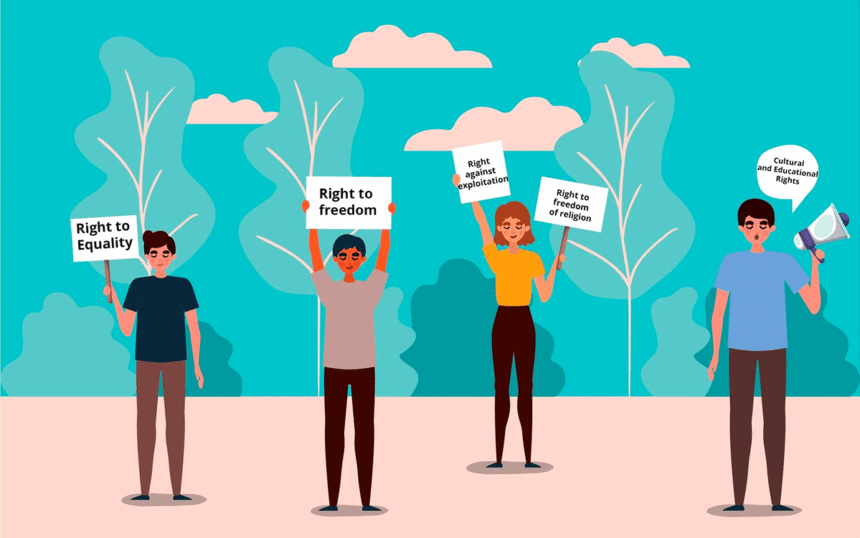

Have you ever wondered what rights you have just by being a person? These aren’t privileges that can be easily taken away; they are the core protections and freedoms that everyone is entitled to. These are known as fundamental rights, and they form the bedrock of a just and fair society. They ensure that people can live with dignity, equality, and freedom, protected from unfair treatment by the government or other powerful entities. Understanding these rights is not just an academic exercise; it’s essential for participating in society and protecting yourself and others.
This guide will walk you through everything you need to know about fundamental rights. We’ll explore where they come from, what they include, why they are so important, and how they are protected. From the freedom to speak your mind to the right to a fair trial, these principles are woven into the fabric of daily life.
Key Takeaways
- What They Are: Fundamental rights are a set of basic human freedoms that every individual possesses, which are generally protected by a country’s constitution.
- Why They Matter: They protect individuals from government overreach, promote equality, and ensure personal liberty and dignity.
- Universal vs. Constitutional: While many fundamental rights are universal (like those in the Universal Declaration of Human Rights), their specific legal protection often comes from a nation’s constitution, like the U.S. Bill of Rights.
- Key Examples: Common examples include the right to life, freedom of speech, freedom of religion, and the right to equality.
- Limitations Exist: These rights are not absolute and can be limited under specific circumstances, such as to protect national security or public health.
- Active Protection: Courts play a crucial role in interpreting and enforcing these rights, ensuring they are upheld in practice.
What Exactly Are Fundamental Rights?
At their core, fundamental rights are a special class of rights considered essential for human development and a dignified life. Think of them as the most important promises a country makes to its citizens. They are typically written into a nation’s constitution, which is the highest law of the land. This placement makes them difficult to change or take away, providing a strong shield against potential government abuse.
These rights are considered “fundamental” because they are the foundation upon which other laws and freedoms are built. Without them, a society risks falling into tyranny and oppression. They guarantee that no matter who you are—rich or poor, from any background—you have certain inalienable protections. For example, the right to liberty ensures you cannot be imprisoned without a valid reason, and the right to equality prevents the government from discriminating against you based on characteristics like race or gender.
The Origin and Evolution of Fundamental Rights
The idea of fundamental rights isn’t new. It has evolved over centuries, shaped by philosophers, revolutions, and landmark legal documents. Early concepts can be traced back to documents like the Magna Carta (1215) in England, which limited the power of the king and established that even the monarch was not above the law. Later, thinkers of the Enlightenment, such as John Locke, argued that people have natural rights to life, liberty, and property.
These ideas heavily influenced the American and French Revolutions. The U.S. Declaration of Independence famously states that all men are “endowed by their Creator with certain unalienable Rights,” including “Life, Liberty and the pursuit of Happiness.” This philosophy was codified into law with the U.S. Constitution and its first ten amendments, known as the Bill of Rights. This document enshrined specific fundamental rights like freedom of speech, religion, and assembly, setting a powerful precedent for modern democracies worldwide.
Why Are Fundamental Rights So Important?
The importance of fundamental rights cannot be overstated. They serve as the primary defense for individuals against the immense power of the state. A government has armies, police forces, and the authority to create laws, which gives it significant control. Fundamental rights create a protected zone where individuals can live, think, and act without undue government interference. They ensure that the relationship between the citizen and the state is balanced, preventing the state from becoming all-powerful.
Furthermore, these rights are crucial for democracy to flourish. A functioning democracy requires citizens to be informed, to express their opinions, and to participate in political processes. Rights like freedom of speech and the press allow for open debate and criticism of the government, holding leaders accountable. The right to assembly allows people to gather and protest peacefully, signaling their collective will. Without these foundational freedoms, true democratic participation would be impossible.
Fostering Equality and Social Justice
Another critical function of fundamental rights is to promote equality and social justice. They establish the principle that every person is equal before the law and deserves equal protection. This is a powerful tool for combating discrimination and protecting minority or vulnerable groups. For example, rights guaranteeing equality regardless of race, religion, sex, or national origin have been used to dismantle discriminatory laws and practices.
By setting a baseline standard of treatment for everyone, fundamental rights help create a more inclusive and fair society. They challenge historical injustices and provide a legal framework for marginalized communities to demand fair treatment. This ongoing struggle for equality, backed by the power of constitutional rights, is essential for building a society where everyone has the opportunity to succeed and live a life of dignity. For more insights on how technology and legal frameworks intersect, you can find interesting articles at https://siliconvalleytime.co.uk/.
Key Categories of Fundamental Rights
Fundamental rights can be grouped into several categories, each protecting a different aspect of human freedom. While the exact list varies by country, most modern constitutions recognize similar core principles.
1. The Right to Equality
This is often considered the most essential of all fundamental rights. It means that the government cannot discriminate against its citizens on arbitrary grounds. Everyone is equal in the eyes of the law and is entitled to equal protection.
What Does Equality Mean in Practice?
- No Discrimination: The state cannot treat people differently based on characteristics like religion, race, caste, sex, or place of birth. This applies to public employment, access to public places, and education.
- Equal Protection of Laws: This means that laws must be applied equally to all people in similar situations. It prevents the state from singling out individuals or groups for unfair treatment.
- Abolition of Titles: In many countries, like India, the constitution abolishes hereditary titles of nobility to promote a sense of equality among all citizens.
2. The Right to Freedom
This category includes a bundle of rights that are central to personal liberty. These are the rights that allow individuals to live their lives with autonomy and express their identities.
Core Freedoms Included:
- Freedom of Speech and Expression: The right to voice your opinions, whether through words, writing, art, or other media, without fear of government censorship or punishment. This is the cornerstone of a democratic society.
- Freedom of Assembly: The right to gather peacefully and without weapons. This allows for protests, rallies, and public meetings.
- Freedom of Association: The right to form or join groups, clubs, political parties, or unions.
- Freedom of Movement: The right to travel and reside in any part of the country.
- Freedom of Profession: The right to practice any profession or to carry on any occupation, trade, or business.
3. The Right Against Exploitation
This right aims to protect individuals from being forced into labor or being taken advantage of. It is a crucial protection for the most vulnerable members of society.
Key Protections:
- Prohibition of Human Trafficking: This forbids the buying and selling of human beings as goods.
- Prohibition of Forced Labor: No one can be compelled to work without payment or against their will.
- Prohibition of Child Labor: This specifically bans the employment of children below a certain age (usually 14) in hazardous jobs, ensuring they have the opportunity for education and a healthy childhood.
4. The Right to Freedom of Religion
This right guarantees that every individual is free to choose and practice their own religion. It also includes the freedom not to follow any religion at all. The state is expected to remain neutral in religious matters.
Elements of Religious Freedom:
- Freedom of Conscience: The inner freedom to believe in whatever you choose.
- Freedom to Profess: The right to declare your religious beliefs openly.
- Freedom to Practice: The right to perform religious worship, rituals, and ceremonies.
- Freedom to Propagate: The right to share your religious beliefs with others, as long as it does not involve coercion.
5. Cultural and Educational Rights
These rights are designed to protect the unique identity of minority groups. They ensure that linguistic and cultural minorities can preserve their language and culture.
How It Works:
- Protection of Language and Culture: Any community with a distinct language or culture has the right to conserve it.
- Right to Establish Educational Institutions: Minorities have the right to establish and administer their own educational institutions to preserve their heritage and pass it on to the next generation.
6. The Right to Constitutional Remedies
This is a unique and powerful right. It is the right that makes all other fundamental rights effective. It gives citizens the right to go to court if they feel any of their other rights have been violated. The judiciary, particularly the highest courts, is empowered to issue orders or “writs” to enforce these rights and provide justice. This right is often called the “heart and soul” of a constitution because, without it, the other rights would be mere promises on paper.
The Bill of Rights: Fundamental Rights in the USA
In the United States, the primary source for fundamental rights is the Bill of Rights, which consists of the first ten amendments to the Constitution. Several later amendments, like the 14th Amendment, have also been crucial in expanding and applying these rights.
|
Amendment |
Core Right Protected |
Description |
|---|---|---|
|
First |
Freedom of Speech, Religion, Press, Assembly |
Protects the core rights of expression and belief. Prevents the government from establishing a state religion. |
|
Second |
Right to Bear Arms |
Protects the right of individuals to keep and bear arms, originally in the context of a “well regulated Militia.” |
|
Fourth |
Protection from Unreasonable Searches |
Requires the government to have a warrant and probable cause before searching your home or seizing your property. |
|
Fifth |
Right to Due Process, Self-Incrimination |
Protects against being tried for the same crime twice (double jeopardy) and from being forced to testify against yourself. |
|
Sixth |
Right to a Fair and Speedy Trial |
Guarantees the right to a public trial by an impartial jury, the right to an attorney, and the right to confront witnesses. |
|
Eighth |
Protection from Cruel and Unusual Punishment |
Prohibits excessive bail and fines, as well as punishments that are considered inhumane or torturous. |
|
Fourteenth |
Equal Protection and Due Process |
Originally passed after the Civil War, it guarantees equal protection of the laws to all citizens and has been used to apply the Bill of Rights to state governments. |
These amendments form the legal basis for nearly every court case involving fundamental rights in the United States. The Supreme Court continuously interprets their meaning in the context of modern society, addressing issues ranging from online speech to privacy in the digital age.
Are Fundamental Rights Absolute?
One of the most common misconceptions about fundamental rights is that they are absolute. In reality, no right is without limits. The law recognizes that individual rights must sometimes be balanced against the needs of the community and the rights of others. For example, your freedom of speech does not give you the right to slander someone (falsely damage their reputation) or to incite violence. These are known as reasonable restrictions.
Governments can impose limitations on fundamental rights, but these restrictions must meet strict criteria. Generally, they must be:
- Prescribed by law: The limitation must be clearly stated in a law.
- For a legitimate aim: The purpose must be valid, such as protecting national security, public order, public health, or the rights and freedoms of others.
- Necessary and proportionate: The restriction must be the least intrusive means of achieving the aim. A government cannot use a sledgehammer to crack a nut.
The courts play a vital role in determining whether a government’s restriction on a fundamental right is justified. This balancing act is one of the most challenging and important functions of the judiciary.
The Role of the Judiciary in Protecting Fundamental Rights
The judiciary acts as the ultimate guardian of fundamental rights. When a legislature passes a law or a government agency takes an action that infringes on a citizen’s rights, it is up to the courts to intervene. This power is known as judicial review. Through judicial review, courts can strike down laws that they find to be unconstitutional.
For example, if a state passed a law banning all forms of public protest, citizens could challenge that law in court. The court would likely find that the law violates the First Amendment’s right to freedom of assembly and declare it invalid.
The Supreme Court, as the highest court in the U.S., has the final say on the interpretation of the Constitution. Its landmark decisions have shaped the meaning and scope of fundamental rights throughout history. Cases like Brown v. Board of Education, which declared racial segregation in schools unconstitutional, or Miranda v. Arizona, which established the right to remain silent, show the profound impact the judiciary has on protecting these essential freedoms.
Conclusion
Fundamental rights are more than just legal terms; they are the principles that allow us to live with freedom, dignity, and security. They form a protective barrier around each individual, ensuring that the state serves the people, not the other way around. From the right to speak freely to the right to be treated equally, these rights empower citizens and hold governments accountable.
Understanding your fundamental rights is the first step toward defending them. They are not granted by the government but are inherent to our humanity, recognized and protected by the highest laws of the land. As societies evolve, the debates over the meaning and application of these rights will continue, but their central importance as the foundation of a free and just world remains unchanged.
Frequently Asked Questions (FAQ)
1. What is the difference between human rights and fundamental rights?
Human rights are universal moral principles that apply to all human beings, regardless of their nationality or legal system. They are outlined in international declarations like the Universal Declaration of Human Rights. Fundamental rights are the specific human rights that are legally protected by a country’s constitution. In essence, fundamental rights are the legally enforceable version of human rights within a specific nation.
2. Can fundamental rights be taken away?
Generally, no. They are designed to be permanent protections. However, in times of national emergency, such as a war or major public health crisis, some rights may be temporarily suspended. Even then, such suspensions are subject to strict legal and constitutional checks to prevent abuse. Rights like the right to life and freedom from torture can never be suspended.
3. Who can I go to if my fundamental rights are violated?
The right to constitutional remedies allows you to approach the courts. In the U.S., you can file a lawsuit in federal court if you believe your constitutional rights have been violated by a government actor. Organizations like the American Civil Liberties Union (ACLU) also provide legal assistance to individuals whose rights have been infringed.
4. Are corporations bound by fundamental rights?
This is a complex legal area. Traditionally, constitutions protect individuals from the government, not from private entities like corporations. However, courts have found that in certain situations, private actors performing public functions may be bound by constitutional standards. Additionally, many laws (like anti-discrimination statutes) extend similar protections to the private sector.
5. How do fundamental rights apply to the internet and social media?
The application of centuries-old rights to new technology is a major challenge. Courts are constantly grappling with questions like: What constitutes free speech on a platform owned by a private company? What is a reasonable expectation of privacy in the digital age? Landmark cases continue to shape how fundamental rights, especially freedom of speech and the right to privacy, are interpreted in the online world.



