






Have you ever looked at a painting and felt like it was speaking to you? Art has a powerful way of connecting with us across centuries and cultures. From mysterious smiles to swirling starry nights, certain masterpieces have captured the world’s imagination.
These famous paintings are more than just images on a canvas; they are stories, historical artifacts, and windows into the minds of some of the greatest artists who ever lived. This journey will take us through the halls of history to explore the brushstrokes, colors, and secrets behind the world’s most celebrated works of art. We will uncover why these specific pieces have stood the test of time and continue to inspire awe and wonder in millions of people.
Key Takeaways
- Timeless Appeal: Famous paintings often explore universal themes like love, loss, and beauty, allowing them to connect with audiences across different generations and cultures.
- Artistic Innovation: Many celebrated works broke from tradition, introducing new techniques, styles, or perspectives that changed the course of art history.
- Cultural Significance: These paintings are not just art; they are cultural icons that reflect the societies, beliefs, and historical events of their time.
- The Stories Behind the Canvas: The tales of how these paintings were created, stolen, or interpreted add layers of intrigue and deepen our appreciation for them.
- Enduring Legacy: The influence of these famous paintings can be seen in modern art, film, fashion, and popular culture, proving their lasting impact on the world.
What Makes a Painting Famous?
It’s a fascinating question with no single answer. A painting’s journey to global recognition is a mix of artistic genius, historical timing, and a good story. Sometimes, a piece becomes one of the famous paintings because it introduces a revolutionary technique. Think of the Impressionists and their bold, new way of capturing light and movement. Other times, the subject matter itself is so compelling or controversial that it creates a buzz that lasts for centuries. The mystery behind a subject’s smile or the raw emotion depicted in a scene can spark endless debate and analysis.
Moreover, the story behind the painting often plays a huge role. Was it stolen in a dramatic heist? Was the artist a tortured genius? These narratives add a layer of mystique that draws us in. Finally, a painting’s fame is also cemented by its presence in major museums, its reproduction in books and media, and its constant reference in popular culture. It becomes a part of our collective visual language. A work might be technically brilliant, but it’s this combination of artistic merit, compelling backstory, and cultural exposure that elevates it to the status of one of the world’s most famous paintings.
The Renaissance Masters and Their Enduring Works
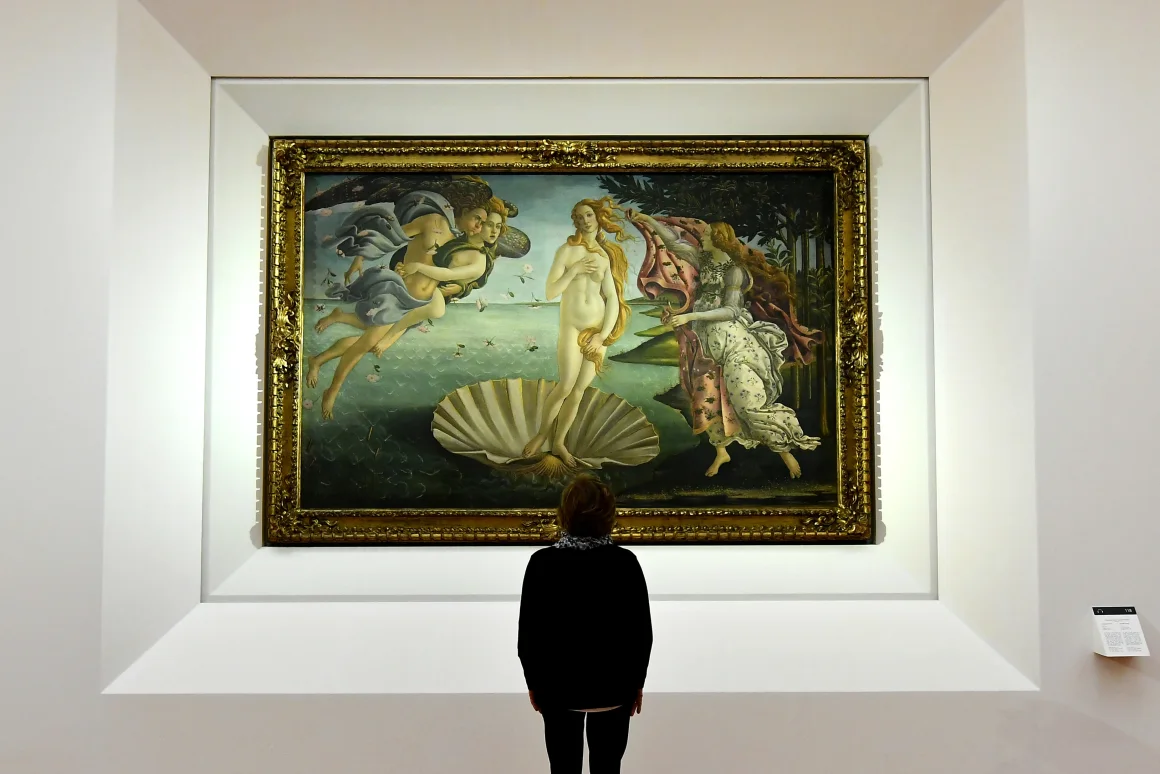
The Renaissance, a period of “rebirth” in Europe from the 14th to the 17th century, produced some of the most iconic and famous paintings in history. This era was a flourishing of art, science, and culture, and its artists were revered as geniuses. They developed new techniques like sfumato (a soft, hazy blending of tones) and linear perspective, which made their work look incredibly realistic and three-dimensional. The focus shifted to humanism, celebrating the beauty and potential of the individual. Artists like Leonardo da Vinci, Michelangelo, and Raphael weren’t just painters; they were innovators who pushed the boundaries of what was possible on a canvas.
Their works often depicted religious scenes with newfound emotional depth and humanity, but they also created stunning portraits of wealthy patrons. These masterpieces were not just decorations; they were statements of power, faith, and intellectual curiosity. The legacy of the Renaissance masters is immense. They set a new standard for artistic excellence and created a visual language that would influence artists for centuries to come. Exploring these famous paintings is like stepping back in time to witness a pivotal moment in human creativity.
Leonardo da Vinci: The Ultimate Renaissance Man
Leonardo da Vinci was more than a painter; he was an inventor, a scientist, a musician, and an architect. His insatiable curiosity about the world is evident in every brushstroke of his art. He dissected human bodies to understand anatomy, studied the flow of water, and designed flying machines, all while creating some of the most famous paintings ever known. His approach to art was scientific. He used his knowledge to create works that were not only beautiful but also astonishingly lifelike. His notebooks are filled with sketches and observations that reveal a mind constantly working to unravel the mysteries of the natural world.
This blend of art and science is what makes his work so captivating. He didn’t just paint a person; he captured their psychology. He didn’t just paint a landscape; he understood the geology and botany behind it. This depth is why his relatively small number of surviving paintings have been studied and admired for over 500 years. Leonardo’s legacy is that of the ultimate “Renaissance Man,” a symbol of human potential and the powerful connection between art and knowledge.
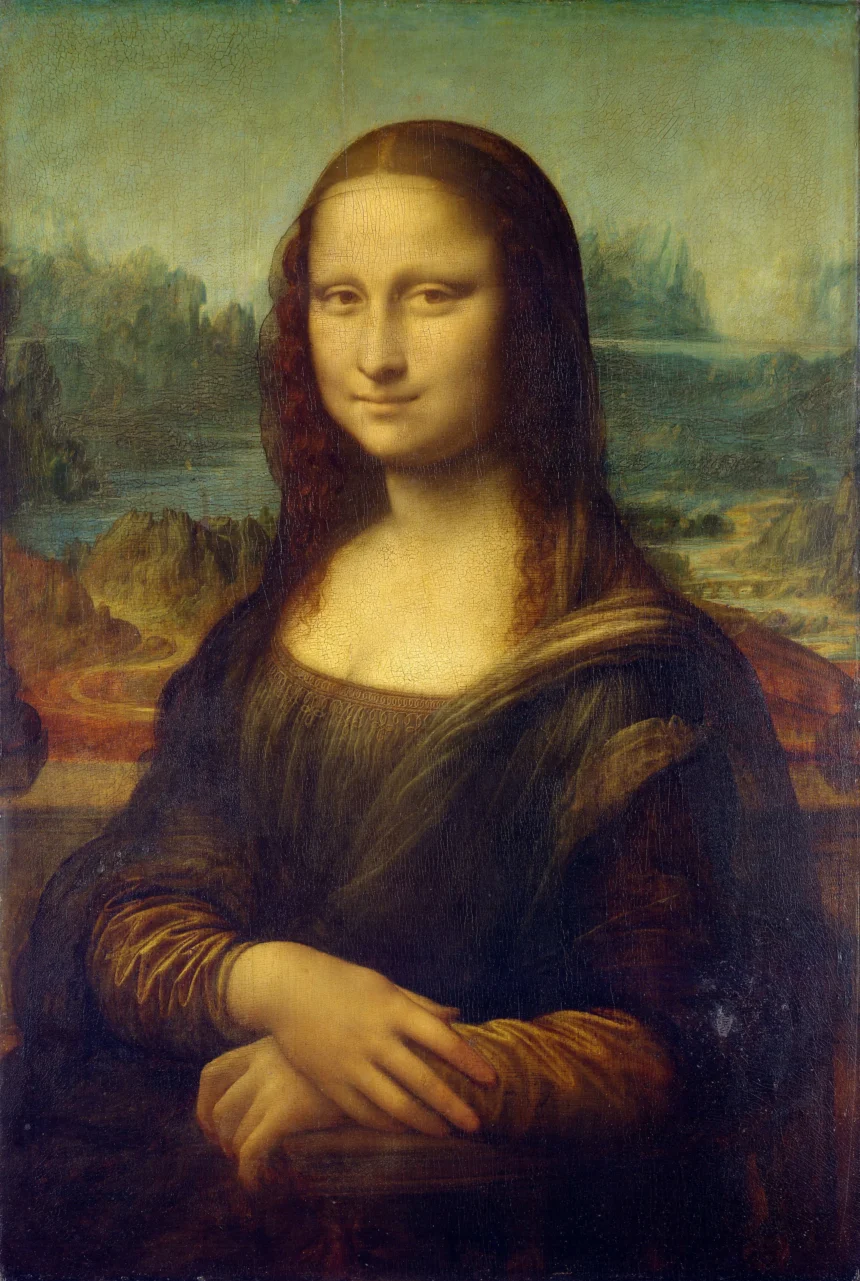
Mona Lisa: The Smile That Puzzled the World
Housed in the Louvre Museum in Paris, the Mona Lisa is arguably the most famous painting in the world. But why? Painted by Leonardo da Vinci in the early 16th century, the portrait of Lisa Gherardini is a masterclass in technique. Leonardo used his signature sfumato style to create soft, blurred edges, particularly around the corners of the mouth and eyes. This is what gives the Mona Lisa her famously enigmatic smile. Depending on where you look, she appears to be smiling, or her expression seems to change to one of melancholy. It’s an optical illusion created by a genius.
Beyond the technique, the painting’s history is filled with drama. It was stolen from the Louvre in 1911 by an Italian handyman who believed it belonged in Italy. The theft made international headlines, and its recovery two years later catapulted the painting from a respected masterpiece to a global celebrity. Today, millions of visitors flock to see her each year, drawn by the mystery of her expression and the legend that surrounds one of the most iconic and famous paintings of all time.
The Last Supper: A Moment of High Drama
Leonardo’s The Last Supper is not a painting on a canvas but a massive fresco painted on a dining hall wall in Milan, Italy. It captures a single, dramatic moment: the instant Jesus Christ tells his twelve apostles that one of them will betray him. What makes this work so powerful is the human emotion Leonardo masterfully depicts. Each apostle reacts differently to the shocking news—with horror, anger, disbelief, or sorrow. Leonardo grouped them in threes, creating a wave of motion and emotion that flows across the long table.
At the center, Jesus remains calm, a point of stability in the chaos. The composition is a marvel of perspective, with all lines converging on the figure of Christ, drawing the viewer’s eye directly to him. Unfortunately, Leonardo experimented with a new paint technique on the dry plaster wall, which was not durable. The painting began to deteriorate within his lifetime. Despite centuries of damage and numerous restorations, the raw power and psychological depth of this masterpiece endure, solidifying its place among the most famous paintings in religious art.
Raphael: Master of Harmony and Grace
While Leonardo was known for his mystery and Michelangelo for his power, Raphael (Raffaello Sanzio da Urbino) was the master of grace, harmony, and serene beauty. In his short life, he produced an incredible number of masterpieces that defined the High Renaissance. His work is characterized by its clarity of form, ease of composition, and visual splendor. He was a brilliant synthesizer, taking the best elements from his contemporaries—Leonardo’s soft modeling and Michelangelo’s dynamic figures—and blending them into his own unique and perfected style.
Raphael’s paintings often feel calm and effortless, belying the incredible skill required to create such balanced and beautiful compositions. His Madonnas, in particular, are celebrated for their tender and idealized beauty, portraying the Virgin Mary with a gentle, human touch. He ran a large and highly organized workshop, which allowed him to complete massive commissions, like the frescoes in the Vatican. His influence on subsequent generations of artists was enormous, as many looked to his work as the ultimate example of classical perfection.
The School of Athens: A Celebration of Philosophy
Raphael’s The School of Athens, another monumental fresco in the Vatican, is a grand celebration of knowledge and philosophy. It doesn’t depict a single historical event but rather imagines an assembly of the greatest thinkers of all time, gathered together in a magnificent classical building. At the center of the composition are the two giants of Greek philosophy: Plato, who points upward to the world of ideas, and his student Aristotle, who gestures toward the earth, representing the physical world.
Surrounding them are other famous mathematicians, astronomers, and philosophers, including Pythagoras, Euclid, and Socrates. Raphael even included portraits of his contemporaries in the scene; Leonardo da Vinci is the model for Plato, and Raphael himself peeks out from the crowd on the far right. The painting is a masterpiece of perspective and organization, creating a scene that is both intellectually deep and visually stunning. It perfectly embodies the Renaissance spirit of humanism, placing human reason and the pursuit of knowledge at the center of the universe. It is undeniably one of the most intellectually ambitious and famous paintings ever created.
The Dutch Golden Age and a New Kind of Art
The 17th century was a “Golden Age” for the Netherlands. Thanks to its global trade and economic prosperity, a wealthy merchant class emerged that was eager to decorate their homes with art. This created a new market for paintings that was very different from the rest of Europe, which was still dominated by commissions from the Church and royalty. Dutch artists began to specialize in new subjects: detailed portraits of regular citizens, dramatic seascapes, quiet domestic interiors, and lavish still lifes. These famous paintings celebrated everyday life.
This period saw the rise of masters like Rembrandt van Rijn and Johannes Vermeer. They developed incredible techniques for capturing light, texture, and mood. Rembrandt was known for his dramatic use of light and shadow (chiaroscuro) and his deeply insightful portraits. Vermeer, on the other hand, was a master of tranquility and light, creating quiet, intimate scenes of domestic life that feel timeless. The art of the Dutch Golden Age gives us a remarkable window into the world of 17th-century Holland and produced some of the most beloved and famous paintings in history.
Rembrandt van Rijn: Master of Light and Shadow
Rembrandt is one of the most revered painters in art history, a master whose work is defined by its emotional depth and stunning use of light. He lived and worked during the Dutch Golden Age, but his art transcended the typical subjects of his time. Whether he was painting a biblical scene, a wealthy merchant, or himself, Rembrandt had an unparalleled ability to capture the inner life and psychological complexity of his subjects. His signature technique was chiaroscuro, the dramatic contrast between light and dark, which he used to create mood, focus attention, and reveal character.
His early career was marked by success and wealth, but his life was also filled with personal tragedy and financial hardship. These experiences seem to have deepened his art, particularly his many self-portraits, which provide an unflinching record of his journey from youthful confidence to old age. He explored the full range of human experience, from joy and love to sorrow and doubt. Rembrandt’s legacy is that of a profound storyteller who used paint to explore the very essence of humanity.
The Night Watch: A Revolutionary Group Portrait
Rembrandt’s most famous work, The Night Watch, is not actually a nighttime scene. Its official title is Militia Company of District II under the Command of Captain Frans Banninck Cocq. The painting got its popular name because centuries of accumulated dirt and varnish made it look much darker than it was originally. This monumental painting completely revolutionized the genre of the group portrait. Instead of lining up the subjects in a stiff, formal row, Rembrandt painted them as if they were in the middle of action, creating a dynamic and energetic scene.
The captain and his lieutenant are shown striding forward, giving orders as their company assembles. The composition is a whirlwind of movement, with figures holding muskets, waving flags, and beating drums. Rembrandt’s brilliant use of light highlights the key figures while others recede into the shadows, creating a sense of depth and chaos. While it was controversial at the time for its unconventional approach, The Night Watch is now celebrated as one of the greatest and most famous paintings of the Dutch Golden Age.
Johannes Vermeer: The Master of Light
Johannes Vermeer was a painter from Delft whose life is shrouded in mystery. He produced a relatively small number of paintings—only about 34 are known today—but each one is a perfectly crafted jewel. Vermeer was a master of light. In his quiet, contemplative scenes of domestic life, light streams in from a window on the left, illuminating the room and its inhabitants with a soft, ethereal glow. He had an incredible ability to render textures, from the sheen of a pearl to the roughness of a bread crust, making his scenes feel remarkably real.
Vermeer likely used a camera obscura, a precursor to the modern camera, to help him achieve his precise compositions and realistic effects of light and perspective. His subjects are usually women engaged in everyday activities: reading a letter, playing a musical instrument, or pouring milk. These simple moments are elevated to something profound and beautiful through his artistry. For centuries, Vermeer was largely forgotten, but he was rediscovered in the 19th century and is now recognized as one of the great masters of the Dutch Golden Age.
Girl with a Pearl Earring: The Dutch Mona Lisa
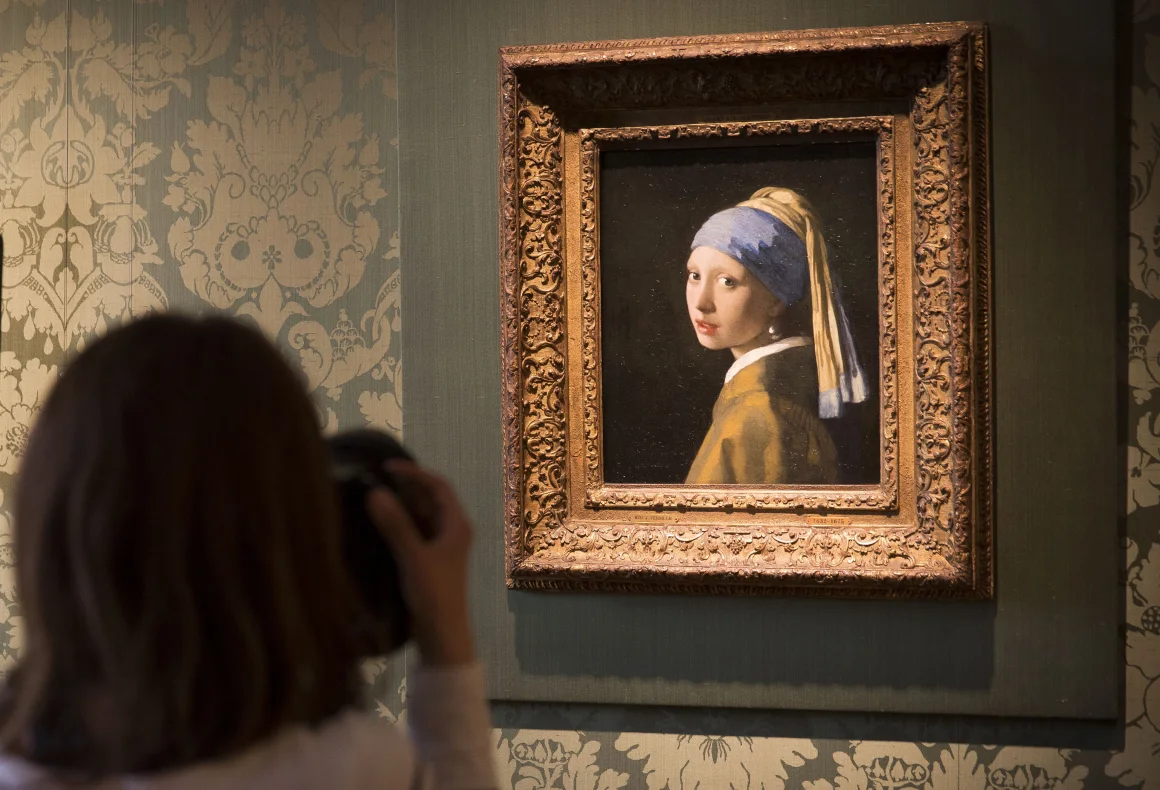
Often called the “Mona Lisa of the North,” Vermeer’s Girl with a Pearl Earring is one of the most enigmatic and famous paintings in the world. It’s not a traditional portrait but a tronie—a type of painting that shows a head or figure with an interesting or exaggerated expression. We don’t know who the girl is. She could be Vermeer’s daughter, a model, or a complete fabrication. This mystery is part of its appeal. She looks over her shoulder, her lips slightly parted as if she is about to speak, her eyes meeting the viewer’s gaze.
Her expression is captivating—it seems to hold a mix of innocence, curiosity, and perhaps a hint of longing. The painting is a technical marvel. Vermeer’s handling of light is extraordinary, especially on the girl’s turban and the luminous pearl earring, which is created with just a few simple brushstrokes. The dark, empty background makes her figure pop, focusing all our attention on her face and her ambiguous expression. It is this combination of technical brilliance and psychological mystery that has made Girl with a Pearl Earring an enduring icon of art.
The 19th Century: Revolution and New Ways of Seeing
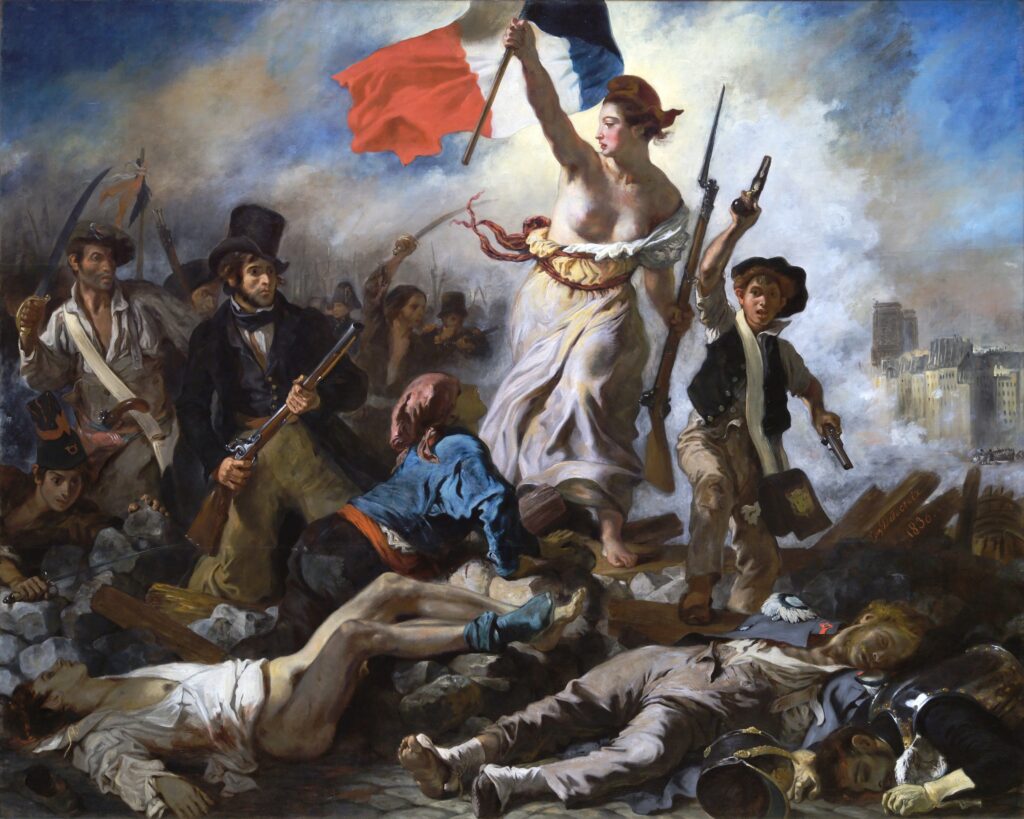
The 19th century was a time of immense change and upheaval, and the art world was no exception. The rigid rules of the academic art world, which prized historical and mythological scenes, began to be challenged by a new generation of artists. This century saw the birth of modern art, with movements like Romanticism, Realism, and, most famously, Impressionism. Artists moved out of the studio and into the real world, painting modern life, landscapes, and everyday people. They were interested in capturing fleeting moments and the changing effects of light and atmosphere.
This led to revolutionary new techniques. Instead of smooth, blended colors, the Impressionists used short, visible brushstrokes to capture the “impression” of a scene. These new approaches were initially met with ridicule from the art establishment, but they ultimately changed the course of art history forever. The 19th century gave us some of the most vibrant and famous paintings ever created, works that broke with tradition and taught the world a new way of seeing.
The Birth of Impressionism
In the mid-19th century, a group of young artists in Paris grew tired of the official Salon, the annual art exhibition that dictated what was considered “good” art. They wanted to paint the world around them—the bustling boulevards of Paris, the sunny countryside, the leisure activities of the middle class. Artists like Claude Monet, Pierre-Auguste Renoir, and Edgar Degas decided to hold their own independent exhibition in 1874. A critic mockingly called them “Impressionists” after the title of one of Monet’s paintings, Impression, Sunrise, and the name stuck.
The Impressionists were fascinated by light. They often painted en plein air (outdoors) to capture the fleeting effects of sunlight on water or a landscape at different times of the day. Their technique was radical for its time. They used bright, unmixed colors and visible brushstrokes to convey the immediacy and vibrancy of a moment. While they were initially rejected by the mainstream, their focus on light, color, and modern life paved the way for all of modern art, making their works some of the most beloved and famous paintings today.
Claude Monet: Capturing a Fleeting Moment
Claude Monet was the driving force behind Impressionism and is perhaps its most famous practitioner. He was obsessed with capturing the way light and atmosphere change the appearance of a subject. For Monet, the subject itself was less important than the light that fell upon it. He famously painted the same subject—haystacks, the Rouen Cathedral, his water lily pond—over and over again at different times of day and in different seasons to study these subtle shifts.
His dedication to painting outdoors was legendary. He would brave freezing temperatures and changing weather to capture a scene exactly as he saw it in that moment. His late work, particularly the massive Water Lilies series, became increasingly abstract as he focused more and more on pure color and light. These paintings, created while his eyesight was failing, are immersive experiences that surround the viewer with the sensation of being in his garden at Giverny. Monet’s relentless pursuit of capturing perception itself changed art forever and gave us many of the world’s most instantly recognizable famous paintings.
Water Lilies Series: An Immersive World of Color
Monet’s Water Lilies series is one of the monumental achievements of modern art. In the last 30 years of his life, Monet dedicated himself to painting the water lily pond he had specially constructed in his garden at Giverny. He created approximately 250 oil paintings of the pond, focusing on the surface of the water and the reflections of the sky and trees. In these works, the horizon line often disappears completely, immersing the viewer in a world of water, light, and color.
These are not just simple paintings of flowers; they are profound meditations on nature, time, and perception. The brushwork becomes looser and more expressive in the later paintings, with color and light dissolving into an almost abstract pattern. He designed some of the final, massive canvases to be displayed in curved rooms, creating a panoramic effect that he called his “grand decoration.” He intended for them to be a peaceful refuge, “a haven of peaceful meditation in the center of a flowering aquarium.” Today, these powerful and beautiful works are considered a bridge between Impressionism and abstract art.
Modern Art and the Break from Tradition
The 20th century unleashed a whirlwind of artistic innovation. Artists felt increasingly free to break from the tradition of representing the world realistically. They explored new ways of expressing emotion, ideas, and the experience of modern life. This led to a rapid succession of “isms”—Fauvism, Cubism, Surrealism, Abstract Expressionism, and Pop Art, among others. Color could be used for its emotional impact rather than its descriptive accuracy. Forms could be fractured and rearranged to show multiple viewpoints at once. The subconscious mind became a source of bizarre and dreamlike imagery.
Painters like Pablo Picasso, Vincent van Gogh (whose work was a bridge to this new era), Edvard Munch, and Salvador Dalí pushed the boundaries of what a painting could be. Their work was often shocking and controversial to contemporary audiences, but it opened up entirely new possibilities for art. The famous paintings of the 20th century are incredibly diverse, reflecting a world grappling with new technologies, world wars, and profound psychological questions.
Vincent van Gogh: Emotion Through Color
Vincent van Gogh is one of the most tragic and beloved figures in art history. During his lifetime, he was a commercial failure, selling only one painting. Yet today, his works are among the most valuable and famous paintings in the world. Van Gogh’s art is characterized by its intense emotional honesty, which he expressed through thick, energetic brushstrokes and bold, often non-naturalistic colors. For him, color was a way to convey his inner feelings, not just to describe the world as it appeared.
His letters to his brother Theo provide an incredible insight into his artistic process and his struggles with mental illness. He painted with a frantic energy, producing an astonishing body of work in just ten years. He sought to capture the life force in nature, whether in a gnarled olive tree, a field of wheat under a stormy sky, or a vase of sunflowers. Though his life was short and troubled, his art has brought joy and inspiration to millions, and his influence on modern art is immeasurable. The team at https://siliconvalleytime.co.uk/ often discusses how innovators like van Gogh change their fields forever.
The Starry Night: A Swirling Vision of the Cosmos
Painted in 1889 from the window of his asylum room in Saint-Rémy-de-Provence, The Starry Night is one of the most iconic images in Western art. It is a powerful expression of Van Gogh’s turbulent inner world. The night sky is not calm but a swirling, explosive vortex of cosmic energy. A massive, cypress tree, often a symbol of death and mourning, dominates the foreground, reaching up to connect the earth with the heavens. The stars and moon glow with an intense, otherworldly light.
Below the dramatic sky lies a peaceful, sleeping village, a stark contrast to the turmoil above. The painting is a blend of what Van Gogh saw and what he felt. The emotional power of the work, created through its dynamic composition, expressive brushwork, and symbolic imagery, is what makes it so resonant. It is more than a landscape; it is a vision, a raw and beautiful expression of hope, despair, and the awesome power of nature.
Pablo Picasso: Reinventing Art
Pablo Picasso was arguably the most dominant and influential artist of the 20th century. His career spanned over seven decades, and he was constantly innovating and reinventing his style. He famously said, “I don’t seek, I find.” He is best known as the co-founder of Cubism, a revolutionary art movement that abandoned traditional perspective and instead depicted subjects from multiple viewpoints at once, fracturing them into geometric forms. This was one of the most radical breaks from artistic tradition in 500 years.
But Picasso’s genius wasn’t limited to Cubism. He moved through many different styles, from his melancholic Blue Period to his warmer Rose Period and his later explorations of Surrealism and classicism. He was a prolific artist who created tens of thousands of works, including paintings, sculptures, ceramics, and drawings. He changed the definition of art itself, showing that it didn’t have to be a window onto a realistic world but could be an object in its own right, a construction of forms and ideas.
Guernica: A Powerful Anti-War Statement
Picasso’s monumental black, white, and gray painting, Guernica, is one of the most powerful anti-war statements ever made. It was his response to the horrific bombing of the Basque town of Guernica by Nazi planes during the Spanish Civil War in 1937. The painting is not a realistic depiction of the event but a visceral, symbolic representation of the brutality and suffering of war. The massive canvas is a chaotic scene of death and dying.
On the left, a screaming mother holds her dead child, a modern version of the religious pietà. A bull, a symbol of brute force, stands over her. In the center, a wounded horse screams in agony under a bare lightbulb, representing the harsh glare of modern warfare. The painting uses the fragmented style of Cubism to convey the chaos and terror of the bombing. It is a timeless and universal cry against violence, and its raw emotional power has made it one of the most significant and famous paintings of the 20th century.
Comparison of Famous Artists
|
Artist |
Era |
Key Style/Technique |
Famous For |
|---|---|---|---|
|
Leonardo da Vinci |
High Renaissance |
Sfumato, Scientific Realism |
Mona Lisa, The Last Supper |
|
Rembrandt van Rijn |
Dutch Golden Age |
Chiaroscuro, Psychological Depth |
The Night Watch, Self-Portraits |
|
Claude Monet |
Impressionism |
En Plein Air, Capturing Light |
Water Lilies Series, Impression, Sunrise |
|
Vincent van Gogh |
Post-Impressionism |
Expressive Color, Impasto |
The Starry Night, Sunflowers |
|
Pablo Picasso |
Modernism / Cubism |
Cubism, Constant Reinvention |
Guernica, Les Demoiselles d’Avignon |
Frequently Asked Questions (FAQ)
Q: What is the most famous painting in the world?
A: While fame can be subjective, the Mona Lisa by Leonardo da Vinci is almost universally considered the most famous painting in the world. Its mysterious smile, dramatic history (including its theft), and home in the world’s most-visited museum, the Louvre, have given it unparalleled global recognition.
Q: Why are these famous paintings so expensive?
A: The value of these famous paintings comes from a combination of factors. They are incredibly rare—there is only one Starry Night. They were created by artists who are considered geniuses in their field. Their historical and cultural significance is immense, and they are in extremely high demand from museums and collectors. This combination of rarity, authorship, and demand drives their prices into the millions or even billions of dollars, making them essentially priceless.
Q: Where can I see these famous paintings?
A: These masterpieces are housed in major museums around the world. The Mona Lisa and The School of Athens are in Paris and the Vatican City, respectively. The Night Watch and Girl with a Pearl Earring are in Amsterdam and The Hague in the Netherlands. The Starry Night and Guernica are located in New York City and Madrid, Spain.
Q: How did Vincent van Gogh become famous after he died?
A: Van Gogh’s fame grew gradually after his death, largely thanks to the efforts of his sister-in-law, Johanna van Gogh-Bonger. She inherited his vast collection of paintings and letters and dedicated her life to promoting his work. She organized exhibitions and published his letters, which allowed the world to understand his artistic vision and tragic life. By the early 20th century, his emotional intensity and bold use of color were being recognized by a new generation of artists, and his reputation began to soar.
Q: What is the difference between Impressionism and Post-Impressionism?
A: Impressionism, led by artists like Monet, focused on capturing the fleeting visual “impression” of a scene, particularly the effects of light. Post-Impressionism was not a single style but a term for the artists who came after the Impressionists (like Van Gogh and Cézanne). They took the Impressionists’ innovations—bright colors and visible brushstrokes—but used them for different ends. Instead of just capturing visual reality, they focused more on expressing emotion, structure, and symbolism.
Conclusion: The Timeless Power of a Painted Canvas
From the serene smile of the Mona Lisa to the chaotic energy of Guernica, the world’s most famous paintings offer us more than just beauty. They are portals to different times, cultures, and states of mind. They are the product of immense skill, revolutionary ideas, and profound human emotion. These masterpieces have survived centuries, wars, and changing tastes to become part of our shared cultural heritage. They teach us about history, challenge our perceptions, and connect us to the universal human experiences of joy, sorrow, wonder, and conflict.
The stories behind these canvases—the lives of the artists, the techniques they invented, and the histories of the works themselves—add layers of meaning that continue to fascinate us. Whether seen in a grand museum or as a print in a book, these famous paintings have an enduring power. They remind us of the incredible heights of human creativity and the timeless ability of art to capture the complexities of our world and ourselves. To delve deeper into the vast and fascinating world of art history, a great place to start is the extensive collection of articles on the topic available at Wikipedia, which offers detailed information on countless famous paintings and the artists who created them.



