







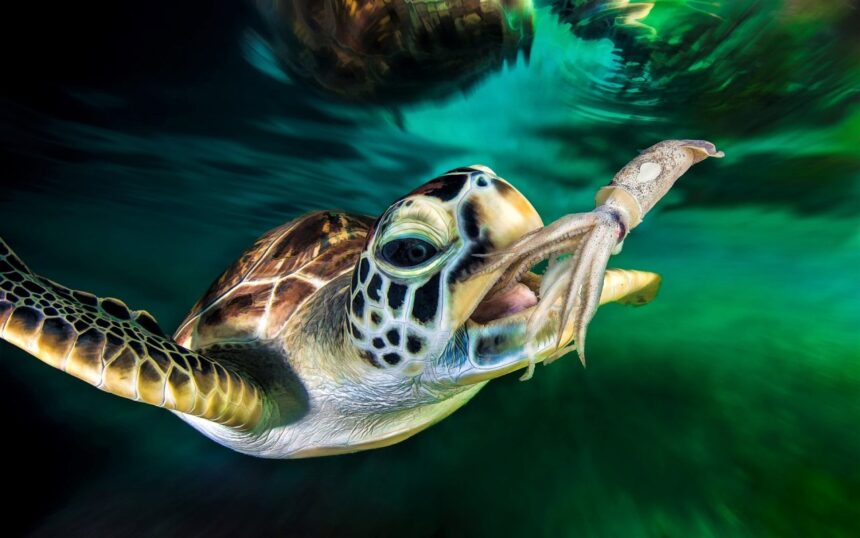

Sea turtles are some of the most fascinating creatures in our oceans. They have been swimming through Earth’s waters for millions of years, long before humans built cities or cars. When people spot these gentle reptiles gliding through the water, they often wonder about their daily lives. One of the biggest questions people ask is: what do sea turtles eat? The answer isn’t simple because different types of sea turtles have very different favorite foods.
Some sea turtles love munching on plants, while others prefer a meaty diet of crabs and jellyfish. Understanding their diet helps us protect them and keep our oceans healthy. In this article, we are going to explore the unique menus of all the major sea turtle species. We will look at how their jaws are shaped perfectly for their specific meals and why plastic pollution is such a big problem for them. Let’s dive in and discover the underwater buffet that keeps these ancient mariners alive.
Key Takeaways
- Diverse Diets: Not all sea turtles eat the same things; some are herbivores, some are carnivores, and others are omnivores.
- Species-Specific Menus: Green sea turtles love seagrass, while Leatherbacks eat almost exclusively jellyfish.
- Jaw Adaptations: Each species has a unique beak shape designed to crush, slice, or hold their specific food.
- Age Matters: A sea turtle’s diet often changes as they grow from a baby hatchling into an adult.
- Human Impact: Plastic pollution looks like food to turtles, which is a major threat to their survival.
The 7 Species of Sea Turtles and Their Diets
There are seven distinct species of sea turtles swimming in our oceans today. While they might look similar from a distance, they are actually quite different when you look closely at their habits. Specifically, if you want to know what do sea turtles eat, you have to look at each species individually. Their diets are so specialized that what is delicious to one turtle might be totally ignored by another.
In the sections below, we will break down the menu for each of the seven species. This will give you a clear picture of the variety of food sources these animals rely on. From the massive Leatherback to the smaller Kemp’s Ridley, every turtle plays a specific role in the ocean’s food web.
The Green Sea Turtle: The Ocean’s Gardener
The Green Sea Turtle is unique among sea turtles because adult Green turtles are primarily herbivores. This means they eat plants. When they are babies, they might snack on worms or small crustaceans, but as they grow up, they turn into strict vegetarians. Their serrated jaw is perfectly built like a saw to cut through tough seagrass and algae.
Because they graze on seagrass beds, they act like lawnmowers for the ocean. By keeping the seagrass short, they help it grow faster and healthier. This is vital for many other sea creatures that live in the grass. So, when you ask what do sea turtles eat, for the Green turtle, the answer is huge amounts of underwater greens!
The Leatherback Sea Turtle: The Jellyfish Eater
The Leatherback is the largest of all sea turtles, growing to massive sizes. Surprisingly, this giant animal eats something that is mostly water: jellyfish. They also eat sea squirts and other soft-bodied animals known as tunicates. Their throat is lined with backward-facing spines called papillae. These spines help them swallow slippery jellyfish and keep them from escaping back out of their mouth.
Leatherbacks travel thousands of miles just to find large swarms of jellyfish. Because jellyfish don’t have many calories, Leatherbacks have to eat huge quantities of them every single day to maintain their energy. This heavy reliance on jellyfish makes them very vulnerable to plastic bags floating in the water, which look exactly like their favorite snack.
The Loggerhead Sea Turtle: The Heavy Crusher
Loggerhead sea turtles are named for their large, block-like heads. This big head houses incredibly powerful jaw muscles. These muscles allow the Loggerhead to eat hard-shelled prey that other animals can’t crack open. Their diet consists mainly of whelks, conch, crabs, and horseshoe crabs. They are essentially the carnivores of the turtle world who love a crunchy meal.
They forage along the bottom of the ocean, flipping over rocks and digging through the sand to find food. Once they find a tasty crab or clam, their powerful beak crushes the shell instantly. While they prefer meat, they are sometimes known to eat seaweed if they can’t find enough prey, making them technically omnivorous, but leaning heavily towards meat.
The Hawksbill Sea Turtle: The Sponge Specialist
The Hawksbill sea turtle has a narrow, bird-like beak that gives it its name. This sharp beak is a specialized tool used to reach into crevices in coral reefs. Their favorite food is sea sponges. Sponges are toxic to many other animals and contain sharp glass-like shards called spicules, but the Hawksbill eats them without any problem.
By eating sponges, Hawksbills help coral reefs survive. Sponges grow faster than coral and can suffocate reefs if left unchecked. The Hawksbill keeps the sponge population down, allowing the colorful coral to flourish. They can eat over 1,000 pounds of sponges a year! It’s a great example of how nature balances itself out.
The Kemp’s Ridley Sea Turtle: The Crab Lover
Kemp’s Ridley sea turtles are the smallest of the sea turtle species and are critically endangered. They live mostly in the Gulf of Mexico and along the Atlantic coast. If you are wondering what do sea turtles eat when it comes to this smaller species, the answer is mostly crabs. Blue crabs are a particular favorite.
They are energetic hunters who will also eat clams, mussels, shrimp, and occasionally fish or jellyfish. Because they live in shallower coastal waters, they often hunt along the bottom where these crustaceans hide. Their jaws are strong enough to crush shells, similar to the Loggerhead, but adapted for smaller prey.
The Olive Ridley Sea Turtle: The Opportunistic Eater
The Olive Ridley is arguably the most abundant sea turtle species. They are omnivores, meaning they aren’t picky eaters. They will eat algae, lobsters, crabs, tunicates, and mollusks. They are also known to dive deep—sometimes over 500 feet—to find food.
Because they are opportunistic, they will eat whatever is available in the area they are swimming through. This flexibility helps them survive in many different parts of the ocean. Whether it is a shrimp swimming by or a patch of algae, the Olive Ridley is likely to take a bite.
The Flatback Sea Turtle: The Aussie Local
Flatback sea turtles are found only in the waters around Australia. Unlike other sea turtles that travel across entire oceans, Flatbacks stay relatively close to home. They are omnivores that eat a variety of creatures found on the shallow seafloor. Their diet includes sea cucumbers, soft corals, jellyfish, prawns, and crabs.
Since they don’t migrate across deep oceans, their diet reflects the rich biodiversity of the Australian continental shelf. They are less studied than other species, but we know they play a crucial role in the coastal ecosystems down under.
How Sea Turtle Jaws Are Adapted for Feeding
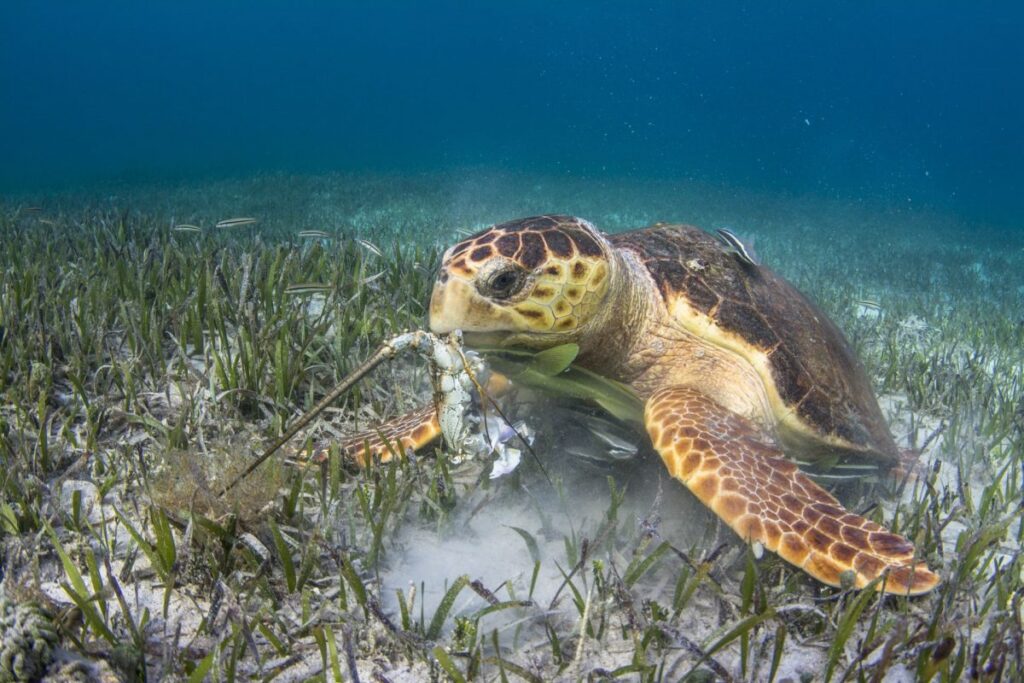
One of the coolest things about evolution is how animals adapt to their environment. Sea turtles are a perfect example of this. You can often tell what do sea turtles eat just by looking at the shape of their mouth and beak. They don’t have teeth like we do; instead, they have beaks made of keratin, the same stuff your fingernails are made of.
These beaks vary wildly in shape and strength. A sharp, pointed beak is great for getting food out of cracks, while a serrated beak is perfect for cutting. Let’s look closer at these biological tools.
Serrated Beaks for Plant Eaters
The Green Sea Turtle has a beak with serrated edges. Imagine a steak knife or a saw blade. This edge allows them to grab a mouthful of seagrass and shear it off cleanly near the roots. If they didn’t have these serrated edges, they would have to yank and pull, which would damage the roots and kill the plant. This adaptation ensures the grass can grow back.
Strong Jaws for Crushing Shells
Loggerheads and Kemp’s Ridleys have massive heads relative to their body size. This isn’t just for show; it accommodates huge jaw muscles. Their beaks are thick and strong, designed to deliver thousands of pounds of pressure. This crushing power is essential for breaking through the thick shells of conchs and crabs to get to the meat inside.
Sharp Beaks for Precision Hunting
The Hawksbill’s narrow, hawk-like beak is a precision instrument. It allows the turtle to snipe sponges growing deep inside coral crevices where other predators can’t reach. This specific shape minimizes competition for food because the Hawksbill can access resources that are off-limits to turtles with wider, blunter heads.
Table: Sea Turtle Species and Their Primary Diet
|
Sea Turtle Species |
Diet Type |
Primary Food Sources |
Beak Adaptation |
|---|---|---|---|
|
Green |
Herbivore (Adult) |
Seagrass, Algae, Seaweed |
Serrated edge for cutting plants |
|
Leatherback |
Carnivore (Specialized) |
Jellyfish, Tunicates |
Delicate, scissor-like; throat spines |
|
Loggerhead |
Carnivore |
Crabs, Whelks, Conch |
Powerful, crushing jaws |
|
Hawksbill |
Omnivore (Specialized) |
Sea Sponges |
Sharp, narrow, bird-like beak |
|
Kemp’s Ridley |
Carnivore |
Crabs, Shrimp, Clams |
Strong jaws for crushing |
|
Olive Ridley |
Omnivore |
Crabs, Shrimp, Algae, Fish |
Generalist beak for varied diet |
|
Flatback |
Omnivore |
Sea cucumbers, Soft corals |
Adapted for soft-bodied prey |
Do Baby Sea Turtles Eat the Same as Adults?
When sea turtles first hatch, they are tiny and vulnerable. They scramble down the beach and swim frantically toward the open ocean. This period is often called the “lost years” because, for a long time, scientists didn’t know where they went. During this time, the diet of a baby turtle is often different from what its parents eat.
Hatchlings are generally omnivorous scavengers. They float in currents and huge mats of seaweed called Sargassum. Here, they eat anything they can fit in their tiny mouths: fish eggs, small shrimp, larvae, and small jellies. Even the vegetarian Green Sea Turtle starts life eating meat to get the protein needed for rapid growth. As they get larger and stronger, they migrate to their adult feeding grounds and switch to their primary adult diet.
The Dangers of Mistaken Identity: Plastic vs. Food
When we discuss what do sea turtles eat, we sadly have to mention things they shouldn’t eat but do anyway. Pollution is confusing these ancient animals. To a sea turtle, a floating plastic bag looks almost identical to a jellyfish. A small piece of colorful hard plastic looks like a crab shell or a shrimp.
Sea turtles rely on sight and smell to find food. Once they bite into plastic, they often can’t spit it out because of the spines in their throats (especially Leatherbacks). Swallowing plastic can block their intestines, cause them to float so they can’t dive for food, or simply make them feel full so they starve to death. Reducing plastic waste is the single best way we can help ensure turtles eat real food, not trash.
Why Sea Turtle Diets are Important for the Ocean
Sea turtles aren’t just swimming around eating; they are working hard to keep the ocean healthy. Scientists call them “keystone species,” which means other animals depend on them. If sea turtles disappeared, the ocean ecosystem would look very different—and not in a good way.
For example, without Green turtles grazing on seagrass, the grass would overgrow and rot, causing disease. Without Hawksbills eating sponges, coral reefs would be suffocated and die. Coral reefs are home to millions of fish, so if the reefs die, the fish die too.
Nutrient Cycling
Sea turtles also help move nutrients around. When they nest on beaches, the eggs that don’t hatch provide vital nutrients to the sandy dunes. This helps plants grow on the beach, which holds the sand in place and prevents erosion. In the water, their waste provides food for smaller organisms. Everything in the ocean is connected.
How Can You Help Sea Turtles?
Now that you know what do sea turtles eat, you might be wondering how to help them find the right food. You don’t need to be a marine biologist to make a difference. Simple actions at home can have a huge impact on the ocean.
- Reduce Plastic Use: Use reusable bags and bottles. This stops plastic from ending up in the ocean where turtles might mistake it for a snack.
- Participate in Cleanups: Cleaning up a local beach or river prevents trash from washing out to sea.
- Choose Sustainable Seafood: Sometimes fishing nets accidentally catch turtles. Buying seafood that is caught safely helps protect them.
- Don’t Release Balloons: Balloons released into the sky eventually come down, often in the water. To a turtle, a deflated balloon looks exactly like food.
Frequently Asked Questions (FAQ)
Here are some common questions people ask about sea turtle diets.
Do sea turtles drink fresh water?
No, sea turtles live in salty ocean water their whole lives. They drink seawater and have special glands behind their eyes that remove the excess salt. When you see a turtle “crying” on the beach, it is actually releasing this salt.
Can a sea turtle bite you?
Yes, sea turtles can bite if they feel threatened, and it can be painful. Species like the Loggerhead have jaws strong enough to crack conch shells, so they could easily hurt a human finger. It is always best to admire them from a distance.
Do sea turtles eat fish?
Some species do. The Kemp’s Ridley and Olive Ridley will eat fish if they can catch them, though they are usually too slow to catch healthy, fast-swimming fish. They are more likely to eat slow or injured fish.
What is a sea turtle’s favorite food?
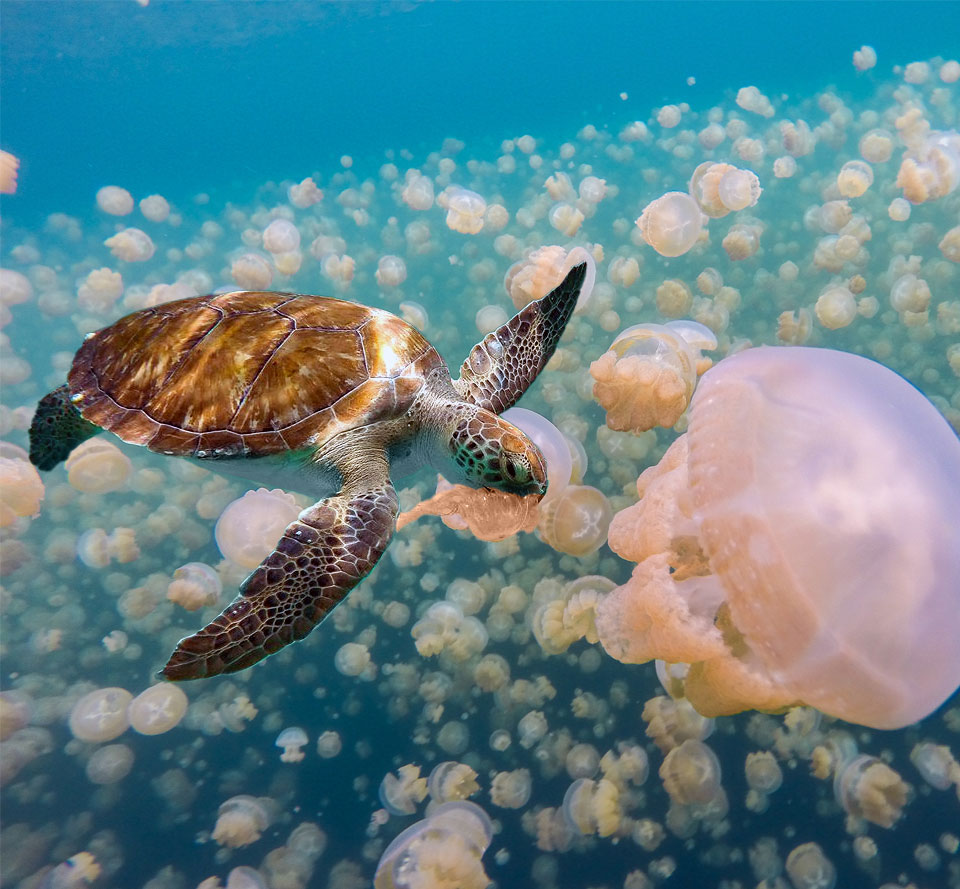
It depends on the turtle! Green turtles love seagrass. Leatherbacks love jellyfish. Hawksbills love sponges. There is no single favorite food for all of them.
How long can a sea turtle go without eating?
Sea turtles are reptiles, so they have a slow metabolism. They can survive for months without food if necessary, especially in cooler water where their body slows down. However, they need regular food to have enough energy to migrate and lay eggs.
Conclusion
The ocean is a vast and mysterious place, and the diet of the sea turtle is a perfect example of its diversity. From the vegetarian Green turtle to the crab-crunching Loggerhead and the sponge-loving Hawksbill, every species has evolved to eat something different. This variety reduces competition and helps keep the ocean ecosystem in balance.
The next time you visit the beach or watch a documentary, and someone asks what do sea turtles eat, you will know that the answer tells the story of an incredible animal perfectly adapted to its home. By understanding their needs, we can better protect their food sources and ensure these magnificent creatures continue to swim in our oceans for generations to come.
If you are interested in learning more about technology and nature, check out interesting articles on https://siliconvalleytime.co.uk/. Protecting our planet requires both natural knowledge and technological innovation. For more detailed scientific information on this topic, you can also explore the Wikipedia entry on Sea turtle, which offers extensive data on their biology and habitats.



